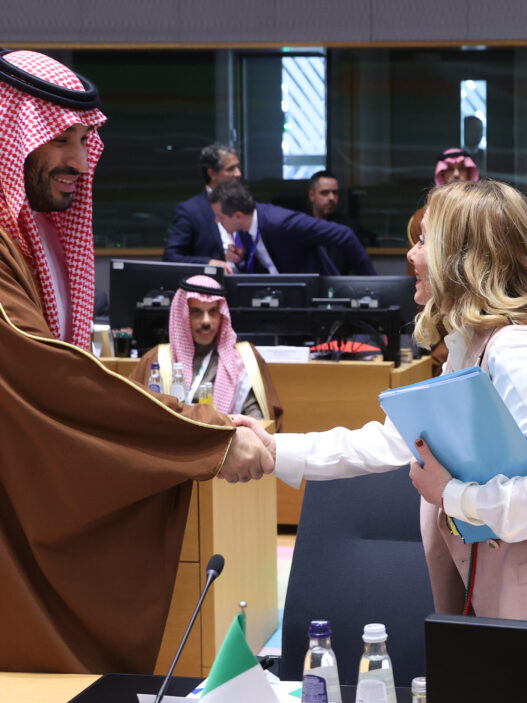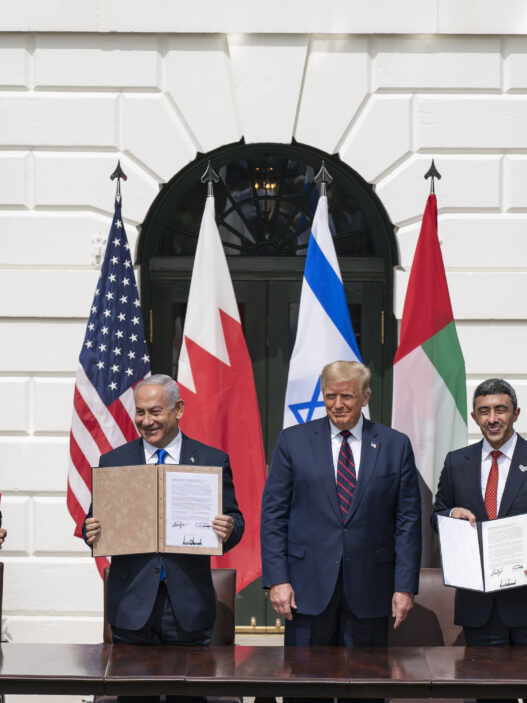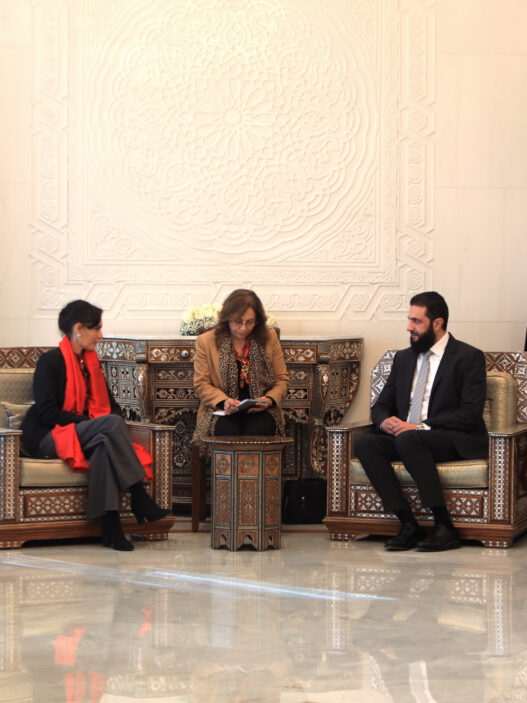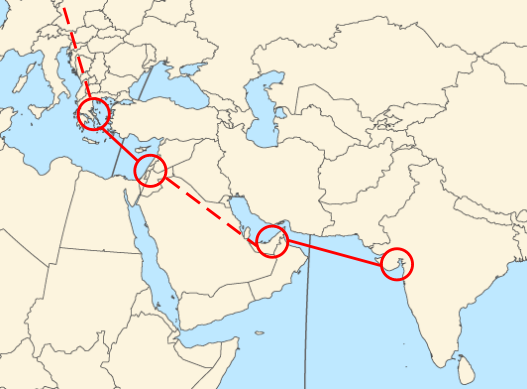







The recent crises in the Middle East, re-surfacing prominently with the Israel-Palestine conflict in 2023, and the June attacks between Israel and Iran, have once again brought back the question of the West’s problematic relationship with the Middle East – if it was ever really gone. Yet, Europe does not only have external problems in the Middle East, but it also faces a crisis of its own. Now that the reliability of the US has waned, the EU is seeking to establish a strong foothold in the region independently.
However, in order to improve the ties with countries in the Middle East and to be a broker for peace, Europe first and foremost needs to review its outlook on the region. A perspective that has been based on inequality and misguided superiority for centuries – a perspective that is called ‘orientalism’. In the attempts of the EU, as well as the UK, to ease the tensions in the Middle East over the last few months, can Europe be a companion to Middle Eastern countries in a way that the West has been unable to do in recent decades, if it can get past its “orientalist” history?
Orientalism
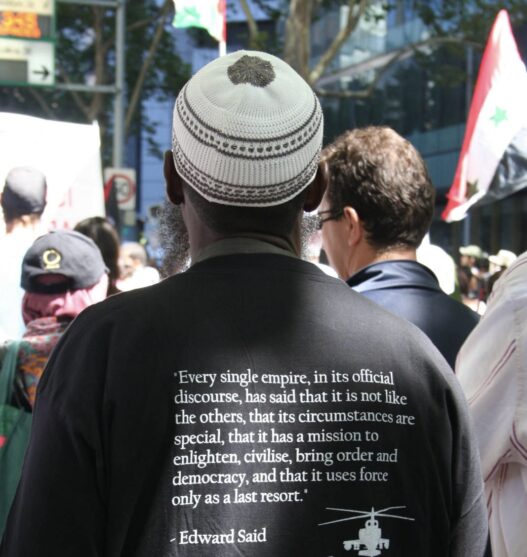
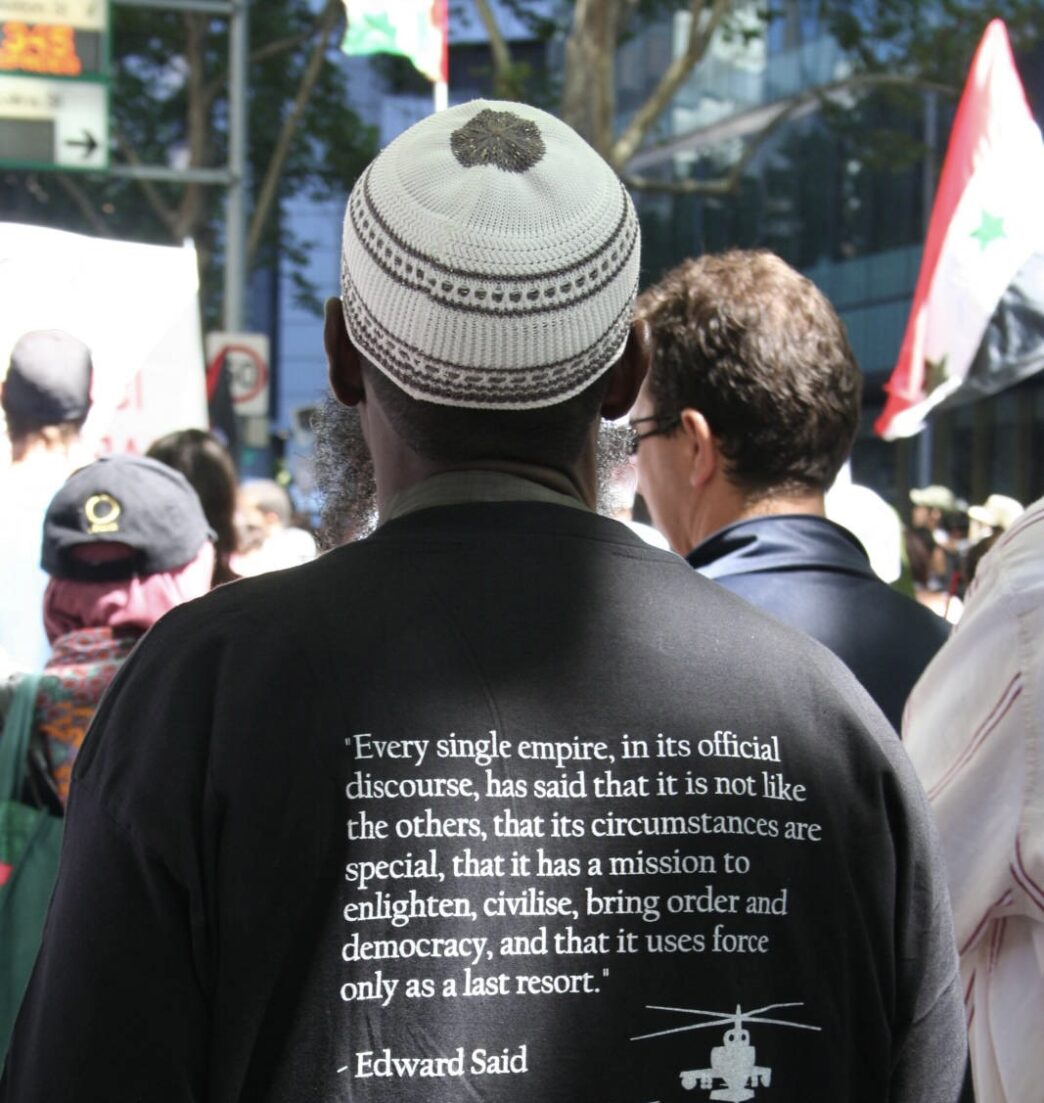
A critique of the concept Orientalism was first brought to the attention by Palestinian-American critic Edward Said in his 1978 book of the same name. Orientalism refers to the perspective of the Western world towards the East, particularly the Middle East, but extending further to places like India and China, cultures which have always fascinated the West. And it is this fascination that causes problems, according to Said. Even though the word fascination can be defined as a positive trait, even an admiration, in the case of Europe-Asia relations, it was often a matter of an indirect (and most of the time, direct) claim of superiority. 
An important part of Said’s argument is the so-called “other”. The Middle East is Europe’s other, more so than any other region in the World. The proximity and early emergence of civilisations has made this part of the world a hub for exchange and trade between regions in Eastern Europe, the Mediterranean and the Levant – even before what most people in Europe would consider the beginning of popular history, the Classical antiquity. This overlap in cultural and religious traits would possibly mean that there are more shared historical elements than diverging ones. Yet, throughout history, these shared elements have mostly been disregarded, and the Middle East has been the other to which Europe identifies itself.
The other is subsequently constructed through stereotypes and characterisations that are more often than not inaccurate or entirely false. Asian life, especially concerning the religion of Islam, was studied and portrayed in European books and art as being exotic, mysterious, and alluring. However, behind these portrayals lay the view that such mystical cultures, based on gods, rituals, and elements so alien to the increasingly homogenous and industrial West, were inherently inferior. And therefore needed such Western influence to up the standard in these primitive, perhaps even barbaric, lands.
Said was often critiqued by other scholars for portraying European and American powers in the same way that he accused the West of Orientalising the East; so-called “Orientalism in reverse” or“Occidentalism” – but his work has remained influential nonetheless. Said’s argument naturally focuses heavily on the colonial history of European powers in this part of the world, where feelings of European superiority were a given. And where xenophobia was anything but indirect.
However, an orientalist mindset has persisted long after the end of colonial rule and may still linger in the consciousness of Western societies today. Around the turn of the century, American and European powers intervened in crises in the Middle East, often with a problematic and destabilising outcome – with Iraq being the most notable example. And whether it is 18th-19th century colonialism or 21st century military incursions, the common thread of Western superiority and the supposed need to assist/influence state-building in the region has remained.
But what has shifted is the Western perception of the unknown. Centuries ago, anything unfamiliar about the cultural and religious practices of the so-called ‘Far East’ was deemed as mystical and exotic – perceived negatively, yet not without a certain amount of attraction. This allure has changed drastically in the 21st century. Now, anything that is unknown, or rather different, is a threat. This can be seen in the differential treatment on the arrival of refugees from the Middle East in comparison to refugees from other places in Eastern Europe, where cultural aspects perhaps align more with what is known in Western Europe.
Even before the refugee crisis erupted in 2015, the same sentiment already existed. The attacks of 9/11 and subsequent bombings in London, Paris, and Brussels – to name a few – have cemented the image of the Middle East and the wider Muslim population as a threat. People arriving at airports and train stations in Europe with a different skin colour or perhaps a turban or headscarf were singled out and questioned. This is Orientalism in practice.
We might still travel to countries like Egypt, India, and Jordan to see the sights and experience cultures vastly different from those we are familiar with in Europe. The search for exoticism has not waned, and the Middle East still attracts and amazes – and rightly so. But when it comes to politics, the allure of the mystical that was present centuries ago is gone. The discourse surrounding the mystical has become synonymous with insecurity and peril.
The Conflicts
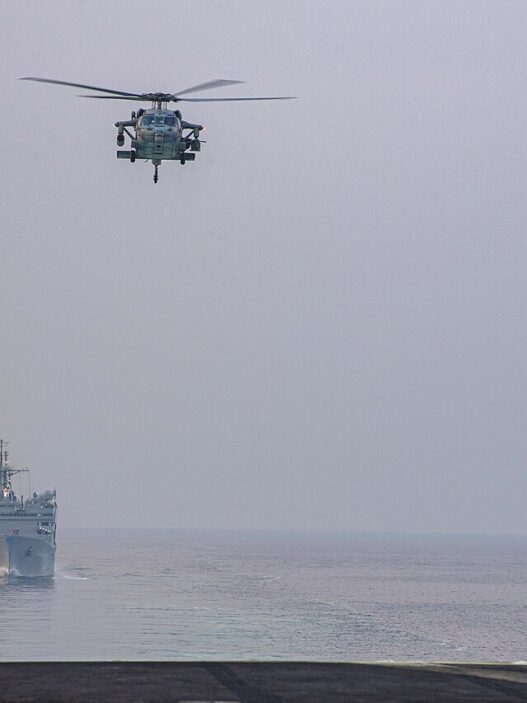
Both the Israel-Palestine conflict as well as Iran-Israel crisis have included direct interference from Western powers. The last few weeks saw an escalation of the conflict (that has since then died down slightly) with direct military intervention by the US, aiding Israel in its bombings of nuclear sites in Iran. President Trump not fully aligning himself with EU and UK leaders, calling into question the strong bonds that have always existed between both sides of the Atlantic, has made the situation worse.
Then, how does Orientalism frame these crises? Said put forward a few examples of binary oppositions by which Europe tried to classify the Orient: rational against irrational, mind against body, and order against chaos. The first part of each of the characterisations is meant to represent the West, while the Middle East is the less developed of the two, unstable and unpredictable. The last one of those pairs, order/chaos, is what still dominates the relationship between the Middle East and Europe nowadays. Or to be more precise, that still dominates the discourse in Europe. Orientalism shapes the way Europe looks at Palestine and Iran, as both places respectively fit the ‘chaos’ and ‘irrational’ moulds.
Palestine: Chaos
It needs to be said that the general opinion in Europe differs starkly between the countries of Palestine and Iran. The overall consensus about Iran is more pessimistic, both in European governments as well as the public, given the more autocratic ideology the regime adheres to. The perception about Palestine, on the other hand, is more positive, evident in the ever-growing opposition from the public to the support some European governments and the EU institutions themselves give to Israel for its operations in Gaza.
However, away from the public, the EU institutions struggle to present a united front. Some national governments support Palestine and condemn Israel, while others strongly support the latter. When it comes to the EU institutions, this lack of decisive action on the war in Gaza is a form of “othering” Palestine. No matter what side you are on in the sensitive and inflamed Israel-Gaza crisis, the fact that the EU has an Orientalist view of Palestine has deep roots. Traditionally, Israel has been a close ally of most European countries, given its close shared history, as Judaism is more closely linked to European Christianity, and US military backing.
The question of whether the socio-economic problems in Palestine are a result of decades-long oppression by Israel is not one that is asked by a large number of EU governments and media outlets. And even when Israel is to blame, it is a modern, Western country with a democratic government; therefore, the actions must be well coordinated and justified. Palestine, on the other hand, because of its separate territories and lack of clear political structures, is seen as messy and undeveloped. Any form of uproar is seen as a result of the chaotic nature of the people and their politics. Simply put, the organisation Hamas is often equated with all of Palestine, reflecting an Orientalist tendency to generalise, implying that everyone in the region possesses barbaric traits associated with terrorism.
Iran: Irrational
The arrival of Iran in the conflict has made the situation even more complex. Here, Orientalism plays an even bigger part than in relation to Palestine. Iran has always been a rather unknown place in Western discourse. The physical distance from Europe, combined with the Iranian regime’s external relations being more focused away from the West, made it a country of which a lot has been written and talked about in academic and political circles, but perhaps never fully understood.
Because by “getting to know” Iran is where, according to Orientalist theory, European scholars and critics have gone wrong when it comes to the Middle East. In the past, Said argued, “knowing the Orient” served not only to understand it, but also to give European powers the right to dominate it. The study of these places by the European cultural classes led to generalised and false portrayals that could be used to showcase the superiority of the people doing the research and making the art, and the inferiority of the people who were studied and depicted. And this misunderstanding, rather deliberately, is possibly still the case nowadays.
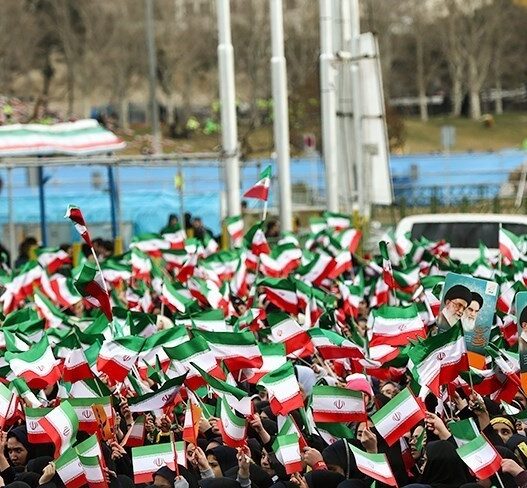
It is a fact that the Iranian regime favours a strict Islamic way of life and that its society has severe human rights issues regarding freedom of expression and equality. However, just as with most countries all over the world, the regime does not represent everyday life and the people who are there.
Even though, as discussed earlier, the time when the Middle East was being characterized as mystical and mysterious has largely worn off, most people in the West only hear news about Iran when it is negative and relates to the regime’s dangerous actions relating to military, or crackdowns on protests. This subsequently, naturally, creates a pessimistic picture of Iran in the minds of European citizens and governments. The decades-long anxiety caused by possible Iranian nuclear weapons highlighted the need for understanding the country, but has conclusively “othered” Iran. Orientalism has made Iran seem uncontrollable and irrational, not to be reasoned with.
A rare exception in recent years might be the 2022-23 protests against the mandatory wearing of the Hijab, which Western media and governments depicted as indicative of modest progress within Iranian society. But besides this, the uncertainty about the regime’s actions has caused Iran to be labelled as erratic, with European discourse explaining that erratic nature as a result of backwards thinking and an uncivilised society. Furthermore, implying that a homogenous society, without paying attention to the many facets and dissenting voices that do exist.
What can Europe change?
Perhaps now, with the US exhibiting a level of volatility and unpredictability in political and military actions similar to that which it has long attributed to states like Iran in the past, Europe may have an opportunity to position itself as a stabilising force – offering a middle ground to facilitate decisive negotiations between Israel, Iran, and other regional actors. Not a middle ground that vehemently chooses one side, Palestine or Israel; nor a middle ground that disregards the human rights offences and censorship that happen in places like Iran, but a neutral territory where past images of the Middle East are reviewed and reconsidered.
When it comes to Palestine, the clear dividing line here is religion. However, Islam has always been a part of Europe, most notably in the Balkan countries (which are in the process of becoming EU member states) as well as citizens individually elsewhere in Europe, with a growing number of Muslims since the refugee crisis of the last decade. Therefore, the dividing line between Christian, Jewish, and Islamic life has significantly weakened in European society on a smaller scale, and it is perhaps time that European governments and EU institutions catch up with the reality. Old Orientalist views – and this mindset extends to Iran – of the Middle East being so vastly different and unpredictable, that the first point of contact between the continents is always one of precariousness and uncertainty, does not fit the bill anymore.
A new approach is needed, one where the presupposed non-Western notions of chaos and irrationality are put aside. Negotiations for peace and stability require an equal footing; a footing that cannot be led by an EU that considers itself to be superior in a way that European governments, scholars, and critics have done for centuries. If the EU wants to play a role, it needs to connect with the Middle East in a way that highlights shared values. Again, this does not mean brushing over real-life human rights offences, as is the case in Iran, but it simply means recognising that the only way out of these conflicts is understanding the countries in a way that has not been done before. “Knowing the Orient” not for the sake of justifying superiority, but for the sake of actually understanding what the Middle East is about – reviewing and actively changing the discourse.
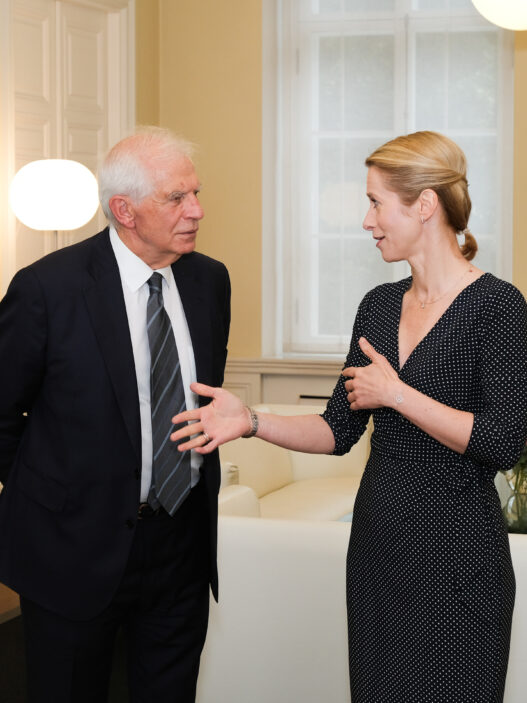
Three years ago, former EU High Representative of the Union for Foreign Affairs and Security Policy Josep Borrell gave a speech in which he stated that ‘Europe is a garden. We have built a garden. Everything works. It is the best combination of political freedom, economic prosperity, and social cohesion that humankind has been able to build … intellectual life, well-being. The rest of the world … is not exactly a garden. Most of the rest of the world is a jungle, and the jungle could invade the garden.’
Not only do such xenophobic words imply that Europe is superior in contrast to the often primitive rest of the world, they also imply that Europe needs to be more self-aware of its own traits, and make sure that, if anything, it spreads that European way of life. Or otherwise, it risks the other side of the wall spreading its non-European values and way of life into the garden.
Let’s hope that three years later, the EU can be a force for good in the crises the world is facing. But for this to be the case, and to move forward, this ‘us vs. them’ mindset must be a thing of the past. Rather than seeing the Middle East as a mysterious jungle full of insecurity and peril, Europe should knock down its garden wall and start afresh.