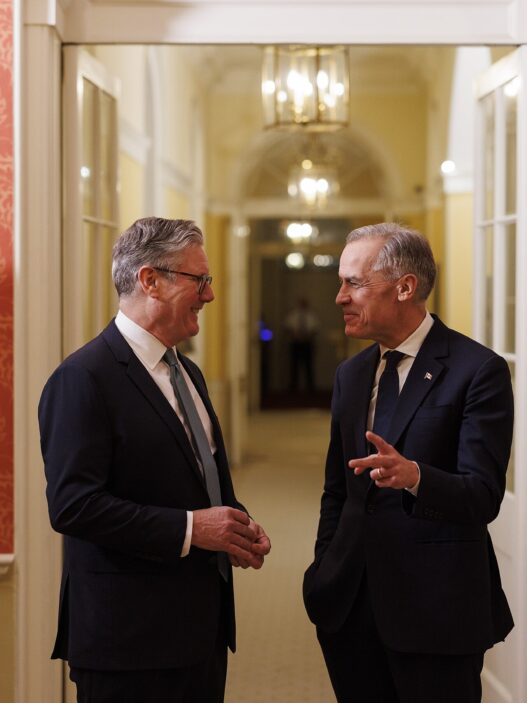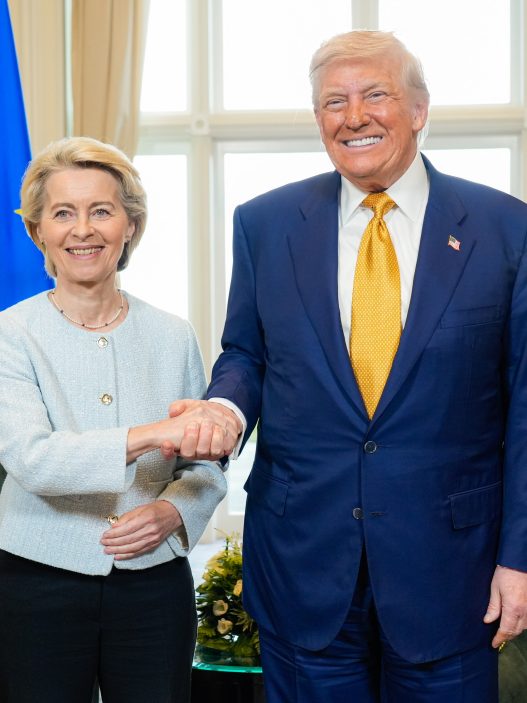



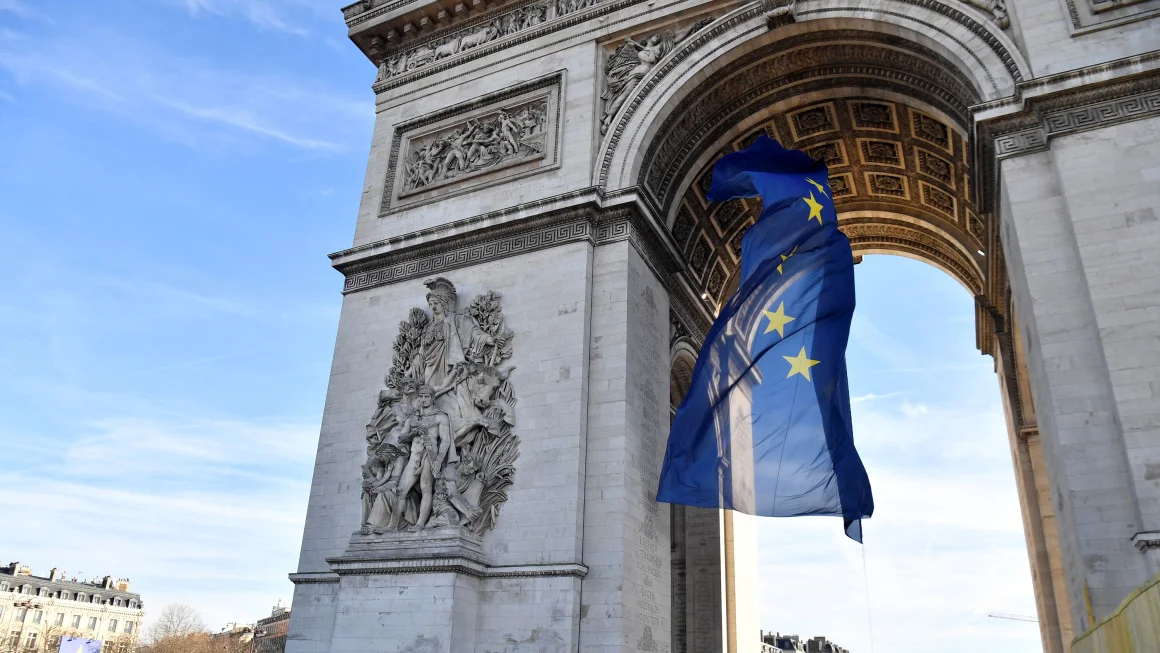






On 16 September, as part of her State of the European Union speech, European Commission President Ursula von der Leyen said that Canada could become an ‘associate member’ of the EU. She stressed that this would not be membership in the classical sense, but rather a new type of relationship that would closely tie Canada and the EU in defense, technology, AI, and the Arctic. Canadian Prime Minister Mark Carney endorsed the idea in his own speech to the European Parliament the following day, calling for “an alliance for the future.” But what could an ‘associate membership’ realistically mean?
Looking for New Allies
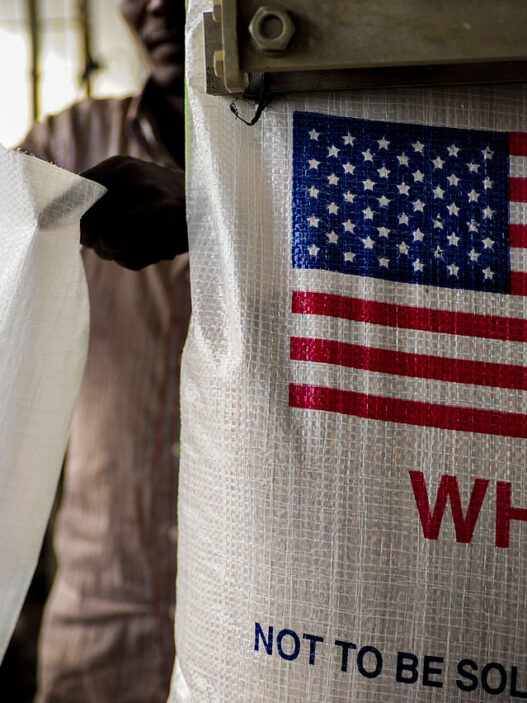
These calls for ‘associate membership’ come in the context of the EU’s and Canada’s deteriorating relationships with the US. Since taking office in January 2025, the Trump administration has disrupted its traditional trade and security alliance with both its northern neighbour and its allies across the pond. Taking a belligerent and overtly transactional approach to foreign relations, Trump has threatened to withdraw from the North Atlantic Treaty Organisation (NATO) and has imposed high tariffs on imports from a long list of countries.
The effects have been felt sharply by both the EU and Canada, whose economies are heavily intertwined with the US. Last year, the EU exported €554.6 billion worth of goods to the US, amounting to 21% of its total exports. The EU has opted for a measured, appeasing response: von der Leyen agreed to 15% tariffs last year, in a move that some commentators described as a capitulation. Though not an EU institution, NATO Secretary General Mark Rutte has also faced criticism for his conciliatory approach to President Trump, although supporters of the approach have argued that it gives Europe time to strengthen its own defence architecture independently of the US.
Canada is fighting a similar storm but is in a much bigger bind. Sharing one of the world’s longest borders, as well as a language and a culture, with the US, Canada is its biggest and most obvious trading partner: a whopping 70% of Canadian exports go to the US. Canada’s economy, from regulatory standards to interwoven infrastructure to even the currency’s name (the Canadian dollar, after all) was shaped by these close ties for decades. It is interesting, then, that Canada was the one to take a stand: Carney is positioning himself to fight what is increasingly being called a “trade war.” In August, Canada walked away from a ‘last-chance’ trade deal, becoming the first country to outright refuse to sign what it considered a disbalanced trade deal with the US. Seven out of ten Canadians polled said they supported the decision to walk away. 
In other words, the EU and Canada need each other to navigate a volatile world without their former top ally. They see eye to eye on their democratic value systems. And they both have things that the other needs: the EU needs to diversify its energy sources, for example, and Canada needs new buyers. A match made in heaven, but at the moment, they lack the necessary infrastructure to deepen their ties.
Not the EU’s First ‘Unique’ Relationship
Canada becoming a full member of the EU, and the years it would take to fulfill the Copenhagen Criteria, are not on the table. Nor does the EU necessarily need Canada to become a full member. Instead, it could build institutional infrastructure needed for closer cooperation on energy, defense, AI, research, critical minerals, while potentially easing service and labour mobility and creating what Carney calls a ‘unique’ relationship.
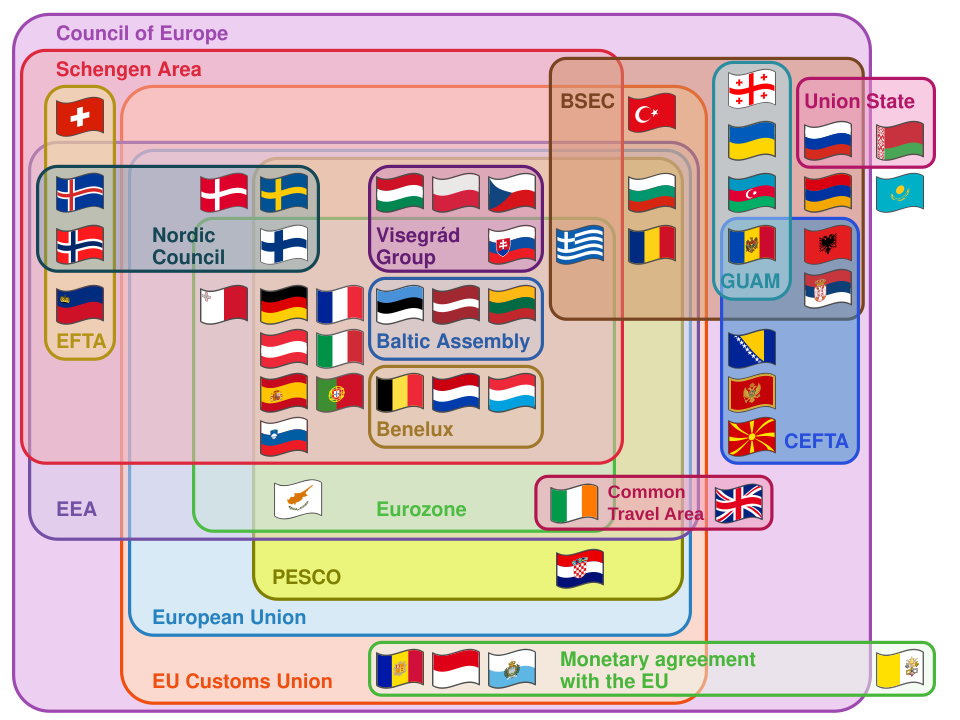
The ‘associate member’ concept used by von der Leyen does not exist in the EU treaties, so there is currently no legal architecture for it. But having a ‘unique relationship’ with the EU is not unprecedented; the EU has developed a range of differentiated relationships with non-member countries (see Figure 1). Norway, Iceland, and Liechtenstein participate in the European Economic Area (EEA), which extends the EU single market zone to these countries and provides for the free movement of goods, services, people, and money across member borders. Norway, Iceland, and Liechtenstein give up some of their sovereignty to benefit from the EEA, by accepting EU regulation but not having a say on how that regulation gets made as ‘normal’ member states would. Switzerland has its own network of bilateral agreements with the EU. The UK, meanwhile, has a Trade and Cooperation Agreement (TCA) with the EU, which has governed their relationship since the end of the Brexit transition period.
The EU and Canada as Trade Partners
What would suit Canada best is probably a tailored approach drawing on elements of the UK or Swiss model, which employs sector-by-sector agreements. The UK TCA, after all, was presented by then-Prime Minister Boris Johnson as a “Canada-style” agreement; he was referring to Canada’s own Comprehensive Economic and Trade Agreement (CETA), one of the existing pillars of the EU-Canada relationship.
EU-Canada trade in goods amounted to almost €82 billion in 2025. CETA removes tariffs on 98% of these goods traded between the two sides. The EU was Canada’s second trading partner after the US last year, accounting for 8.7% of its trade. Canada was the EU’s 12th largest trading partner, behind, among others the US, China, and Turkey.
But even a decade after its signing, CETA has still not been ratified by ten EU member states – Belgium, Bulgaria, Cyprus, France, Greece, Hungary, Ireland, Italy, Poland and Slovenia. European farmers have raised concerns that Canadian products may create unfair competition, since production regulations are less rigorous in Canada than the EU’s Common Agricultural Policy. The EU operates – at least in theory – as a bloc that requires consensus to move forward. It has frequently been criticized for this, since it can react to crises as slowly as an immense ship changing course. Despite the potential benefits of deeper ties, closer sector-by-sector cooperation with Canada would therefore require lengthy negotiations addressing the specific concerns of individual EU member states.
Meanwhile, Canada will have its own negotiating priorities, with its own history of protectionist policies across sectors (for instance, in the dairy industry) that could be hard to reconcile with EU law. Canada is also governed in a decentralised manner, with considerable powers divided between the federal government and the provinces. Natural resources, for instance, fall largely under provincial jurisdiction, giving resource-rich provinces such as Alberta considerable influence over how those resources are developed and exported. Even if the EU and Canada reached an agreement on energy and natural resources, transporting those resources across the Atlantic presents a separate logistical challenge. Canadian energy exports would need to reach European markets by sea rather than through a transatlantic pipeline.
Beyond Trade: Partners in Research and Security
Being an ‘associate member’ would also presumably mean building on more than just trade. Canada is already associated with Horizon Europe, the EU’s flagship research program, since 2024, and Carney has specifically expressed hope that Canada will continue to participate in future editions, as well as joining Europe’s Erasmus+ program. In June 2025, Canada and the EU signed a Security and Defense Partnership. In February 2026, Canada also became the only non-EU country to join the EU’s €150 billion joint defense procurement instrument, Security Action for Europe (SAFE).
In the meantime, what about EU candidate countries like Albania, Georgia, Moldova, and Ukraine? The EU must undertake a delicate acrobatics act to ensure Canada is not perceived as getting special treatment, fast-tracking to the front of the line. Russian and Chinese influence campaigns already portray themselves as alternative partners ready to meet the needs of the EU neighbourhood. Such perceptions could add fuel to these fires and divert EU candidate countries.
Conclusions
Four in five Canadians surveyed support closer integration with the EU. But what does that mean in practice? According to the European Council on Foreign Relations’ Matthias Matthijs, “Canada would participate in large parts of the EU’s economic, technological, and educational ecosystem while staying out of its political institutions.”
Canada is still in the process of reducing its economic dependence on the US after decades of enmeshment and dependency. Experts have warned of a difficult road ahead, with rising prices for Canadians, who have braced “elbows up” for the storm. Seeking to diversify a US-dependent economy, Carney recently hosted the first Canada Investment Summit, where he sought to attract a trillion in private investments. But with the US’s economy at 32 trillion and Canada’s only at 2.5 trillion (a tenth), an additional trillion dollars would not be decisive in this David and Goliath fight.
Canada is still early in the process of establishing a more independent position on the world stage. But the political standoff with the Trump administration has seen a significant swell of patriotism within Canada; Carney’s approval rating is at 70% according to a summer 2026 poll, the highest of any Prime Minister in Canadian history since the approval rating system began in the Diefenbaker 1950s. The road ahead is unlikely to be smooth, but the experience could contribute to an ongoing debate about Canada’s independent identity.
The signals from Ottawa and Brussels, and their growing relationship, have been taken poorly in Washington. Trump has threatened to halt trade with the EU if the plan to make Canada an ‘associate member’ goes through, although it remains unclear whether such a threat would be carried out. Ursula von der Leyen insisted: “This is a partnership not against anyone else, but for our common strength. In short, we want to bring th