








Europe, and the European Union, have come to be defined by the increase in migration during the 21st century. This phenomenon, spanning from the exodus of Syrians into Germany at the start of the civil war in 2014 to Congolese and Rwandan’s making the torrid trip across Africa to European shores, has always been viewed through the typical EU lens; one that is rigid, seeing things as wholeheartedly right or wrong. This oversimplification obscures the complexity of migration.
The binary framing has been at the root of EU leaders’ struggle to control the narrative or negate the problems that many feel are prescient within their countries. Policy filters down from how an issue is defined – the consensus has been moulded to only see migration as a net negative, meaning policy, rhetoric and action become aligned with that notion. As a result, language such as ‘crisis’, ‘surge’ or ‘invasion’ has become normalised, perpetuating fear and serving the aims of motives of far-right parties, such as the AfD in Germany or the National Rally in France, who seek to utilise it for their own political gains. For instance, in Germany AfD leaders – including Alice Weidel – embraced the term “reimigration”, openly advocating for the deportation of migrants and even German citizens with migrant backgrounds as part of their 2025 election. This misrepresentation is not only dangerous but also reduces migration to an exceptional threat to social cohesion, overlooking its necessity for economic sustainability.
Public perception is as much shaped by emotional resonance as it is by facts. The prevailing narrative of migrants as ‘others’ feeds into anxieties about identity, security and economic competition. This emotional narrative tends to override objective data showing migrants often contribute positively to the economy through labour, taxes and entrepreneurship. This highlights the challenge of policymakers: not only simply change the policy but to reshape deeply held societal attitudes. Without addressing this emotional dimension, even the most rational migration policies risk rejection or backlash from populations whose fears are unaddressed.
Such framing not only undervalues the issue but also misrepresents migration as a fleeting moment that will eventually fade, rather than an ongoing and dynamic reality. Migration is seen as a failure to resolve that fuels hysteria and frustration. The flow of people from Africa, the Middle East and Asia will remain consistent as countries continue to be ravaged by internal political turmoil, a lack of economic opportunities, inhospitable living conditions and the dream of a better life. These are realities that no amount of political rhetoric can take away. It therefore requires incumbent EU leaders to shift public perception, acknowledging migration as a persistent and complex reality, qualities that many politicians currently lack. 
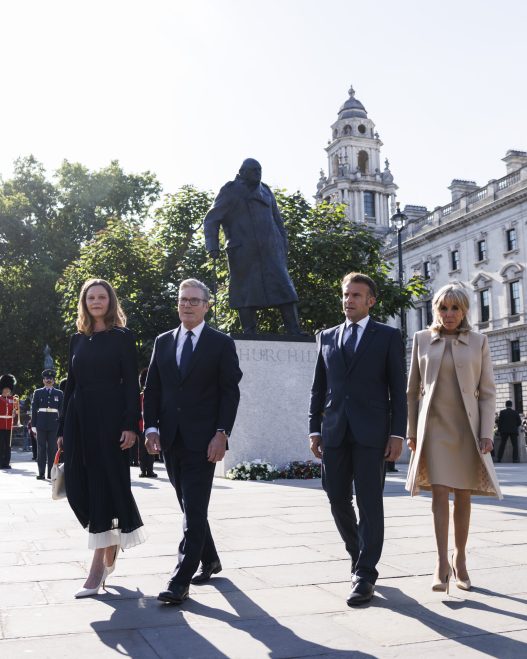
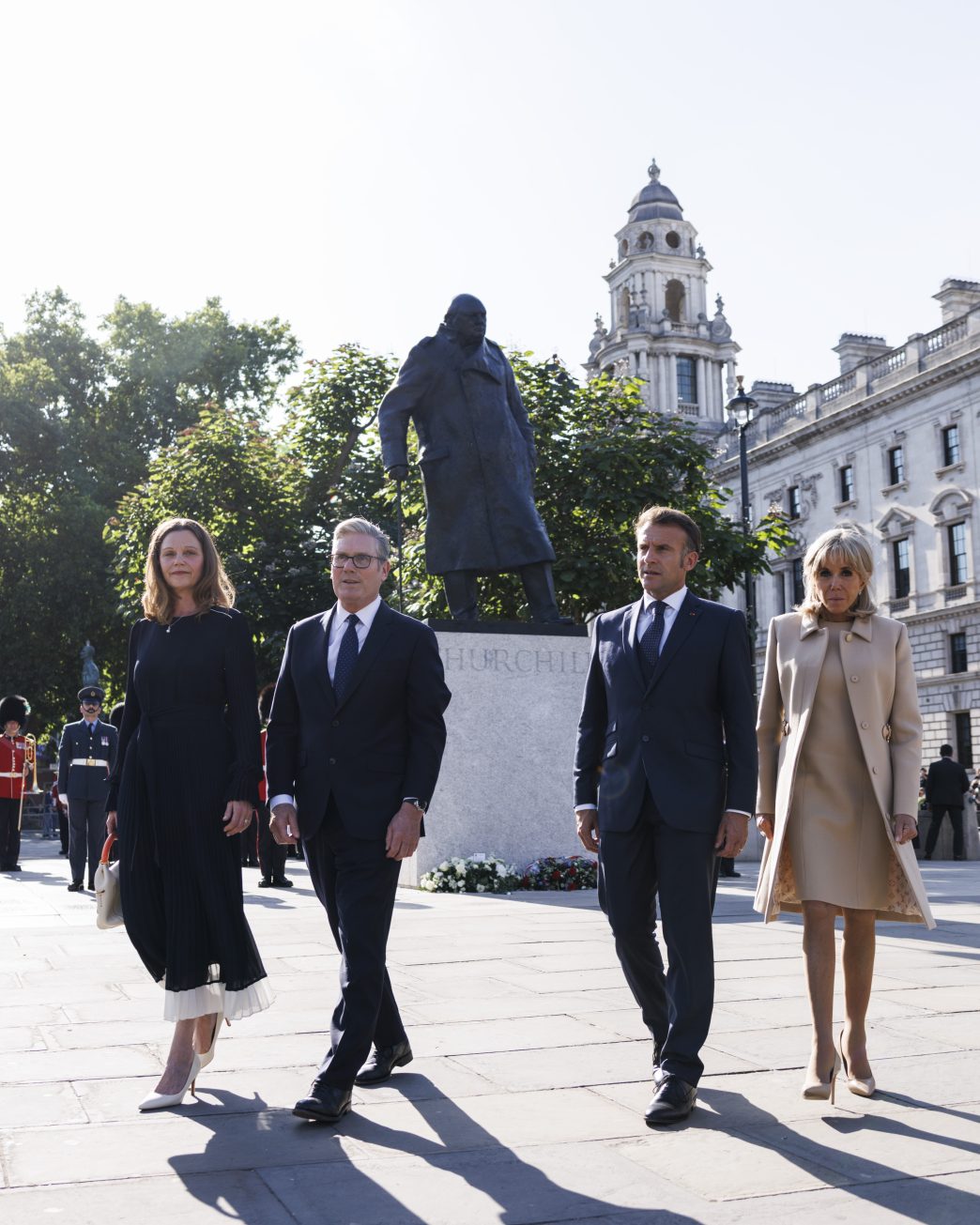
Leaders such as Emmanuel Macron, Friedrich Merz and Georgia Meloni – who oversee the continent’s largest economies – are emblematic of this struggle. Macron recently announced a new partnership with the UK to stop boats crossing the English Channel, signposted as a “1 in 1 out” strategy. Whilst optically this is more beneficial to the UK, the sight of people crossing in dinghies and the like is one of the sticking points that the Labour government has been most berated with – how this relates to France or indeed benefits them in any way is not so apparent.
Italy, Spain, Greece, Malta and Cyprus have all voiced their concerns about how the deal would implicate their own migration responsibilities. Macron’s emphasis on border control national sovereignty – reflected in statements such as “A sovereign Europe is for me above all a Europe capable of controlling its borders” and “France cannot host everyone if it wants” has done little to shift public perception, with only 21% of French citizens expressing satisfaction with his presidency in early 2025. His centrist approach lacks the nuance in messaging that is necessary to reframe the issue effectively.
Media coverage and political discourse have played critical roles in shaping and entrenching the crisis narrative around migration. Recognising the power of discourse is vital; shifting the narrative requires not just policy changes by concerted efforts to engage media responsibly and foster public dialogue that reflects the complexities and benefits of migration.
This points to a deeper problem: the need to place economics at the heart of the narrative. It enables policy to be viewed through a long-term lens, placing migration at the core of decision-making, rather than being hindered by short-term thinking that often leads to stagnation. A malaise that seeps into the public consciousness; most voters do not care for politics, they care for having enough money and for things working as they should. The Eurobarometer Winter 2025 survey saw inflation, rising food prices and the cost of living as the most pressing issues for 43% of Europeans.
Long-winded or abstract explanations further alienate those already sceptical of establishment narratives. Instead, a clear story must be told: sustainable economies require steady migration flows, and integration is central to economic and social cohesion; fiscal stability requires a steady flow of migration.
Some countries have begun to embody this pragmatic and bold approach. In Denmark, for example, the government has understood that creating a utopic and harmonious society is unrealistic; rather, it strives for balance between those who seek to maintain white homogeneity and others who want a multicultural society. The system has been defined by a firm but fair approach, residence permits for migrants are almost always temporary and economic migrants must prove financial self-sufficiency if they want to stay indefinitely in the country. Only 864 applications were granted to asylum seekers in 2024, and immigrants were forced to work 37 hours a week in exchange for benefits.
Speaking recently to Vogue, Prime Minister Mette Frederiksen said, “It’s quite obvious that the price of mass migration is being paid more by people living in difficult circumstances already. Protecting ordinary people’s lives, can’t coexist with the problems caused by migration.” The rhetoric is tough on the surface and has brought her critics from those on the left who say she is aping the messaging of the far right. But the motives of the argument are fundamentally different; Fredriksen’s is based on economic realism and not rooted in demonisation.
At the core of the model lies a constant emphasis on balance and control, maintained by all vested parties striving to create and sustain a stable, long-term system. Control is administered by the government as they take an incredibly stringent approach to the number of people able to enter the country, and control is widely supported by the public in not berating the steady influx of people. This pragmatic framework prioritises integration, demanding mutual respect and active participation. A hallmark of the approach is requiring those who enter the country to learn the language and actively participate in the labour market.
Enacting this approach challenges pervasive stereotypes. The predominant image associated with immigrants entering an EU country is living secluded in tents, away from the general population and who display no active willingness or want to engage with society. It is not a question of cultural assimilation, but one of mutual benefits for all parties. One of the predominant tropes regurgitated by the far right is of migrants coming to countries, scrounging around, living segregated within communities and making no attempt to integrate.
Effectively showing that these individuals are coming to contribute actively to society – and linking this to economic growth – is essential for crafting policies that are resilient to populist rhetoric. Yet, much of the EU continues to struggle with a lack of conviction and willingness to communicate this narrative effectively. There is a persistent hesitancy and reluctance among those in Brussels to confront these challenges head-on.
A June 2025 Commission report from the EU acknowledged that members were advancing toward implementing the measures outlined in the Migration and Asylum pact, but it would still not be in operational capacity until 2026 summer. The act is one of the boldest attempts yet from the EU in trying to implement a coherent and stringent migration policy. The measures establish a uniform process for assessing asylum claims, requiring countries to relocate asylum seekers and providing emergency tools for sudden influxes of people into a country.
While it demonstrates initiative and provides a nuanced understanding of an often watered down problem – one that is frequently oversimplified in political discourse and reduced to binary debates for the sake of domestic agendas – the fragmented uptake and reluctance from some countries – Hungary and Poland – to take in several migrants, exposes the absence of a narrative, one that is shared, cohesive and forward looking, that many leaders have when it comes to addressing these issues.
These divisions are compounded by political leadership. Poland’s newly elected president, Karol Nawrocki, represents a nationalist, right-wing faction opposed to Prime Minister Donald Tusk’s pro-EU, centrist agenda. This political dichotomy mirrors broader continental tensions and complicates efforts for cohesive migration policies. When the most influential leaders within one country diverge so sharply in their outlooks, creating proactive, unified approaches across the continent becomes an uphill battle.
Conclusion
If the EU is to meaningfully address migration, it must first shed the binary lens through which it views the issue. The prevailing reactive and moralising discourse – rooted in fear, crisis language and political convenience – has only served to inflame divisions, empower populists and obscure the long-term economic realities. Migration is not a short-term disruption, but a structural necessity for Europe’s ageing economies and labour markets.
Success must come from cultivating a shared, honest narrative, one that frames migrants not as burdens, but as contributors. This requires courage from leaders, consistency in messaging and policies grounded in integration, opportunity and accountability. Ultimately, the EU faces a defining choice: to remain trapped in cyclical crisis management, or to assert control over the narrative and lead with a vision that reflects the realities of the 21st century.