







Although geographically distant, the ongoing instability in the Middle East continues to present a significant challenge to Europe’s foreign policy strategy and energy security. The recent escalation between Iran and Israel, marked by drone attacks, naval mobilizations, and a series of military strikes, has reignited tensions and captured global attention. Europe’s increasing reliance on energy imports from the Gulf, coupled with its secondary role in the region, constrains its foreign policy options and increases its exposure to external shocks. The EU’s tendency to react to American decisions rather than shape outcomes remains a critical challenge, especially in a world increasingly defined by conflicts such as the one between Israel and Iran.
The Threat to Europe’s LNG Supply Routes
The Gulf region, specifically Qatar, is undoubtedly a key player in the supply of liquefied natural gas (LNG) to Europe. LNG is a vital pillar in Europe’s energy security, particularly as the region shifts its reliance away from Russian gas. Qatar alone provides a substantial portion of Europe’s LNG, having supplied 4.3% of the EU’s gas in 2024. Disturbances to this supply could have significant consequences for European energy markets, exposing the EU to price volatility, supply insecurity, and increased geopolitical dependence on a region marked by instability and external rivalries
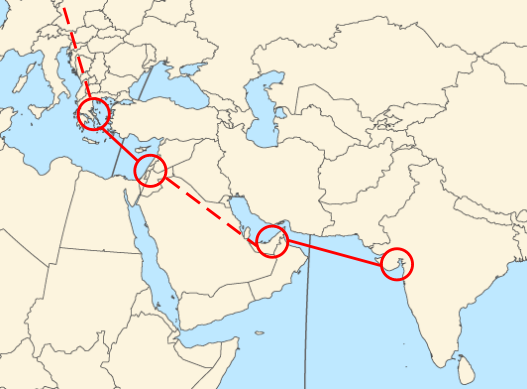
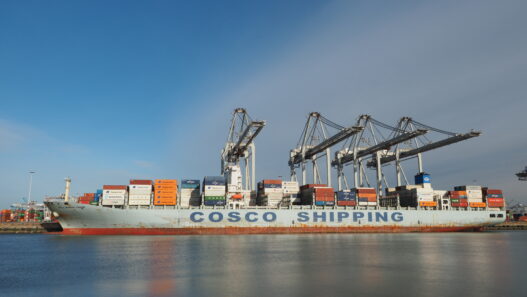
The EU’s energy vulnerability stems not only from its dependence on Qatari LNG but also from Iran’s strategic leverage over the Strait of Hormuz—a vital chokepoint for global energy flows. This risk has grown more pressing following Iran’s parliament’s approval to close the Strait. The Strait of Hormuz, through which most of Qatar’s and other Gulf states’ LNG is shipped, is a key trade corridor to Europe. Therefore, military tensions in the region pose two key risks: potential disruptions of trade in the Strait itself and potential isolation of Qatar from global LNG markets due to the political escalation, which may result in 20% of the global LNG supply being suspended. Global supply disruptions would also raise prices and strain European markets, which are already under pressure from post-Russia diversification.
Therefore, the collapse of the Iran-Israel ceasefire has provoked major concerns in Europe. Given the EU’s efforts to ensure a secure energy future, its growing dependence on Middle Eastern energy comes with significant geopolitical risks, particularly as the region remains volatile and prone to conflict and external interference. 
Continued U.S. Military Focus in the Gulf: A Barrier to EU Strategic Autonomy
The ubiquitous U.S. military presence in the Gulf, including infrastructure such as Al Udeid Air Base, located in Qatar, which houses approximately 8,000 American troops, making it the largest U.S. military base in the Middle East, remains crucial for regional security. Although the U.S. presence ensures the protection of vital trade routes, including the Strait of Hormuz, it also exposes European strategic weaknesses in the region.
Europe’s strategic autonomy is challenged by its excessive reliance on U.S. military power and installations in the region. While Europe maintains its soft power through peacebuilding, economic incentives, and naval missions in the Gulf, these initiatives often lack both the necessary scale and deterrent effect required in unstable environments like the Gulf. Moreover, member states frequently act independently in their foreign policy, further limiting the EU’s ability to present a unified strategic approach. This reveals that the EU cannot fully secure both energy shipment routes and its vital strategic interests independently.
Rising instability in the Gulf region has, therefore, renewed calls for NATO involvement as a security guarantor. This underscores the EU’s reliance on a treaty-based organization ultimately led by the United States—a dependence that is not only military but also financial, as U.S. defense spending accounts for approximately two-thirds of the defense spending of the alliance. The EU’s drive to enhance its defense capabilities, while establishing more autonomous policies in parallel, is hindered and needs to gain autonomy.
Challenges to EU Peacebuilding Missions
The EU plays an important diplomatic role in the Middle East, leading a range of missions aimed at stabilising the region and remaining actively involved. One of the most prominent initiatives is the European Maritime Awareness in the Strait of Hormuz (EMASoH), which aims to ensure safe navigation, de-escalate tensions, and enhance Europe’s strategic presence in the Gulf region. Launched in 2020 and operating out of Abu Dhabi, EMASoH is a non-confrontational framework that leaves it unable to act or intervene in military provocations, as well as disruptions in energy flows. The legacy of the Iran-Israel conflict, as well as the region’s instability, poses significant operational and political challenges to these efforts. Lacking both military leverage and unified political will, the EU struggles to assert itself as a credible mediator in the face of the U.S.-led or Iran-centered negotiations.
Even with a ceasefire, the EU’s diplomatic influence in the region remains weak. Regional geopolitical instability undermines the EU’s ability to foster peace and cooperation. The region’s constant tensions also continually test European diplomatic initiatives. Therefore, the unresolved conflicts further compromise the EU’s role in stabilizing regional conflicts and securing its energy supply routes.
Following the collapse of the ceasefire, the Iran-Israel conflict continues to have significant implications for Europe. From energy security to defense autonomy and diplomatic influence, the crisis underscores the limitations of Europe’s power and influence in the Gulf. The EU recognises its limited autonomy, continued reliance on the U.S. and NATO, and the instability and ineffectiveness of its presence in the region as key strategic gaps. Europe’s ability to maintain stability in its energy markets will depend on how it navigates these ongoing pressures and the unpredictable geopolitical landscape of the Gulf, whilst translating declarations and initiatives into actual capacity and unity.