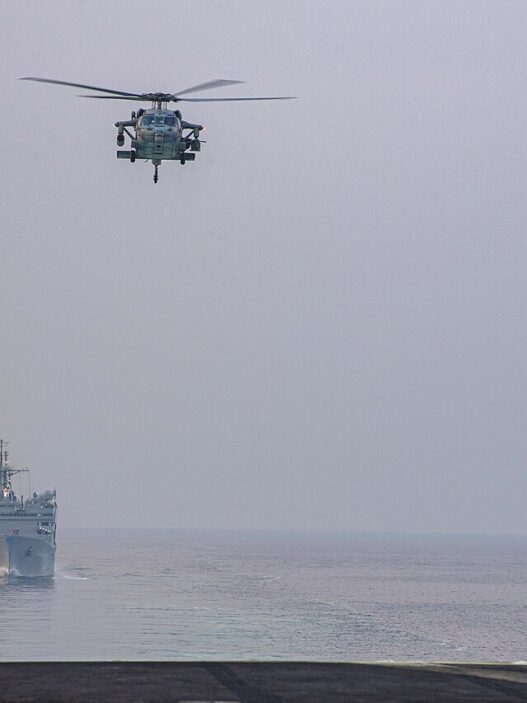









Since the onset of the US-Iran war on February 28, 2026, the global shipping industry has been facing an unprecedented crisis. Traditional maritime trade routes are yet to cope with the new reality that the Strait of Hormuz is effectively closed to international trade and commerce. Caught in the midst of a dual blockade, enforced by a relentless IRGC campaign on one side and a punitive US counter-blockade on the other, one of the world’s most vital energy arteries is now witnessing long lines of ships waiting to reach their destination. Major global shipping firms like Maersk, Hapag-Lloyd, and Cosco have long avoided the Bab el-Mandeb and the Red Sea due to escalating violence, especially by the Houthis, who continue to threaten the region during this ongoing war, forcing traders to route vessels around the Cape of Good Hope. However, that lengthy detour has brought its own complexities, as resurgent piracy off the coast of Somalia and vulnerabilities in the Gulf of Guinea expose the limits of other maritime alternatives.
With the International North-South Transit Corridor (INSTC) effectively neutralized due to war damage at Iran’s Chabahar port and increasing geopolitical uncertainty, the global economy desperately needs a reliable alternative, resistant to existing geopolitical tensions. This strategic necessity has breathed urgent new life into an ambitious blueprint first presented on the world stage nearly three years ago: the India-Middle East-Europe Economic Corridor (IMEC). What was once viewed as a distant, visionary ideal has suddenly become a geo-economic necessity.
The Birth and Blueprint of IMEC
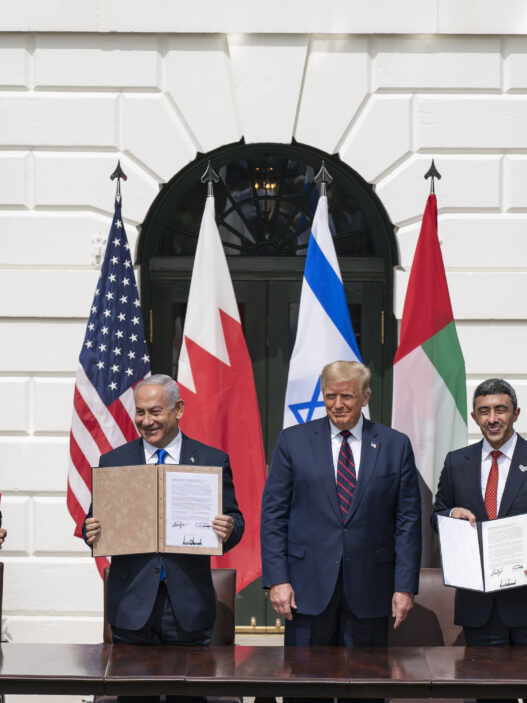
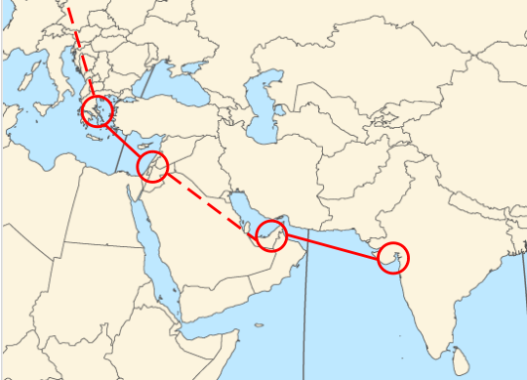
Unveiled on September 9, 2023, during the G20 Summit in New Delhi, IMEC was introduced by Indian Prime Minister Narendra Modi alongside leaders from the United States, Saudi Arabia, the United Arab Emirates, France, Germany, Italy, and the European Union. Signed as a historic Memorandum of Understanding (MoU), the project was designed to seamlessly connect three of the planet’s fastest-growing economic blocs through a multimodal infrastructure network.
The transit network is split into two distinct operational arms: 
- The East Corridor: Connecting Indian maritime hubs like Mumbai and the Jawaharlal Nehru Port Authority (JNPA) across the Arabian Sea to the Arabian Gulf via UAE ports like Jebel Ali.
- The North Corridor: Extending a vast overland rail network from the Gulf across Saudi Arabia and Jordan, culminating at the Israeli port of Haifa, where sea lanes cross the Mediterranean to European gateways like Piraeus in Greece.
By integrating crucial maritime shipping lanes with heavy rail infrastructure, IMEC aims to bypass vulnerable maritime bottlenecks. Yet, it is more than a transport route. Backed by global institutions and the EU’s Global Gateway strategy, which aims to mobilize up to €300 billion for international infrastructure, the corridor includes supporting pillars for digital infrastructure, such as the Blue Raman submarine data cable project with Google, Sparkle, and Omantel, regional electricity grids, and clean hydrogen pipelines.
The Fragility of Hormuz
To understand why IMEC’s multimodal approach is so critical, one needs to look at the staggering numbers behind the Strait of Hormuz. Under normal circumstances, roughly 20 million barrels of oil pass through this narrow waterway every day, which represents a substantial portion of global energy consumption.
When the current conflict triggered the double blockade, the impact was immediate. Within less than two weeks of active hostilities, the global oil supply shortfall exceeded 200 million barrels. Key decisions like emergency releases of strategic reserves by the International Energy Agency (IEA) member states can only offer temporary economic and psychological relief to the oil markets. Experts point out that even if IEA nations maximize their output and release 400 million barrels of oil, their largest in history, they can at maximum inject an additional 1.2 million barrels per day into the market, which cannot completely address the daily demands compared to the missing daily volume of 20 million barrels from the Strait.
The resulting economic shockwaves, which briefly sent crude oil spiking toward $120 a barrel, have forced the world to face the reality once again: relying on a single, highly vulnerable maritime chokepoint controlled by a single nation in a geopolitically volatile region is a severe economic threat. The world requires a stable and reliable economic route, and IMEC’s combination of sea routes, cross-border railways, and overland trucking provides exactly that.
Geopolitical Friction: Internal Fractures and Regional Clashes
Building a transcontinental corridor through the Middle East is both an administrative and diplomatic challenge. While the economic and infrastructural plans may seem sound, IMEC faces intense geopolitical headwinds, beginning with the shifting dynamics among its own Gulf Arab partners.
The Saudi-UAE Rivalry and the OPEC Fracture
For years, Saudi Arabia and the UAE have operated as a unified economic and military regional bloc. Today, they are fierce competitors for regional dominance. This friction culminated in a major shift on May 1, 2026, when the UAE officially exited OPEC after nearly 60 years of membership. Driven by Abu Dhabi’s desire to fully leverage its oil production quotas to aggressively fund its own post-oil economic transition, the UAE made a move that further fractured relations with Riyadh. Abu Dhabi aims to scale up production to 5 million barrels of crude oil per day by 2027. OPEC’s quota ceilings severely restricted the UAE’s output, resulting in significant annual opportunity costs.
This economic fallout is accompanied by their rivalries on the battlefield in Yemen. Tensions reached a breaking point when UAE-backed separatists of the Southern Transitional Council (STC) seized strategic, oil-rich territories near the Saudi border. Riyadh responded directly with airstrikes against STC-held ports and deployed ground troops, forcing a complete military withdrawal by the UAE. Today, Saudi Arabia has consolidated control over non-Houthi Yemeni territories, weakening the STC and reshaping the local security landscape to protect its own sovereign interests. For IMEC to function, Abu Dhabi and Riyadh must prevent these ongoing regional disputes from spilling over onto the corridor’s shared rail links.
The Israel-Gulf Tensions and Regional War
The biggest geopolitical challenge is the corridor’s reliance on Israel. The Mediterranean gateway for the entire project is the Port of Haifa. When IMEC was signed in 2023, regional normalization seemed within reach. However, the October 7 attack by Hamas and the subsequent war in Gaza and the outbreak of the US-Israel war with Iran led to acute complications in the regional security dynamic.
The Israeli government, represented by figures like Deputy Foreign Minister Sharren Haskel, continues to champion the project, framing the Greece-Cyprus-Israel trilateral axis as strategically significant to the corridor, which he termed as “ a cornerstone for global economic stability.” To accommodate the expected increase in flow of Asian goods, the Israel Ports Company has announced plans for a $3-5 billion mega land port near Beit She’an on the Jordan border, designed to act as a high-tech logistics and customs control hub to eliminate frontier bottlenecks.
Yet, following joint US-Israeli strikes on its territory, Tehran launched a strategic retaliatory campaign, firing over 4,000 drones and ballistic missiles targeting energy and transport nodes across all six GCC states. Major economic hubs were severely hit, including the Fujairah and Mussafah oil terminals in the UAE, the sprawling Jebel Ali infrastructure network, threatening the entry node of IMEC’s East Corridor, Saudi Arabia’s Ras Tanura refinery,and the East-West pipeline, temporarily knocking out 10% of crude output, etc.
These strikes prove that even if IMEC may try to avoid the waters of Hormuz, its land and port infrastructure remain directly under the radar of the Iranian missile tech. Furthermore, diplomatic hurdles remain. Jordan’s powerful truckers’ union has actively resisted the cross-border railway schemes, fearing job losses. Bypassing these domestic political roadblocks will require substantial diplomatic manoeuvering from New Delhi, Riyadh, and Abu Dhabi.
India’s Quiet Diplomatic Efforts
As the anchor of the East Corridor and the world’s soon-to-be third-largest economy, India has been constantly making efforts to not let the Middle Eastern crisis paralyze this critically important project. Recognizing that the corridor cannot move forward or succeed without deeper, strategic European integration, Prime Minister Modi has embarked on a series of critical bilateral engagements to solidify IMEC’s western anchors.
Italy
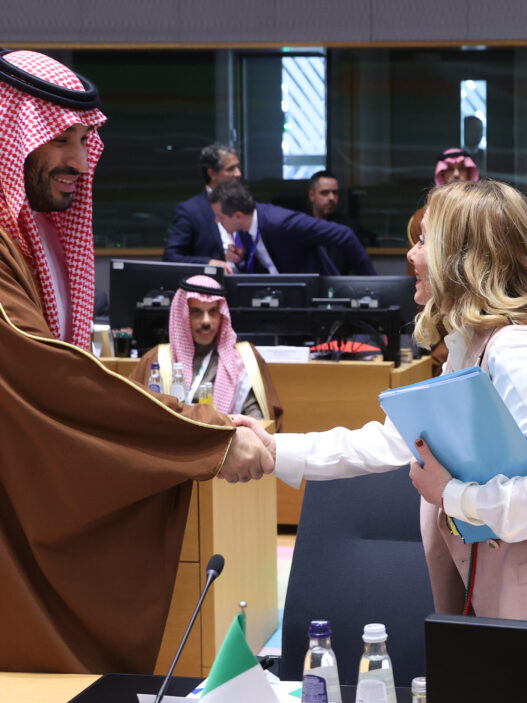
Italy has emerged as one of IMEC’s most enthusiastic European cheerleaders. Prime Minister Giorgia Meloni and Prime Minister Modi have recently outlined a joint vision reaffirming a shared commitment to the “Indo-Mediterranean Corridor”. Prime Minister Meloni has repeatedly highlighted IMEC’s transformational role in securing supply-chain resilience for a European continent that relies heavily on stable trade routes. To convert this political commitment into a ground reality, Rome and New Delhi have called for the first formal IMEC Ministerial meeting to establish concrete operational guidelines. Strategically, the Italian port of Trieste is actively lobbying to be designated as a formal European IMEC terminal, pointing to its direct rail connections into Central Europe and its integration into the EU’s Trans-European Transport Network (TEN-T).
France
The strategic partnership between New Delhi and Paris has also proved to be a critical push factor. During French President Emmanuel Macron’s state visit to India, a major commercial milestone was achieved when Adani Ports & SEZ (APSEZ) signed a strategic partnership with the Port of Marseille Fos. This deal aligns French maritime logistics directly with India’s private infrastructure companies, ensuring that when cargo leaves Haifa, it has a streamlined, efficient path into the heart of Western Europe. This is a significant development because APSEZ already owns and operates the Port of Haifa in Israel, a key IMEC transit hub, allowing it to establish a stronger link between the corridor’s Middle Eastern region and its European node at Marseille Fos. This enhanced connectivity is likely to gain further importance as the India–EU Free Trade Agreement is expected to boost trade flows between the two regions.
Greece and Cyprus
Further East in the Mediterranean, Greece and Cyprus are positioning themselves as the major European gateways. At the MARE MED III conference in Athens, Greek officials highlighted the strategic value of the Port of Piraeus. Piraeus, which already boasts a magnificent maritime heritage and world-class handling capacity, is poised to receive significant maritime traffic originating from Israel. Combined with Cyprus’s unique maritime location, this trilateral alignment forms an eastern Mediterranean partnership ensuring the safe and rapid transit of goods from Asia.
The United Arab Emirates (The Groundwork)
On the logistics front, India has been working on its immediate operations through the Intergovernmental Framework Agreement (IGFA) signed with the UAE. This agreement lays the legal and digital framework required to manage the corridor’s supply chain. It establishes a unified digital ecosystem, allowing customs data, tracking manifests, and cargo handling to be processed seamlessly across borders without bureaucratic friction.
Towards Reality: The Road Ahead
Despite the geopolitical storm churning across the Middle East, work on IMEC has to quietly move from boardroom presentations to active construction activities, starting from the less vulnerable locations. If this is successful, hostile nations may find it advantageous to work together for greater regional economic development, especially during the post-war reconstruction phase. April 2025 marked the official kickoff of construction for key infrastructure components, with ground broken on new rail lines, expanded port berths, and high-speed freight highways across the partner nations. Major players like the India-based engineering firm RITES, global terminal operator DP World, and the Piraeus Port Authority are collaborating to streamline operations across their assets. Private entities and state enterprises are also stepping in to supply the raw materials, with domestic steel suppliers aligning their operations with India’s “Make in India” initiative to provide the heavy rails needed for the desert corridors.
The ongoing US-Iran war has proved that the old global trade architecture is too fragile. The closure of the Strait of Hormuz is no longer a worst-case scenario exercise;it is a reality that is costing the global economy billions of dollars every week. By providing a flexible, multimodal path that weaves together the geographic and economic power of India, the material and financial resources of the Gulf, and the technology and consumer markets of Europe, IMEC is no longer just an alternative route. It can soon become the primary trading hub for global commerce in an increasingly volatile world.