







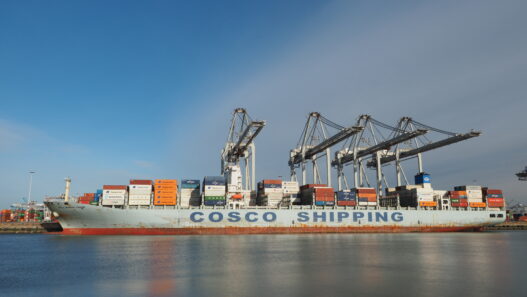


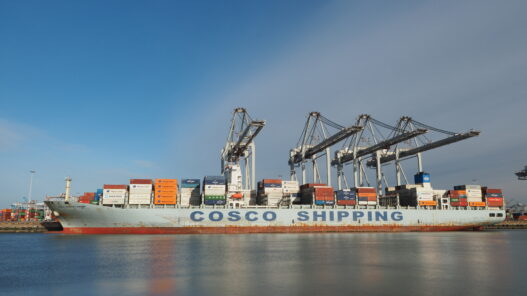
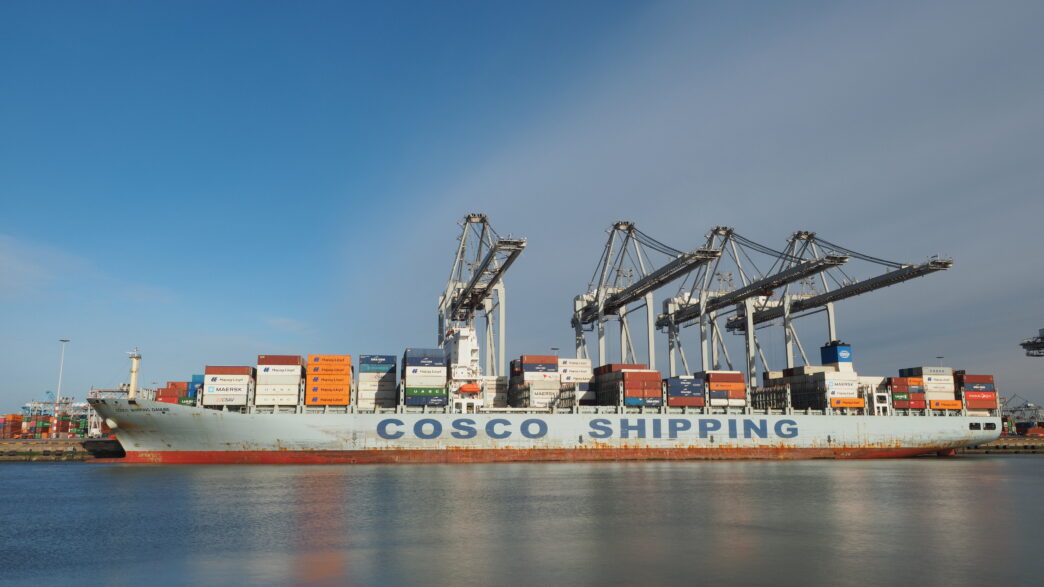
The Port of Rotterdam faces a growing security challenge. Since 2016, Chinese state-owned shipping corporation COSCO has held a 35% stake in Euromax Terminal in Rotterdam. In 2021, this stake was restructured into Navigator Investco, a joint investment platform through which the Chinese state-linked Silk Road Fund became an indirect shareholder. The restructuring was not an isolated development but rather formed part of a broader pattern of Chinese investment in strategically important European ports. The core problem is a growing gap between legal safeguards and practical enforcement. The Wet Vifo Act, the Netherlands’ investment screening law, entered into force on 1 June 2023 and nominally covers Rotterdam. Yet, during its first two years of operations, no investment was blocked. Dutch institutional caution, rooted partly in trade dependency and fear of shipping diversion, has complicated efforts to balance commercial interests with national security considerations. The Algemene Inlichtingen- en Veiligheidsdienst (AIVD) has publicly identified China as the greatest threat to Dutch economic and knowledge security.
The Strategic Logic Behind Chinese Port Investment
As a central state-owned enterprise operating within China’s party-state system, COSCO’s investment decisions are guided by strategic as well as commercial logic. Chinese state-owned port operators can provide strategic footholds in key global ports, where commercial, informational, and potentially military interests intersect. Rotterdam, as Europe’s largest port and a major node in European trade, fits this profile. Hence, this strategic logic is also connected to China’s Belt and Road Initiative (BRI), specifically its maritime dimension. COSCO has explicitly framed its Rotterdam acquisition as part of the BRI Maritime Silk Road, and port investment accounts for nearly 17% of total BRI expenditure. Rotterdam’s position at the western terminus of China’s Maritime Silk Road, therefore, makes it a strategically significant location within Beijing’s state-directed port expansion strategy.
A second driver is the structural path dependency created by Europe’s pre-2020 regulatory gap. COSCO’s Rotterdam stake was acquired in 2016, several years before the EU FDI Screening Regulation entered into force and seven years before the Dutch Wet Vifo Act took effect. The 2021 restructuring of the stake into the Navigator Investco platform, which brought the Silk Road Fund in as an indirect shareholder, also occurred in this same pre-Vifo window, meaning the transaction was never subject to any Dutch security assessment. Entrenched investments are considerably harder to unwind than prospective ones, as the legal, diplomatic, and commercial costs of reversal rise sharply once a foreign actor is embedded in a port’s operations and supply chains.
A third driver is Dutch institutional caution rooted in trade dependency. Cooperation with Chinese companies is a way for the Netherlands to protect Rotterdam’s status as Europe’s primary logistics hub and to maintain existing trade flows, since close relations may reduce the likelihood of China redirecting trade towards competing ports. Additionally, this creates a structural dilemma: the same openness that makes Rotterdam commercially successful can also make it politically difficult to restrict Chinese involvement. The OECD estimates that a 25% reduction in trade would lead to a comparable reduction in Dutch production, potentially leaving the Netherlands more exposed than many other EU member states. 
Behaviour of Key Actors
COSCO and other Chinese state-linked actors have pursued an expanding investment strategy in European ports, acquiring minority stakes just below governance thresholds while maximising operational presence and data access. COSCO has invested in all five major European container ports like Antwerp-Bruges, Hamburg, Piraeus, Valencia, and Rotterdam, forming an interconnected network of Chinese state-linked positions across Europe’s most strategically important maritime nodes.
As a state-owned enterprise, COSCO operates within China’s party-state system, making it the most politically integrated of the three major Chinese port operators. The 2024 transfer of COSCO’s Rotterdam stake to Navigator Investco via the Silk Road Fund reduced COSCO’s direct exposure while maintaining full state control. Because it predates the Wet Vifo Act by nearly two years, this restructuring illustrates not an evasion of an existing rule but the deeper problem: the absence of any screening mechanism during the precise period when China was most actively consolidating its European port network.
The Dutch government’s response has been structurally cautious. The Wet Vifo Act was a meaningful step, but without EU-level cover, political enforcement has been limited. In 2023, the Bureau for Investment Screening investigated 44 transactions, blocking none and approving only one conditionally. At the European level, the direction is more decisive. In 2025, the EU agreed to a revised FDI Screening Regulation establishing mandatory screening for critical transport infrastructure, and released a dedicated Ports Security Strategy. This provides the Netherlands with a legal framework and political cover to act without doing so in isolation.
Constraints and Trade-offs
Three constraints bound realistic policy action. First, any attempt to unwind or restrict COSCO’s existing Rotterdam stake carries commercial risk. Chinese companies could potentially redirect shipping flows towards competing ports. The Hamburg case, in which concerns about possible diversion to Rotterdam and Antwerp featured in German government deliberations, illustrates how such concerns can influence investment decisions. Second, although the Wet Vifo Act covers the Port of Rotterdam as a vital provider, its screening framework was not designed specifically around minority stakes in port terminals. Its implementation can also be influenced by broader political and economic considerations. Moreover, because the Act has no retroactive effect, it cannot be applied to entrenched pre-2023 positions like COSCO’s, even where those positions continue to generate strategic leverage. Third, unilateral Dutch action without EU coordination risks creating a competitive disadvantage. The politicisation of Chinese port investment is uneven across member states, meaning that some governments continue to prioritise commercial considerations while others apply stricter security-based screening. If Rotterdam tightens its rules while competing ports such as Antwerp and Hamburg do not, shipping activity could shift towards those ports.
Policy Recommendations
Recommendation 1: Align Dutch screening with the EU FDI framework and EU-level port security rules
The Netherlands should align the Wet Vifo Act with the EU’s evolving FDI screening framework and advocate for Rotterdam’s designation under the EU Ports Security Strategy. Rotterdam is not only a Dutch asset, but also a critical European and NATO logistics infrastructure, meaning that the risks associated with foreign state-linked influence extend beyond national borders. Greater EU coordination would also help mitigate the risk of competitive disadvantage. If screening standards are more closely harmonised, Rotterdam would be less likely to face commercial costs for adopting stricter security measures than competing ports.
Recommendation 2: Introduce port-specific mitigation conditions
Rather than attempting to reverse existing investments, the Dutch government should consider imposing operational firewalls on Chinese-linked terminal operators. These could restrict access to cargo data beyond the relevant terminal, limit integration with wider IT and logistics systems, and prevent undue influence over port-wide scheduling. The Hamburg case demonstrated how mitigation conditions can provide an alternative to outright prohibition. Moreover, this approach is consistent with the logic of investment screening, allowing the state to reduce specific security risks without unnecessarily blocking all commercial activity.
Recommendation 3: Restrict future Chinese state-linked investment in the most sensitive port functions
The Netherlands should draw a clear line preventing future state-linked investment in Rotterdam’s most sensitive functions, including core digital systems, logistics-coordination, cargo-data infrastructure, and terminals connected to defence-related or other critical supply chains. Crucially, these restrictions should be triggered by the security-sensitivity of the function itself, not by the nationality of the investor. A screening framework built around nationality risks both over- and under-inclusion: it could block benign investment simply because it is Chinese, while missing equivalent risks posed by other state-linked or opaque foreign investors. Anchoring restrictions in the sensitivity of the asset avoids this problem and keeps the policy defensible under EU non-discrimination principles. This would not amount to a full ban on Chinese commercial involvement, but rather a targeted restriction on activities where foreign state influence could be most damaging. The restrictions should be narrow, clearly defined, and based on the sensitivity of the function or infrastructure in order to minimize legal uncertainty. Because such function-based restrictions would apply to future investments rather than to existing stakes, they would carry lower political and commercial costs than attempting to unwind established investments.
Conclusion
The Netherlands faces a strategic challenge that is easy to underestimate. COSCO’s presence in Rotterdam forms part of a broader state-directed effort to build Chinese positions across Europe’s most critical maritime infrastructure. The 2021 restructuring of COSCO’s stake through the Silk Road Fund-linked Navigator Investco platform also exposed a regulatory gap that the Wet Vifo Act cannot retroactively close, since investments established before the Act entered into force fall outside its prospective screening framework. It could be argued that the risk is overstated, since COSCO’s stake is a minority, non-controlling interest and no tangible harm has occurred during its operation. However, the concern is not limited to what China is doing today, but also to the forms of strategic, informational, and operational leverage that such a position could provide in the future. Leverage does not need to be exercised to be effective, and the 2021 restructuring shows how easily state-linked ownership can shift and consolidate without any regulatory checkpoint. The time to act is now, before the next transfer, stake, or crisis makes the cost of inaction impossible to ignore.