











Historic precursors have envisioned the EU as a guarantor of peace, freedom, and prosperity to the European people; the European promise. Although this narrative enabled the EU to integrate internally and externally, it has recently lost public attention as Eurosceptic forces highlight the negative effects of the EU and promote the return to a nation state.
This article argues that reviving the historic European promise could present an opportunity for pro-European forces to turn the tables by reuniting the EU and its citizens around a common goal; the creation and maintenance of peace, freedom, and prosperity in Europe, which remain attractive to both internal and external actors.
Historical Legacy
The European Union was founded in the aftermath of the Second World War, an unprecedented humanitarian and economic crisis for Europe, and therefore led politicians and civil society leaders to seek a new form of cooperation. In a discourse, the French politician Jean Monnet formulated in 1943 the thesis that “there will be no peace in Europe if States are reconstituted on a basis of national sovereignty with all that implies in terms of prestige politics and economic protectionism.” Instead, he proposed that “they form a federation or a ‘European entity'” which would create prosperity and peace across Europe. In 1946, the former British Prime Minister Winston Churchill added to the idea of a European federation the prerequisite that Europeans must “want to be happy and free, prosperous and safe”.
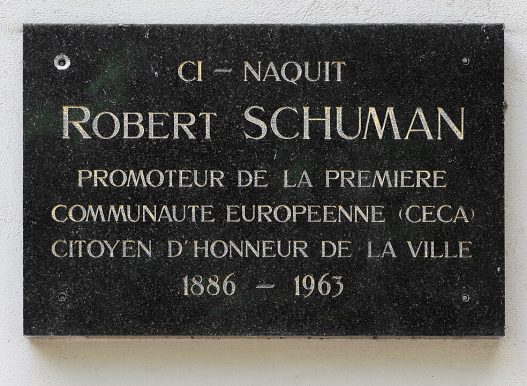
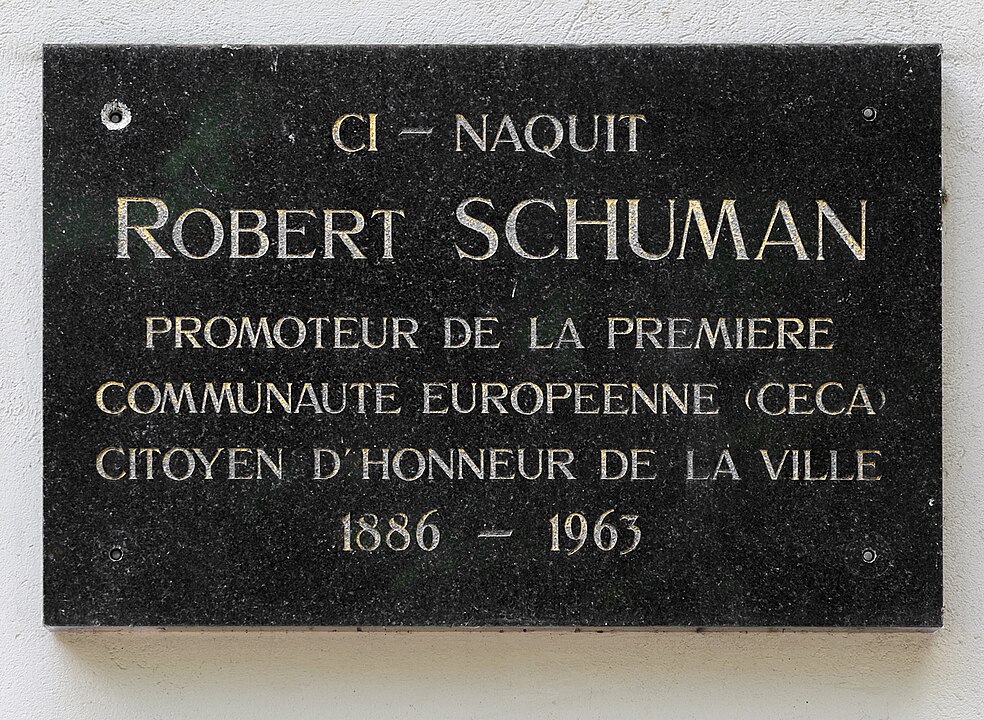
Consequently, the European project had to convince its people of its own necessity by formulating as its core narrative the common pursuit of freedom, peace, and prosperity; the European promise. This connection was most notably illustrated in 1950 by the Schuman Declaration, which argued that only a united Europe can achieve peace in Europe. The actuality of this argument in modern times was, among others, highlighted in 2000 by the then German Foreign Minister, Joschka Fischer. 
The European Promise as a Historical Impetus for European Integration
Considering the historic development of the EU, the internal and external attractiveness of this promise is mirroring the success of the respective attempts to further integrate the Union. Public appearance and communication about the narrative are determining, thereby affecting the following acceptance or rejection of the proposed measure.
The success of this effect can be exemplary perceived by the mentioned declaration of the then French Foreign Minister, Robert Schuman, who aimed to persuade the French and German publics of the necessity of cooperation and integration. Comparably, Fischer revived the European promise to try to convince the European public, among several crises, that the introduction of the single currency and the Eastern Enlargement of the EU were beneficial steps for the people as they would lead towards a deeper integration and mark the beginning of the formation of a European federation. In summary, the European promise can help the EU to overcome internal and external crises and deadlock by highlighting and reminding the public of its benefits.
Yet, the 2010s and 2020s also demonstrated the effects of failing to implement the integration measures. Both the rejection of the European constitution in national referendums in France and the Netherlands and the Brexit can be traced back to the decreased appeal of the European promise as it lost visibility in the public discourse or was displaced and superimposed by nationalistic, Eurosceptic narratives and fears. Consequently, the public could not be convinced of the integration step.
While the internal attractiveness of the European promise is dependent on its public visibility and communication, the European promise has historically also unfolded an external attractiveness. This was most notably demonstrated by the impact the EU had on the accession candidates, especially during the Southern and Eastern enlargements, in terms of democratic and economic reforms, and their public acceptance, as accession to and cooperation with the EU was perceived as the most preferable scenario for their own country’s future.
As this dynamic is most noticeable in times when the EU is confronted with internal or external crises, the original European promise could, revived, also serving as a bridge-builder in the current situation. This is substantiated by a currently rising, but not communicated, internal and external appeal of the European promise.
Current Internal Attractiveness
According to recent research and studies, Gen Z is increasingly expressing their dissatisfaction with the current political situation and is therefore looking for alternatives to the so-called mainstream. This dynamic is, among others, rooted in the government’s inability to present a convincing plan for youth-related problems, such as labour and social security, while also lacking to present comprehensive solutions and responses to events, which have politicised the youth; starting from the Fridays for Future and Black Lives Matter demonstrations to the COVID-19 pandemic and the wars in Gaza and Ukraine.
The European promise could present an alternative to the current, largely negative, discourse around the EU. Yet, recent elections in Europe, such as the 2025 German federal election, have demonstrated that currently these alternatives have been found in parties that propose a new and radical direction in politics. In Germany, the far-right party AfD received 21% of the vote from young people, and the left party Die Linke gained 25%. However, the European promise remains an underestimated opportunity in the long term, as radical and often populist solutions are not capable of solving the root of the problems. Instead, there is a growing preference for a European alternative, which can be observed in multiple dynamics.
The last elections to the European Parliament in 2024 resulted in an increased proportion of seats assigned to parties with a negative position on the EU. However, the smaller party Volt was also able to increase its seats from one in 2019 to five in 2024, with the MEPs coming from Germany and the Netherlands. Further significance of this party includes their central call for an increased integration of the EU, and their performance among the youth. Simultaneously, recent years have seen an increase in the foundation of pan-European research, journalistic, and other similar institutions such as the European Correspondent or the European Relations Association, which are focused on the development of the EU and are run and operated by young people. Yet, the European promise is not reaching its full potential as it is not accepted within society due to a lack of visibility and communication by pro-European actors.
Current External Attractiveness
Alongside the internal developments, and considering the decline and unreliability of the global U.S. soft power, the EU—or respectively some member states—are increasingly perceived as the world‘s central advocate for democracy, multilateralism, and the rule of law. Yet, this perception remains challenged as the EU and its member states fail to present a coherent vision for the future and are facing accusations of paternalism and double standards in their external actions. Although this dynamic is exacerbated by the EU being hesitant and indecisive about its future global stance, the European promise remains attractive, as demonstrated by recent developments.
The most notable impact has been indicated above by examining the effects the EU had on its accession candidates and closest allies. Currently, due to the changing world order, the attractiveness of the EU is manifested in multiple ways. Firstly, the integration process with states from the Western Balkans and Eastern Europe has gained new momentum, which is also fueled by the youth who identify the EU with a better future for their country, as demonstrated in several protests, such as in Georgia and Serbia.
Secondly, the perception of the EU as a centre of stability and growth among rising global uncertainties is fostering a pro-European movement in other states, which have been previously either unwilling to join the union or did not consider themselves eligible, such as Norway and Canada. Simultaneously, recent polls conducted in the United Kingdom indicate a majority of the public regretting Brexit.
The global attractiveness of the European promise is also demonstrated by the EU’s model of regional integration, serving in its basic set-up as a paragon for several other similar processes. This indicates that the EU’s perception as a driver of peace, freedom, and prosperity holds a strong appeal, inspiring other populations to mirror and reimagine this promise, highlighting the impact of the European promise in mobilising public will for further regional integration.
Political Consequences
However, as these effects are currently superimposed by narratives which present the nation state as the most relevant model of the future, the EU can only achieve its historic perception as a reliable and feasible solution if better communicated.
The EU’s current internal and external crises can serve this purpose again, by building on the rising, but underused opportunity of the European promise to increase public acceptance of deeper integration, offering a possible solution to these crises. Yet, in order to unlock the full potential of the narrative, the EU and pro-European actors should implement serveral measures, especially in their communication approach, which includes outlining a coherent vision of the future of the EU, framing current politics around the European promise in order to overcome nationalistic narratives and highlighting the advantages of the EU on citizens‘ daily life. This includes measures ranging from the unprecedented agreements of the EU, such as the Schengen area and the single currency, to smaller policy initiatives like the introduction of a common charger system in the EU. Additionally, the EU and pro-European actors should actively oppose Eurosceptic narratives by implementing an honest communication about the current internal and external crises, combined with the opportunity the EU offers to solve them.
In summary, these efforts can lead to a change of perception about the EU among the public and therefore enhance its capacity to solve the crises by enabling further integration measures. Such a change of perception can be supported by the increasing interconnection between young Europeans, which is promoted by exchange programs like Erasmus+ or DiscoverEU, creating a shared identity, with the opportunities of social media preserving and enhancing these effects.
Therefore, by reviving and communicating the European promise as its core narrative, the EU can, again, turn the crises into an impetus for European integration.