









The Baltic Sea has long been a focal point of conflict and tension, with control over it key to advancing strategic aims in Europe. Considering increasing tension and new threats, this article explains the NATO militarisation of the Baltic Sea and its importance to European Security.
Before looking at specific analysis, we must remember the two crucial contexts of European security. The first being the heightened threat from Russia since 2022, which includes conventional military threats and the emergence of hybrid-warfare. The second context is the US pivot away from Europe, demanding more from European states to fill the security gap.
What does militarisation aim to secure?
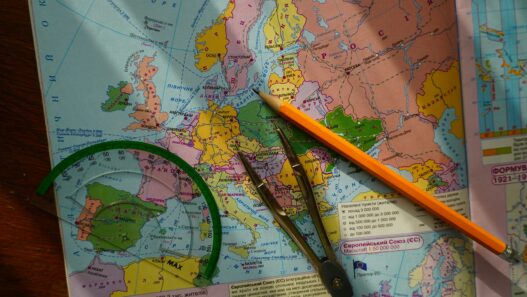
The importance of the Baltic Sea to European Security cannot be understated. Eight countries have a coastline on the Baltic Sea with a combined population of just over 150 million people. All of them are NATO and EU member states, with the capitals of Stockholm, Helsinki, Tallinn, Copenhagen, and Riga all accessible from the Baltic Sea.
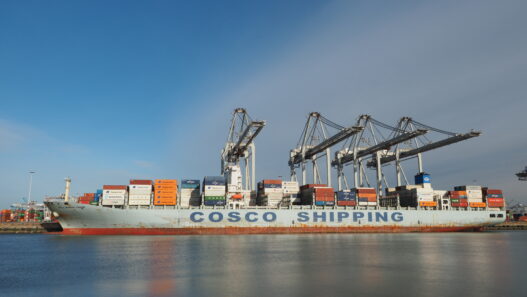
Additionally, the Baltic is a major facilitator of trade, with Gdańsk being the 8th busiest EU port in annual cargo tonnage. Many large shipyards are found on the Baltic Sea at Wismar, Gdynia, Turku, and Karlskrona. The countries on the Baltic Sea depend on it for international trade, boosting growth and the maritime industry of each country. 
Other critical national and international infrastructure lie in the Baltic Sea. Many natural gas pipelines, such as Baltic Pipe and Balticconnector, play a vital role in transporting the valuable resource across the Baltic Sea. Poland is also extracting oil and gas from its B3 and B8 oil fields in the Baltic. Plenty of electric power cables are also in the depths of the Baltic, with Sweden especially reliant on cables such as Fenno-Skan, Konti-Skan, NordBalt, and HVDC Gotland to connect its power grid to the rest of Europe. As Europe has weaned itself off Russian energy supplies, the importance of this infrastructure is likely to only increase.
Naturally, there are also military facilities that use or require access to the Baltic Sea for their operations. The enclosed and shallow nature of the Sea places extra emphasis on warships already deployed in the Baltic, and poses a logistical challenge to get resources into the Baltic. The sea provides logistical relief to the Baltic states, bypassing the choke point of the Suwalki gap and making it a key referent object of security.
The Baltic Sea is important not just militarily. The livelihoods of the countries that border it heavily depend on it for their well-being, as well as the well-being of states that require it for trade and to sustain their national infrastructure. Threats to Baltic Sea security have repercussions for the whole continent.
From what threats?
As previously mentioned, the threat from Russia has increased, and the Baltic Sea is no exception to this. The threat is two-fold: Russia continues to use its war economy to build up its armed forces. It has also placed a focus on a hybrid-warfare strategy. Whilst the threat has increased in size – the willingness to also threaten European assets actively has also risen.
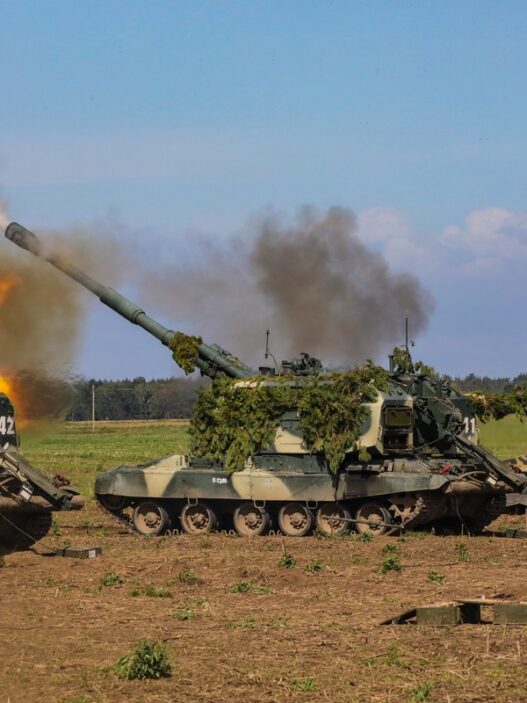
Focusing on the conventional military threat, the Russian exclave of Kaliningrad is vital in countering NATO in the Baltic and putting pressure on Europe’s Northern flank. It hosts short-range nuclear capable missiles whose facilities have been recently expanded. Not to mention it serves the HQ of the Baltic Fleet, Russia’s only ice-free port on the Baltic Sea, where Russian warships are based. In short, the exclave is a fortress, and any NATO strategy in the Baltic relies on the ability to limit the threat from Kaliningrad.
St. Petersburg lies on the banks of the Eastern Baltic, hosting the Kronshtadt naval base and the HQ of the Leningrad Military District. Although geographically further from the centre of the Baltic Sea, the assets based in the St. Petersburg region pose a real threat to European Security, particularly to Estonia and Finland in the Eastern Baltic.
The other side of the coin, hybrid-warfare is just as real a threat, but even more imminent. Whilst not a new tactic (it was first brought to light in 2013 by Chief of the General Staff Valery Gerasimov), Russia has become much more willing to use indirect action to threaten critical national infrastructure. It has already undertaken such actions; for example the sabotage of the Estlink 2 cable and GPS jamming of the Baltic Sea and Suwalki Gap in Poland.
The fact that both cases cannot be directly linked to the Russian state shows the effectiveness of hybrid warfare. The Gerasimov doctrine seeks strategic gains without using actions that could constitute war or military retaliation. It is reasonable to say that the Baltic is a target-rich environment for a hybrid warfare strategy. Nothing is off limits for sabotage or indirect attack if it furthers Russian power or strategic gain in the region.
Europe faces the challenge of securing itself from a potent military threat and a very real hybrid threat to various assets. Having just one defined strategy is not enough. It leaves the Baltic vulnerable to the under-prioritised threat. The potential vulnerability of assets across European countries also demands close cooperation in securing them. Alone, not one single country can completely call on the assets to totally counter the Russian threat, particularly as the US starts its pivot away from Europe.
What are the militarisation efforts?
A flexible and interoperable effort is the requirement to achieve meaningful results of militarisation in the Baltic Sea. That is also what NATO, along with European states, is aiming for in their militarisation strategy. It is reasonable to conclude that the drive for militarisation in the Baltic Sea region is a double-pronged effort.
The first effort is to build up military assets and resources that are strong enough to counter the Russian conventional threat head on. A key example of this is the Swedish government’s 150 million euro investment on the island of Gotland, allowing for extra military forces to be based on the island as well as allocating air-defence missiles and tanks on the largest island in the Baltic Sea. Often referred to as an ‘unsinkable aircraft carrier’[1][2], Gotland is perfectly located to counteract any Russian military assets in the Baltic Sea.
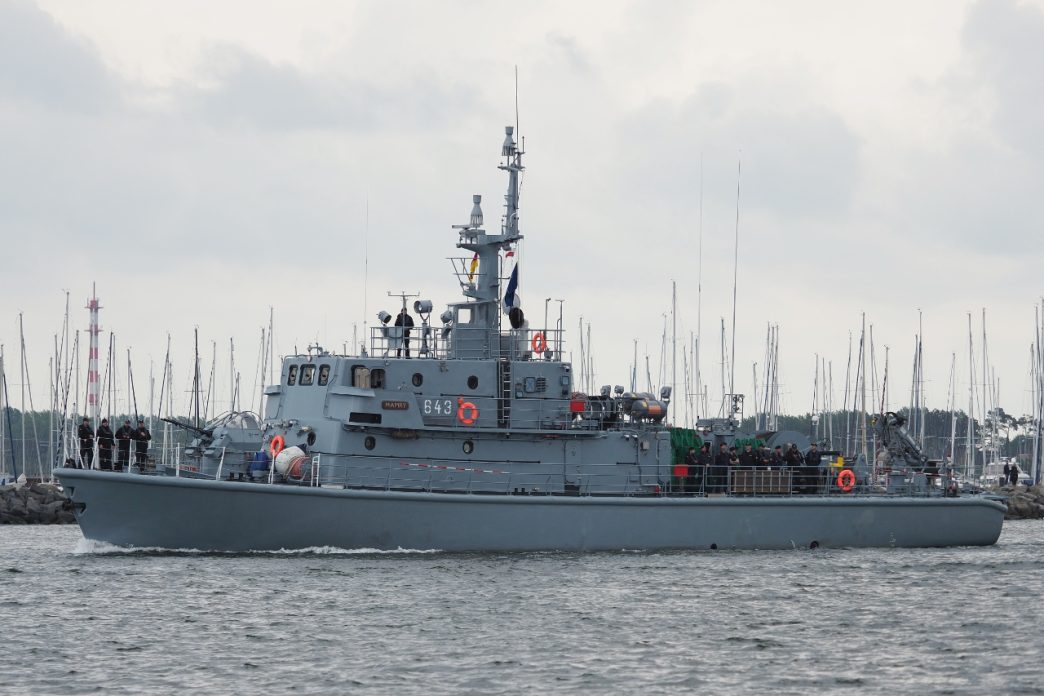
Poland has seen an astonishing rate of militarisation by spending 4.7% of its GDP on its armed forces. The modernisation and expansion, particularly in missile capabilities as well as several on-order ships, seek gains in NATO control over the Baltic Sea. Poland taking a leading role in European security is vital as the US looks to shift its efforts towards the Asia-Pacific, a key requirement in the current context.
The second effort concerns primarily NATO and is concerned with interoperability, training, and flexibility to be able to effectively deal with the hybrid threat posed by Russia. One of the most important ways this takes place is through military exercises in the region.
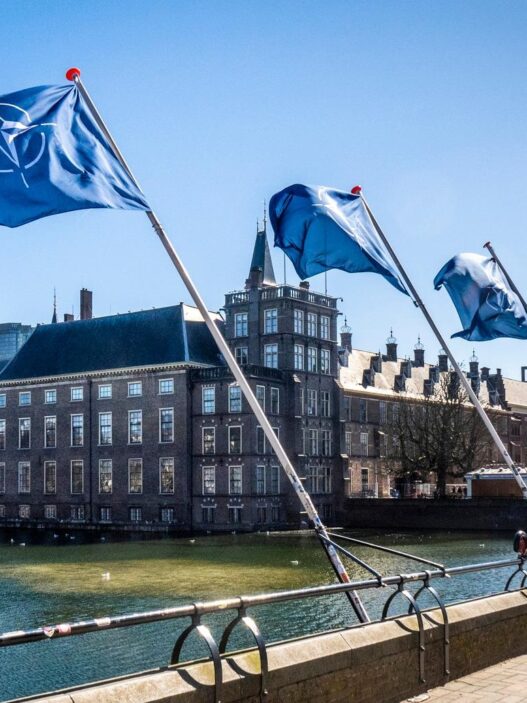
The annual BALTOPS exercise run by NATO further trains members in simulating a real-life threat from the Russian forces in the region. A variety of threats are simulated to evaluate readiness against hybrid-warfare. This year 16 NATO member countries took part in a concerted effort to practice the interoperability and flexibility required to deal with hybrid-warfare scenarios. The exercise allows all NATO states that have a Baltic coastline to assess their readiness in the light of a threat to European security.
Aside from large-scale exercises, there are also ongoing NATO operations to counter the Russian hybrid threat. One such effort is Operation Baltic Sentry, launched in light of the potential vulnerability of critical infrastructure after the cutting of the Estlink cables between Finland and Estonia.
What are the takeaways?
Although militarisation has been stepped up, it is far from the levels needed for a direct conflict with Russia in the short-term. The existing threats are hybrid warfare attacks to destabilise European security. In the long-term, militarisation in the region aims to prepare for the eventuality of war, whilst also allocating assets for defence against hybrid warfare.
The fact that European states feel the need to expand militarisation in the region shows how dangerous the threat from Russia is perceived to be. The Baltic Sea exposes states’ vulnerabilities and allows for strategic gain by hostile actors. Thus, it is likely to become a focal point for tension between Russia and Europe in the coming years. There is a lot to gain and to lose for both sides, but European security very much depends on it.