










An Unexpected Signing
What once seemed an impossible peace may now be turning into reality. Under United States mediation, on 8 August 2025, Armenia’s Prime Minister Pashinyan and Azerbaijan’s President Aliyev initialled the long-debated draft Agreement on Peace and the Establishment of Interstate Relations, following four years of negotiations. Although the final peace agreement has not yet been signed or ratified, the text initialled at the White House is a memorandum of understanding that postpones finalisation to a larger stage.
“Today, we have reached a significant milestone in Armenian and Azerbaijani relations. We are laying a foundation to write a better story than the one we had in the past,” Prime Minister Pashinyan declared.
The Armenia-Azerbaijan peace deal aims to normalise bilateral relations after 37 years of tensions and conflicts due to territorial claims, antagonistic narratives, and geopolitical aspirations. The initialling can therefore be seen as part of a positive trajectory in the peace talks. On 13 March 2025, the foreign ministries of Armenia and Azerbaijan jointly announced the finalisation of a 17-point draft peace agreement. Afterwards, the 10 July 2025 Abu Dhabi summit further reinforced mutual commitment and confidence, with a vis-à-vis dialogue held for the first time without international mediation.
However, the initialling came sooner than almost anyone expected. Only a few weeks earlier, official projections pointed to a possible understanding no sooner than 2026, suggesting that sensitive issues still remained on the negotiating table. The acceleration of the peace talks can be read as the outcome of a favourable geopolitical window, both external and domestic: Washington eager to consolidate its role in the South Caucasus in light of Russia’s weakening influence; Baku determined to translate its 2020 and 2023 military achievements into an internationally recognised document; and Yerevan impatient to receive an official guarantee of Azerbaijan’s commitment to refrain from further incursions into its territory. 
At a glance, the timing of the initialling reflects a political calculation in which the risks of regional instability far outweigh those of a “flash” compromise.
Some highlights of the agreement
The text of the Agreement on Peace and the Establishment of Interstate Relations commits the Parties to: mutual recognition of sovereignty, territorial integrity, and the inviolability of borders (Art. I); renunciation of present and future territorial claims (Art. II); non-deployment of third-party forces along their mutual border (Art. VII); and the conclusion of sectoral agreements in areas of mutual interest (Art. X).
The Nagorno-Karabakh issue
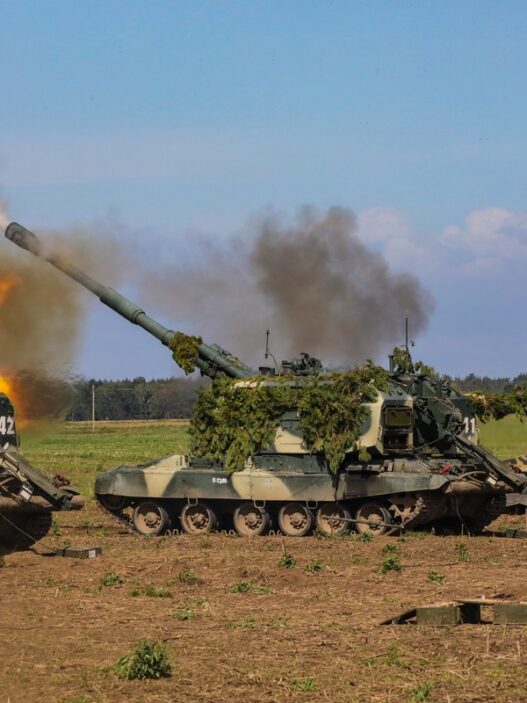
Articles I-II crystallise the new regional equilibrium in the Caucasus following Azerbaijan’s reconquest of Nagorno-Karabakh and the mass exodus of the Armenian population in 2023. Nagorno-Karabakh is a mountainous region located in the South Caucasus. Originally, it was established as an Armenian-majority autonomous region within the former Soviet Socialist Republic of Azerbaijan. Following the collapse of the Soviet Union and the region’s request to be annexed by Armenia in 1988, the separatist region became a matter of controversy between Yerevan and Baku. Since then, three violent and destabilising conflicts have followed: the first Nagorno-Karabakh war (1988-1994), the so-called 44-day war (27 September-10 November 2020), and the Azerbaijani military offensive in 2023, marking the consolidation of both de jure and de facto Azerbaijani control over Nagorno-Karabakh.
By initialling the text on 8 August, Yerevan has officially put in black and white its acknowledgement of Azerbaijan’s territorial integrity, including Nagorno-Karabakh within Baku’s internationally recognised borders.
Since Article XII establishes the prevalence of the agreement over domestic law, any conflicts with norms – including constitutional ones – would be resolved in the treaty’s favour. In a nutshell, this means that Baku’s precondition to amend the preamble of the Armenian Constitution is not legally binding. Baku has long objected to the preamble’s language because of its historical references to the reunification of Armenia with Nagorno-Karabakh. For this reason, a constitutional amendment has consistently been set as an essential precondition for advancing the peace talks. Yerevan has expressed its openness to reviewing the language through a national referendum scheduled before or after the next parliamentary elections in 2026.
Article XII seems to address the problem at the root: the constitutional amendment, if and when it occurs, would be more a political choice than a legal obligation.
The Future of International Guarantees
Article VII shifts border security management from a multilateral framework to a strictly bilateral one. In other words, the parties will no longer be allowed to deploy third-country forces along their shared border.
This clause raises questions about the future of the European Union Mission in Armenia (EUMA). The EUMA is a civilian monitoring mission established in 2022 as part of the EU’s efforts to foster stability along the Armenian side of the international border with Azerbaijan. As a non-armed instrument, the EUMA would technically be compatible with the article. However, its activities in close proximity to the border have always been a source of concern on the Azerbaijani side: Baku authorities have repeatedly criticised the initiative, describing it as an attempt to interfere in Azerbaijan’s home affairs while prioritising Armenia’s agenda.
The future of EUMA is therefore uncertain. Although in January 2025 its mandate was extended until 2027, it would not be surprising if its mission were abruptly interrupted or operationally restricted.
In addition to the end of on-site protection, the foreign ministers of the Republic of Azerbaijan and the Republic of Armenia made a joint appeal to the OSCE Ministerial Council for the closure of the OSCE Minsk Process and related structures. The Minsk Group is a diplomatic mediation platform established in 1992 to guarantee a peaceful resolution to the Nagorno-Karabakh conflict. Finland, as the current OSCE chairperson in charge from 2025, will lead the discussions.
The Corridor of Discord
Article X paves the way to future sectoral agreement on trade, transport, and connectivity. Behind this clause lies one of the most controversial and sensitive issues of the peace negotiations: the development of the so-called Zangezur corridor.

The corridor is a potential land connection project between mainland Azerbaijan and its exclave of Nakhchivan through the southern Armenian province of Syunik. For Baku, this link represents a long-standing geopolitical goal: it would strengthen Azerbaijan’s territorial continuity with the autonomous republic of Nakhchivan, reduce its dependence on trade routes through Iran, and enhance Azerbaijan’s status as a regional hub for Eurasian connectivity. By contrast, Yerevan regards the corridor idea as a threat to its sovereignty and a loss of control over the Syunik province.
However, this friction point seems to have been overcome through the U.S. proposal for the Trump Route for International Peace and Prosperity. Officialised by a joint declaration between Aliyev, Pashinyan and Trump, TRIPP aims to establish a trade and infrastructure route under Armenian jurisdiction, with U.S. technical and financial support. In this way, Azerbaijan’s proposal is integrated into a multilateral framework, mitigating Yerevan’s concerns and giving economic cooperation concrete political weight.
In other words, President Trump has played the regional connectivity card as a diplomatic lever. The idea is clear: to transform fracture lines into channels of interdependence.
A Win-Lose Condition?
To what extent can the peace agreement be considered fair and balanced? To what extent, instead, does it crystallise a status quo imposed by Azerbaijani military and diplomatic supremacy? The trajectory pre- and post-initialling appears to be outlined more as a set of unilateral concessions rather than a mutual compromise between the parties.
- Firstly, the document definitively marks Armenia’s loss of Nagorno-Karabakh by formalising what the military events of 2020 and 2023 had already imposed on the ground. This means Yerevan will no longer claim the Nagorno-Karabakh region as part of its jurisdiction or territory.
- Secondly, in the days after the initialling, Baku renewed its call for a revision of Armenia’s constitution, even though the text of the agreement does not provide any formal obligation for constitutional amendment.
- Thirdly, the potential deinstitutionalisation of the EUMA and the OSCE Minsk Group deprives Yerevan of its only – albeit fragile – international protection umbrellas.
- Finally, TRIPP – presented as an opportunity for regional connectivity – raises deep questions. The main risk is that TRIPP could open the door to new Azerbaijani extraterritorial claims, further undermining Armenia’s security and sovereignty.
The point is that a just, comprehensive, and lasting peace in the region comes at a cost. For Armenia, in particular, it comes at a very high price. As the Armenian National Committee of America (ANCA) Executive Director Aram Hamparian argues, Armenian land has become a bargaining chip, sacrificing everything: the centuries-old Armenian presence in Nagorno-Karabakh, the only international deterrents against Azerbaijani invasion of Armenian territory, and even part of its territorial sovereignty within the new regional architecture.
For many, the initialled peace deal is a watershed event that marks a before and after in the history of the South Caucasus in the name of sustainable peace. For others, by contrast, it is nothing more than an unconditional surrender, the Armenian one.
“Erasing Nagorno Karabakh is not peace. Accepting the Azerbaijani occupation of Armenia is not peace. Peace reached at gunpoint is not peace,” the ANCA Executive Director stated.