







An unexpected connection
The Israeli strike that took place in September on Qatari territory, a US partner state and one of Washington’s most valuable diplomatic intermediaries in the Middle East, has revealed the limits of security guarantees. Qatar has been portraying itself as an indispensable actor in the regional mediation sphere and as a privileged ally of the US, and it still faced a blatant breach of its territorial security without receiving the firm public response it might have expected from Washington.
This incident is not only a Gulf problem. It exposes deeper questions about the limits of strategic partnerships when national interests are different, and what happens when a smaller state, regarding of its economic power, becomes dependent on security ties with another actor. For Romania, a frontline NATO state on the Black Sea, with its own security architecture heavily anchored in its strategic partnership with the US, this incident offers lessons worth taking a look at.
Qatar – caught between vulnerability and restraint
The recent Israeli strike on sovereign Qatari territory, carried out during sensitive negotiations with Hamas representative hosted in Doha, proved that the assumed stability of the Qatar-US security partnership has its own risks. Qatar has built a reputation as a leading regional mediator. It hosts political offices and facilitates back-channel diplomacy. As home of the largest military US facilities in the Middle East, the Al Udeid Air Base, Doha has often considered the American presence as a de facto guarantee of security. Yet Israel, another close US ally, conducted a targeted operation inside Qatari territory, in a very politically charged moment, when the whole world was watching the negotiations, which were at that moment a crucial point for Gaza’s future and for the end of the Israeli aggression on Palestinians.
What followed exposed the asymmetry of the Qatar-US alliance. Washington did not issue a firm public reaction, and the whole situation developed on a day-by-day basis, with Qatar mostly waiting to see how the situation unfolded, steering away from strong condemnations. Especially in the first moments, which define the public perspective for events such as this one, there was no explicit warning to Israel, no clear reassurance to Doha, and no visible effort to reaffirm Qatar’s territorial inviolability. For a state that has invested heavily in positioning itself as a valuable US ally, the silence was profound. Other mechanisms were activated in the region, within the GCC, but they are not a substitute. 
It took more than two weeks for Trump’s administration to respond officially, which it did, using the attack as a political opportunity to gain a more prominent role in the peace process, while also offering renewed security guarantees to Qatar. However, not all states exert the same power as Qatar.
Even from its strong position, for Qatar, the situation was delicate. Any forceful response would have risked:
- Undermining its essential partnership with Washington
- Jeopardising its hard-won reputation as a mediator
- Collapsing the negotiation channels that the Qatari hosts.
The paradox hidden in Qatar’s foreign policy came to the public attention – being a mediator does not necessarily shield you, it often constrains you.
Despite its vast energy wealth and diplomatic leverage, Qatar learned that deep strategic ties come with diplomatic guarantees, rather than security guarantees. This incident becomes more than a Gulf-based episode. It is a case study in the vulnerabilities of states whose security architecture relies heavily on external protection, states whose partnerships offer deterrence, but impose restraint.
Lessons for Romania – the risks of externalised security
If Qatar’s situation exposes the vulnerabilities of external security guarantees, Romania represents the European counterpart of this dilemma, situated on the edge of an active war zone. As a frontline NATO state bordering Ukraine and in proximity to Russian military Black Sea operations, Romania’s security architecture depends profoundly on its strategic partnership with the US and on NATO’s collective defence framework.
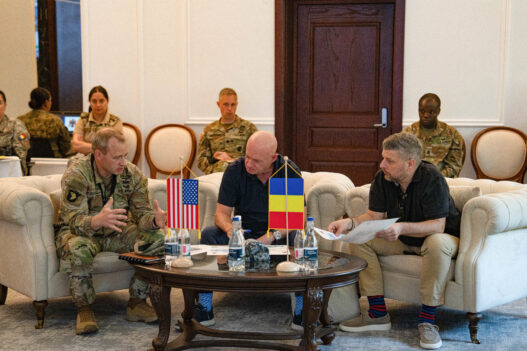
In theory, Romania’s strategic position has never been stronger. The Mihail Kogălniceanu Air Base has evolved into a critical operational hub for the US and for NATO, hosting American troops, advanced assets and command structures that reinforce the Alliance’s Eastern deterrence posture. Since the full-scale invasion of Ukraine, Romania has received additional deployments, political reassurances and recognition of its frontline status. Yet, security decisions do not lie within Romanian decisions. For example, most recently, Washington decided to do certain troop rotations, generating uncertainty and fear throughout the Romanian society, while also opening the door for NATO as an Alliance to step in.
This asymmetry is rarely publicly addressed in these terms, but it is a structural reality: Romania hosts security, but does not command it. Every decision on security, from intelligence coordination to regional military approaches, unfolds within a framework shaped by NATO expectations and US strategic interests. Similar to Qatar, it must navigate between benefit and dependence.
The Qatar episode demonstrates that even privileged partners must face situations when other alliances within the region override bilateral accords, and third actors’ interests might call for a balancing act. For Romania, this is not an abstract risk. It becomes a plausible scenario, considering that:
- The US priorities are shifting, with interests closer to home
- NATO’s priorities can shift with political leadership changes, considering the rise of right-wing extremism
- European allies hold different views on the war in Ukraine and Black Sea security
- Washington’s leadership can refocus its commitments in an instant.
Moreover, Romania cannot rely on the same type of leverage that Qatar possesses. Doha’s ability to influence Washington through its economic bargaining powers does not represent the Eastern European context. Romania’s value is primarily geopolitical, from a hard-security approach, offering a strategic troop deployment location.
Romania, situated on NATO’s currently most sensitive border, must treat external guarantees as essential, but not exclusive, and its future deterrence capabilities, with their durability, depend strongly on Bucharest’s ability to anticipate and negotiate in a rapidly shifting security environment. Strengthening Romania’s agency must become a priority for its decision-makers.
Romania in the Context of the Ukraine war – beyond Article 5
Considering all this, the ongoing war in Ukraine has transformed Eastern Europe into a region where deterrence is no longer theoretical, and for Romania, this context makes the Qatar attack even more of a lesson. Dependence on collective defence is not a weakness in itself, but assuming that guarantees are absolute would be.
NATO’s Article 5 remains the pillar of European security, yet the Qatar case shows that even strong alliances come with political calculations, strategic concessions, and grey areas that smaller states must be careful about.
For these reasons, Romania needs to pursue additional layers of security in order to better ensure its position, such as:
- Clear bilateral defence assurances from the US
- Predictable allied presence on the Black Sea
- Stronger national defence capabilities
- Political dialogue that reduces reliance on foreign guarantees
- Clear, strategic narrative that emphasises Romania’s role as a stabilising actor rather than a buffer zone.
The war in the Eastern neighbourhood demonstrates that reliable defence is not built on assumptions, and Qatar’s experience shows that strategic partnerships, although definitely essential, cannot replace national resilience.
Conclusion
For Romania, this is not a moment to question the US partnership, but to review it with strategic realism. Its security depends not only on the strength of its allies but also on the coherence of its own national posture.
From the Gulf to the Black Sea, smaller states navigate the same dilemma when tackling relations with great powers, respectively, how to maximise the benefits of security guarantees without losing the ability to act in defence of their own interests.
For Romania, the lesson is clear. Strategic partnerships must be complemented by strategic readiness. And in a region where war is already reshaping the security order, treating these guarantees as unquestionable would be the biggest risk of all.