







On the eve of the 2026 Review Conference of the Parties to the Treaty on the Non-Proliferation of Nuclear Weapons (NPT), Europe faces significant changes in its geopolitical and strategic environment that have prompted calls for a reassessment of its approach to nuclear non-proliferation. Two developments in particular have intensified this debate: Russia’s full-scale invasion of Ukraine in 2022 and Moscow’s coercive nuclear signalling, which challenge Europeans’ longstanding defence complacency. At the same time, repeated signals from Washington and the transatlantic crisis over Greenland have raised the possibility that the United States could deprioritise or outright abandon its security guarantees to Europe in favour of strategic competition. These challenges have led to calls for the European Union to “urgently confront a new nuclear reality,” and to develop an “autonomous and credible European nuclear deterrent”. Yet from a regionalist perspective, Europe’s more immediate task is to strengthen strategic cohesion and conventional capabilities rather than rush toward nuclear autonomy. This article outlines the EU’s current approach to nuclear non-proliferation and examines the strategic environment and internal challenges, arguing why major adjustments should not be the first priority.
The EU’s Regional Role in Nuclear Non-Proliferation
The EU’s approach to nuclear non-proliferation has been shaped by its strategy of “effective multilateralism,” defined as “the development of a stronger international society, well-functioning international institutions and a rule-based international order”. This position also informed the development of the EU’s own strategy against the proliferation of Weapons of Mass Destruction in 2003. International regimes – understood as “implicit or explicit principles, norms, rules, and decision-making procedures around which actors’ expectations converge in a given issue-area” and characterised as a “pervasive characteristic of the international system” – form a core element of the rule-based order, particularly in critical areas like nuclear non-proliferation. Therefore, it is not surprising that the EU has only recently reaffirmed its “unequivocal support to the NPT as the cornerstone of the global nuclear non-proliferation regime”. Furthermore, the EU and its member states participate in informal regimes in the field of non-proliferation and export control, particularly the Nuclear Suppliers Group (NSG). On a regional level, this approach is also evident in the EU’s cooperation with EURATOM as an independent international organisation, which works as a regional safeguard of non-proliferation alongside the International Atomic Energy Agency (IAEA).
Despite this commitment, the EU’s practical impact within the NPT framework has been limited. While the EU remains Europe’s central “Peace Actor,” providing a framework for regional stability, political coordination, and regulatory governance, it is often seen as a weak or “fragmented” geopolitical actor that struggles to convert its economic strength into global political power. Case studies of the EU’s actions regarding both Iran’s nuclear programme and exemptions by the IAEA and NSG, which allowed India to participate in nuclear trade without NPT membership, have led to the observation that “the EU’s actual capacity to disseminate its vision and norms regarding nuclear non-proliferation is rather weak or inconsistent”. This inconsistency reflects underlying divisions among member states in strategic outlook and legal positioning: The EU comprises predominantly Non-Nuclear-Weapon States (NNWS) alongside France as its sole Nuclear-Weapon State (NWS). Three EU member states are parties to the 2017 Treaty on the Prohibition of Nuclear Weapons (TPNW), which most of the other member states oppose. These internal differences among member states continue to constrain the EU’s bargaining power. Consequently, the EU has shown a tendency “to be a marginal player in areas where great powers dominate,” underlining that its practical role in non-proliferation remains primarily regional.
Challenges: Russia and the US
The EU’s approach towards nuclear non-proliferation has increasingly come under pressure due to the Russian war of aggression against Ukraine, which has shattered the European security order and brought direct nuclear threats to the EU’s borders. Since the beginning of the war, Russia has engaged in repeated and escalating nuclear signalling with the intention of limiting Western support for Ukraine. This includes a revision of its nuclear doctrine, which now employs nuclear deterrence even against NNWS. Furthermore, the expiry of the 2010 Treaty on Measures for the Further Reduction and Limitation of Strategic Offensive Arms (New START) in February 2026 leads to the loss of “verification mechanisms, data exchanges and confidence-building measures built into the treaty,” thereby reducing strategic transparency and predictability. So far, however, Russian nuclear threats have failed to prevent sustained Western support for Ukraine, as governments have “cautiously but incrementally tested and pushed Russian red lines”. The EU’s response to the Russian aggression has been hampered less by nuclear threats than by internal fragmentation and member states’ diverging positions, which even led to the failure to agree on further sanctions against Russia in February 2026 and the recent blocking of a €90 billion loan to Ukraine. Though the end of New START may generate greater uncertainty in managing coercion, in the short term, it does not produce a direct shift in regional military balances, particularly Europe’s strategic position regarding the war in Ukraine. 
These dynamics could be more significantly disrupted if the US were to withdraw its security guarantees for Europe. The Trump administration’s confrontational tone and economic policies as well as repeated threats to invade Greenland, work to “slowly erode confidence in NATO’s cohesion and Washington’s commitment to European defense.” The November 2025 US National Security Strategy not only repeats the decades-long call for burden-sharing by European NATO partners but also pivots toward “burden-shifting,” demanding allies “assume primary responsibility” for their own regional defence. As a result, European governments have begun considering alternatives to the US nuclear umbrella. Options include a French nuclear umbrella, a joint Anglo-French umbrella, a European multilateral nuclear force, or genuinely European nuclear weapons.
Limits of Proposed Autonomy Alternatives
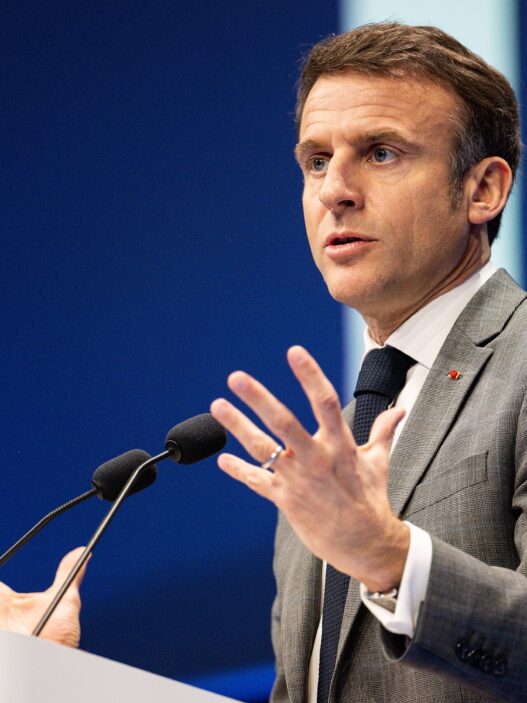
Those alternatives, however, face steep hurdles. France, now the EU’s only remaining NWS following Brexit, is unlikely to enter into any power-sharing arrangements, as “strategic independence” is a longstanding pillar of French nuclear doctrine. The political weight of this French nuclear sentiment should not be underestimated: A recent German push for nuclear cooperation under German leadership has alienated political circles in France. Indeed, French President Macron has already ruled out shared European control in his “Île-Longue Speech” on France’s nuclear doctrine on 2 March 2026. In that speech, he reaffirmed the “European dimension of France’s vital interests” while also stating that French nuclear deterrence only complements US extended deterrence within NATO. Similarly, the 2025 “Northwood Declaration” on nuclear policy and cooperation between Britain and France affirms each nation’s nuclear independence. At the same time, it signals a deepening strategic alignment and hints at the possibility of a joint Anglo-French umbrella as a “new European strategic backstop”. The background dossier on the new French nuclear doctrine also highlights that the Northwood Declaration is intended to send “a message of reassurance to European partners by stating that there can be no extreme threat to Europe that would not prompt a response from both nations.”
These developments indicate an emerging pattern of coordinated but non-integrated nuclear deterrence between Britain and France. However, as the nuclear doctrines of Britain and France are determined by the British Prime Minister and the French president, respectively, the credibility of such an extended deterrence rests on domestic political prerequisites that are no longer self-evident. With the increasing likelihood of right-wing and Eurosceptic parties coming to power in both countries, a switch from the US to an Anglo-French nuclear umbrella may simply replace one strategic dependency with another. Any genuinely European solution would face significant legal constraints, in particular because some EU member states are prohibited by the TPNW from acquiring, or assisting the EU in acquiring, any form of nuclear armament. Furthermore, at the policy level, it is difficult to see how the establishment of a European nuclear force can be reconciled with the EU and its member states’ commitment to nuclear non-proliferation.
Prioritising Internal Cohesion
As the analysis has shown, the challenges faced by the EU are only partly due to changes in the external geopolitical and strategic environment. Rather, that environment amplifies the EU’s underlying internal institutional problems. The fragmentation among its member states has repeatedly undermined the EU’s ability to coherently act upon its own non-proliferation strategy in the international sphere. In the face of Russian aggression, member states’ opposing viewpoints increasingly hinder a decisive response. The consideration of a European response to US burden-shifting and continued threats to Greenland lacks credibility if member states cannot agree on a common nuclear strategy. For that reason, the EU’s immediate priority should not be nuclear redesign but political cohesion. Without a shared strategic outlook, even the most ambitious proposals for European deterrence remain institutionally fragile and politically contested.
To address the non-proliferation dilemma, the EU must first develop a common strategic framework for addressing nuclear questions that respects the positions of TPNW parties among its member states. One possible interim approach would be to strengthen Anglo-French cooperation on nuclear deterrence while at the same time investing in conventional capabilities, mirroring France’s long-standing policy of “épaulement,” the backing of nuclear deterrence with conventional forces. However, there will be no economically feasible way for the EU to achieve full strategic parity with Russia. Rather than entering a costly and internally divisive nuclear competition, the EU should combine stronger conventional readiness with continued support for nuclear de-escalation and promote (inter-) regional cooperation, integrating non-proliferation into its wider economic policy and strengthening international institutions. In the current strategic environment, the 2026 NPT Review Conference will be an opportunity for the EU, acting together with its member states, to project its influence and promote nuclear non-proliferation.
As part of the writing process, the author used generative AI to improve language and readability. The author then reviewed and edited the text and assumes full responsibility for its content.