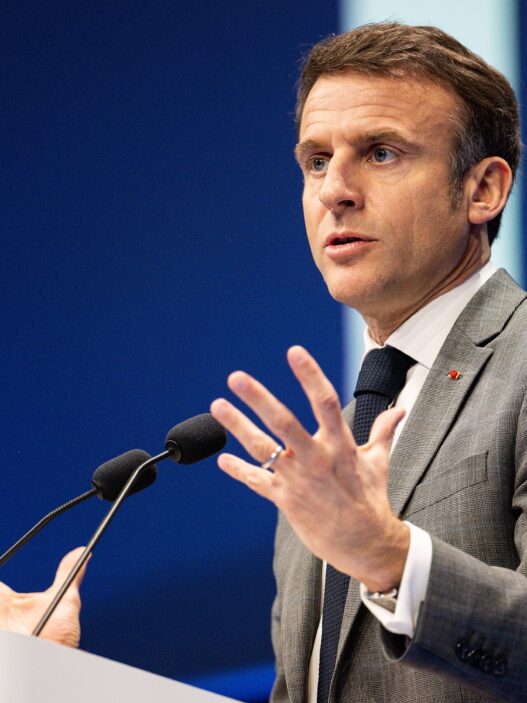



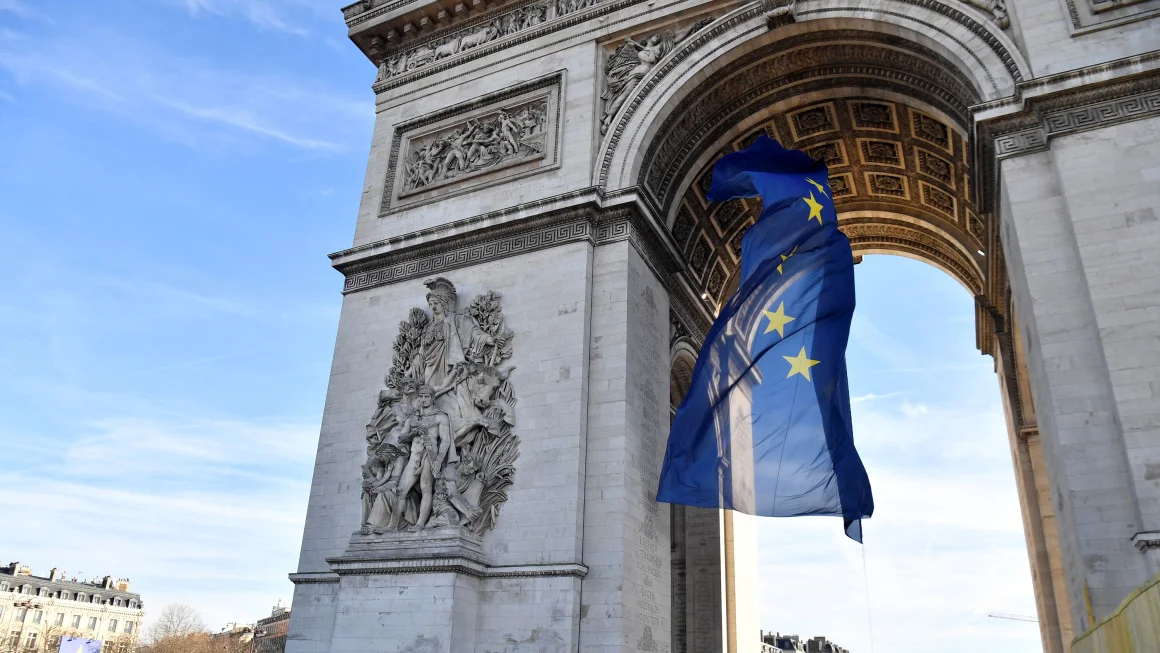





On March 2nd, 2026, French President Emmanuel Macron gave a speech in Île-de-Longue. In the speech, Macron announced, for the first time since 1992, an increase in the number of French nuclear warheads. He also announced that France will allow for the temporary deployment of nuclear-armed aircraft in allied European countries.
When examining the motivations for France’s moves, there are two driving factors. The first is a decision to hedge against American uncertainty amid transatlantic tensions. The second is to safeguard France’s leading role in European security.
Reason 1: The Shocks from Washington
Ever since Charles de Gaulle, France has been an advocate of European strategic autonomy. Under French President Emmanuel Macron, those Gaullist views of European autonomy were once again articulated. During his 2017 speech at Sorbonne University, he insisted on the need for European defense. During his 2024 speech at Sorbonne University, Macron stated that the country’s nuclear arsenal will be a crucial component of European defense.
However, for many years, France’s position faced immense pushback, since for many Atlanticist countries, European defense was seen as too provocative for the United States. For example, in 2023, Macron said that in the event of a conflict between the United States and China over Taiwan, Europe should not be Washington’s “vassal.” However, in response, the then German Defense Minister Boris Pistorius criticized those remarks as “unfortunate” and said that being an ally does not mean being a vassal. 
Moreover, many other European countries, such as Sweden and the Netherlands, viewed France’s advocacy of European strategic autonomy to promote French defense industrial interests, rather than pan-European interests.
However, under the second Trump administration, transatlantic relations worsened considerably over the Liberation Day tariffs, Donald Trump’s threat to invade Greenland, and the war in Iran. Consequently, even the most ardent Atlanticists, such as Germany, Italy, and the Netherlands, are beginning to echo calls for European strategic autonomy.
In this context, countries that were once reluctant to a French nuclear deterrent are embracing it, seeing it as a way to ensure European security amid American unpredictability. In April 2025, then Polish President Andrzej Duda said that Warsaw was open to a French nuclear deterrent to safeguard the country against Russia. A year later, France and Poland announced a deepening of defense cooperation, including nuclear deterrence. Shortly after Macron’s speech at Île-de-Longue, Paris and Berlin announced deeper nuclear deterrence cooperation and the establishment of a nuclear steering group. In late May 2026, Norway announced that it would join France’s nuclear umbrella.
Reason 2: Ensure France’s Leadership in European Security
Another factor driving Macron’s speech is to ensure that France continues to play a leading role in European security.
In a paradoxical sense, as more European countries are adopting the language of greater strategic autonomy, it has also created an opening for more European countries to develop their own nuclear capabilities.
For example, in February 2026, when asked about Poland developing nuclear weapons during an interview, Polish President Karol Nawrocki said: “The path toward a Polish nuclear project, in full respect of all international regulations, is a path Poland should pursue.”
While German Chancellor Friedrich Merz rejected the notion of Berlin developing its own nuclear arsenal, in March 2025, a poll conducted by Forsa and Civey showed that between 31-38% of Germans supported the country getting nuclear weapons. According to Jeppe Kofod, Denmark’s former foreign affairs minister, a Nordic nuclear deterrent is becoming a “strategic necessity.” (The Nordic countries are Iceland, Denmark, Sweden, Norway, and Finland).
While it is unlikely that Poland will obtain a nuclear weapon overnight, these remarks indicate that amid transatlantic stresses, European countries that generally shied away from nuclear weapons are open to the idea of developing them.
For many years, what allowed Paris to claim de facto European leadership in a post-transatlantic framework was that it was the only EU country with nuclear weapons. However, France’s leading role in security can be diminished should more European countries obtain nuclear weapons.
Thus, as Federico Petroni stated during a podcast interview with The Stimson Center, France is seeking to use nuclear power to assert its influence, as the rest of Europe, in particular Germany, rearms.
As transatlantic tensions increase, France’s long-standing push for European defense has been vindicated. However, for France to present itself as a credible leader in European security, it must act on behalf of European interests, not solely French national interests. Paradoxically.