











The European Union symbolises the defence of human rights and promotes the fight for the rule of law as a binding principle in society. Minorities across the member states enjoy safety and freedom to live their lives with dignity and fairness. Nevertheless, social matters inevitably become political, shaped not only by the law but also by ideology. Women’s rights are often the victim of political instrumentalisation, creating debates on the entitlement of institutions to prioritise the protection of certain groups. In recent years, this phenomenon has been observed in the enforcement of laws against sexual violence, together with the free and safe abortion demands and the public debates caused by their effects. The catalyst of this uprising around consent laws and reproductive rights stems from popular discontent with political actions that undermine basic rights and social events, sparking demonstrations and grievances.
The old institutional conception of rape as a physically violent attack from an unknown person has been refuted on many occasions. Women in many European countries called for a stricter definition and the elimination of the “grey area” around the matter.
The European Union has committed to criminalising non-consensual sexual relationships without the need for the victim to explicitly show evidence of verbal refusal or physical resistance. However, the enforcement of these laws has been on hold since 2024. The EU member states have not reached a consensus on a definition for the term rape. “The council legal service and many other member states came to the conclusion that there was insufficient legal basis for this provision in European primary law,” argued the German Justice Minister, Marco Buschmann.
Germany, along with France and Hungary, was the main resistance at the negotiations, causing disappointment among many MEPs, as it highlighted what was labelled as “disturbing insights” on the attitude around gender legislation. Although the EU has certain competence in criminal matters, criminal law remains largely within national jurisdiction. This shared competence can result in limited approaches across Member States, including in areas such as the protection of women. 
Consent Reform in Europe
Regardless of the absence of this nuance in EU legislation, some member states have themselves attempted to draft legislation on this matter at the national level. Spanish legislation passed in 2022 the Only yes means yes law, which attempted to open the definition of non-consensual sexual relationships to include non-verbal agreement as sexual aggression. Unfortunately, this law did not meet the expected results due to the configuration of the Spanish national law, which led to reduced sentences for many convicted individuals. Thus, far-right-wing politicians took advantage of the situation to personally attack and discredit Irene Montero, the leader of the proposal. Several sexist accusations undermined her political career and tied it to her intimate life and the fact that she got “impregnated by an alpha male”, as well as labelling her “liberator of rapists”.
In 2025, Gisele Pelicot’s case ignited the rage of thousands of French people, leading to the reform of French law to admit non-verbal confirmation after sexual relationships as a crime. The previous lack of this legal specification might have led to a complex prosecution for Gisele’s husband, who drugged, raped her, and allowed different men to do the same for many years. The old law did not include explicit regulation over non-physical or psychological coercion, which made it more difficult to rule on the case. Nevertheless, the French conservative opposition still found arguments to disagree with this reform, criticising its cynicism as it “turns love into a form, and desire into a document to file” as well as “turns society into one of suspicion”.
Further pushback and defiance are observed all over Europe. The Lega Party, led by Matteo Salvini, postponed the decision on a new bill on consent to be approved by parliament on the 25th of November 2025, and justified it by saying, “better to take more time to pass a convincing law”. In Poland, the majority of the far-right Confederation members voted against the proposal of adding “lack of conscious and voluntary consent” as rape. The main concerns around the law were that it might steal from men their presumption of innocence, presumption of innocence, and could be used by women to falsely accuse men of rape.
Reproductive Rights Debate
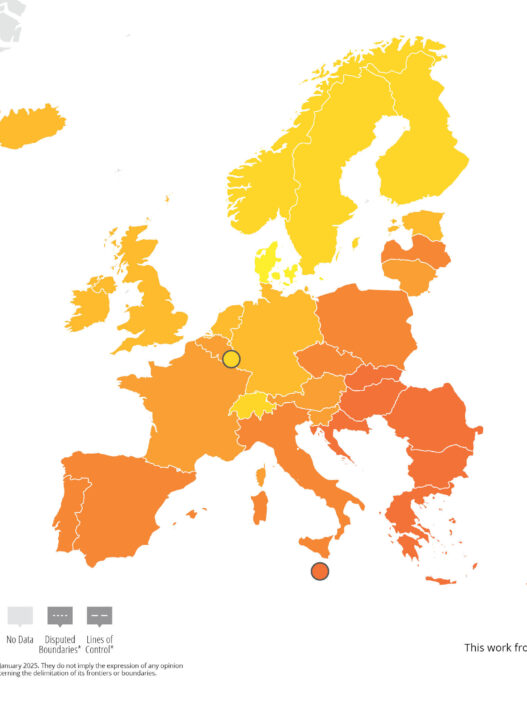
The scope of vague justifications and weak arguments does not restrict to the sexual rights of women, but also covers their reproductive rights. The laws on abortion change depending on the member state, and are subject to different requirements. Poland and Malta hold the most restrictive laws, allowing abortion only in cases of rape, incest, or danger to the woman’s life, while other countries require compulsory counselling in Germany, Portugal, or Austria, and listening to the fetal heartbeat in Hungary. Additionally, the medical intervention can become inaccessible when not included in their national healthcare systems, or healthcare professionals can refuse to provide the service when opposed to their beliefs.
The current laws on abortion in many countries have strengthened the gender activist movements and campaigns across Europe, demanding free, safe, and accessible abortion for women as a fundamental right over their healthcare and bodies. One of the biggest political movements has been orchestrated by the feminist movement My Voice My Choice, which, together with hundreds of supporting organisations, has been fighting over the last year to bring free and safe abortion to the European Union institutions. Their main objective is to request the enforcement of an EU law creating a financial mechanism to provide this service in the countries that join the policy.
The European Parliament recognised last December that many women in the EU still face legal and practical barriers to safe abortion and called on member states to align laws with human rights standards. Following the My Voice, My Choice initiative, the European Parliament approved a voluntary EU-funded mechanism to enable access to safe abortions across borders. The resolution emphasised the EU’s role in safeguarding sexual and reproductive health, including family planning, contraception, and maternal care. Following this success, the European Commission has until March 2026 to decide on measures, prompted by over 1.12 million signatures supporting the initiative.
Although abortion policy is not officially under EU competence, the European Parliament voted 358 to 202, with 79 abstentions. However, conservative parties denounce the initiative as driven by politicised associations promoting a progressive agenda that they claim undermines national sovereignty and, in their view, promotes a “culture of death.” The Dutch MEP Bert-Jan Ruissen has been one of the biggest critics, warning it would encourage “abortion tourism” and stressing that Europeans should “protect and cherish unborn life”. Religious groups also remain suspicious towards the organisation. The Commission of the Bishops’ Conferences of the EU urged “prudent policies”, warning against normalising abortion. Finally, the initiative faced additional criticism for its advocacy tactics. After a November 2025 European Parliament vote, the campaign publicly shared images of MEPs who opposed its inclusion in the Gender Equality Strategy. It listed their countries and social media handles, encouraging the public to pressure them to support the initiative.
The Fight Continues
Women’s rights in Europe rest with policymakers and resonate in public debate. These issues are discussed endlessly, and each step forward reminds activists of the long road still ahead. When shaping laws that concern half the population, ideologies should stop being the priority to let the collective effort make decisions that will improve the lives of millions of women across the world. As Carol Hanisch wrote in the 70s: “The personal is political”, reflecting on sexuality, domestic labour, and childcare, and in 2026, those words continue to shape the movement for equality.