








The European Union has had 6 enlargement waves, bringing into the Union more than 22 new member states in over 40 years. However, only one managed to leave: The United Kingdom.
But what is the real threat? Countries leaving, or countries eroding the EU from the inside?
1. The Threat of Exit
When the UK left the EU through Brexit, it was feared that it would create a shockwave within the Union. The panic of a domino effect of member states leaving took hold of Brussels. Pundits warned the EU that ‘Frexists’ or ‘Italexits’ could unravel. But as the EU was focused on states leaving, a serious threat was ignored: a dismantling of the democratic norms the EU was supposed to uphold from within.
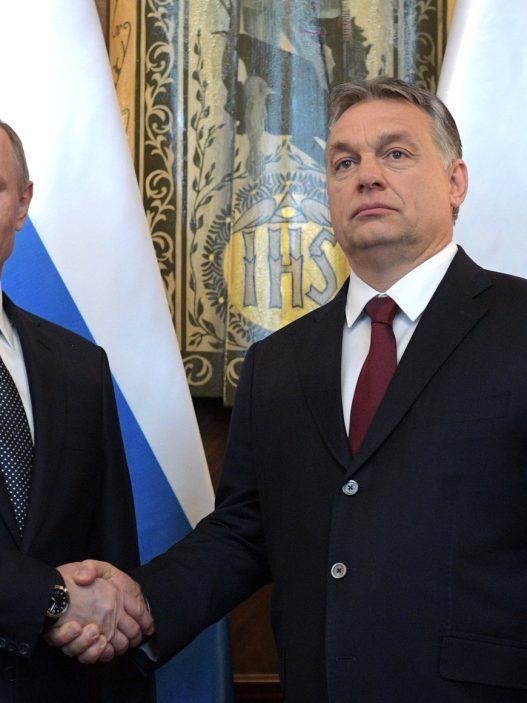
After the 2008 global financial crisis, Victor Orban returned to power by using public distrust in liberal politics. Capitalising on the momentum, Victor Orban, as the Hungarian Prime Minister, declared that he was building an ‘illiberal state’, rejecting liberal values, the very core of the European Union. Orban planned on doing this by reshaping the EU from within, not by leaving the Union. According to Orban, an illiberal democracy refers to a system in which elections occur, but liberal principles are systematically weakened. It is, in principle, a form of democracy without its liberal components. 
Orban’s ‘Illiberal State’ model challenges the EU from within. While receiving EU funds, participating in decision-making processes, and vetoing foreign policy moves, the Hungarian Government has diligently been trying to undermine the values the EU claims to defend since its formation.
2. How is the EU undermined?
Unlike external threats to the EU like Russia, the problems constituted by illiberal member states like Hungary and Poland are weakening and undermining the EU’s values while continuing to benefit and take part in the system they resist.
They have the representation of being committed Europeans, while disregarding democratic standards that, in essence, define the EU. The most troublesome tool that they can and have used is the veto power in the European Council, the highest political entity in the EU.
Rather than using EU funds to strengthen the rule of law, checks and balances, public services, or infrastructures, illiberal regimes often send them to political elites or oligarchs, consolidating further power through patronage.
Hungary and Poland continue to use their EU membership as a mark of legitimacy domestically, using it for credibility, while rejecting European democratic norms. These dynamics have been described as an ‘authoritarian equilibrium’, a situation where autocratic-leaning governments exploit EU rules, money, and structure without following the EU’s core values with little to no repercussions. It is a paradox the EU has yet to resolve.
The EU, which was built on mutual trust and consensus, struggles to respond effectively. In turn, this allows illiberalism to fester inside a system that wasn’t designed to guard against internal democratic decay.
As a result, the EU faces a contradiction: while claiming to be a union of liberal democracies, it tolerates the existence of governments that are illiberal and autocratic in the system.
3. Tools Against ‘Illiberal’ States
Due to the European Union’s design, its capacity to respond to democratic backsliding from within the union is severely limited. The EU’s main disciplinary tool is Article 7 of the Treaty on European Union.
Article 7 allows the suspension of a member state’s right to vote if core EU values are breached. However, it has been proven virtually impossible to implement through previous Article 7 infringement attempts. It requires unanimous agreement among all other member states, a threshold that is near impossible due to countries like Hungary and Poland protecting each other from sanctions by mutually blocking the procedure.
This further proves and suggests that as long as illiberal governments have the possibility to shield each other, Article 7 or any other EU tools remain symbolic rather than a practical disciplinary tool. The union is practically ineffective in limiting the powers of its internal opponents.
Democratic backsliding in Poland and Hungary, combined with the ineffectiveness of Article 7, has resulted in the adaptation of the Rule of Law Conditionality Mechanism. It allows the European Commission to withhold EU funds from member states that violate democratic standards of the Union.
Even so, this tool has also been inefficient and surrounded by legal issues when put into practice. The European Court of Justice (ECJ) upheld the mechanism in 2022, but enforcement of the decision is still procedurally delayed. The illiberal governments responded by stalling reforms or engaging in legal battles, buying time while still receiving EU funding.
The EU’s trust in consensus-based governance was a symbol of unity among Europeans that promoted democratic ideals, a quality viewed as strength for several decades. Now, it’s seen as a vulnerability. It gives every member state, even those that have been democratically backsliding, a de facto veto power. As a result, the EU is stuck in a paradox: While promoting democratic standards abroad, the same standards can’t be applied back home. Does this not make the EU a hypocrite?
4. Case Studies:
Hungary
Over the past decade, Prime Minister Orban’s government led an effort to reshape Hungary into an illiberal state. In 2011, the Judiciary was seized through constitutional changes and court-packing policies, handing key decisions to regime supporters, and effectively destroying checks and balances. Today, Orban’s party has gained near full control over the media, transforming public news agencies into vehicles for propaganda. On the EU level, Hungary has frequently vetoed to block consensus on issues like sanctions on Russia, opposing EU stance on China and jamming EU aid. It’s difficult to ignore that, whilst defying the EU’s core values, Orban’s government continues to leverage EU funds to receive support from his domestic base. The EU’s mechanisms have been clearly inefficient when it came to dealing with Orban’s government. Article 7 was launched by the European Parliament in 2018, but was stalled due to Poland’s support in favor of Hungary. Later, in December 2022, the Commission initiated the ‘Rule of Law Conditionality’ to freeze Hungary’s 6.3 billion Euro’s worth of funds due to its democratic backsliding, but its effects are still inefficient. Hungary has also lost many cases at the ECJ, but they have consistently ignored or delayed compliance, defying the rule of European law.
Poland
Under the Law and Justice Party (PiS) a similar path compared to Hungary has been followed, particularly when dealing with the judiciary. The government introduced reforms that gave political control over the National Council of the Judiciary, and allowed judges to be disciplined for their decisions. The ECJ later ruled that Poland had breached EU law with these so-called reforms. Poland’s constitutional court responded by rejecting the supremacy of EU law, directly challenging the EU’s authority from a legal perspective. PiS employed a nationalist agenda, framing the EU’s criticism as an attack on Polish sovereignty. Similar to Hungary, the EU initiated an Article 7 procedure on Poland in December 2017, the first ever one triggered by the Commission. The procedure failed as in Hungary’s case. Poland has also faced many ECJ rulings, and received a fine of 1 million Euros per day for non-compliance, one of the highest daily fines in EU history, but still remains ineffective.
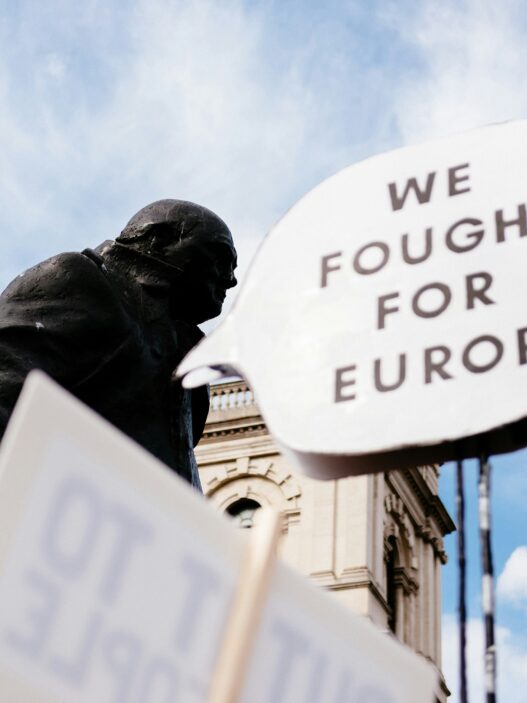
Some wonder, is this what important figures in European Politics like Jean Monnet, Robert Schuman, or Romano Prodi envisioned in European integration when they fought for the union? Would they be proud of the point where we’re at?
5. Consequences for EU Integration & Legitimacy
Experts believe that the long-term existence of illiberal governments within the EU has triggered a crisis of credibility. At an institutional level, the EU finds itself paralysed on matters of foreign policy and enlargement. Hungary’s repeated vetoes show how a single illiberal actor can undermine the EU’s effectiveness and block the decision-making process. This dysfunction portrays the EU as an inward-looking block, damaged by its inability to rein in its own members, instead of being a key geopolitical power and a global strategic actor.
Internally, trust in EU institutions is eroding. Citizens who believe in the EU’s democratic mission continue to question why Hungary and Poland, or any illiberal states, continue to receive structural funds while clearly defying the rule of law.
Europe is concerned about one additional factor: the contagion effect. It has been suggested that as long as these non-democratic and illiberal states go unpunished, they risk spreading onto other liberal countries. Politicians in Slovakia, Italy, and even France started to gain inspiration from Orban’s model, proving that illiberalism is not a tendency but rather a political formula. If this trend continues, the EU’s liberal and democratic identity may continue to fade, and turn the union of democracy into a union of transactional politics and diminished rights.
6. Can the EU continue being a value-based union?
The EU, starting from its formation, has defined itself as a value-based political community, built on democracy, human rights, and the rule of law. However, the presence of so-called ‘illiberal states’ that reject these founding principles expose a contradiction: the EU demands liberal democracy while at the same time lacking the tools to enforce it.
Critics have 2 solutions:
- Multi-Speed Europe, in which only states committed to core values participate in deeper integration
- Stronger Enforcement Mechanism, which requires qualified majority voting on sanctions, expanded financial conditionality, or legal pathway for suspension of rights.
However, the reforms will face the same barricade: a need for unanimity.
The EU has survived the European Sovereign Debt Crisis, the 2015 migrant crisis, and Brexit. But how can it possibly survive a slow erosion of its own core values? If the Union cannot defend democracy within its own borders, how can it promote those rights abroad?
The EU risks becoming what it was built to prevent: a Europe divided not by walls but by the loss of what once held it together, democracy. How can Europeans believe in the promise of the EU if its core values are no longer guaranteed?