











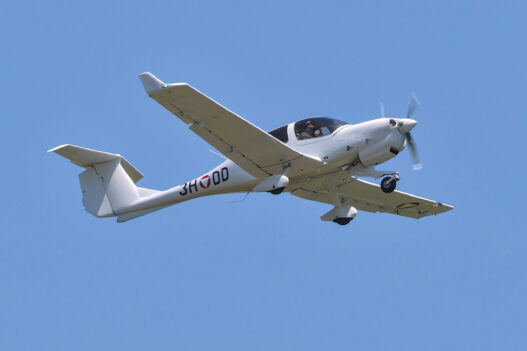
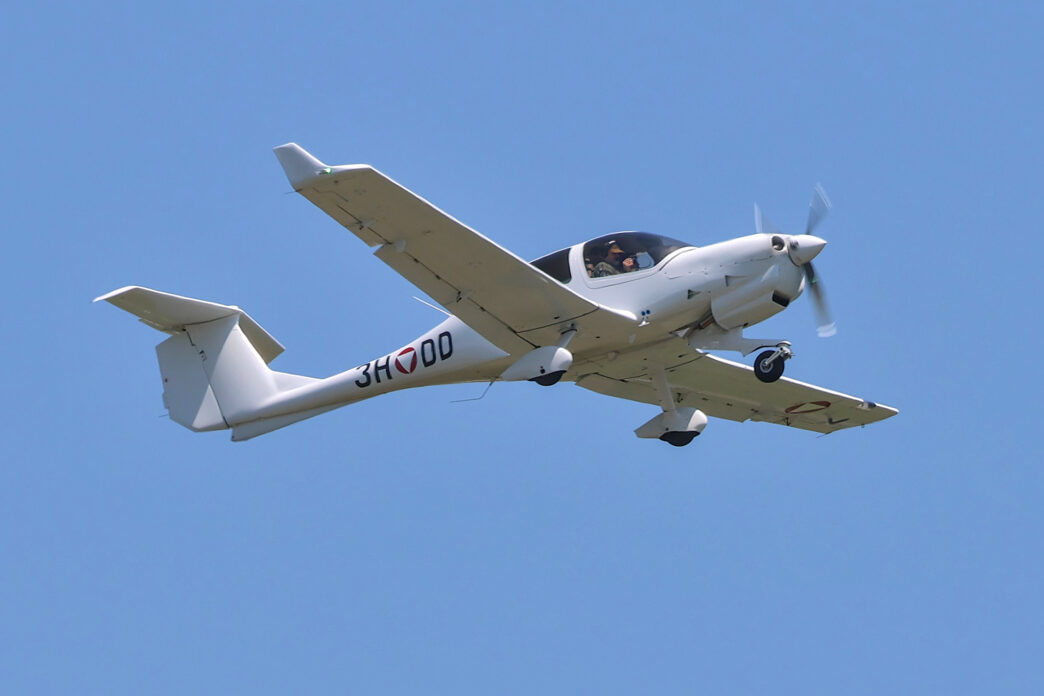
A civilian training aircraft could fall within the EU’s dual-use export regime when its technical characteristics also allow military use. Advocate General Tamara Ćapeta reached that conclusion on September 24th in Flugzeugherstellerin, the first case asking the Court of Justice to interpret the definition of a dual-use item under Regulation 2021/821. The dispute concerns an Austrian manufacturer seeking to export training aircraft, technology and components to Myanmar, with the Myanmar Air Force as the final customer. Austrian authorities eventually prohibited the exports after identifying possible uses for military pilot training and surveillance as well as human rights concerns surrounding the final customer. The goods themselves sit outside the EU dual-use list and the restrictive measures applying to Myanmar in the proceedings.
Info box:
Dual-use refers to goods, software, technology or equipment that can be used for both civilian and military purposes. These items may be developed or sold for legitimate civilian uses but can also have applications in defence, surveillance or weapons-related activities, which is why their export may be subject to government controls.
Ćapeta proposes a broad reading of the Regulation. An item can qualify as dual-use where its objective capabilities allow both civilian and military use. Basic training of military pilots may already provide the necessary military connection, even where the same training could be provided to civilian pilots. The assessment would focus on the item’s physical and technical characteristics at the time of export. Questions surrounding the destination country, the end-user or diversion risks would only become relevant when authorities decide whether an export requires authorisation. This distinction broadens the potential material scope of the Regulation while keeping individual restrictions tied to specific security or human rights concerns.
Info box:
Diversion risk is the possibility that exported goods or technology could be redirected to an unauthorised recipient, destination or use, including for military or other restricted purposes.
The case does more than define what a training aircraft is. Dual-use controls form part of the EU’s Common Commercial Policy (CCP), an area of exclusive EU competence, while their purpose increasingly overlaps with foreign and security policy. The Court established this relationship in two previous cases back in 1995 (Werner and Leifer).
Export restrictions remain part of commercial policy when they pursue security or foreign-policy objectives, while EU law can leave room for national authorities to act on grounds of public security. This institutional tension has accompanied the EU export-control regime since its development. Regulation 2021/821 now places human rights, foreign-policy considerations and diversion within the same framework. A broader definition of dual-use goods could therefore bring more civilian technologies into a trade-law structure that increasingly serves security objectives.
That development also fits the EU’s wider economic security agenda. The Commission has identified export controls as a tool for addressing unauthorised technology transfers and the growing overlap between civilian and military technologies. Its also warns that differing national controls can fragment the Single Market and weaken a common European approach to security sensitive trade. Academic analysis similarly points to persistent tensions between the CCP and Common Foreign and Security Policy frameworks and the discretion retained by Member States.
If the Court follows Ćapeta, clearer Commission guidance on the treatment of non-listed goods could help national authorities apply the broader definition consistently. Stronger use of the Regulation’s information-sharing and coordination mechanisms could reduce divergent national approaches, in line with proposals already advanced by the Commission. Periodic EU-level human rights risk assessments could provide a common reference point while leaving individual licensing decisions with national authorities. The eventual judgment could therefore clarify more than the status of one aircraft. It could help define how far EU trade law has become part of Europe’s security toolkit.
Sources
- https://juris.curia.europa.eu/juris/document/document.jsf?docid=315496&doclang=EN
- https://eur-lex.europa.eu/legal-content/EN/TXT/PDF/?uri=CELEX:32021R0821
- https://eur-lex.europa.eu/legal-content/EN/TXT/PDF/?uri=CELEX:32013R0401
- https://eur-lex.europa.eu/legal-content/EN/TXT/PDF/?uri=CELEX:61994CJ0083
- https://onlinelibrary-wiley-com.leidenuniv.idm.oclc.org/doi/epdf/10.1111/j.1468-5965.2012.02249.xv
- https://eur-lex.europa.eu/legal-content/EN/TXT/PDF/?uri=CELEX:52023JC0020
- https://eur-lex.europa.eu/legal-content/EN/TXT/PDF/?uri=CELEX:52024DC0025
- https://www.tandfonline.com/doi/full/10.1080/14702436.2023.2277455
- https://kluwerlawonline-com.leidenuniv.idm.oclc.org/journalarticle/European+Foreign+Affairs+Review/31.2/EERR2026017
Info boxes provided by Laksmitha Anindyanari.