







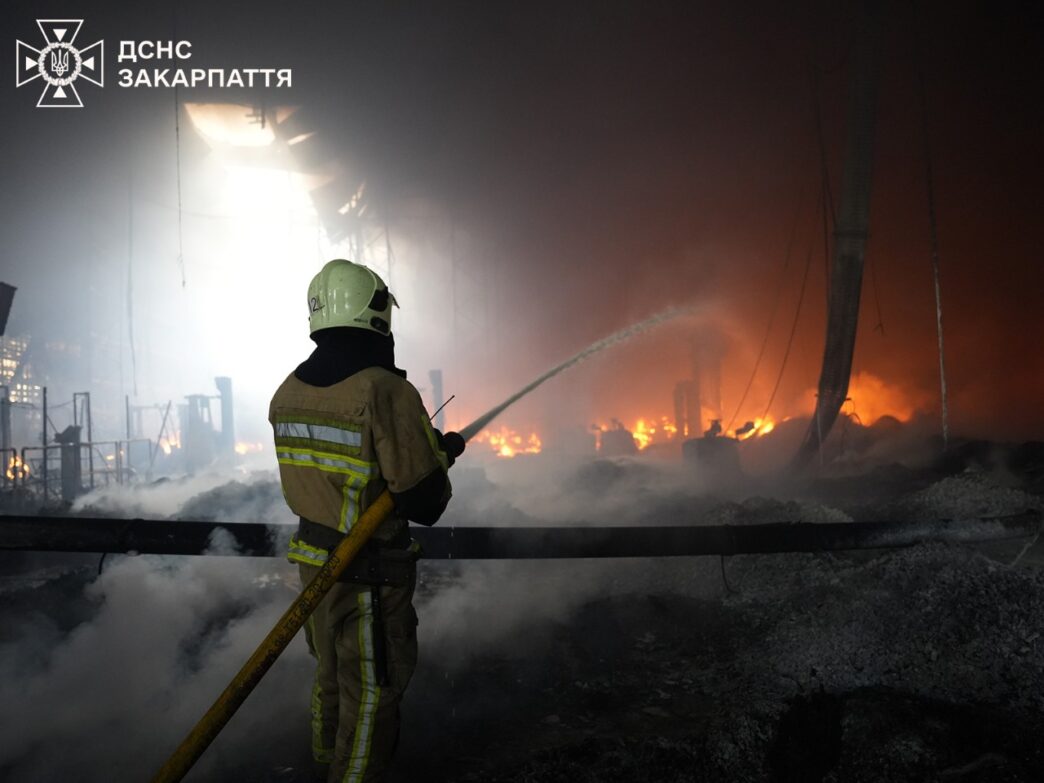
The August 21 Russian strike on an American factory in Mukachevo has laid bare the fundamental contradictions regarding Hungary’s foreign policy, as President Tamás Sulyok’s hazardous Facebook post edit exposed the contradictions in Viktor Orbán’s balancing act between Moscow and Hungarian national interests.
Within hours of the attack on an electronics factory in the predominantly Hungarian city in Ukraine’s Transcarpathian region, President Sulyok posted his condolences on Facebook, expressing “deepest sympathy to those injured in the Russian missile attack on Mukachevo.” Yet less than an hour later, the post was quietly deleted and replaced with an almost completely identical statement – minus the word “Russian,” now referring only to a generic “missile strike.“, leaving his audience with questions about he aggressor.
Given the Fidesz government’s controversial foreign policy, this digital sleight of hand represents more than a mere diplomatic fiasco. It reveals the impossible position the Hungarian government finds itself in when Russian military actions directly threaten the very ethnic Hungarian communities that the Hungarian government claims to “fight for”. Although the quick evacuation managed to prevent a severe number of casualties, the airstrike injured at least 19 people in a region where Hungary has already invested considerable political capital in protecting Hungarian minority rights and gaining votes in the parliamentary elections, making Sulyok’s linguistic gymnastics more significant.
The incident occurs against a backdrop of Hungary’s increasingly unhealthy energy relationship with Russia. As European Union pressure escalates to reduce Russian energy dependence, Budapest continues to resist sanctions that would compromise its strategic partnership with Moscow. This worrying energy-dependency has created a foreign policy framework where the Hungarian government routinely blocks or waters down EU measures against Russia, even if Russian missiles fall on Hungarian communities across the border. 
Prime Minister Viktor Orbán’s response to the Mukachevo strike further illustrated this contradiction: While acknowledging it as a “Russian missile attack” during a government meeting, Orbán notably avoided any condemnation of Moscow, instead focusing on offering medical assistance and sharing his enthusiasm regarding the upcoming Trump-Putin Alaska Summit. His restrained reaction stood in stark contrast to the fiery rhetoric typically reserved for EU institutions, Western policies, domestic NGOs, or the independent media that Fidesz deems threatening to Hungarian sovereignty.
The strike on Mukachevo has further exposed the fundamental unsustainability of Hungary’s geopolitical positioning. For years, Orbán has successfully portrayed his Russia-friendly stance as pragmatic realism — maintaining energy security while protecting Hungarian interests abroad. Yet when Russian missiles directly threaten ethnic Hungarians, this narrative becomes paradoxical, revealing the empty and false nature of Budapest’s nationalist claims to prioritise ethnic Hungarian communities above anything else.
The timing of the Mukachevo strike aggravated Hungary’s diplomatic difficulties. As Fidesz continues to hinder EU military aid to Ukraine while simultaneously claiming its concern for Transcarpathian Hungarians, the Russian attack demonstrates how the military escalation makes such positions increasingly flawed and unsustainable. Hungarian communities in Ukraine now find themselves caught between Budapest’s pro-Russian policies and Moscow’s military objectives.
This worrying contradiction extends well beyond the symbolic gestures to substantive policy challenges. Hungary’s blocking of EU sanctions and military assistance to Ukraine, theoretically speaking, indirectly aids the same Russian forces now also targeting Hungarian communities. The cognitive dissonance required to maintain the Hungarian government’s position grows more visible with each cross-border incident.
The Mukachevo episode suggests that Orbán’s foreign policy framework – built on the belief that Hungary is capable of maintaining beneficial relationships with both Russia and the West – is facing increasing pressure from the harsh realities. When Russian actions directly and severely threaten Hungarian interests, the limitations of this ambivalent approach become impossible to ignore or edit away.
As Hungary strives to navigate its complex relationship with both Moscow and Brussels, the Mukachevo missile strike serves as a stark reminder for everyone that geopolitical tightrope walking has its limits. President Sulyok’s hasty and unprofessional deletion may have removed the word “Russian” from his Facebook statement, but it cannot erase the fundamental contradictions now defining Hungarian foreign policy, amid Russia’s aggression in Ukraine.