













Since the inauguration of Donald J. Trump’s second presidency, tariffs have reemerged as a defining feature of U.S. trade policy. This development carries substantial implications for the European Union (EU), which now faces the uncomfortable possibility that its once “historical ally” may be repositioning itself as a strategic competitor. A March 2025 opinion poll by Le Grand Continent found that 51% of respondents considered Trump an adversary to the EU, underscoring the erosion of transatlantic trust.
In this shifting geopolitical environment, the critical question arises: Can Europe assert its economic leadership in a world increasingly defined by protectionism and fragmented alliances? More urgently, does the EU possess the structural and political coherence necessary to respond effectively to America’s confrontational economic stance?
Structural Power vs. Strategic Fragmentation
In terms of commercial measures and economic countermeasures, the EU certainly possesses significant leverage and bargaining power, primarily stemming from its aggregated Gross Domestic Product (GDP) of 17 trillion euros, the considerable size of its unified market, and the notably high purchasing power of its 450 million consumers.
However, the multifaceted threats that Europeans must collectively address in this new reality do not automatically translate into a consensus among member states on how to counter these challenges effectively or which specific strategies would best serve the Union’s collective interests in both the short and long term. 
The EU functions not as a singular economic entity but as a composite of distinct national economies. As shown by the above figures, all member states do not have the same weight within the European Union, which means that they cannot share the same national preoccupations. While goods and services circulate freely within the Single Market, essential production factors—labor, capital and innovation—remain regulated at the national level. This creates competing internal markets and hinders coordinated responses to external shocks. Without a harmonized system of economic governance, the EU struggles to present a unified front or to make long-term strategic investments. Investors, producers, and innovators face a fragmented policy landscape that undermines confidence and limits Europe’s economic agility.
This structural deficiency is not new. It reflects a deeper, historical challenge: the EU’s difficulty to evolve from a regulatory economic community into a political federation which was the implicit purpose of the founding fathers. While treaties such as the Treaty on the Functioning of the European Union (TFEU) articulate lofty goals of social and economic cohesion, these goals remain largely aspirational. The bloc continues to lack the institutional mechanisms necessary to implement a coherent, continent-wide economic strategy. As a result, it remains vulnerable not only to external pressures, such as Trump’s tariffs, but also to its own internal divisions.
Market Attractiveness Is Not Enough
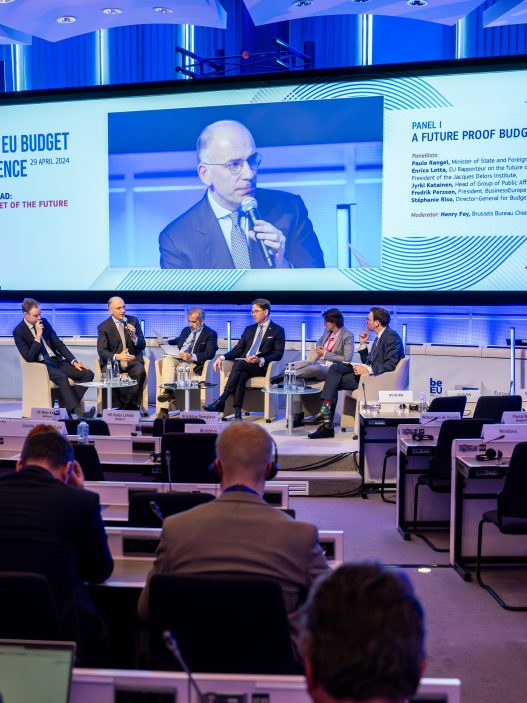
The foundational mission of the European project, as articulated in the TFEU, is to “ensure the economic and social progress of their States”. This ambition, rooted in post-war reconstruction, aimed to promote collective prosperity through integration, cooperation, and rule-based governance. Over time, this evolved into the Single Market and the eurozone, mechanisms intended to transform economic interdependence into political unity. In the report commissioned by the European institutions, Enrico Letta—former Prime Minister of Italy (2013–2014), now President of the Institut Jacques Delors and a member of the Italian Chamber of Deputies—writes: “The Single Market was established to strengthen European integration by eliminating trade barriers, ensuring fair competition, and promoting cooperation and solidarity among Member States.”
Historically, the EU addressed this fragmentation and economic diversity through the careful definition and gradual implementation of a shared economic space —a comprehensive common economic union designed to harmonize disparate national approaches. The underlying strategic project behind this market integration was the belief that the practical necessity for countries to comply with the standardized rules of the European Market would inevitably lead to the organic construction of a political—not merely economic—entity with shared values and objectives. In other words, economic integration was conceptualized as the practical means through which a broader political project could be achieved and sustained over time. As Jean Monnet, one of the visionary founders of European integration, eloquently puts it: “The characteristic of the method we follow in Europe is to pool the resources of our countries, to have established common institutions to which the national parliaments have agreed to transfer sovereignty and granted decision-making powers, and to act according to common rules applying to all without discrimination.” This deliberate primacy of economic integration over direct political unification culminated in the landmark establishment of the Single Market, as Jacques Delors retrospectively noted in his 2012 analysis of European integration.
Access to the European market is no longer a sufficient guarantor of prosperity. For the market to remain competitive and compelling, it must offer more than regulatory clarity—it must foster an environment conducive to innovation, investment, and long-term industrial resilience. This, in turn, requires political and institutional tools that the EU currently lacks.
The Missing Piece: Industrial Sovereignty
A core issue lies in the EU’s limited competence in industrial policy. Article 173 of the TFEU recognizes the importance of industry, yet it does not grant the Union exclusive authority in this domain. Instead, the EU may only support, coordinate, or complement national initiatives.
This leads to inconsistencies, overlaps, and missed opportunities for strategic alignment.
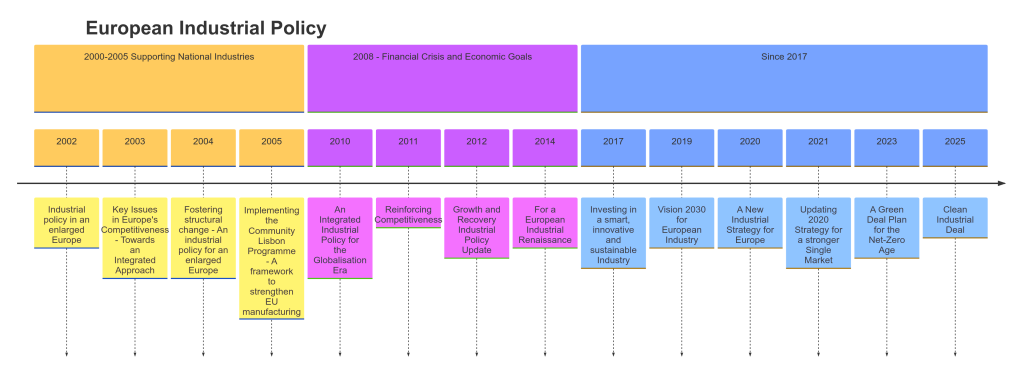
Industrial policy is not a technical detail; it reflects a society’s priorities and values. Decisions about what to produce, how to do, and for whom have profound implications for employment, environmental sustainability, and technological sovereignty. Without the authority to set common industrial goals, the EU cannot fully control the conditions under which its market operates. It can regulate the “rules of the game” but not the broader economic terrain on which that match is played.
This gap becomes particularly glaring in strategic sectors such as energy, digital technology, and defense. In these areas, fragmentation undermines Europe’s competitiveness. Member states pursue parallel or even contradictory strategies, often leading to duplicated investments and inefficient outcomes. The war in Ukraine exposed these vulnerabilities most starkly, as Europe struggled to coordinate defense procurement and production across national lines.
The Draghi and Letta reports (2024–2025) emphasize the urgency of overcoming this fragmentation. They argue that Europe’s long-term economic security hinges on the development of a coherent industrial policy backed by centralized coordination. As former European Central Bank president Mario Draghi notes, without shared priorities and long-term investment frameworks, the EU will remain structurally disadvantaged in its competition with centralized economies like the United States and China.
Green Deal: A Case Study in Incoherence
The European Green Deal illustrates both the potential and limitations of current EU industrial governance. Framed as a transformative strategy to transition to a low-carbon economy, the Deal includes the Clean Industrial Act and other initiatives aimed at reshaping European production. However, its implementation has been marred by inconsistencies, delays, and resistance from various Member States. A recent sign of these drawbacks is the vote on the Omnibus package, which restricts the implementation of the Green Deal by removing certain company regulations. While the Green Deal was supposed to be the cornerstone of the EU’s industrial strategy, this type of measure illustrates the challenges of properly meeting the initial ambitions.
These difficulties are not merely procedural. They reflect deeper political disagreements about burden-sharing, timelines, and strategic objectives. More critically, they signal to external partners and investors that the EU lacks the institutional coherence to sustain long-term commitments. The result is a credibility gap: while the EU champions ambitious goals, it struggles to deliver them in a consistent and dependable manner.
This inconsistency not only weakens Europe’s internal cohesion but also undermines its global standing. In the absence of predictable frameworks, the EU loses ground to more coordinated competitors who can offer clear incentives, stable policies, and integrated supply chains.
Why Member States Resist Deeper Integration
The persistent reluctance of national governments to cede greater control over industrial policy stems from both pragmatic and ideological concerns. On a practical level, states fear losing the ability to protect domestic industries and shape national development strategies. Politically, many governments remain wary of transferring sensitive economic powers to Brussels, especially amid rising nationalist and eurosceptic sentiment.
Yet this resistance comes at a cost. As Letta and Draghi highlight, Europe’s economic power remains untapped due to the absence of interconnected strategies. National-level decisions, when uncoordinated, often cancel each other out. The result is policy incoherence, wasted resources, and a failure to leverage the EU’s full economic potential.
The defense sector exemplifies this dysfunction. Despite increasing calls for a “European defense pillar,” Member States continue to design and produce military equipment without regard for interoperability. This not only diminishes operational effectiveness but also undermines the goal of strategic autonomy. The same logic applies to other high-tech sectors where fragmented efforts limit scale, reduce efficiency, and weaken innovation.
The unwillingness to integrate further is not solely institutional—it reflects a failure of political imagination. Without a shared vision of how to achieve a European economic sovereignty, national governments default to short-term electoral concerns and parochial interests. They might agree on shared objectives, but they disagree on how to achieve them. This prevents the emergence of a truly pan-European strategy capable of meeting the challenges of the 21st century.
Economic Power Requires Democratic Legitimacy
Underlying the institutional constraints of EU economic policy is a deeper democratic challenge. The delegation of authority to supranational institutions must be underpinned by popular legitimacy. Without broad public support, efforts to deepen integration risk backlash, resentment, and political instability.
Recent electoral trends, marked by the rise of nationalist and anti-EU parties, underscore this risk. Many citizens feel disconnected from EU decision-making processes and skeptical of the benefits of integration. Thus, an industrial policy may not be seen as a vehicle for shared prosperity, but as a distant and opaque technocratic process.
This democratic deficit must be overcome if the EU is to become a genuine economic power. The industrial strategy offers a unique opportunity to reconnect institutions with their citizens, provided that this strategy conveys the EU’s constituent values. Indeed, unlike monetary policy or abstract regulatory frameworks, industrial policy has immediate and visible effects on employment, infrastructure, and local communities, enabling a more direct connection between guiding values and political institutions.
To strengthen its legitimacy, the EU must involve citizens more directly in defining economic priorities. Participatory consultations, cross-border research initiatives, and transparent investment decisions can build trust and support. The European Commission’s industrial alliances, such as those for the production of clean hydrogen and batteries, are a promising model. But while these measures can reinforce what already exists, they will also require coherent investment in innovation, which must go hand in hand with more research and development.
The Path Forward: Unity Through Production
The debate over European economic power ultimately hinges on a basic question: can the EU become not just a powerful consumer market but also a cohesive and competitive production hub? Consumption alone does not constitute economic power. True strength lies in the capacity to produce, innovate, and shape the terms of trade.
Achieving this will require bold reforms. The EU must strengthen its industrial governance, empower its institutions with greater competencies, and build the democratic legitimacy necessary to sustain these changes. It must move beyond the logic of market access and embrace a production-oriented vision rooted in strategic autonomy, technological leadership, and social cohesion—production of goods, of regulations, of ideas.
This transformation will not be easy. It will involve political risk, institutional experimentation, and cultural change. But without it, the EU risks becoming economically stagnant, geopolitically marginalized, and increasingly irrelevant in a world dominated by production-centered powers.
In short, Europe stands at a crossroads. To remain a global economic power, it must confront the limitations of its current model and reimagine integration not just as a legal or regulatory project but as a strategic endeavor grounded in shared production, shared purpose, and shared prosperity.