







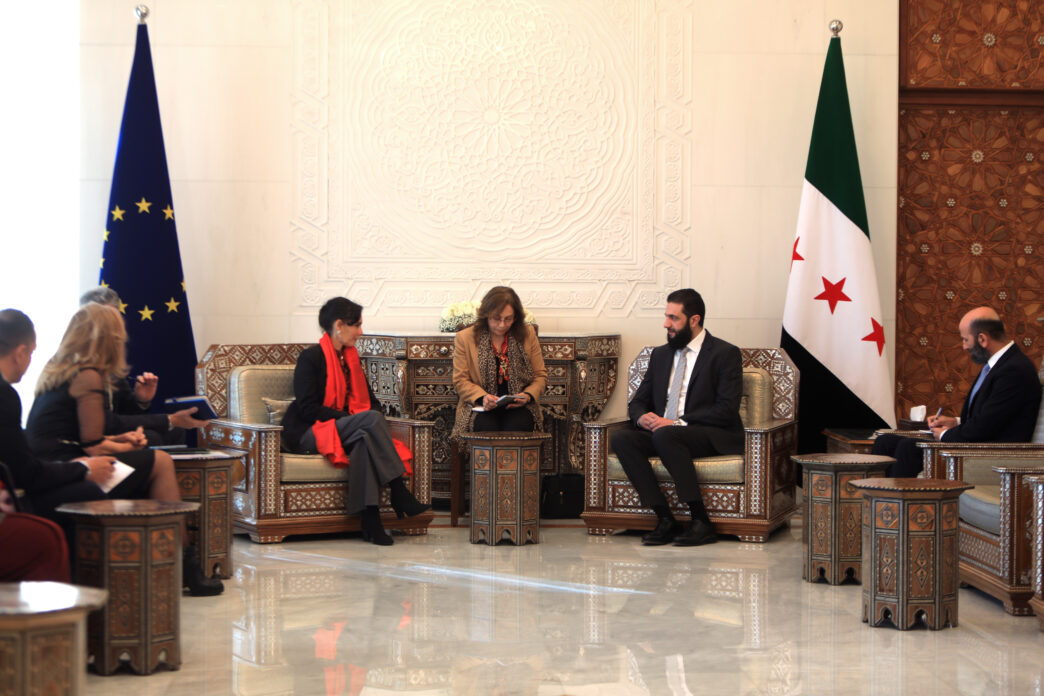
Can the European Union’s experience of peace-through-trade provide a viable framework for stability and development in Syria today?
Economic development is best substantiated in a stable environment. Trade is built on trust, and trust is best sustained when the context is stable. Instability, whether through conflict, bonded social capital, or societal segregation, hurts trust and thus hurts trade and the potential for sustainable economic development. To generate growth potential, trust and stability must be built. The current situation in Syria, which just emerged out of its civil war but still sees a lot of mistrust and instability, could form a significant future challenge if the European Union falters in supporting efforts in building trust – and a significant opportunity if it succeeds.
Instability corrodes the foundations of trade and exchange. Where conflict or division prevails, trust breaks down, agreements lose credibility, and investment stalls. This produces a cycle in which violence fuels mistrust, mistrust deters growth, and underdevelopment feeds further unrest. Breaking this cycle requires more than aid or reconstruction; it demands deliberate efforts to build stability and social cohesion. Such investments may seem slow, but their returns are lasting. Stability allows trust to grow, trade to flourish, and economies to expand, creating opportunities for local communities while opening reliable markets for European businesses and international partners alike.
Economists working on peace and development have long recognised these principles. The minds behind the Marshall Plans, the American aid aiming to reconstruct Europe after the horrors and destruction of the Second World War, understood that an unstable Europe would constitute the risk of renewed conflict. As such, they designed their aid packages in such a way to boost European industries, increase European competitive advantages, and incentivise peaceful collaboration through trade and economic interests. This, evidently, worked, and the principle of peace-through-trade became one of the pillars that the European Union as it exists today is built on. 
What people looking at the Marshall Plan, however, at times forget is that the aid given by the United States did not solely aim to generate economic growth. Investments in industrial capacity were paired with investments in infrastructure and in institutions. Led by ordoliberalist (Wu, T. 2018) economists such as Eucken (1950) and Böhm (1937), the post-war German state rebuilt not just its economy but also its institutional framework to better counter external pressures and maintain healthy levels of competition. The United States encouraged this process, understanding that competitive and healthy German, French, and British economies would create the building blocks necessary for a lasting peace in Europe, even if it came at the cost of short-term American business interests (Wu, T. 2018; additionally, special reference can be paid to the writings and policies of Jean Monnet). Through investing in trust, infrastructure, and economic connections, they built the bridging social capital needed for stability and sustainable peace.
In short, the goal of the United States in implementing its Marshall Plan was not merely economic growth, but rather social cohesion and stability – eventually paving the way for sustainable peace. Peacebuilding, they considered an investment.
The European Union adopted similar ideas. By tying together the economies of France, Germany, and their neighbours through the European Coal and Steel Community, it aimed to make conflict materially irrational. Trust is institutionalised and formalised through trade deals and intra-continental social cohesion, creating the peace and stability necessary for economic prosperity. Critics of this approach point out that such a vision may now appear outdated, too closely bound to the optimism of post-war integration and ill-suited to today’s fragmented global order. Yet the underlying principle has not lost its relevance. Economic interdependence continues to reduce incentives for violence, with peace functioning both as a dividend and as an investment opportunity.
While these principles are evidently still relevant in peacebuilding and post-conflict reconstruction, these nuances are too often overlooked in public debates. Peace building is at times confused with pacifism, and development is seen as a humanitarian enterprise, and linked to left-wing policies. In this politicisation of peace, the tangible, long-term benefits of trust and stability are underappreciated. By incentivising social cohesion and bridging divided communities, a stable foundation can be laid for sustainable economic growth.
Right now, the European Union has a unique opportunity to apply these principles once again. Syria, as a neighbour, holds considerable latent potential – especially if the conflict continues to subside. Syria possesses significant natural resources, a strategic geographic position linking regional markets, and a young, driven, and highly capable population. Yet this potential cannot be accessed under the current conditions of fragmentation, mistrust, and social strife.
Fourteen years of civil war, and forty of brutal dictatorship, have eroded societal trust in Syria. Where trust exists, it exists within communities and not in between, which significantly hinders the potential for economic development, institutional development, or the development of a functional Syrian state.
Without rebuilding cohesion between communities, investments in infrastructure or industry alone would fail to secure lasting development. What Syria requires first are deliberate efforts to restore trust, repair social bonds, and create the bridging capital that can stabilise society and provide the foundations for sustainable economic recovery. This process cannot be imposed from outside. Rather, it must be led by Syrians themselves, with external partners such as the EU supporting the creation of spaces and incentives for trust to grow across communities.
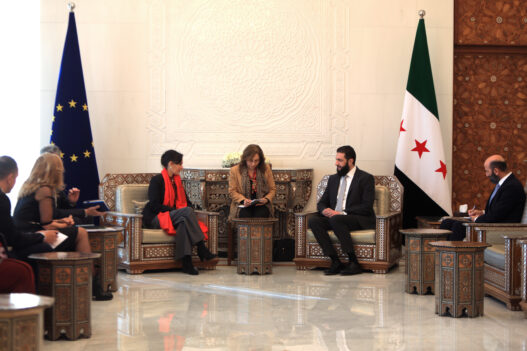
For the European Union, this presents both a responsibility and an opportunity. Drawing lessons from its own history, the EU can help incentivise collaboration between Syrian communities by creating opportunities for young people to build businesses in peaceful conditions, removing incentives for mistrust and providing pathways for cooperation. Once cooperation is established, the costs of returning to violence will outweigh any perceived benefits, and an opportunity arises for stability to consolidate. Unlike the conditional lending often associated with international financial institutions, this approach does not seek to enforce particular economic policies. Instead, it prioritises stability and cohesion as the groundwork upon which any future economic choices must rest.
Stability, in turn, creates the environment in which Syria’s economic potential can be realised, opening markets that will benefit both Syrians and European partners alike. For the EU, stability in Syria also means reduced security concerns and new commercial opportunities in neighbouring markets, making peace a shared dividend rather than a one-sided act of aid. Just as the Marshall Plan once invested in trust, cohesion, and institutional rebuilding, European engagement in Syria can lay the foundation for lasting peace and prosperity.
Economic development cannot take root without stability. Trust is the foundation of trade, and stability provides the conditions for trust to grow. History has shown, through the Marshall Plan and European integration, that deliberate investments in cohesion, institutions, and economic interdependence create incentives for peace and opportunities for prosperity. The same principles apply today. In Syria, as in post-war Europe, growth potential exists but remains locked behind division and mistrust. By prioritising investments in trust and collaboration, the European Union can help create stability that benefits local communities while opening new opportunities for European partners. With the European Union providing support through direct investments, Syrians can take the lead in the process of stabilising and rebuilding their country. In this sense, peace is both a moral imperative and a shared dividend, improving Syrians’ prospects while contributing to stability and prosperity in Europe.