






The history of a place tells us why it is the way it is today. Understanding Iran’s social and political history helps us understand why we are where we are today. We must reconstruct the historical events that led Persia to officially adopt the name Iran in 1935, as requested by Shah Reza Pahlavi. The analysis will focus on the relationship between the Western powers and the newly formed Iran, in particular, that with Great Britain, and how they had a negative impact, both politically and socially, contributing to the Iranian revolution of 1979, which definitively marked diplomatic relations with the State of Israel, leading us today to the first direct military confrontation between the two powers. What responsibility do the Western states have?
Navigating the Middle Eastern context proves to be particularly complex due to the multitude of external influences and competing actors that animate the region. A common analytical error lies in interpreting history through a systemic lens, as a linear sequence of events triggering one another. Applying such a framework to the Middle East can be misleading, as it tends to overlook the social dimension that is essential to understanding the deeper dynamics of the region. How did we arrive at the present confrontation? What role have Western powers played in shaping such a fragmented geopolitical landscape, one that hinders peaceful coexistence among the various states?
To begin, it is important to recall that modern Iran was historically the Persian Empire, which had been under Qajar rule since 1789. The geopolitical control exerted by imperial powers in the Middle East has had profound consequences for regional stability, as highlighted by James Barr in his 2012 study. Throughout the 19th century, this dynasty was subjected to mounting external pressures from both the Russian and British Empires as each sought to extend its sphere of influence over the Fertile Crescent. The Russo-Persian wars (1804–1813 and 1826–1828) secured Russian dominance over the South Caucasus. Alarmed by Russian advances, the British turned their attention to regions bordering India to safeguard their colonial holdings and assert economic, political, and social influence over the Qajar dynasty. These tensions did not subside, and the Persian population spent the 19th century under the shadow of imperial ambitions of both powers, cultivating a deep-seated resentment toward what John Gallagher and Ronald Robinson, in their 1953 essay The Imperialism of Free Trade, termed “informal imperialism”; a form of domination absent formal annexation, yet deeply embedded in the sociopolitical fabric through commercial, financial, and cultural instruments. 
The political dynamics of the region shifted dramatically in the 20th century, as described by Campanini, with the gradual dissolution of the colonial order and the rise of local powers. In 1907, Britain and Russia signed an agreement to delineate their respective zones of influence in Persia. By then, the Qajar regime had lost its ability to govern independently, rendering the population vulnerable to foreign involvement. What emerged was a de facto protectorate, not intended to foster a strong and sovereign Persian state, but rather to serve the mutual interests of the two empires, using the Persian people as pawns in a broader geopolitical game. In 1901, Mozaffar al-Din Shah granted William Knox D’Arcy a sweeping oil concession, excluding only parts of northern Persia. The agreement was strikingly asymmetrical, heavily favoring the British side: the Persian government received only 16 percent of net profits and a modest share in the company that would soon emerge as reported in Oil Agreements in Iran published by Encyclopædia Iranica. This case exemplifies the very notion of informal economic imperialism imposed by Western powers on colonized populations. By 1909, the Anglo-Persian Oil Company was established, and in 1914, the British government became its principal shareholder in anticipation of the war, motivated by both strategic and economic interests. The outbreak of the First World War did not alleviate tensions; it aggravated them.
In the postwar period, Britain sought to formalize its control over Persia by establishing a protectorate. This plan, which implicitly ignored the Iranian people’s aspirations for self-determination, was met with resistance from the United States, the fading Qajar dynasty (which would fall in 1925), and the newly empowered Bolsheviks. Britain realized that a resilient Persia was needed to contain the Bolshevik threat and quietly orchestrated the downfall of the Qajars in order to install a figure more amenable to modernization and Westernization. Since 1879, the Qajar monarchs had maintained a personal guard, the Cossack Brigade, led by Russian officers. Following the Bolshevik Revolution, Britain pledged to remove the Russian command and place the brigade under Persian control. British experts considered the Cossack Brigade the most advanced military unit available and the ideal foundation for rebuilding the army to defend the region. At that time, the brigade’s commander was Reza Khan, viewed as the ideal candidate to overturn the existing order. He was held in high esteem by Edmund Ironside, commander of the North Persian Force, although it would be more accurate to say that, even if he was aware of Reza Khan’s intentions, he did nothing to prevent them, in a clear sign of political opportunism. In 1921, he marched on Tehran, entered Parliament alongside reformist forces, and paved the way for what was to follow: in 1923, he became Prime Minister and initiated sweeping reforms aimed at modernizing the country along the lines of Atatürk’s efforts in Turkey. Like his Turkish counterpart, Reza Khan’s ultimate goal was to consolidate power. Shortly after, with the support of British intelligence, he deposed the last Qajar monarch in 1925 and declared himself Shah of Persia.
Beyond the historical facts, it is critical to grasp the underlying dynamics. Western arrogance manifested itself in the repeated imposition of political destinies on third countries, steering their trajectories from afar with little regard for their sociocultural intricacies. The pursuit of self-interest has often masked itself as a pursuit of justice. Is that not, in essence, what is still unfolding today?
During the Second World War, the same patterns re-emerged. In 1935, Reza Khan renamed the country to Iran and declared neutrality in order to maintain diplomatic ties with Nazi Germany and protect longstanding economic relations with Britain, especially in the oil sector. In 1941, the Allies demanded that Iran expel German nationals and grant military access to its railway network. Reza’s delay proved fatal. In August of that year, he was forced to abdicate in favor of his son, Mohammad Reza, who by September had assumed the throne and was far more accommodating to foreign influence. This was not a matter of merit, but of method. Opposition to the Third Reich was unequivocally justified, but the means through which the Allies acted in Iran bore the same imperialist imprint that had characterized earlier interventions. These methods sowed the seeds of anti-imperialist sentiment, which would eventually evolve into the anti-Western and, by extension, anti-Israeli stance prevalent today. History not only teaches, it foreshadows. Indeed, postwar dynamics only exacerbated tensions, with the emergence of a new global actor: the United States.
As the Cold War began, and with the Korean War underway (1950–1953), Mohammad Mosaddeq, a democratically elected leader with ties to the Iranian Communist Party and open sympathies for the Soviet Union, rose to power. He implemented nationalist policies, rejected foreign interference, and advocated for the establishment of an Islamic republic. Among his earliest acts was the nationalization of the Anglo-Persian Oil Company, provoking a crisis with Britain. In 1953, following the Korean War, the United States intervened, coordinating with MI6 and the CIA to overthrow Mosaddeq and reinstate Mohammad Reza Shah. What followed was another wave of Westernization and alignment with Western powers. The Anglo-Persian Oil Company was managed by an international consortium, and Iran joined the CENTO military alliance with Britain, Pakistan, and Turkey.
Throughout this period, a dual identity emerged: an “external Iran,” represented by the monarchy, aligned with Western powers, and an “internal Iran,” guided by the Ulama—Muslim scholars who served as spiritual, political, and social leaders, deeply opposed to Western cultural influence, which they viewed as corrupting Islam’s sacred traditions. With the rise of Reza Khan and later Mohammad Reza Shah, the influence of the Ulama waned. Ayatollah Ruhollah Khomeini became the most prominent figure among them, articulating a powerful critique of the Shah and the West. He was exiled in 1963 after leading mass protests in Tehran. These demonstrations coincided with the so-called White Revolution, ostensibly designed to modernize Iran but in practice a strategy to dismantle traditional elites and strengthen monarchical authority. While the White Revolution had certain admirable goals, it was executed through repressive means that undermined Iran’s cultural consciousness. The economic crisis that exploded in 1976 further alienated key social groups, including the mercantile Bazari class and university students, adding to the growing opposition.
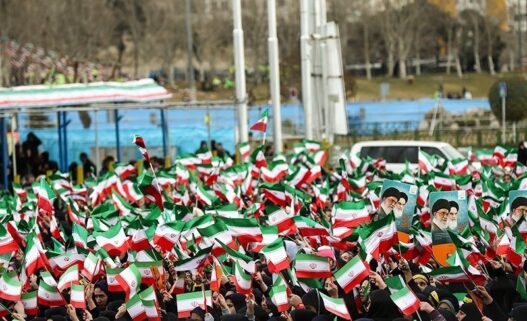
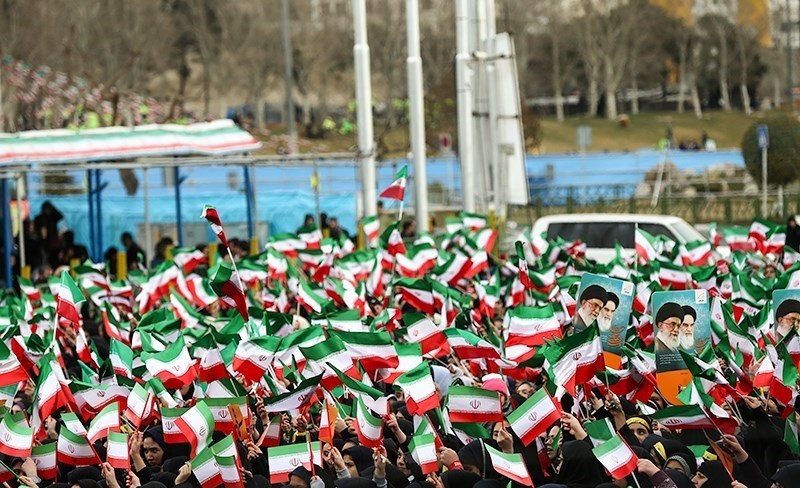
Iranian history cannot be interpreted solely through internal dynamics; it must also be understood in relation to the broader Middle Eastern context and the evolving posture of Western states. As discontent surged in Iran against Western subjugation, the United States was reeling from its trauma of the Vietnam War. The Nixon administration began to embrace a more isolationist doctrine and, indirectly, one could argue, supported Mohammad Reza in building a strong army to preserve regional order without direct US intervention. Paradoxically, Iran became Washington’s closest ally in the Middle East; beneficial to the “external Iran,” but antithetical to the values of “internal Iran.” This trajectory culminated in the Iranian Revolution of 1979, a watershed moment that marked the definitive break between Iran and the West, uniting even the external Iran against foreign interference. Between January 5 and 13, 1979, millions took to the streets to demand the end of the monarchy and the return of Khomeini. On January 16, Mohammad Reza fled the country, and three days later, Khomeini returned triumphantly. A national referendum held in March 1979 formally ended the monarchy and established the Islamic Republic.
The 1979 revolution is the defining turning point in modern Iranian history, reshaping its regional and international orientation and initiating a prolonged period of tension, particularly with Israel and the United States. Under Mohammad Reza Shah, Iran had maintained de facto recognition of Israel, despite the absence of formal diplomatic ties. The two states shared extensive economic, military, and intelligence cooperation. The revolution abruptly ended this arrangement: Israel was now denounced as a “Zionist regime,” and the 1979 constitution, which was later amended in 1989, institutionalized resistance against Israel as part of a broader struggle against Western imperialist powers.
The conflict between Iran and the West lies at the root of today’s volatile climate. There was an “underground” relationship up to 1979 and an “overt” one thereafter, but in both phases, attempts at normalization and mutual recognition have failed, leaving the conflict unresolved. History teaches us that resolving this issue requires a concerted effort involving major Western powers and Arab states working together to stabilize the region. From this historical reconstruction, it becomes clear that the British – alongside Russia and, later, the United States – played a central role in fomenting the conditions that led to the 1979 revolution and, ultimately, to the current geopolitical configuration.
The relationship between Iran and the West cannot be understood merely as a sequence of events, but rather as a long-term structural process in which continuous Western interference has left an indelible mark on Iran’s political, cultural, and ideological identity. From British informal imperialism to the postwar American manipulation of Iranian sovereignty, and the unconditional support for the Shah’s regime, Western powers have persistently shaped Iran’s trajectory according to geopolitical interests, often disregarding internal tensions, religious foundations, and the intricate social fabric of the country. It is precisely within this space of friction, between externally imposed authority and a society seeking self-determination, that a deep-rooted hostility toward the West took shape, extending inevitably to Israel, perceived not simply as a state, but as an extension of Western imperial presence in the region. Opposition to Israel, therefore, cannot be reduced to territorial or religious disputes alone; it must be understood within a broader historical context marked by decades of political humiliation, economic exploitation, and cultural alienation.
Lorenzo Kemal, in Contested Land, explores the deep roots of the Israeli-Palestinian conflict and its geopolitical implications. Today’s conflict is not an isolated development but the culmination of a long and complex history in which Iranian sovereignty was repeatedly undermined by foreign powers. The 1979 revolution marked the end of a cycle of subjugation and the emergence of a new national narrative, one defined by resistance to the West and rejection of Israel as a symbol of an international order that had long denied Iran the right to determine its own destiny. To understand the current tensions, we must look beyond the surface of contemporary events and retrace the deeper genealogy of the conflict. It is there, in the often-overlooked history of Iran’s entanglement with the West and with Israel, that we find the roots of today’s incendiary standoff and, perhaps, the first clues to its eventual resolution.