






Winter crisis: Flooding, inadequate shelter and shortages of essential supplies are worsening humanitarian conditions in Gaza.
Humanitarian access: The EU urges Israel to open Gaza crossings and ensure sustained aid deliveries by the UN and humanitarian organisations.
Civilian protection: Brussels expresses concern over reported military strikes and calls for compliance with international humanitarian law.
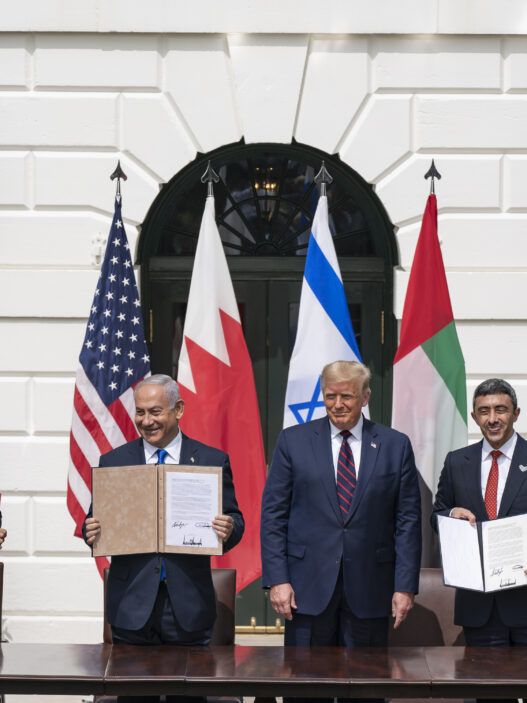
Political demands: The EU calls for Hamas’s disarmament, Israeli withdrawal and progress towards a two-state solution.
Source: EEAS
AI-assisted: Reviewed by the Briefing Team.
More Quick Briefs:
·Climate Policy·Geopolitics·Latin America·Technology and Digital Policy·Trade Policy·Brazil·COP31·European Union·Germany·Mercosur·Weekly Briefing
·Climate Policy·Geopolitics·Latin America·Technology and Digital Policy·Trade Policy·Brazil·COP31·European Union·Germany·Mercosur·Weekly Briefing
Brazil – Weekly Briefing ↗︎
Brazil and the EU advanced diplomatic and economic cooperation this week, while digital regulation and climate policy highlighted shared priorities and persistent differences.
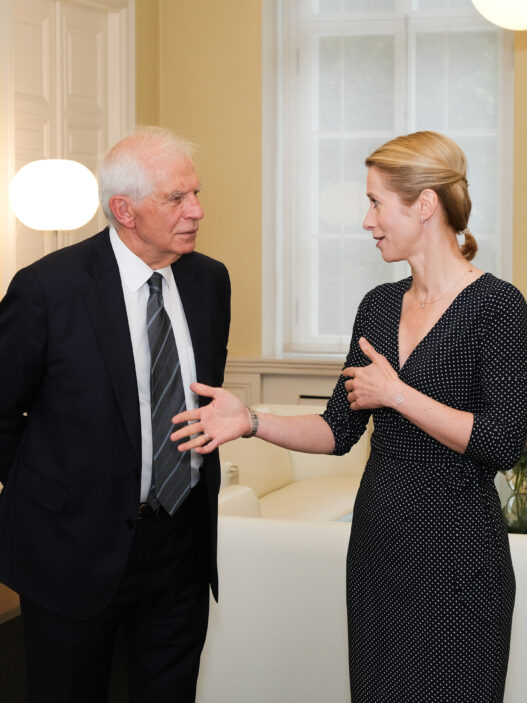
→Diplomatic Relations: EU foreign policy chief Kaja Kallas signalled interest in a 2027 EU-Brazil summit during talks with Foreign Minister Mauro Vieira, highlighting closer diplomatic engagement despite geopolitical differences.
→Democracy and Technology: Brazil’s electoral court fined Meta BRL 7.5 million for incomplete information in an electoral investigation. The case reflects concerns also driving EU efforts to strengthen digital platform accountability.
→Economics and Trade: Brazil launched the Conecta Brasil-EU platform to help businesses access European markets and identify opportunities linked to the EU-Mercosur agreement.
→Climate Cooperation: At COP31, Brazil and Germany advanced plans for €100 million in Amazon bioeconomy financing, highlighting practical climate cooperation despite differing economic priorities.
→Sources: Folha de S.Paulo | Agência Brasil - Meta | Agência Brasil - Trade | Agência Brasil - Climate
→AI-assisted: Reviewed by the Briefing Team.
·Climate Policy·Energy Policy·Environmental Policy·United Nations·Australia·Clean Electricity·COP31·Council of the EU·European Commission·European Union·Fossil Fuels·UNEP
·Climate Policy·Energy Policy·Environmental Policy·United Nations·Australia·Clean Electricity·COP31·Council of the EU·European Commission·European Union·Fossil Fuels·UNEP
Fossil Fuels and Climate Finance Top COP31 Agenda: Electifrication Now! But Is It Clean? ↗︎
Governments meet in Antalya from 9 to 20 November to discuss how to move away from fossil fuels and close the funding gap for countries adapting to climate change.
Updates
→News: UN climate chief urges faster progress at COP31 as divisions over fossil fuels threaten international climate negotiations (Reuters)
→Official Announcement: EU and Global Green Growth Institute sign €10 million agreement aiming to mobilise €1 billion in climate-aligned investment (European Commission)
→News: Climate-vulnerable developing nations demand greater financial support at COP31 to address climate-related disasters, while wealthy countries face criticism for their limited commitments (Reuters)
→News: Small island nations seek to channel remittances from overseas communities into climate resilience projects as they face growing threats from climate change (Reuters)
→News: COP31 highlights human rights and environmental concerns over critical mineral mining as demand grows for materials needed for the clean energy transition (AP)
→News: UN Secretary-General António Guterres warns of accelerating climate change at COP31 and urges stronger global action on fossil fuels and climate justice (Reuters, United Nations)
→Official Announcement: EU signs Global Geothermal Pledge at COP31, reaffirming its commitment to expanding geothermal energy as part of the clean energy transition (European Commission)
→Official Announcement: EU and Organisation of African, Caribbean and Pacific States reaffirm climate commitments at COP31, focusing on translating shared priorities into concrete action (Council of the EU)
→Analysis: Six key issues to watch at COP31 climate talks, including emissions reductions, climate finance and international cooperation (Rapporteur)
→News: Turkish villagers urge COP31 leaders to witness the environmental devastation caused by coal mining and energy production (Reuters)
→The summit: Turkey hosts COP31, while Australia leads the negotiations. Heads of state and government meet on 11 and 12 November
→Fossil fuels: Brazil’s outgoing COP presidency published a voluntary roadmap on 3 November. It calls for fossil fuel production and demand to fall as clean energy expands
→Adaptation finance: Developing countries received $28.2–31.7 billion in international public adaptation finance in 2024. The UN Environment Programme estimates they will need around $305 billion annually by 2035
→EU position: The EU will press governments to implement their national climate plans, accelerate the shift away from fossil fuels and expand the use of clean electricity
→Sources: Council of the EU, COP30 Presidency, UNEP, UNFCCC
→Transparency Note: AI-assisted. Reviewed by the Briefing Team.
·European Governance·Technology and Digital Policy·Transatlantic Relations·Cloud·Copilot·European Sovereignty·Microsoft·Outlook·Software·Teams·Technological Dependencies·USA
·European Governance·Technology and Digital Policy·Transatlantic Relations·Cloud·Copilot·European Sovereignty·Microsoft·Outlook·Software·Teams·Technological Dependencies·USA
Microsoft Outage Raises Questions Over Europe’s Digital Dependence ↗︎
A widespread Microsoft service outage on 12 November disrupted Outlook, Teams and other services, renewing concerns about Europe’s reliance on major US technology providers.
Updates
→News: Microsoft says its services are fully restored following a global outage that disrupted users and businesses worldwide (The Guardian)
→Service disruption: Thousands of users reported problems accessing Microsoft services, including Outlook, Teams and Copilot.
→Digital dependence: The incident highlighted the importance of US-based cloud and software providers for European businesses and public institutions.
→Operational resilience: Reliance on concentrated digital infrastructure raises questions about service continuity, alternative providers and contingency planning.
→European sovereignty: The outage adds context to ongoing EU debates over digital sovereignty, cloud competition and reducing strategic technological dependencies.
→Sources: Reuters | Associated Press | Euronews
→AI-assisted. Reviewed by the Briefing Team.
·Cyber Security·Rule of Law·Security & Defence·BfV·BND·Cyberattacks·Espionage·Germany·Hybrid Threats·Intelligence·Sabotage
·Cyber Security·Rule of Law·Security & Defence·BfV·BND·Cyberattacks·Espionage·Germany·Hybrid Threats·Intelligence·Sabotage
Germany wants to Expand Intelligence Powers, but Scandal Shocks Plans ↗︎
Germany wants its intelligence services to move beyond observation and gain powers to actively disrupt threats, a major shift in the country’s post-war security architecture.
Updates
→News: German Bundestag passes sweeping intelligence reform expanding the powers of the BND and domestic intelligence agency BfV to counter espionage, cyberattacks and hybrid threats (Tagesschau, German Bundestag)
→Update (07.10.2026): News: Former BND chief August Hanning detained over suspected espionage and attempted treason, in a scandal that could undermine Germany’s push to strengthen its intelligence services (Reuters)
→Update (05.10.2026): News: BND chief Martin Jäger warns Russia poses Germany’s most direct security threat and calls for a stronger, more resilient intelligence service (Bundestag)
→Quick Brief:
→The cabinet approved the reform on 12 August, covering both the foreign intelligence service BND and the domestic BfV; parliament must still approve it
→Intelligence services could take active countermeasures, such as turning off a foreign server used for an imminent cyberattack
→New rules would expand digital surveillance and permit AI-assisted analysis; the BND could retain certain telecommunications data for up to 12 months
→The government cites growing espionage, sabotage and hybrid threats, while critics warn that expanded domestic intelligence powers require strong rule-of-law safeguards
→Sources: German Federal Government, Reuters
→Transparency Note: Use of AI
·Inside Europe·Hungary·Péter Magyar·Profile
·Inside Europe·Hungary·Péter Magyar·Profile
Péter Magyar: Hungary’s Conservative Reformer ↗︎
Péter Magyar ended Viktor Orbán’s 16-year rule in April 2026, promising to restore democracy, fight corruption and rebuild Hungary’s relationship with the EU.
→Former insider: Once part of Orbán’s Fidesz establishment, Magyar became its leading challenger through his centre-right Tisza party.
→Historic victory: Tisza won 141 of 199 parliamentary seats, securing a two-thirds majority and bringing Magyar to power in May 2026.
→Complex EU relations: Magyar seeks closer cooperation with Brussels and stronger democratic institutions but defends national sovereignty and opposes Hungarian arms deliveries to Ukraine.
→Authoritarianism allegations: Orbán accuses Magyar of targeting political opponents following investigations involving former officials and Orbán’s brother. Magyar rejects the accusations and defends the investigations as lawful accountability.
→Sources: DGAP, OSW, Reuters
→Transparency Note: AI-assisted. Reviewed by the Briefing Team.
·Geopolitics·Russia·Ukraine·War in Ukraine·Baltics·European Union·Russia·Russian-Ukrainian War·Ukraine
·Geopolitics·Russia·Ukraine·War in Ukraine·Baltics·European Union·Russia·Russian-Ukrainian War·Ukraine
Russia – Ukraine Weekly Update ↗︎
Russia and Ukraine intensify cross-border attacks as US-mediated peace talks resume, while drone incursions raise security concerns across the Baltic region.
→Ukrainian drone attacks targeted Russia's northwestern Leningrad region, setting parts of the Ust-Luga port area on fire and damaging oil infrastructure. Three people were reportedly injured. Russia also reported intercepting large numbers of Ukrainian drones across multiple regions, while attacks on Russian energy facilities continued.
→Russian forces intensified attacks across Ukraine, targeting energy infrastructure, electricity substations and urban areas. Strikes were reported in Kryvyi Rih, Kharkiv, Zaporizhzhia and Odesa, while a drone attack damaged a hospital in Kyiv and injured one person. Ukrainian authorities also reported casualties following attacks on residential and civilian infrastructure.
→Lithuania, Latvia and Estonia issued emergency drone alerts after unidentified drones entered their airspace from neighbouring Russia or Belarus. NATO aircraft were activated in response, while Finland temporarily imposed airspace and maritime restrictions in the eastern Gulf of Finland as a precaution. No injuries were reported in connection with the alerts.
→The two-day US-mediated negotiations between Russia and Ukraine in Abu Dhabi on 10–11 November concluded with an agreement in principle for a major prisoner-of-war exchange. Both sides described the discussions as constructive, although territorial disputes, particularly Russia's demands concerning the entire Donbas region, and Ukraine's security guarantees remain unresolved.
→US envoys Steve Witkoff and Jared Kushner met Russian President Vladimir Putin in Moscow on 12 November before holding discussions with Ukrainian President Volodymyr Zelenskyy in Ireland. Washington indicated that European participation would be necessary for a sustainable settlement. However, Moscow had not yet formally agreed to an expanded negotiating format that would include European representatives.
→Ukraine continued targeting Russian military and energy infrastructure during the diplomatic engagements. Ukrainian officials reported strikes on oil refineries, missile production facilities and military assets, including a Russian naval vessel in the Gulf of Finland. Finland confirmed detecting a strike on a Russian warship, although details surrounding the incident remained limited.
→The continued attacks have raised concerns over the security of Baltic Sea shipping and critical energy infrastructure. The Ust-Luga port, a major Russian oil and grain export facility, and the Gulf of Finland remain particularly exposed to the conflict's spillover effects, including potential disruptions to civilian maritime traffic and environmental safety.
→Ukraine reported mounting Russian military casualties alongside continued fighting along the front lines. Kyiv claimed nearly 3,000 Russian soldiers were killed or wounded on 9 November and more than 26,000 casualties during the first 10 days of the month. These figures could not be independently verified. Meanwhile, Russia maintained its territorial demands and called for wider negotiations on European security arrangements, including NATO's military presence in the region.
→Sources:
→Russia, Ukraine exchange strikes as Baltic nations issue drone alerts – Al Jazeera
→Russia and Ukraine hold first peace talks since February in Abu Dhabi – Reuters
→Russia and Ukraine reach deal on prisoner swap – Reuters
→Ukraine claims record 3,000 Russian casualties in one day as war drags on – Al Jazeera
→Ukraine attacking Russian warships in the Baltic Sea amid talks – Al Jazeera
→Russia and Ukraine report overnight attacks amid US diplomatic push – Al Jazeera
→Transparency Note: Prepared with AI assistance.
·Geoeconomics·Geopolitics·Middle East Relations·EU·Houthis·Iran·Iran War·Israel·Saudi Arabia·Weekly Update·Yemen
·Geoeconomics·Geopolitics·Middle East Relations·EU·Houthis·Iran·Iran War·Israel·Saudi Arabia·Weekly Update·Yemen
Middle East Weekly Update ↗︎
US pauses further military strikes against Iran amid renewed diplomatic efforts, while continued attacks across the Strait of Hormuz and Saudi Arabia highlight persistent regional instability.
→US President Donald Trump announced a pause in further military strikes against Iran following appeals from Qatar, Saudi Arabia, the United Arab Emirates, Bahrain and Kuwait. However, Washington intends to maintain its naval blockade in the Strait of Hormuz and has retained the option of renewed military action.
→Diplomatic efforts involving Qatar and Pakistan continue, with Qatari Prime Minister Sheikh Mohammed bin Abdulrahman Al-Thani holding discussions with Trump and Iranian officials. However, Tehran's senior security official Mohsen Rezaei denied that negotiations were currently underway, insisting that Washington must respond to Iran's conditions before talks can resume.
→Four oil tankers were reportedly struck by explosions in the Strait of Hormuz on 11 and 12 November, according to Iranian military authorities, which attributed the incidents to naval mines. The United Kingdom Maritime Trade Operations agency also reported that an unidentified projectile struck a vessel near Ras Al-Khaimah, highlighting continued maritime security risks despite expectations of de-escalation.
→Yemen's Iran-aligned Houthis claimed attacks on Saudi Arabia's East-West oil pipeline, an oil facility in Yanbu and an Aramco building in Riyadh. The Saudi-led coalition subsequently reported intercepting and destroying two Houthi drones over the Riyadh region and the Eastern Province. The attacks threaten critical energy infrastructure, particularly as Saudi Arabia relies on the East-West Pipeline to bypass disruptions in the Strait of Hormuz.
→Saudi Arabia is pressing the European Union to designate Yemen's Houthi movement as a terrorist organisation amid renewed cross-border attacks. However, European governments remain concerned that such a designation could undermine future peace efforts, restrict humanitarian operations and increase threats to European shipping. The proposal requires unanimous approval from all 27 EU member states.
→Israeli forces continued military operations in southern Lebanon, including a reported explosion in Khiam. Separately, conflicting accounts emerged over a reported drone attack targeting Bahrain, with Iran's Islamic Revolutionary Guard Corps claiming responsibility for an attack on an early-warning system. At the same time, the United States Central Command said it intercepted two drones without causing damage or injuries.
→Sources
→US pauses further strikes on Iran following Gulf appeals – Reuters
→Four tankers struck by explosions in the Strait of Hormuz – Reuters
→Houthis claim attacks on Saudi Arabia's East-West oil pipeline – Reuters
→Saudi Arabia presses EU to designate Houthis as a terrorist group – Reuters
→Transparency Note: Prepared with AI assistance.
·Geopolitics·Inside Europe·Security & Defence·Trade Policy·UK·Andy Burnham·Brejoin·Closer Cooperation·Conservatives·European Union·UK-EU Summit
·Geopolitics·Inside Europe·Security & Defence·Trade Policy·UK·Andy Burnham·Brejoin·Closer Cooperation·Conservatives·European Union·UK-EU Summit
Brejoin? Burnham Reopens Debate on Britain Rejoining the EU ↗︎
Ahead of the 20 November UK-EU summit, Centre for European Reform director Charles Grant argues that Prime Minister Andy Burnham has reopened the debate on EU membership, though he sees little chance of Britain rejoining within a decade.
Updates
→News: EU foreign policy chief Kaja Kallas calls for gradual UK-EU rapprochement ahead of next week’s summit, advocating small steps towards closer cooperation (EUObserver)
→The immediate agenda: Burnham is seeking closer cooperation on food trade, energy and security.
→The case for closer ties: Grant argues that weaker trade with the EU drives the debate in Britain, while EU governments have more to gain from closer security and defence ties.
→Domestic opposition: The Conservatives oppose rejoining, and senior Labour figures are wary of reopening the debate, particularly over free movement.
→The EU’s terms: Grant expects most member states to welcome a British return but sees France as a possible obstacle. He doubts the UK would recover its former EU budget rebate.
→Sources: Centre for European Reform, European Council, The Guardian
→Transparency Note: AI-assisted. Reviewed by the Briefing Team.
·National Politics·Security & Defence·Elections·Liberals·Magdalena Andersson·Sweden·Ulf Kristersson
·National Politics·Security & Defence·Elections·Liberals·Magdalena Andersson·Sweden·Ulf Kristersson
Sweden: After Slight Win of Andersson, Coalition Deadlock Continues ↗︎
Sweden votes on 13 September in an increasingly close contest between the centre-left opposition and Prime Minister Ulf Kristersson’s governing bloc, amid concerns over foreign disinformation.
Updates
→News: Sweden’s rival political blocs seek the Centre Party’s support to break the parliamentary deadlock and form a government (Reuters)
→News: Sweden’s Centre Party reportedly leans towards Ulf Kristersson’s centre-right coalition after the Sweden Democrats drop their cabinet demands, but remains divided as Magdalena Andersson offers an alternative government (Reuters)
→Update (26.10.2026): News: Sweden’s Centre Party leader returns mandate to form a government to parliamentary speaker amid coalition deadlock (Reuters)
→Update (19.10.2026): News: Sweden’s Centre Party leader Elisabeth Thand Ringqvist tasked with exploring government formation (Reuters)
→Update (15.10.2026): News: Swedish parliament rejects Magdalena Andersson as prime minister (Swedish Parliament)
→Update (28.09.2026): News: Andersson fails to form Swedish government despite centre-left majority (Euronews)
→Update (25.09.2026): News: Sweden receives record number of challenges to election result amid vote-tampering allegations (Euractiv)
→Update (23.09.2026): Interview: Magdalena Andersson calls for stronger Swedish role in EU foreign policy (POLITICO)
→Update (21.09.2026): Analysis: 11 lessons for Europe from the far right’s failure in Sweden (POLITICO)
→Update (17.09.2026): Analysis: How Sweden’s far right stopped winning (Reuters)
→Update (17.09.2026): News: Sweden’s left wins razor-thin election victory (POLITICO)
→Update (15.09.2026): Analysis: Sweden Democrats’ ‘era of deportations’ leaves lasting mark across Europe (EUobserver)
→Update (15.09.2026): Analysis: Elisabeth Thand Ringqvist emerges as Sweden’s most powerful woman (POLITICO)
→Update (14.09.2026): Interview: Expert warns Sweden faces ‘very messy’ political situation after election (YouTube)
→Update (14.09.2026): News: Preliminary results give Swedish opposition three-seat majority (AP)
→Update (14.09.2026): Analysis: Sweden’s election remains very close (Euractiv)
→Update (13.09.2026): News: Early poll suggests Swedes reject far-right party in election (EUobserver)
→Update (11.09.2026): Analysis: Sweden’s fractured left holds narrow lead ahead of election (Reuters)
→Update (10.09.2026): Analysis: Sweden’s election could bring far right into heart of government (Reuters)
→Update (10.09.2026): News: Sweden warns Russia is targeting elections in France and Germany with disinformation (POLITICO)
→Update (09.09.2026): Analysis: Swedish Voter Barometer (Novus)
→Quick Brief:
→Swedes will elect the Riksdag as well as regional and municipal councils on 13 September, with Prime Minister Ulf Kristersson seeking another term
→The centre-left led by Social Democrat Magdalena Andersson remains ahead, but the governing right-wing bloc has narrowed the gap significantly in recent polls
→The Liberals could be decisive: a recent Novus poll puts them at 4.3%, just above the 4% threshold needed to remain in parliament - potentially improving Kristersson’s chances of retaining power
→The election also takes place under heightened security concerns. Swedish authorities say Russia is not prioritising the vote, but pro-Russian networks have already spread fabricated claims about electoral fraud
→Sources: EUobserver, Reuters, Swedish Election Authority
→Transparency Note: Use of AI
·Inside Europe·Housing·Strike·Tenant Groups·Trade Unions
·Inside Europe·Housing·Strike·Tenant Groups·Trade Unions
Spain’s Housing Strike Puts Pressure on Parties ↗︎
Spain’s first nationwide general strike since 2012 disrupted public transport on 11 November, putting housing affordability in the spotlight ahead of the 29 November snap election.
Updates
→News: Spanish parliament passes new housing measures following a nationwide general strike over the country’s housing crisis (Le Monde)
→News: Spain sees its first general strike in 14 years as unions report four million participants protesting the housing crisis, with clashes in major cities (Reuters)
→The strike: Trade unions CCOO and UGT called the walkout with tenants’ groups. Unions reported strong turnout in some sectors, while employers said participation was low across most of the economy.
→The demands: Organisers want rent controls, stronger eviction protections, more public housing and higher wages.
→The political divide: Prime Minister Pedro Sánchez called the election after parliament rejected two housing decrees. Opposition leader Alberto Núñez Feijóo criticised the strike, while unions said their demands targeted all levels of government.
→The election: The formal campaign begins on 13 November, two days after the strike. Voters elect both chambers of parliament on 29 November.
→Sources: UGT, AFP via The Local Spain, Spanish Official Gazette
→Transparency Note: AI-assisted. Reviewed by the Briefing Team.
·African Relations·Health Policy·Democratic Republic of Congo·Ebola·Epidemic·Uganda·WHO
·African Relations·Health Policy·Democratic Republic of Congo·Ebola·Epidemic·Uganda·WHO
Ebola Epidemic: DRC’s deadliest ever, Conflicts make situation worse ↗︎
The World Health Organisation declared the Ebola outbreak in the Democratic Republic of Congo (DRC) and Uganda a global public health emergency.
Updates
→New numbers, new infections (CDC)
→Update (23.10.2026): News: Woman diagnosed with Ebola in Nigeria identified as wife of Swiss diplomat (BBC News)
→Update (20.10.2026): News: Nigeria confirms first Ebola case amid regional outbreak (WHO)
→Update (15.10.2026): Reportage: Bunia fights to protect families from DR Congo’s deadliest Ebola outbreak (RFI)
→Update (01.10.2026): News: Thousands flee Ebola-hit Congo camp, raising fears of wider disease spread (Reuters)
→Update (24.09.2026): News: WHO says Congo’s Ebola outbreak remains out of control amid health worker shortage (PBS NewsHour)
→Update (20.09.2026): News: Congo prioritizes Ebola health care workers for Ervebo vaccine effective against different virus strain (AP)
→Update (26.08.2023): Conflict drives DRC cholera outbreak (RFI)
→Update (20.08.2026): Ebola vaccines allocated to Congo (WHO)
→Update (13.08.2026): WHO chief warns of deadliest Ebola outbreak (BBC News)
→Update (10.08.2026): Interview with expert: How missing international aid increasingly exacerbates the crisis (ZDFheute)
→Update (05.08.2026): Expert speaks about potential future Ebola vaccine (FAZ)
→Update (July 24, 2026): First person gets new experimental vaccine for Ebola (BBC)
→Update (July 13, 2026): Ebola vaccine made in UK now ready for trials (BBC)
→Update (July 09, 2026): Ebola rumours fuel attacks on health workers (BBC)
→Update (July 03, 2026): Ebola treatments trial begins in DR Congo (BBC)
→Update (June 15, 2026): Recovery of Ebola patients offers rare moments of joy (BBC)
→Update (June 02, 2026): Protests against US Ebola quarantine centre plan in Kenya, two deaths (BBC)
→Update (June 01, 2026): Three Ebola vaccines in development (BBC)
→Update (May 31, 2026): How Ebola spreads and why it is so dangerous (BBC)
→Update (May 31, 2026): Medical charity Médecins Sans Frontières (MSF) has warned about Ebola in DRC: "Deeply alarming" situation (BBC)
→Update (May 25, 2026): Many African countries want to cooperate to prevent the virus from further spreading (BBC); the EU and UNICEF mobilise over 100 metric tonnes of emergency supplies to DRC (UNICEF)
→Update (May 24, 2026): African Centres for Disease Control warns of 10 other countries being at risk (BBC)
→Update (May 22, 2026): Drastic missing information and education about the danger of Ebola within the population. Regional conflicts affect the situation. The population has high levels of mistrust of the government, corruption, and institutions like hospitals (BBC). WHO warned of very high national and regional spread, a potential epidemic and healthcare risks, but low global influence (BBC)
→May 21, 2026:
→WHO and the African Union declared a public health emergency over the Bundibugyo Ebola outbreak, which started in Eastern Congo (Ituri)
→Bundibugyo Ebola is a rare Ebola strain with no approved specific vaccine or treatment yet; a vaccine could take 9 months
→WHO reported approximately 600 suspected cases and 139 suspected deaths, but the situation is highly fluid
→Sources: WHO, BBC
·Inside Europe·Justice Policy·2027 Parliamentary Elections·Constitutional Tribunal·Donald Tusk·European Union·Far-Right and Right-Wing·Independence Day·Karol Nawrocki·Poland·Political Polarisation
·Inside Europe·Justice Policy·2027 Parliamentary Elections·Constitutional Tribunal·Donald Tusk·European Union·Far-Right and Right-Wing·Independence Day·Karol Nawrocki·Poland·Political Polarisation
Poland’s Independence March Highlights Political Polarisation ↗︎
President Karol Nawrocki joined Warsaw’s nationalist-organised Independence March on 11 November, while Prime Minister Donald Tusk marked the holiday separately in Szczecin and called for less political confrontation.
→Turnout and security: Warsaw officials estimated around 250,000 participants. The march passed without major incident under heightened security after the deadly Kraków shooting.
→EU fault line: Organisers rallied against EU influence and mass immigration, portraying Tusk as a puppet of European Commission President Ursula von der Leyen.
→Court dispute: Some marchers accused the government of taking over the Constitutional Tribunal. Tusk’s government blames Nawrocki for refusing to swear in several judges elected by parliament.
→Political divide: The march brought together right-wing and far-right opposition figures ahead of the 2027 parliamentary elections. In Szczecin, Tusk invited Nawrocki for talks.
→Sources: Notes from Poland, EUobserver, Notes from Poland - Constitutional Tribunal explainer
→Transparency Note: AI-assisted. Reviewed by the Briefing Team.