










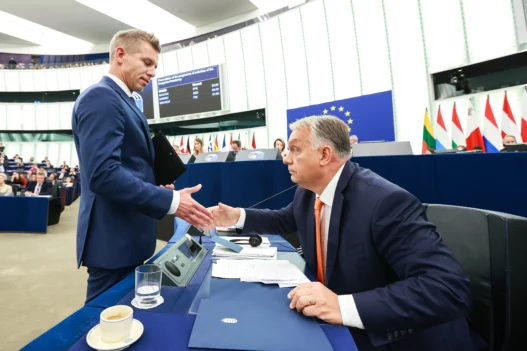
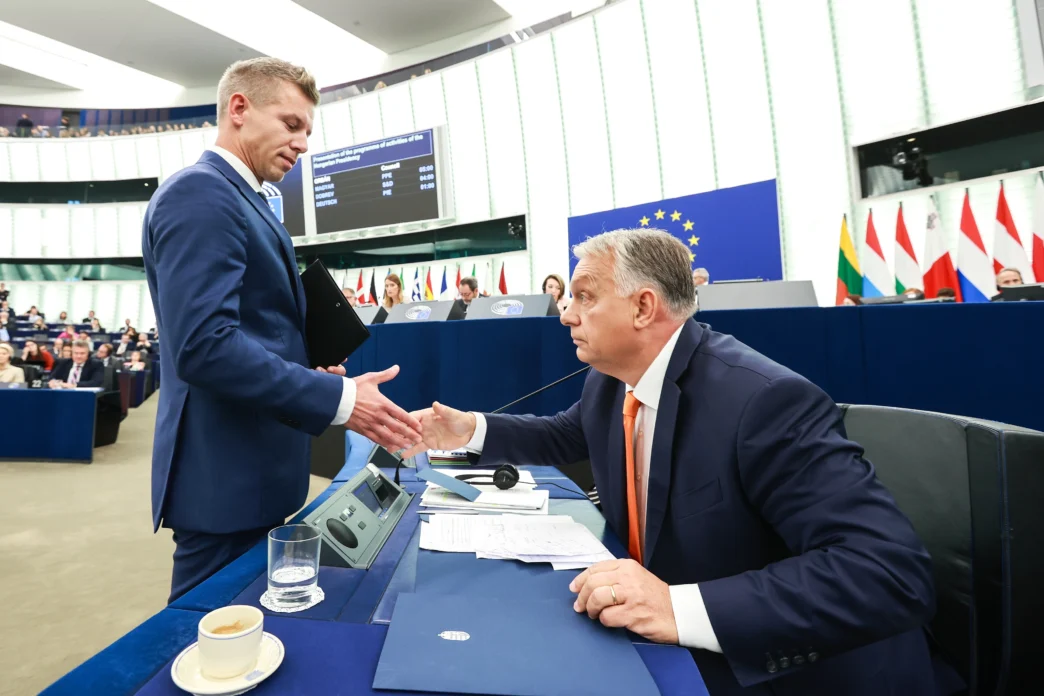
Yesterday, 12 April 2026, Viktor Orbán’s Fidesz party suffered defeat in the Hungarian parliamentary elections – a result that has been greeted with the greatest sense of relief by EU representatives and European leaders since Donald Tusk ousted the PiS party in 2023.
Election result
On Sunday, the Tisza (an acronym for “respect and freedom”) party, led by Peter Magyar, won the Hungarian parliamentary elections, holding 137 seats out of 199 with Fidesz winning only 55 seats (provisional result) amid a record turnout of 77.8%. This brings Viktor Orbán’s term as Prime Minister to an end after 16 years. Despite various fraud allegations against Russia and Fidesz by the opposition and vice versa before and on election day, the provisional result closely mirrors most polls, making successful election interference unlikely. Based on their Election Observation Mission, the OSCE Office for Democratic Institutions and Human Rights and its international partners described the election as free but not fair, with a technically well-administered process and distinct choices for the voters, but significantly undermined by a lack of a level playing field, the misuse of state resources, and a biased media environment widely controlled by the Fidesz government.
The broad opposition coalition led by Magyar also secured a two-thirds majority against Orbán’s Fidesz party. This is necessary to be able to reverse Orbán’s authoritarian restructuring of the constitution and state institutions under the current constitutional law. Technically, Viktor Orbán could, with his two-thirds majority, attempt to amend the constitution, which contains no perpetual clauses, and raise the quorum for relevant constitutional procedures to two-thirds of the votes in parliament until the new parliament is constituted, in order to make state liberalisation more difficult for Magyar’s government. However, Orbán’s acceptance of the election result does currently not suggest such an intent.
The election campaign
Péter Magyar’s rapid transformation from a Viktor Orbán ally to a leading challenger was catalysed by the 2024 pardon scandal, which undermined the governing Fidesz party’s moral narrative and created a significant momentum for credible opposition. As a formerly well-connected political entrepreneur within Fidesz, Magyar could position himself as an anti-corruption figure against Orbán’s government and rose to lead the Tisza Party after its strong result in the 2024 European election, establishing him as a viable candidate in the then-fragmented opposition landscape. Magyar’s campaign strategy primarily centred on domestic socio-economic concerns and corruption, while rather avoiding foreign policy to limit political attacks from Viktor Orbán, who tried to benefit from an anti-Ukraine and fear-inducing narrative. He managed to broaden his appeal across ideological lines, effectively mobilising a largely anti-Orbán electorate. However, this wide coalition, including conservatives and liberals, raises questions about long-term cohesion and effective governance, echoing challenges seen in other anti-authoritarian alliances, such as in Poland.
European Context
Péter Magyar’s election victory has raised high hopes within the EU – some of which have been expressed quite openly – that political deadlocks originating in Hungary will be resolved, as noted by German Chancellor Friedrich Merz. This applies in particular to the €90 billion loan to Ukraine, which Orbán has so far blocked, as well as further support, which is why the election result was met with euphoria by Ukrainian President Zelensky, but also to the prospect of major reform processes within the EU.
Within the EU and NATO, Hungary under Prime Minister Orbán has even been accused of passing on sensitive information to Russia, which has further excluded Hungary from sensitive proceedings in both institutions and branded it as an open supporter of Russia.
In this regard, and also in view of the EU’s ongoing rule of law proceedings against Hungary (the procedure under Article 7 TEU launched by the European Parliament in 2018), Péter Magyar expects a normalisation and rapprochement in relations with the EU, even if dismantling Orbán’s institutional legacy within the Hungarian state promises to be a laborious and complicated process, much like in Poland.
Sources: Politico/2/3/4, Ursula von der Leyen on X, AP News, Nemzeti Választási Iroda (National Election Office), Euronews/2, DW, ODIHR press conference, Hungarian Constitution (english version), Global News, Reuters/2, CNN, Tisza Election Program, Ukrainska Pravda, European Counsil