







Summary
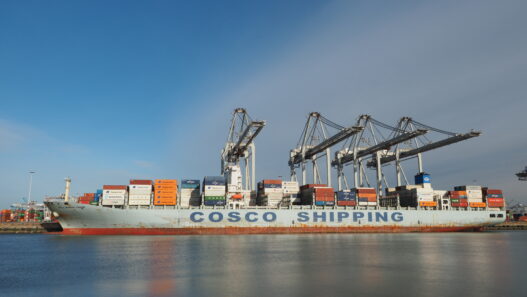
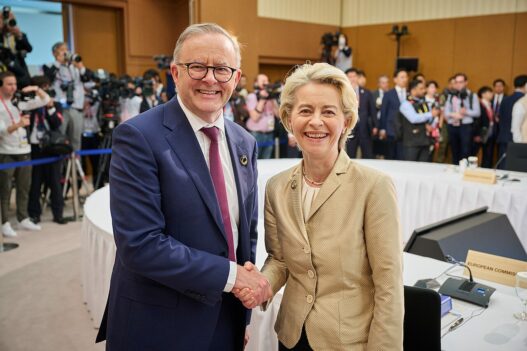
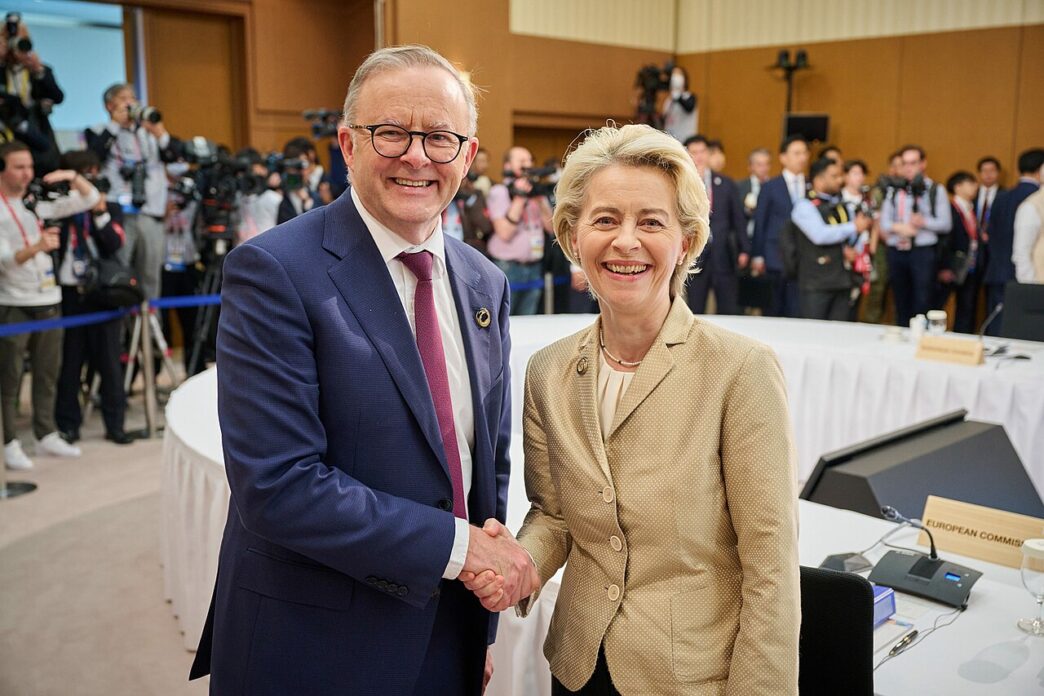
The EU–Australia Security and Defence Partnership (SDP), signed on 18 March 2026, is being developed alongside the conclusion of an EU–Australia Free Trade Agreement (FTA) and the launch of negotiations to associate Australia with Horizon Europe, the world’s largest research and innovation programme. Together, these instruments form an increasingly integrated “economy–security” nexus, linking market access, supply‑chain diversification and technological cooperation to shared security and defence objectives.
- For the EU, the SDP puts into practice the Strategic Compass priorities on resilient value chains, defence industrial innovation and partnerships with like‑minded Indo‑Pacific actors.
- For Australia, it provides an additional channel – beyond AUKUS – to engage with European industrial, technological and regulatory ecosystems, while anchoring economic ties in a shared rules‑based framework.
Overall, this reflects a shift from a compartmentalised approach to a more integrated competitiveness and resilience agenda.
Brief contextualisation
EU–Australia relations have traditionally been anchored in economic and political cooperation, structured by the 2017 Framework Agreement and expanding trade and investment links.
Pairing the FTA with a structured SDP reflects the EU’s post‑Ukraine recognition that economic and technological dependencies can translate into security vulnerabilities. The war in Ukraine and tensions with Russia have also reinforced the idea that European security extends beyond the continent, notably into the Indo‑Pacific, where maritime routes, supply chains and China’s posture are key.
Institutionally, the European Commission now plays a growing role in defence‑relevant industrial policy – including critical raw materials, dual‑use technologies and defence programmes – increasingly intersecting with CFSP/CSDP competences managed by the EEAS and the Council. The European Parliament broadly supports stronger security ties with Indo‑Pacific democracies, while insisting on safeguards for standards, data and export controls.
Analysis
A self‑reinforcing bundle
The economy–security angle shows how the SDP, FTA and research cooperation are designed to reinforce one another. Market access and regulatory convergence under the FTA make it more attractive for European and Australian firms to co‑invest in defence‑related value chains – from semiconductors and cyber to space, maritime technologies and climate security – while the SDP and Horizon Europe provide the political mandate and financial incentives to steer this cooperation into priority security domains.
De‑risking through partnerships
This approach aligns with the EU’s “de‑risking” strategy, which aims to reduce exposure to high‑risk dependencies, particularly vis‑à‑vis China and Russia, by strengthening ties with trusted partners rather than disengaging from global markets. As a like‑minded democracy aligned on Ukraine and committed to multilateralism, Australia enhances the partnership’s political credibility. Its increasingly assertive regional posture also makes it a force multiplier for the EU in the Indo‑Pacific.
Towards an integrated competitiveness architecture
More broadly, the SDP illustrates the convergence of industrial policy, trade, research and security into a single competitiveness‑and‑resilience framework. This reflects wider EU initiatives that treat economic dependencies as strategic risks requiring coordinated policy responses, and that use security partnerships to support the EU’s internal market and technological base.
Functional priorities
The framing of the SDP stresses resilience, critical infrastructure protection and technological cooperation more than classic mutual defence guarantees, underscoring the EU’s preference for networked security partnerships. The partnership prioritises cooperation in maritime security, cyber, hybrid threats and disinformation, emerging and disruptive technologies, space and non‑proliferation. It also establishes structured mechanisms for dialogue and coordination – including security consultations and multilateral engagement – to translate shared values into operational cooperation.
Sources
EEAS: EU and Australia strengthen relations with Security and Defence Partnership and Trade Agreement
Parliament of Australia: What would an EU-Australia security and defence partnership look like?
Australian Institute of International Affairs: Australia-EU Security and Defence Partnership: Shared Interests in a Volatile Geopolitical Environment