










Driving Toward Technological Sovereignty
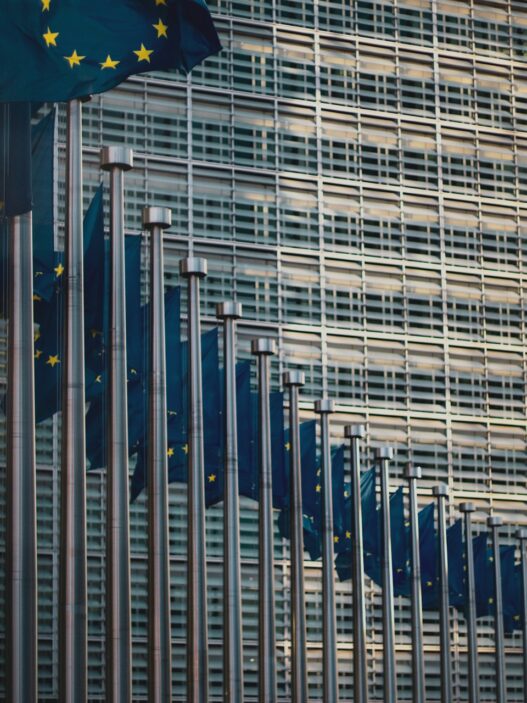
European leaders have declared that the future of artificial intelligence must be “made in Europe”. This ambition reflects a push for strategic autonomy: reducing dependence on U.S. and Chinese technologies in critical domains like defence. The European Commission’s recent Apply AI strategy explicitly ties AI investment to sovereignty, underscoring Europe’s goal to cut reliance on foreign technology. Geopolitical tensions and the dominance of U.S. Big Tech have spurred the EU to invest heavily in home-grown AI capabilities. As Commission President Ursula von der Leyen phrased it, “We will drive this ‘AI first’ mindset across all our key sectors” including defence. This strategic logic has only intensified with Russia’s war in Ukraine and uncertainties over external support, motivating initiatives like the White Paper for European Defence: Readiness 2030 (the ReArm Europe plan) aimed at boosting Europe’s own defence tech by 2030. A core rationale is that technological sovereignty in AI is now integral to Europe’s security and industrial policy.
Investing in Home-Grown Defence AI
To realize AI independence, the EU has marshalled significant funding and programs. Foremost is the European Defence Fund (EDF): the Commission’s €7+ billion instrument supporting collaborative R&D for “tomorrow’s defence capabilities”. Launched in 2021, the EDF co-finances cutting-edge projects (drones, AI-enabled systems, etc.) involving consortia of European firms. By 2025 it had allocated roughly half its €8 billion budget through 2027, prioritizing areas like autonomous systems and AI. EU officials emphasize this is “a major step to…reinforce Europe’s strategic autonomy”. Crucially, the EDF increasingly brings in smaller players: in the 2024 call, 27% of funding went to SMEs, the highest share yet.
To further boost indigenous innovation, the Commission launched the EU Defence Innovation Scheme (EUDIS) in 2023. EUDIS is a comprehensive program (funded via EDF) to lower barriers for startups and SMEs entering the defence sector. It provides hackathons, “spin-in” calls to adapt civilian tech for defence, and even a new Defence Equity Facility for investment. Notably, 31% of the EDF’s 2025 budget (€336 million) is devoted to EUDIS innovation measures. Under EUDIS 2025, the EU launched a technological challenge in Artificial Intelligence and expanded support fordual-use R&D. By coupling grants, coaching, and equity funding, EUDIS aims to nurture a vibrant European AI ecosystem for defence: ensuring the next big military AI breakthroughs can come from European soil rather than Silicon Valley.
Building Europe’s AI Infrastructure
Another pillar of Europe’s AI autonomy bid is investment in strategic digital infrastructure. Recognizing that advanced AI development requires massive computing power (often reliant on U.S. cloud providers), the EU is developing its own high-performance computing and AI cloud ecosystem. Through the EuroHPC Joint Undertaking, the EU is deploying a network of AI-optimised supercomputers called “AI Factories.” These are “dynamic ecosystems” built around supercomputing centers and open to innovators across Europe. The European Commission made AI Factories a strategic priority in its 2024 AI Innovation Package, with plans for at least 15 AI Factories by 2025 and 9 new AI-focused supercomputers. This will more than triple Europe’s AI computing capacity, expanding access for European researchers, startups, and defence projects alike. In parallel, a proposed InvestAI public-private fund would pump €20 billion into creating a handful of AI “Gigafactories” for training next-generation models in Europe. By scaling up local compute infrastructure and data resources, the EU seeks to enable AI innovation on European terms, supporting defence AI development without needing American or Chinese cloud platforms. 
Coordinating Institutions for Strategic Autonomy
Achieving AI independence is as much an institutional challenge as a technical one. The EU has taken steps to coordinate across its bodies and member states. The European Defence Agency (EDA) has been tasked to play a key role. In 2022, the EDA established the Hub for EU Defence Innovation (HEDI) as mandated by the EU’s Strategic Compass. HEDI serves as a platform to “stimulate and facilitate cooperation on defence innovation” among member states, while ensuring synergy with Commission-led activities like EUDIS. In practice, HEDI links national innovation hubs, organizes innovation challenges (e.g., EDA’s annual Innovation Prize), and interfaces with NATO’s innovation efforts to avoid duplication. This kind of coordination is crucial: it aligns the various EU funding streams, military requirements, and R&D efforts toward common capability goals (as defined in the Capability Development Plan). For example, one of the nine EU priority capability areas is explicitly “AI, quantum, cyber, and electronic warfare”, a domain where pooling efforts is essential.
Institutional cooperation is yielding concrete results. The White Paper Readiness 2030 emphasizes joint defence procurement and collaborative projects to close critical gaps, including AI-enabled drone swarms and autonomous systems. The Commission, EDA, and member states now work in concert through forums like the EDF Program Committee and innovation hubs to direct investments into such strategic areas. In short, Europe’s bid for AI independence is a whole-of-EU endeavor: the Commission provides funding and regulation (e.g., the upcoming AI Act for trustworthy AI), the EDA and EEAS ensure alignment with defence needs and external actions, and member states contribute expertise and additional funds. This multi-level coordination is intended to maximize Europe’s strengths (a large single market, strong research base) in order to produce home-grown defence AI breakthroughs.
In conclusion, Europe’s pursuit of autonomous defence AI is driven by the recognition that control over critical technologies equals control over one’s security destiny. Through substantial investments (EDF, Readiness 2030 plans) and new collaborative frameworks (EUDIS, EuroHPC, HEDI), the EU is laying the groundwork for an AI-enabled defence posture independent of superpower tech. While challenges remain, from brain drain to catching up with bigger tech players, the strategic logic is clear: to defend Europe, European AI capabilities must succeed.