



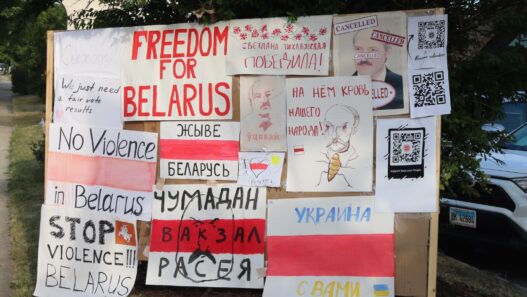



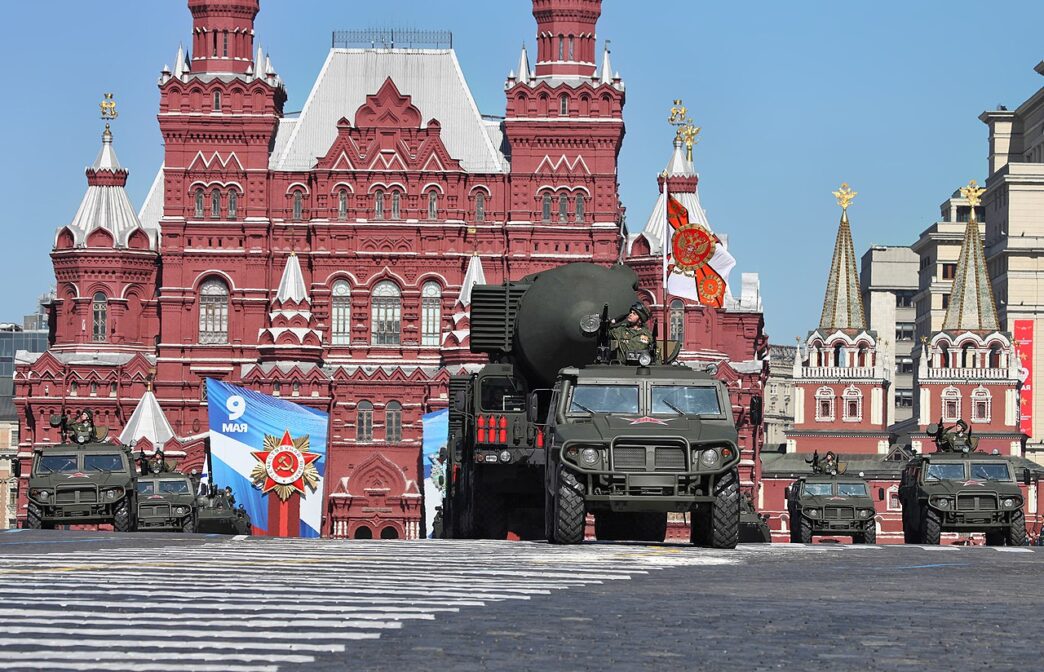
Nuclear weapons are no longer a relic of Cold War history. Instead, they are once more shaping the realities of global politics. Especially the war in Ukraine has put this issue back on the table for Europe. Since launching a full-scale invasion in 2022, Russia has repeatedly invoked its nuclear arsenal to deter Western intervention. From suspending its participation in the new START treaty to deploying tactical nuclear weapons to Belarus, Vladimir Putin has decided that nuclear threats are again a part of Moscow’s active playbook.
Meanwhile, China is undergoing an unprecedented expansion of its nuclear capabilities. By the year 2030, the country is expected to have almost doubled its current nuclear arsenal with a total of 1,000 operational warheads. Elsewhere in the region, tensions between India and Pakistan, two other nuclear-armed states, are still escalating. A recent border clash in the contested Kashmir region once more showed how volatile their relationship is, with an ever-present risk of escalating into a nuclear conflict. At the same time, the Democratic People’s Republic of Korea (DPRK) continues its missile tests and ramps up its nuclear rhetoric. It asserts itself as a rogue nuclear state with unpredictable intentions and regional destabilising potential.
Most recently, growing fears that Iran is nearing nuclear weapons capability have caused instability in the Middle East. Israeli and U.S. actions against Iranian facilities have escalated in response, creating the risk of direct confrontation between nuclear or near-nuclear actors. Amidst this turbulence, Europe is increasingly unsure whether it can still rely on the U.S.’s nuclear umbrella. Donald Trump’s return to the White House has revived doubts about Washington’s commitment to NATO, and with it, the reliability of the U.S. nuclear umbrella.
While not all nuclear powers’ aggressive policies directly threaten Europe, Russia most certainly does. With long-range nuclear capabilities and an openly hostile rhetoric toward NATO and the EU, Moscow presents a clear danger. However, considering all these developments together, it shows a more fundamental shift: the world is drifting away from the post-Cold War era of nuclear arms control and détente. The decades after the Cold War saw major reductions in nuclear stockpiles and a global effort to prevent the spread of these weapons, both horizontally (to new states) and vertically (in terms of arsenal size). That progress is now reversing. 
In this context, the EU faces an important question: how can it (re-)claim strategic relevance and credibility while remaining fragmented and largely silent on the nuclear dimension of security? This analysis explores the internal divisions that undermine the EU’s nuclear policy and why its failure to address the nuclear question risks weakening its broader role as a geopolitical actor.
The Nuclear Divide: Why Unity Remains Out of Reach
If there is one thing that the EU is not short on in the challenging international environment, it is ambition. It often refers to “strategic autonomy” and a stronger role on the global stage. Whether it lives up to those ambitions is a debate for another article. But on the issue of nuclear weapons, the EU is notably quiet. The problem is not just the turbulent international situation; it’s the internal context. Across Europe, national governments hold deeply divergent views on nuclear deterrence, disarmament, and non-proliferation, which fundamentally contradict one another, making it difficult for the EU to act with a unified voice.
We can break this division down into three broad groups of member states.
First, there is France, the EU’s only nuclear power since Brexit. Paris has traditionally framed its nuclear arsenal as a pillar of national sovereignty and an essential safeguard for the French state. But over the years, it has also been suggested that this capability could play a broader role in European defence. This idea draws on the long-standing French concept of dissuasion concertée, a proposal to partially integrate France’s force de frappe (France’s sovereign nuclear force) into a shared European security framework.
What was once a theoretical ambition has recently been revived with real political weight. In a high-profile televised address on March 5th, 2025, President Emmanuel Macron explicitly linked France’s nuclear arsenal to the defence of Europe, urging EU Member States to engage in a serious dialogue about its future role.
The second group includes the EU countries in NATO that rely on the U.S. nuclear umbrella. Four of them (Belgium, Germany, Italy, and the Netherlands) participate directly in NATO’s nuclear sharing arrangement, hosting American nuclear weapons on their soil. While they don’t have operational control over these weapons, their defence strategies are closely linked to NATO’s nuclear posture.
The other 19 NATO-aligned EU countries don’t host nuclear weapons but still depend on extended deterrence as a central part of their security. Across the board, these states tend to be cautious about disarmament initiatives or any move that could be seen as undermining U.S. deterrence credibility, and by extension, the strength of the NATO alliance.
On the opposite end of the spectrum are the EU’s non-NATO members: Austria, Ireland, Cyprus, and Malta. These states have consistently supported disarmament as a legal, moral, or humanitarian necessity. Since 2013, when the Humanitarian Initiative emerged in response to growing frustration over escalating nuclear proliferation, Austria and Ireland, in particular, have taken a strong pro-disarmament position on the international stage, most notably by endorsing the Treaty on the Prohibition of Nuclear Weapons (TPNW). The TPNW is a UN treaty that was adopted by 122 out of 193 United Nations Member States in 2017 with the purpose of abolishing all existing nuclear weapons. Importantly, all NATO-aligned EU states rejected the treaty, citing concerns about its impact on alliance deterrence efforts.
To sum up, within the EU, nuclear weapons are seen through fundamentally different lenses. France leans firmly toward deterrence, viewing its own arsenal as both a national guarantee and a potential European asset. NATO-aligned Member States, whether directly involved in nuclear sharing or not, rely on the U.S.-backed deterrence. In contrast, the EU countries that are not in NATO prioritize disarmament and consequently reject deterrence as incompatible with humanitarian and legal principles. The result is a deeply divided policy landscape in which nuclear deterrence and disarmament are seen as mutually exclusive paths.
Faced with these irreconcilable positions, the EU as an institution has stuck to the safest ground it can find: non-proliferation. Over the past two decades, the EU has played a role in funding and supporting global arms control bodies, such as the International Atomic Energy Agency (IAEA) and the Comprehensive Nuclear-Test-Ban Treaty Organization (CTBTO). It has built consensus on the prevention of the spread of nuclear weapons to new states, a priority that unites even the most divided Member States. However, when it comes to the more contentious issues of disarmament and deterrence, the EU stays quiet. This reflects a broader trend. When faced with fundamental disagreements, the EU tends to adhere to the lowest common denominator.
The Cost of Disunity: How Division Undermines EU Power
The EU’s disagreement on the nuclear weapons approach has real-world consequences. From international negotiations to security strategy, Europe’s inability to speak with one voice has limited its influence and kept it sidelined from some of the most critical nuclear conversations.
A Marginal Player in Global Non-Proliferation
Non-proliferation is one of the few nuclear issues where the EU has managed to align its Member States. This consensus has allowed the EU to support key non-proliferation initiatives and maintain a diplomatic presence at global non-proliferation forums. But coordination doesn’t equal leadership. In moments of real crisis, the EU has largely remained on the sidelines. For example, the EU was not involved in the Six-Party Talks on North Korea’s weapons program. Similarly, in the case of India’s gradual inclusion in the global non-proliferation framework, the EU had little influence. In most cases, diplomacy is handled by global powers like the U.S. or, in the best case, by Member States like France or Germany. But not by Brussels.
However, there is one important exception: the Iran nuclear deal. In the years leading up to the 2015 Joint Comprehensive Plan of Action (JCPOA), the EU played a central role as part of the E3/EU format, coordinating efforts between France, Germany, the UK, and the EU’s High Representative for Foreign Affairs. That unity and EU involvement led, for example, to the 2003 Paris Agreement signed by Iran, which for the first time linked Iran’s suspension of nuclear activities to economic incentives. It was a rare moment of European coherence on nuclear diplomacy and a good reminder of what is possible when Member States align. It proved that EU involvement can translate into concrete diplomatic achievements.
Disarmament: A Divisive Topic, and a Quiet One
When it comes to disarmament, unity becomes much harder to achieve. While practically all EU countries support the goal of a world free of nuclear weapons, they differ significantly on how and within what timeline to pursue that vision.
This divide became especially notable during negotiations for the Treaty on the Prohibition of Nuclear Weapons (TPNW). Austria and Ireland strongly supported the treaty, while all NATO-aligned Member States voted against the treaty.
Moreover, some important policy documents, particularly the EU Strategic Compass, have generally avoided the topic of nuclear disarmament altogether. This cautious approach shows the difficulty of reconciling different national positions, but ultimately also limits the EU’s ability to shape international disarmament discussions.
Deterrence: The Policy Europe Avoids and Can’t Easily Replace
Among all aspects of nuclear policy, deterrence is the one most politically delicate for the EU. France, the Union’s only nuclear-armed state, has periodically suggested that its arsenal could serve not just national interests but broader European security. This idea, referred to as dissuasion concertée, envisions a more integrated European nuclear posture, potentially reducing Europe’s dependence on the U.S.’s extended nuclear deterrence.
While the concept has recently sparked some debate, especially since the return of Donald Trump, it has gained little actual support among other EU Member States. Some worry it would signal a weakening of transatlantic ties. Others, particularly those with strong disarmament traditions, remain uncomfortable with the idea of basing EU security on nuclear deterrence.
Beyond the political sensitivities, there’s also a practical problem. France’s nuclear arsenal is not designed to replace the U.S. nuclear umbrella. Its capabilities are far more limited in scale. Expanding France’s deterrent to cover the entire EU would require not only political consensus but also enormous financial investment and a fundamental shift in strategic doctrine. None of these is likely to appear in the short term.
Legal and diplomatic concerns add another layer of doubt. A collective European deterrent would raise questions about the EU’s commitment to the Non-Proliferation Treaty, particularly regarding Article VI of the treaty, which obliges all signees to pursue disarmament. A European nuclear deterrent could undermine the EU’s credibility as a supporter of the NPT, as it would create the image of investing in nuclear rearmament instead of disarmament.
In short, while the idea of a “European nuclear option” may reappear in moments of geopolitical uncertainty, it remains politically divisive, strategically difficult, and practically constrained. For now, the EU’s nuclear deterrence policy continues to depend implicitly and uneasily on U.S. security guarantees.
Conclusion: The EU Cannot Afford to Stay Quiet on Nuclear Policy
Europe is once again living under the shadow of nuclear weapons. From Russian threats and Chinese nuclear buildup to the erosion of global arms control and the uncertainty of U.S. commitments, the international security environment has fundamentally changed. Yet the EU’s nuclear posture has not. It remains fragmented, cautious, and largely absent from the conversations that matter most.
This incoherence is not just a diplomatic inconvenience; it weakens the EU’s credibility and limits its strategic autonomy. While Member States continue to disagree on disarmament and deterrence, the world around them is moving quickly.
So, where can the EU go from here?
First, the EU must embrace a more honest and structured internal dialogue about nuclear policy. That doesn’t mean forcing consensus where it does not exist, but it means creating mechanisms where disagreement can be acknowledged, debated, and, where possible, managed. A unified position may not be immediately achievable, but strategic silence is no longer sustainable.
Second, the EU should invest more in its strengths. Non-proliferation remains one of the few areas where Member States broadly agree and where the EU has already played a meaningful role, as seen in the Iran deal. This already existing foundation can be strengthened through deeper diplomatic engagement, increased funding for international verification regimes, and consistent support for the NPT.
Third, the EU needs to develop clear contingency planning for the possibility of weakened U.S. guarantees. That does not necessarily mean building a European nuclear deterrent, a move that would raise complex legal, political, and military questions. But it does mean thinking more seriously about what Europe’s security architecture looks like in a less stable transatlantic environment. France’s proposals may not be the solution, but neither is avoiding the question altogether.
Finally, the EU must find a way to balance its identity as a peace actor with the realities of today’s strategic environment. Upholding disarmament as a long-term goal does not preclude pragmatic engagement with deterrence in the short term. The EU should not have to choose between principle and pragmatism, but in order to stay relevant, it must at least be willing to engage with the nuclear question it has too long avoided.
Ultimately, the EU’s ability to act will depend on its willingness to evolve. Strategic ambiguity is no longer an option. The EU must decide whether it wants to be a passive observer of global nuclear dynamics or a credible actor shaping them, whether it’s on non-proliferation, disarmament, deterrence, or a combination of these.