









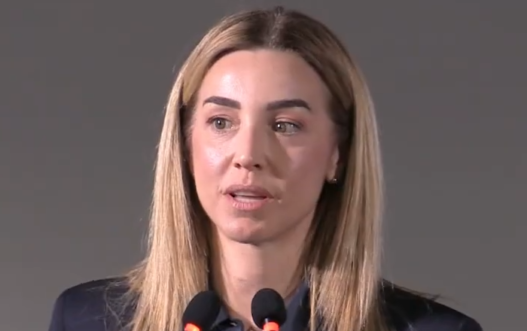
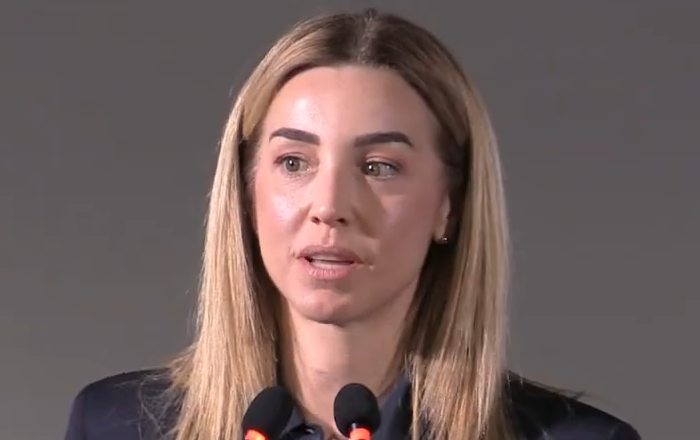
Tizian Stocker: Who is Silvia Salis, and which political issues are most important to her?
Andrea Ghianda: Silvia Salis is one of the most intriguing emerging figures in Italian politics, as she embodies several of the transformations currently affecting the European centre-left.
A former Olympic athlete and sports executive, Salis entered politics without passing through the traditional party structures that have historically defined Italian political careers. Since becoming Mayor of Genoa in 2025, she has established herself as a pragmatic progressive leader, combining a commitment to social inclusion with institutional effectiveness and a communication style that resonates strongly with contemporary audiences.
Tizian Stocker: Why has Silvia Salis been so successful as the Mayor of Genoa?
Andrea Ghianda: Her success can largely be attributed to three factors. First, she succeeded in uniting a broad coalition of progressive and centrist forces that have often struggled to cooperate in Italy. Second, her personal background enabled her to present herself as an outsider to party politics while remaining firmly committed to democratic institutions. Third, she has demonstrated a sophisticated understanding of modern political communication, engaging directly with citizens through both traditional and digital media.
Tizian Stocker: To what extent can Silvia Salis be seen as a political counterfigure to the current right-wing government under Giorgia Meloni?
Andrea Ghianda: At the national level, Salis is increasingly being discussed as a possible reference point for the Italian centre-left. However, it would be premature to view her as a direct challenger to Prime Minister Giorgia Meloni. While both leaders possess strong personal brands, they represent very different political trajectories. Meloni spent decades building influence within political parties, institutions and networks. Salis, by contrast, draws much of her appeal from her relative distance from traditional political structures.
This also points to the principal uncertainty surrounding her future. At present, Salis enjoys significant public support, but national leadership in Italy requires more than electoral popularity alone. It also requires support from political parties, economic actors, organised interests and institutional stakeholders. She has already demonstrated an ability to build public consensus; whether she can transform that public popularity into the institutional support required for national leadership remains an open question.
Andrea Ghianda is Head of Communications at ECCO, an independent Italian climate think tank since 2021. Ghianda lives and works in Genoa; he holds a degree in political science and has over 20 years of experience in strategic communications. Among other roles, he served as a communications specialist at the Italian Ministry of Economy and Finance during Italy’s G20 presidency in 2021.