










About a month after tens of thousands of migrants arrived in the Spanish exclave of Ceuta, the immediate border crisis has largely subsided. 90% of those who arrived returned to Morocco within a short period. While the initial wave of excitement around Ceuta has subsided, the situation on the ground remains unclear, meaning many seeking refuge face precarious living conditions. At the same time, analysts describe Ceuta as the first major stress test for the reformed Common European Asylum System (CEAS).
Sources: The Guardian, The Loop, Human Rights Watch
Info box:
The Common European Asylum System (CEAS) is the European Union’s framework for managing asylum and international protection across its member states. It sets common rules for how people seeking protection are registered, screened, assessed and accommodated, as well as how asylum applications and returns are handled. The system is intended to ensure that asylum seekers receive consistent standards of protection across the EU while helping member states manage migration at the EU’s external borders.
1. Current Situation on the Ground
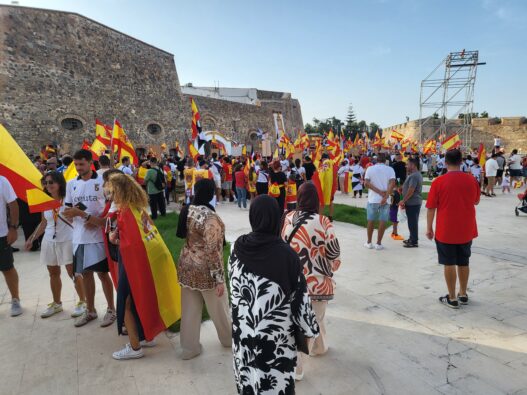
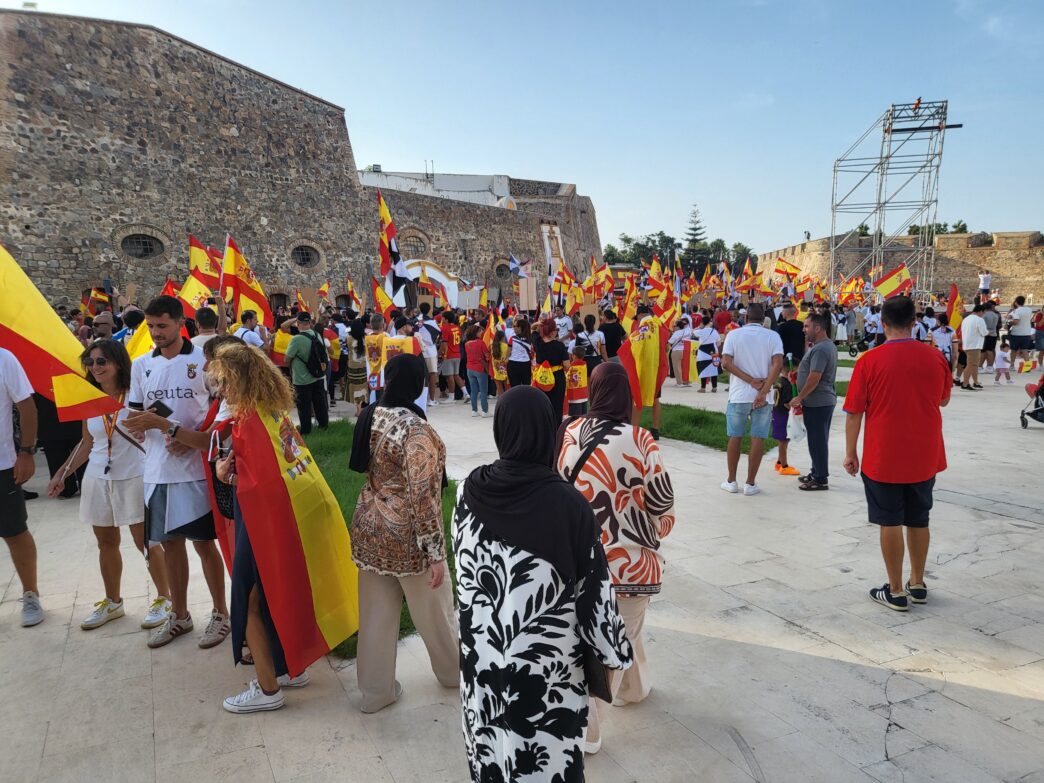
At the end of July, tens of thousands of people, predominantly from Morocco, entered Ceuta in a very short period. Many crossed by swimming or entering through coastal sections of the border. Several dozen people seeking refuge died along the way. Ceuta has a population of only around 85.000; at times, the scale of the initial influx was therefore almost comparable to the city’s population. According to the Spanish government, the vast majority returned to Morocco within the first few days. By late August/early September, however, official estimates suggested that around 5.000 people remained in the exclave, while local aid organisations even reported figures of about 10.000 people. Those remaining include Moroccan nationals as well as people from countries such as Sudan, Somalia, Syria, Chad and Yemen, alongside numerous unaccompanied minors, many of whom expressed their wish to apply for asylum. This fact is particularly relevant because it means that there is no legally homogeneous group in Ceuta. Potential asylum seekers, minors and people not entitled to protection must be subject to different procedures.
The causes of the exceptional influx remain politically contested. Explanations include smuggling networks, misinformation about Spain’s migration policies (like the large-scale regularisation program), and the possible temporary inaction of Moroccan security forces to put pressure on Spain and the EU. So far, however, no conclusive evidence shows that the Moroccan government deliberately orchestrated the border crossings.
Sources: Euronews, Human Rights Watch, Verfassungsblog, The Guardian
2. Humanitarian Situation
The exodus of 10,000 migrants and the unpredictability of the situation meant that many people lost their lives whilst attempting to reach the mainland. Whilst some drowned on the way, others were crushed whilst trying to climb a border barrier. At the same time, there are also reports of Spanish security forces and residents of Ceuta using violence against arriving asylum-seekers.
Whilst the Spanish government speaks of the voluntary return of many people, the Moroccan Association for Human Rights (AMDH) has reported violent ‘mass pushbacks’ by the Spanish security forces, without assessing the individual protection needs of those arriving.
Sources: Human Rights Watch, The Loop
While the immediate pressure at the border has eased, the humanitarian situation in Ceuta remains critical. Reception facilities struggle to accommodate the thousands of people who remain in the exclave. In mid-August, Human Rights Watch reported that more than 1,000 men and boys were living in makeshift shelters at Trampolín beach, while thousands more were sleeping on streets, in industrial areas or in the hills surrounding the city. Hundreds of women and girls were housed in improvised outdoor facilities or on the streets. Access to sanitation and other basic services has remained inadequate, forcing people to use parks, remote areas, and the sea. Despite the expansion of emergency accommodation and the distribution of thousands of meals by authorities and local organisations, people tell journalists that they returned empty-handed from food distributions for several days in a row.
Sources: Human Rights Watch, Le Monde
Thousands of people have been in the streets in a legal vacuum, exposed to sexual violence and without adequate shelter, food, or sanitation for almost three weeks.
Human Rights Watch
Women, children and unaccompanied minors face particular risks. Two improvised shelters were set up for women and young girls who had been raped and sexually abused in their home countries or recently on the streets of Ceuta, since the number of sexual violations has risen sharply in the 4 weeks since the mass crossing. Especially unaccompanied minors (2,168, according to figures from the Spanish Ministry of the Interior) are struggling to find shelters, food and support. Temporary facilities in schools and other public buildings have further demonstrated the strain on the exclave’s limited infrastructure. As a small exclave, Ceuta has only limited ‘surge capacity’ in structural terms; an exceptional influx of people can therefore trigger a long-term humanitarian crisis, even if most leave again quickly.
Sources: Deutsche Welle, La Vanguardia, Human Rights Watch
Non-governmental organisations have expressed great outrage at the situation in Ceuta and are calling for the rights of migrants not to be overlooked amidst this challenging situation. While Spain further tries to accelerate the returns to Morocco, Human Rights Watch and Amnesty International demand that Spanish authorities should provide access to the asylum system since many of the migrants would like to apply for it. Furthermore, they reported no evidence that all adults had undergone systematic individual assessments. This is particularly relevant for people from countries such as Sudan, Somalia or Syria, as well as individuals with specific protection needs. Some Moroccan women told HRW that they had fled domestic violence (in some cases with their children). This is particularly relevant because Morocco’s general classification as a ‘safe country of origin’ does not automatically rule out individual grounds for protection.
Sources: Amnesty International, Human Rights Watch
As things stand, Madrid appears to be aiming to create additional capacity in Ceuta rather than transferring larger numbers to the Spanish mainland – “The Guardian” interprets this as an attempt to avoid backlash in domestic and European politics.
The large number of people arriving in Ceuta and the circumstances of crossings must not distract from the fact that under international law, the principle of non-refoulement is absolute and collective expulsions are prohibited in all cases.
Amnesty International
Under the new EU rules, screening, health and safety checks and a preliminary vulnerability assessment should already have been carried out. Many residents and local organisations assisted; but at the same time, HRW has documented growing insecurity, increasing social strain and fears of xenophobia and violence.
Sources: Amnesty International, The Guardian, Le Monde, Human Rights Watch
3. Political Situation in the EU
The Ceuta crisis quickly developed into a broader political dispute within the EU. While Spain called for European solidarity in managing pressure at an EU external border, several member states focused instead on preventing secondary movements from Spain. Italy, Germany, Greece and other countries pushed for tougher measures, while Spain’s migration and regularisation policies came under criticism for allegedly creating a “pull factor”. However, the causal link between Spain’s regularisation policy and the arrivals in Ceuta remains contested, not least because newly arrived migrants are not eligible for the scheme.
Within Spain, Sánchez faced fierce attacks from the conservative and right-wing populist opposition over his handling of the situation with Morocco and Ceuta. Relations remain strained, however: on 21 August, Spain summoned the Moroccan ambassador after Moroccan ministers had once again asserted claims to sovereignty over Ceuta and Melilla.
Sources: Euronews, The Italian Government, Verfassungsblog, The Guardian
Info box:
Secondary movement refers to asylum seekers or migrants moving from one EU member state to another after initially arriving in or being registered in the EU. In EU migration policy, the term often describes people moving onward to seek protection or settle in another member state rather than remaining in the country responsible for their asylum procedure.
The most immediate consequence has been renewed pressure on the Schengen system. Italy introduced temporary controls on air and sea connections from Spain, prompting Spain to impose reciprocal controls. Both countries subsequently extended these measures. Denmark and Finland went further by calling for Spain’s temporary suspension from Schengen, while a broader group of member states advocated stronger measures to prevent secondary movements. The crisis at the EU’s external border has therefore translated into restrictions at internal European borders.
Rather than demonstrating confidence in the resilience of the EU’s migration and asylum framework in the face of migratory challenges, Ceuta is being used to push for emergency measures in response to migration being used to exert political pressure.
Helena Hahn
Sources: Euronews, European Policy Centre
At the same time, Ceuta has strengthened calls for a more restrictive EU migration policy. Member states have found greater common ground on accelerating returns, strengthening cooperation with third countries and combating smuggling networks than on relocating migrants within the EU. Several governments, including Germany, Austria, Denmark, Greece and the Netherlands, are also exploring establishing “return hubs” outside the EU. However, significant legal questions regarding responsibility, detention and access to legal remedies remain unresolved.
Sources: Euronews
Info box:
Return hubs are proposed facilities, potentially located outside the EU, where people who are required to leave the EU could be transferred and held. At the same time, arrangements are made for their return to their country of origin or another destination. The concept is intended to make deportation procedures more efficient, but has raised concerns about detention conditions, legal safeguards and access to remedies.
The political response therefore reveals a continuing divide over responsibility and solidarity. Whereas Spain frames Ceuta as a common European challenge requiring support for a member state at the external border, other governments have primarily emphasised Spain’s responsibility to control onward movement. Euronews therefore describes migration as one of the key issues likely to cause conflict this autumn; a wider debate is scheduled for the European Council in October.
Rather than generating a new moment of European solidarity, the crisis has led to weakened solidarity between member states, hasty deportations and the disregard for human rights.
Sources: Euronews, European Policy Centre, The Loop
The question remains: if, immediately after a system of compulsory solidarity comes into force, Member States are the first to close their national borders, what does that mean for the reform?
4. Ceuta and CEAS
In recent weeks, many analysts have described the Ceuta crisis as the first major stress test for the reformed Common European Asylum System (CEAS) since the Pact on Migration and Asylum became fully applicable in June 2026. The new framework was designed to improve the EU’s capacity to handle sudden pressure at its external borders through faster screening and border procedures, more efficient returns, and a permanent solidarity mechanism between member states. Ceuta therefore provides an early indication of how these mechanisms function when confronted with an exceptionally large number of arrivals within a very short period.
Sources: European Policy Centre, The Loop
A first challenge concerns screening and border procedures. Under the reformed CEAS, people arriving irregularly at the EU’s external border should undergo registration, identity, security, and health checks, as well as a preliminary assessment of vulnerabilities, before being directed to the appropriate asylum or return procedure. Yet Human Rights Watch reported in August that many people in Ceuta still lacked clear information about how to apply for asylum and that systematic individual procedures were not evident for all adults. According to the Verfassungsblog, the reform introduces more tools. However, it still accepts a system in which large numbers of people can, in effect, be detained at the external border without any realistic prospect of continuing their journey.
Sources: Human Rights Watch, Verfassungsblog, The Loop
Ceuta also illustrates the tension between faster border procedures and fundamental-rights safeguards. One objective of the reform is to process asylum claims and returns more rapidly at the external border. However, rapid returns to Morocco after initial crossings raised concerns about whether authorities sufficiently assessed individual protection needs. This is particularly relevant for third-country nationals and vulnerable individuals who may have grounds for international protection.
Sources: Human Rights Watch, Amnesty International
Migrants are not passive instruments of state strategy, but people who move for reasons that a focus on border control alone can never address
ECPR
A second major test concerns European solidarity. The Pact introduced a permanent solidarity mechanism under which member states can contribute through relocation, financial assistance or operational support to countries facing migratory pressure. However, the political response to Ceuta has demonstrated the limits of this principle in practice. Rather than focusing primarily on relocation, several member states responded by tightening internal border controls and demanding stronger measures against secondary movements. Moreover, relocation mechanisms apply primarily to people within the asylum system, limiting their relevance for many Moroccan nationals expected to be returned.
Sources: European Policy Centre, Euronews, Verfassungsblog, the Italian Government
Ultimately, the GEAS reform was introduced primarily to make frontline states such as Spain more resilient in the face of exceptional migratory pressure.
However, what the Ceuta case has fundamentally demonstrated about the CEAS is:
- That it ultimately still depends on resources, capacity and staffing whether unexpected waves of migrant women can be managed without risking legal breaches, human rights violations or placing an excessive burden on the local population.
- The Pact can organise solidarity in legal terms; however, it has not resolved the political conflict over who should actually take in migrants. And as soon as concrete responsibilities are at stake, many Member States once again retreat into national isolation. And as long as intra-European solidarity remains politically difficult, the incentive to shift migration management to third countries or ‘return hubs’ increases, although the legal framework for this is highly controversial.
- External border crises can directly jeopardise internal freedom of movement as soon as states fear secondary migration. Ceuta thus illustrates the close link between external border management and Schengen
- Human rights: The operational logic of the new system – rapid screening, border procedures, swift return – comes into conflict, particularly during an exceptional influx, with individual assessment, special protection for vulnerable persons and humane reception conditions. Several local and international organisations have documented this conflict in Ceuta precisely.
Sources: European Policy Centre, Human Rights Watch, Euronews, Verfassungsblog, The Loop
Info boxes provided by Laksmitha Anindyanari.
For further updates on the topic, check the quick brief by ERA here