








Back in 2016, the Brexit referendum showed that British society no longer had the intention of being a Member State of the European Union after almost 50 years of membership. This anti-European movement was partially fueled by a nationalist, anti immigration ideology which had been previously arising not only in the UK, but in other European countries.
Brexit cannot be understood as an isolated case, but as a catalyst for populist discourses throughout the whole European continent. However, although Brexit has clearly had a ripple effect on different parts of Europe, it has also shown that the EU needs to be resilient, especially when its democracies are being threatened by extremist and populist political movements.
As the scholar and historian Stephen George argues in his book An Awkward Partner: Britain in the European Community, the United Kingdom has always been Europe´s Awkward partner. Since its adhesion to the EEC back in 1973, British governments have shown reluctance towards deeper European integration, alleging that imposed policies from Brussels were hindering the UK’s national sovereignty. 47 years later, Brexit shocked the whole European society. The role of the UKIP (UK Independence Party) was absolutely essential in this process.
Founded in 1993, UKIP represents the most explicit form of British Euroscepticism, and, even though remaining a marginal political party in British politics for so many years, it started to gain popularity due to the discontent towards immigration and a sense of lack of democracy in European institutions. The British discourse against the European project is highly based on both these two pillars, which are key to understanding later populist movements and discourses. 
In 2004, the European Union experienced its biggest enlargement ever, as 10 new Member states joined the EU: those countries were Cyprus, the Czech Republic, Estonia, Hungary, Latvia, Lithuania, Malta, Poland, Slovakia, and Slovenia. This brought a considerable number of workers from Eastern and Central Europe to the United Kingdom, who became beneficiaries of the principle of free movement of persons, as well as the right to work in any EU Member state without holding a work permit. This migration flow can be understood as an important factor in the future success of UKIP.
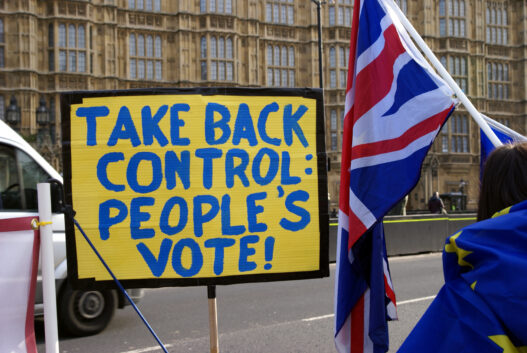
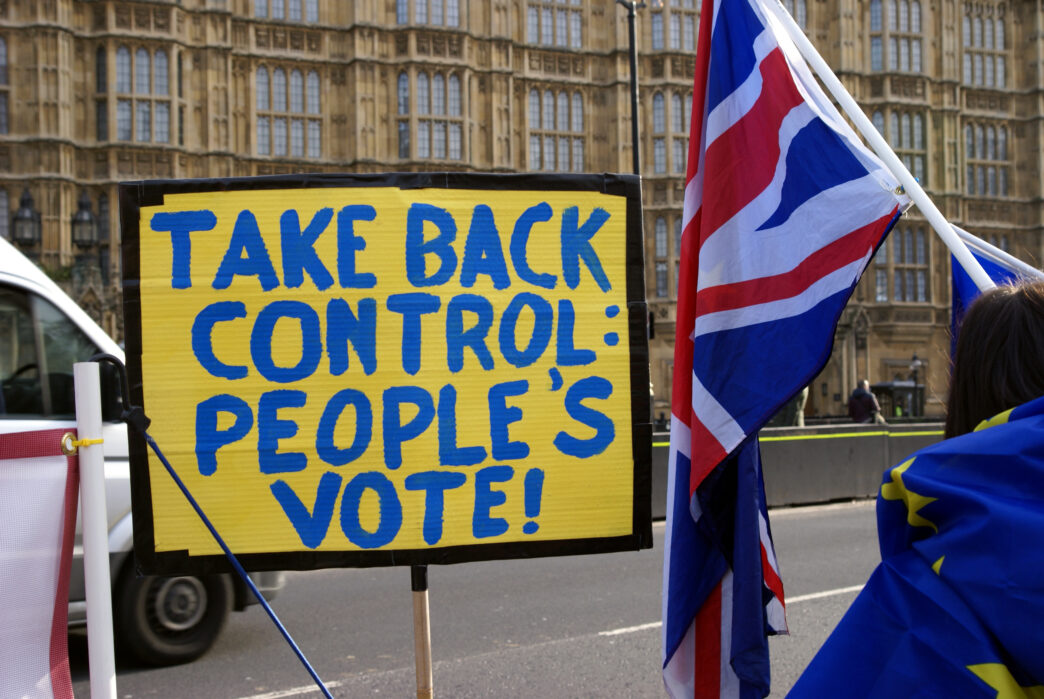
Under the slogan “Take back control”, the leave campaign before the referendum summarized, among other concerns, such as the decision-making regarding EU policies and its supposedly “dictatorial” — as the eurosceptic wing parties argued — the disquiet related to more immigrants arriving in the UK. Despite immigration being one of the key aspects during the Leave campaign, it still remains a controversial topic in the UK. A briefing carried out by The Migration Observatory at the University of Oxford, which was published in January 2025, showed that back in 2023, 52% of the British population thought that immigration should be reduced. At the same time, 33% of the population considered migration as a “bad” or “very bad” thing. The type of migration also divides British society, as the briefing also shows how British people have clear preferences when it comes to receiving migrants.
For example, only 10% of the population answered “none” when they were asked about the number of Australian migrants who should be allowed to enter the UK. However, the results changed significantly when they were asked about Nigerian immigrants: 37% of the population replied “none”. The same happened when they were asked about the immigrant profile they would welcome in the country, showing an evident preference for skilled immigrants rather than less qualified ones. As a result, what we can get is that the British population, in general terms, is prone to show more empathy towards those people they consider to be similar to them in terms of religion, precedence, or even qualification level.
Once Brexit was consummated and the UK formally left the European Union, similar discourses started to gain more popularity all over the European continent. Being reluctant to the European Union, its fundamental values and its institutions became increasingly normalized in political debates, and euroscepticism, as well as populism started to become more popular in many member states, maybe taking Brexit as a “case of success” — or maybe a defeat over European project itself: a project which started to be questioned by all those populist parties which started to attract more and more followers.
According to Brexit and the new populism, an article published by Conciliation Resources, a world-recognised peace-building organization that cooperates with the UN, NGOs, and even national governments, Brexit was “a referendum about globalisation and its consequences”. This means that there were social anxieties — often linked to phenomena such as globalization — such as a sense of loss of national identity and community, job losses, mass migration, unfair trade, and, obviously, the feeling of being controlled by a sort of globalist elite, often associated with the European Union and the decision-making process in the European institutions. This led to a lack of confidence in moderate and traditional political parties and benefited political parties that used populist and anti-European rhetoric.
When talking about populism, countries such as France, Germany, Hungary, and Poland constitute just some of the many representative examples that can be found in Europe, and it seems that after Brexit, populist parties have become real options. The continent, and therefore the European Union, is under threat.
As it has been previously mentioned, France, Germany, Hungary or Poland are some of the European countries that better illustrate the unprecedented growth of populist political forces in Europe. In Germany, the AfD (Alternative für Deutschland) consolidated as a serious candidate in German politics, after doubling its results in the February 2025 Bundestag elections, reaching a 20,8% of the votes; a considerable growth compared to the 10,4% obtained back in 2021. The success of the AfD party in Germany shares many similarities with the UKIP in the United Kingdom: they both present themselves as an escape from the mainstream political parties, those who, according to them, represent the globalist corrupt elites whose interests differ significantly from the main issues concerning what they call “ordinary citizens”. Migration is obviously another key aspect shared by both AfD and UKIP.
If UKIP did it first, AfD with Alice Weidel is doing it right now, portraying migration as one of the most significant issues faced by Germany, even using the term“remigration” during her speeches, standing for a mass deportation of migrants. Formed in 1993, UKIP was created as a response to the process of European integration. AfD´s attitude towards European integration has always been quite reluctant too: they have already advocated for Germany to leave the EU, calling it“a failed project”. In fact, AfD was founded in 2013 during the rise of eurosceptic movements in the wake of the eurozone crisis. Merkel’s coalitions with SPD (Social Democratic Party) and her openness towards migration made the CDU look too “moderate”. As a response, AfD was founded, with some former CDU members among its founders. Since 2024, they have been part of the political group Europe of Sovereign Nations in the European Parliament, a group that continuously expresses its disagreement with further integration while questioning supranational decision-making in Brussels.
AfD might be the most significant up-to-date example of a successful case study. Brexit can be seen as a precedent, since Brexit’s and AfD’s discourses share many similarities. The same scenario has been witnessed in countries like France, where Rassemblement National, the party led by Marine Le Pen has consolidated as a relevant actor in French politics. Its success has gone further from French territory, thus Rassemblement National reached31,5% of the votes in France during the last elections to the European Parliament, held on June 9, 2024. Built among a strong anti-immigration and anti-European elites rhetoric, Le Pen managed to soften the image of the party previously led by his father, Jean-Marie Le Pen.
Presenting themselves as the only effective solution in a political landscape facing many crises, far-right populists have connected successfully with millions of citizens who were undergoing profound grievances related to their national sovereignty and cultural identity, migration, and even their own economic stability, as Rim-Sarah Alouane points out in an article for Friends of Europe. What all of these parties have in common is the capacity to arise in times of crisis and the ease with which they can convince potential future followers.
Poland and Hungary cannot be forgotten. They constitute two of the most remarkable examples of populism in European politics. In Poland, the Court of Justice of the European Union (CJEU) determined that the country must forfeitmore than €300 million in EU funds — a part of the EU budget which was assigned to Poland, due to its refusal to immediately suspend a legal reform that, according to the European Commission, jeopardized the separation of powers. What happened in Poland constituted a major threat to judicial independence. Back in 2017, the Polish Parliament passed an act lowering the retirement age for Supreme Court judges from 70 to 65. As a result, nearly one-third of the Supreme Court´s members (including its president) were forced into early retirement. Although the reform still allowed the judges to continue their term of office, this was subject to the approval of the Polish presidency. In its judgment C-619/18 Commission v Poland of 24 June 2019, the Court of Justice of the European Union concluded that these measures violatedarticle 47 of the Charter of Fundamental Rights and article 19.1 of the Treaty of the European Union.
Besides the political landscape in Poland, the country is also known for its ultra-conservative attitude towards marriage and family values, or abortion. Even its president, Karol Nawrocki, backed by US President Donald Trump, and who won the presidential elections in Poland in June 2025, represents a clash of interests between a national government and the European Union. This stems from their different understandings of democracy, the rule of law, and fundamental rights. While the EU is founded on the protection of the values enshrined in Article 2 TEU, Poland’s agenda prioritises family, traditional values, and national identity. As a result, frictions between Brussels and Warsaw, such as the issues regarding judicial independence, have emerged.
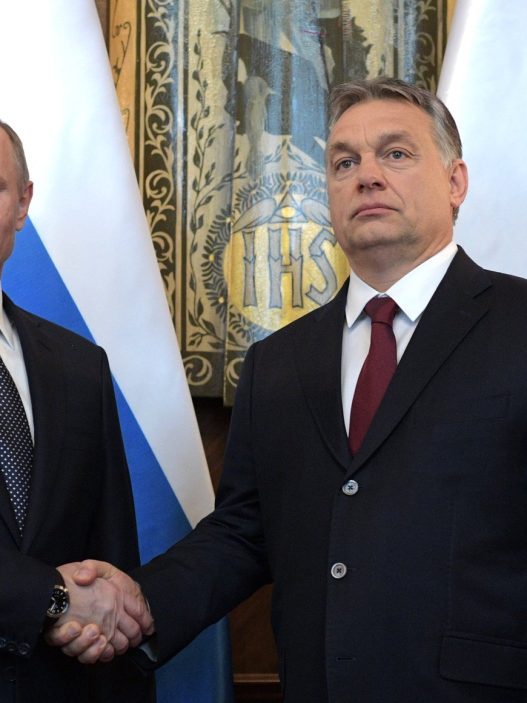
In Hungary, Fidesz, led by Viktor Orbán, consolidated what he called an“illiberal state”. Fidesz, another example of populism that shares many common aspects with PiS in Poland, AfD in Germany, or Rassemblement National in France, has also clashed with Brussels and the European project. In a speech in Budapest, Orbán clearly aligned with Donald Trump, saying that “the Western world has a patriotic, pro-peace, anti-migration and pro-family president” when referring to Trump. He also called the European Union “the sick man of Europe”, differing considerably from the European institutions and arguing that the EU can no longer guarantee peace, nor security. This anti-EU rhetoric is reflected in Hungary’s repeated obstruction of EU sanction measures against Russia, upholding its veto power, as decisions in the Council need to be taken by unanimity. This means that as long as Hungary keeps exercising its right to veto, no measures can be taken.
Orbán, by portraying himself as a defender of Hungarian national sovereignty and its traditional values, challenges the European Union by weakening it from within, not only through his political discourse but also by blocking decisions inside the EU. It is important to note that the European Commission froze EU funds — funds which still remain frozen — due to serious concerns of corruption, rule of law, and lack of judicial independence.
Taken all together, the particular cases of Germany, France, Poland, and Hungary reveal how Brexit acted as a catalyst for populist and anti-European discourses across the continent. Brexit demonstrated to European leaders that leaving the European Union was feasible, hence other political leaders developed similar attitudes towards the European Union, questioning its legitimacy and democracy within its institutions. However, facing backlash from all these emerging forces might constitute an opportunity for the EU to gain in terms of resilience and autonomy.