










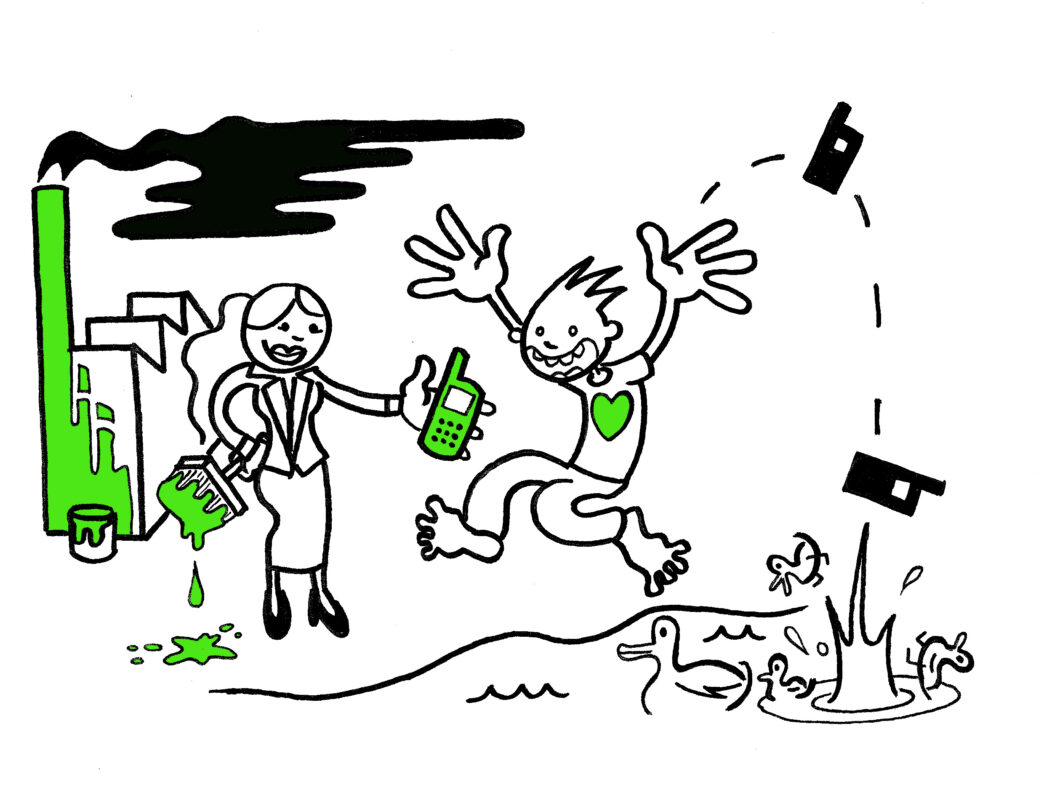
Greenwashing once sat at the margins of EU law, viewed mainly as a marketing issue rather than a regulatory priority. That has changed. It is now treated as a structural challenge to consumer protection and to the credibility of the EU’s sustainability agenda, prompting the Union to redesign the rules governing how environmental claims are made and substantiated.
This article examines the European Union’s evolving response to greenwashing and its broader implications for sustainability governance. It outlines the current legal framework, analyses recent reforms that strengthen standards for environmental claims, and considers the political and economic tensions surrounding their implementation. Together, these developments reflect a structural shift in how the EU integrates environmental accountability into its market regulation.
1. The Current EU Regulatory Landscape on Greenwashing Claims
The existing regulatory architecture targeting greenwashing, especially business-to-consumer claims, revolves most centrally around the Unfair Commercial Practices Directive (UCPD), which serves as the primary legal instrument for combating misleading environmental claims in consumer markets.
Under the UCPD’s broad prohibition on misleading actions and omissions, environmental claims that misinform or create a false impression of environmental performance have long been actionable. This includes implicit and explicit claims (whether textual, symbolic, pictorial, or through labels and logos). 
Even so, the pre-2024 framework suffered from fragmentation and ambiguity. As vague language like “eco-friendly” or “environmentally better” could be interpreted differently across Member States, enforcement varied widely. The criteria for when an environmental claim is misleading were thus far from settled. The revision of EU greenwashing laws recognizes these weaknesses. It aims to provide greater uniformity and precision so that businesses and consumers alike navigate the same legal definitions and standards. One recent scholarly overview notes that, as greenwashing cases become more frequent and visible, more structured legal criteria are needed for regulators charged with assessing environmental claims across the Union.
2. New and Emerging EU Rules Targeting Greenwashing
Since 2024, the EU has introduced several directives and proposals that together form a cohesive, if still evolving, framework for reducing greenwashing.
2.1. Empowering Consumers for the Green Transition
Adopted in March 2024, the Directive on Empowering Consumers for the Green Transition amended the UCPD and the Consumer Rights Directive to integrate environmental criteria directly into the definition of unfair commercial practices. Environmental attributes such as carbon footprint, recyclability, and resource efficiency are now explicitly classified as material characteristics of products and services when presented in commercial communication. Claims concerning future performance or long-term goals, such as “net zero,” must be backed by verifiable public targets and credible implementation plans. The result is that vague or generic claims without reliable evidence are prohibited, and consumers have clearer grounds to challenge deceptive marketing. This directive signifies an important normative shift: environmental claims are no longer rhetorically optional; they are subject to the same evidentiary standards once reserved for financial or safety claims.
2.2. The Green Claims Directive
Building on the Empowering Consumers Directive (and responding to identified gaps), the EU proposed a dedicated Green Claims Directive (GCD). The GCD was introduced by the European Commission in March 2023 to address a problem that the existing framework could not sufficiently solve: the proliferation of vague, unverifiable, or scientifically unsupported environmental claims. Unlike earlier rules that reacted after misleading messages had been published, this proposed directive targets the pre-publication phase. It would require that explicit environmental claims be substantiated by robust, verifiable evidence, grounded in recognized scientific metrics (such as lifecycle assessment methodologies) and verified by independent third parties before public use. Verification is not symbolic, it must be carried out by accredited bodies following standardized protocols. This is how the EU seeks to ensure that evidence is not only robust but credible and that it cannot be easily manipulated for marketing ends. The revised rules also strengthen transparency obligations. Information underlying a claim must be accessible, and enforcement is both national and EU-wide. Member States will transpose these directives at the national level – meaning enforcement tools, sanctions, and remedies may vary in exact form, but they are embedded in a common legal baseline.
However, the GCD’s legislative journey has not been smooth. In 2025, early reports suggested the Commission might withdraw the proposal after parliamentary resistance to its compliance costs. Yet the Commission later clarified that the GCD has not been withdrawn; rather, its survival depends on negotiating a version that is politically viable while still meeting the Directive’s core goals.
The GCD sits at the intersection of corporate disclosure, product regulation, and market surveillance. It complements the Corporate Sustainability Reporting Directive (CSRD) by relying on the standardized environmental data companies must now produce. It interacts with the EU Taxonomy and sustainable finance regulations, ensuring environmental claims correspond to recognised definitions of sustainability. And it reinforces national enforcement systems by providing harmonised rules for what an environmental claim must contain.
More importantly, the risk calculus for companies changes. It is no longer possible to dismiss greenwashing as a minor reputational issue. In the EU’s framework, misleading eco-claims are legally actionable, subject to measurable evidence standards, and embedded in the broader consumer protection mosaic.
2.3. Explicit Bans and Symbolic Restrictions
Some of the emerging legislative texts go further than procedural reform. They target specific kinds of claims. For example, new EU laws have been reported to ban misleading “climate-neutral” product claims unless they adhere to strict, evidence-based criteria. However, statements like carbon neutral are not outlawed in principle. They cannot be conveyed unless they reflect a product’s actual lifecycle emissions reductions, not merely compensatory offsetting. This closes a long-standing loophole that allowed corporate communications to equate the purchase of credits with real environmental performance.
3. Human Rights Dimension
Academic analysis of these reforms frames the EU’s approach as a new analytical framework for anti-greenwashing regulation. It underscores that greenwashing is not merely a consumer harm; it implicates broader human rights and governance concerns. MacLennan & De Catelle describe the expansion of regulatory criteria as responding to the increasing visibility of greenwashing cases within the business and human rights landscape. From this viewpoint, misleading environmental claims are not simple advertising defects; they shape how individuals understand risks to health, environment, and future opportunities. They constitute information asymmetries that affect not just consumer choice but collective decision-making about planetary futures. This elevates the issue: misleading claims are not externalities; they are informational harms.
4. Challenges
Some recent political developments suggest pushback against broader corporate sustainability laws that could affect how environmental claims are contextualized across the market. The main criticism from some industries is that EU red tape and strict regulation hindered competitiveness with foreign rivals. Thus, overly stringent greenwashing rules could burden smaller companies disproportionately. Still others caution that even a strong legal framework cannot replace meaningful enforcement and consumer awareness.
Moreover, recently, an agreement was reached to improve the EU’s competitiveness. It simplifies the directives on corporate sustainability reporting and corporate sustainability due diligence was reached, by reducing the reporting burden and limiting the trickle-down effect of obligations on smaller companies. According to the Minister for industry, business and financial affairs of Denmark, the agreement allows for clear and simple rules, so that companies can focus on their core business, and achieve better value for money in the green transition, creating European jobs and strengthening companies’ ability to grow and invest.
These political adjustments suggest not a retreat from the EU’s sustainability ambitions, but a recalibration of how those ambitions are implemented. The decision reflects an understanding that regulation must remain both effective and proportionate. Policymakers now emphasize not only accountability, but also practicality, competitiveness, and the need for rules that support, rather than hinder, economic activity. At the same time, this shift does not alter the broader direction of EU policy; it simply reshapes the mechanisms through which that direction is pursued.
Conclusion
We can observe how the EU is positioning itself as a global standard-setter in the governance of sustainability. By tightening sustainability rules, the Union is seeking to create a market where sustainability claims are not only accurate, but institutionally credible and legally grounded. In doing so, it signals that environmental responsibility is now a structural element of economic governance. The importance of these developments extends beyond the EU itself: as one of the world’s largest markets, its regulatory choices influence global supply chains, corporate strategies, and emerging international norms. Ultimately, the success of this framework will depend on more than formal rules alone. It will require consistent enforcement, long-term political commitment, and a genuine shift in corporate behaviour, while also unfolding within a complex and evolving global economic and regulatory environment that may either reinforce or challenge the EU’s ambitions.