









The European Union claims to defend human rights all across the globe — but not for everyone
Introduction
The European Union is not just a political or an economic union. It is a union with a legal framework and binding principles. One of those principles is a commitment to democracy, human rights, and the rule of law. These are legal requirements for the EU institutions and member states, as stated in Article 2 of the Treaty on European Union (TEU).
While Türkiye’s accession process is frozen, this doesn’t give a free-pass to the EU. According to the Copenhagen Criteria and the Negotiating Framework adopted in 2005, the EU retains the legal right to monitor, report on and respond to democratic backsliding in candidate-countries. Some instruments like the Pre-Accession Assistance provides the leverage and responsibility like financial aid and institutional cooperation being linked to progress on EU-values like human rights and rule of law. Even when formal negotiations are frozen, EU’s legal framework with it’s soft power give it the means and the duty to act in cases of democratic backsliding.
Compared to previous issues with the Turkish government, some European institutions have been silent after the arrest of Ekrem İmamoğlu, the Mayor of Istanbul, Presidential Candidate, and de facto leader of the Turkish Opposition. 
So why was Europe and European institutions stayed ineffective and dual-faced for this unlawful arrest and attack on Turkish democracy?
Who is Ekrem İmamoğlu?
Istanbul has been an important part of Turkish politics. Istanbul represents 17.6% of the overall Turkish voters. From 2004 to 2019, Istanbul was controlled by Turkish President Erdogan’s party, AKP (Ak Party). The 2019 local elections in Türkiye have been eventful. Ekrem İmamoğlu successfully won the elections with a margin of 13.729 votes. The Electoral Council of Türkiye, YSK, cancelled only the Mayoral portion of the elections and ordered a re-vote across Istanbul.
Without giving up, the opposition parties rallied together and supported Ekrem İmamoğlu. After 3 months of uncertainty, another election was held in Istanbul. To the surprise of the whole country, İmamoğlu won Istanbul with over 806.000 votes from his closest rival. The candidate who was accused of cheating ended up earning more than 792.000 votes. During the second elections, multiple counties flipped in favor of İmamoğlu, showing how public perception of İmamoğlu changed.
İmamoğlu has led a very successful first term in office. He governed Istanbul based on a model of social municipality. He opened kindergartens, community restaurants, gave free transportation to new mothers, and restored many important historical places. He livestreamed municipal tender processes to fight corruption and gain public trust. He helped Istanbul join the C40 cities network, initiated the B40 (Balkan Cities Network) and adopted UN Sustainable Development Goals as a framework.
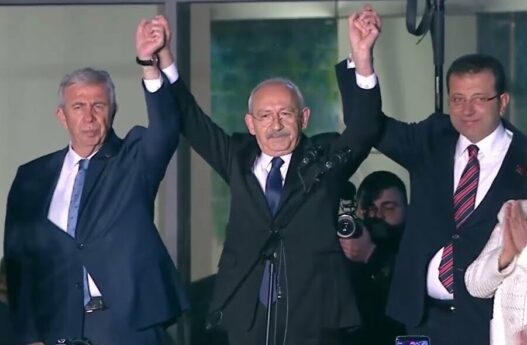
After Erdogan won the Presidential Elections in 2023, İmamoğlu was the most prominent figure in re-structuring the Turkish opposition. He initiated the change in the main opposition party, managing to overthrow Kemal Kilicdaroglu, former leader of the opposition.
He was nominated for a second term in 2024 Local Elections. Without electoral alliances between parties, İmamoğlu managed to earn 51.21% of the votes, with the second highest candidate receiving 39.59%. During the local elections in 2024, the main opposition party CHP, was leading in the polls for the first time after 47 years, with 37.81% of the votes compared to Erdogan’s 35.49%. This was a breakthrough in modern Turkish politics.
The new leader of the Turkish opposition party, Ozgur Ozel, announced that the party would choose its presidential candidate for the 2028 elections by a primary election. This was a first for Turkish politics. When İmamoğlu announced his candidacy, the momentum grew. As he campaigned all over the country, he made the headlines almost every day. On the 18th of March, Istanbul University, the university which İmamoğlu attended, revoked his diploma due to an ‘error’ during his transfer. Retrieving his diploma legally meant that İmamoğlu couldn’t run for President. Per Turkish electoral law, candidates running for President must have a valid diploma.
The day after, the 18th of March, İmamoğlu and his colleagues in the municipality were detained. İmamoğlu released a video message recorded just before he was detained:
“A handful of minds trying to usurp our nation’s will have used my beloved police officers for wrongdoing, stacking hundreds of them in front of the home of 16 million Istanbulites. I love you all dearly. I entrust myself to my people. Let everyone know that I will stand tall.”
The message İmamoğlu sent was deeply moving. The following days, opposition parties rallied in Municipal Headquarters, demanding justice and law. Up to a million people were recorded in a single day at protests. After his detention, İmamoğlu was officially arrested with the charge of ‘Creating a criminal organisation, accepting bribes, illegally storing personal data and fraudulently interfering with a bidding process’. It has been 120 days, and there is still no indictment.
The day he got arrested, on the 23rd of March, the opposition party had their primary elections in which İmamoğlu was the sole candidate. Due to his unlawful detention and arrest, the executive board of the main opposition party decided to make the primary elections for everyone over 18, including non-party members. Official numbers show that 15.5 million people voted for Ekrem İmamoğlu as their Presidential candidate.
The EU’s so called ‘response’
The EU’s response to İmamoğlu imprisonment was notably vague and weak. Public statements released by European Institutions failed to directly condemn the repression of the opposition parties. EU representatives did call for respect of democratic principles and the rule of law in Türkiye, but avoided denouncing the government’s involvement.
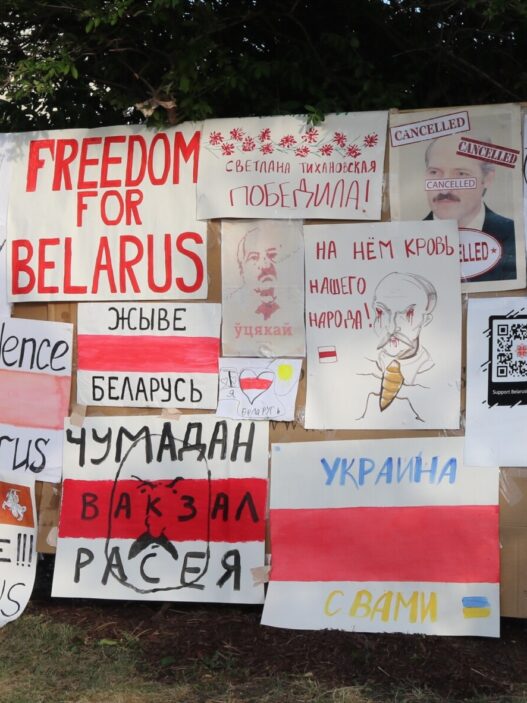
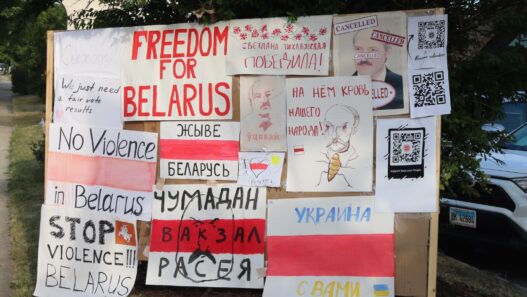
This measured reaction contrasted sharply with the EU’s stance in similar examples and democratic backsliding in European countries aswell as non-EU countries like during 2020 Belarus Presidential Elections, and Georgia during 2021-2023. That wasn’t the case for Turkish democratic backsliding and İmamoğlu’s arrest.
The inconsistencies between how the EU reacted suggested and perhaps proved a double standard. While the EU acts decisively and harshly against member states exhibiting authoritarian tendencies, it remains hesitant against a candidate and partner country, Türkiye.
This selective engagement undermines the TEU, EU’s legal requirements, and its moral duty of being the ‘defenders of democracy’. It reveals that Europe’s pro-democracy, pro-rule of law rhetoric is conditional, and not absolute. It is shaped by political and strategic reasoning, rather than morals and consistent principles.
Why did the EU choose to stay silent?
We can explain the EU’s hesitance to openly condemn the democratic backsliding in Turkiye through a realist and pragmatic perspective. We would need to focus on strategic interests, rather than normative commitments:
- Türkiye-EU Migration Deal of 2016: It has become a milestone for cooperation between Türkiye and the EU. Turkiye willingly hosts millions of refugees, especially from Syria, and controls the irregular migration flow into Europe. The European Union relies on Türkiye to maintain and apply this agreement, preventing another Migration Crisis. Another influx of migrants could easily destabilise the union. Any strong criticism or humiliation can jeopardise the cooperation, which makes the EU cautious in its approach to Erdogan.
- Economic Considerations: Since its creation, Türkiye has been a vital economic partner of the European states. Türkiye is a partner with the EU’s customs union framework, and has considerable trade volume. European businesses hold interests in Turkish markets. In case of a harsh EU response against Türkiye’s democratic backsliding, those relations could be put in jeopardy and disrupt economic ties.
- Geopolitical Perspective: Türkiye holds one of the most important geopolitical locations in modern politics – connecting Europe with Asia, having close proximity to the Middle Eastern region, and controlling the flow of the Bosphorus, connecting the Mediterranean with the black sea. Türkiye holds an important role in regional security. Amid the ongoing Russian invasion of Ukraine, Israeli attacks on Gaza, and political uncertainty in Syria and Iran, the EU emphasizes the importance of maintaining stable relations with Ankara is crucial. Türkiye’s cooperation in fields like energy transit routes, counterterrorism, smuggling, and regional diplomacy is vital. The EU would not risk jeopardising its relationship with Türkiye.
- European Integration: European leaders fear that a harsh reaction could harden Türkiye’s stance on the EU, and push them away from European Integration. Even though accession negotiations are frozen and Türkiye is unlikely to be a member state of the EU anytime soon, the EU hopes to keep the dıalogue open. These are all examples of realpolıtık concerns. However, the EU’s silence undermines its principles.
Selective Democracy Promotion – Europe’s Hypocrisy
Democracy proportion is a core pillar of the EU’s foreign policy. The EU promotes itself as a normative actor, claiming to be the guardian of democracy. However, there is a contrast between rhetoric and practice – there is a selective application of these values.
When Poland and Hungary undermined those core pillars by influencing the judiciary and limiting media freedom, the EU responded swiftly by pursuing legal actions and withholding funds. Yet in Türkiye’s case, the EU resorted to vague and soft diplomatic language, avoiding direct criticism of the ruling party. Similarly, in Ukraine and Tunisia, the EU offered political, financial, and symbolic support to actors aligned with the EU’s democratıc standards. But in İmamoğlu’s case, they were met with silence.
This selective engagement undermines the EU’s soft power, making it unreliable. Treating democracy as a tool of convenıence rather than a consistent value alienates pro-democracy actors both inside and outside of the EU.
The silence in İmamoğlu illegal imprisonment sends a message across the world: Europe will stay silent if your oppressor is geopolitically useful.
What the EU should’ve done
What the EU should have done is not sever ties or impose sanctions on Turkish officials. What they should have done was to speak out against injustice and protect democratic norms. İmamoğlu’s arrest was an attack on democracy and the will of 18 million citizens residing in İstanbul. It was an attack against 15.5 million citizens, who had voted for him in Türkiye’s first-ever primary election.
The EU’s vague response fell short of what was required at the time. Instead, realistically, the EU could have publicly condemned the Erdogan administration, applied diplomatic pressure, and shown solidarity with the Turkish opposition.
Most importantly, the EU should’ve upheld its own laws and legal frameworks. They should have conditioned engagement on respect for fundamental values as outlined in Article 2 of the TEU to respect their fundamental values, even if Türkiye is not a signatory party. Even if Türkiye is not a signatory party, its values are reflected and measured during the accession process.
By remaining silent, the EU signalled that undemocratic practices can go unpunished if the oppressor is useful to the EU. Europe missed the chance to lead on human rights and democracy during a time when we needed it the most.