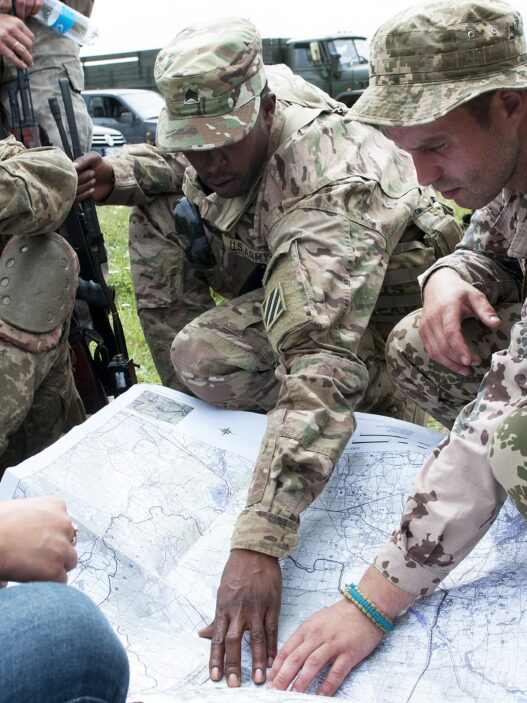









While European powers are focused on Ukraine, the unresolved Transnistria conflict in Moldova’s east remains a fault line, where Russian troops still linger silently. This unresolved conflict is not only a lingering threat to Moldovan statehood but also a strategic threat to European security. The Transnistrian conflict goes back to 2 September 1990, when the Pridnestrovian Moldavian Soviet Socialist Republic was unilaterally announced and formed without recognition, raising tensions in the region. It was formed on the eastern periphery of the Moldavian Socialist Republic by pro-Soviet separatists who expected to remain within the USSR, drawing on its multicultural and multi-ethnic population, which included Moldovans, Russians, and Ukrainians. The tension has been triggered by the legislative changes in 1989, when Moldovan was declared the state language in place of Russian, which has been widely seen as promoting Moldovan nationalism and pan-Romanian integration. This shift alienated pro-Soviet residents who had relied on Russian as the primary language of interethnic communication.
Once the collapse of the USSR became evident in 1991, especially after the failed August coup against Mikhail Gorbachev, a power vacuum emerged, revealing deep cracks within the Soviet system. On 25 August 1991, the government in Tiraspol declared the independence of what is now modern Transnistria. The political dispute between Chisinau and Tiraspol arose quickly in March 1992, with tensions escalating between the two sides. In June 1994, the Russian 14th Army, which was stationed in Transnistria, entered the conflict under General Alexander Ivanovich Lebed with no orders from Moscow. Following a one-month fighting, the conflict reached a stalemate in July 1992, resulting in a ceasefire and the de facto independence of Transnistria — a “frozen conflict” that persists to this day.
This paper argues that the Transnistrian conflict, long neglected as a remnant of the past, is now being instrumentalized by Russia as part of its broader confrontation with the West. This frozen conflict is a national security threat to Moldova with implications for European security and the EU’s eastern enlargement policies. The case underscores how historical legacies, ethno-linguistic divisions, and Russia’s assertive foreign policy continue to fracture the post-Soviet space, constituting obstacles that cannot be disregarded by Western policymakers.
Moldova’s geographical and geopolitical position, sandwiched between Romania and Ukraine, places its security in a precarious position. Moldovan trajectory towards European integration could become a symbol of democratic unification and contribute to regional stability. However, the Transnistrian conflict, sustained by Russia’s political, economic, and military backing, serves as an obstruction to Moldovan security and the accession into the EU. 
Rise of Russian Nationalism
When the conflict in Moldova became frozen, the region came under the influence of Russian nationalistic policies, driven by the sheer fear of Romanization in Moldova. Transnistrian authorities established Russian as the de facto official language and primary medium of interethnic communication, while education was overwhelmingly conducted in Russian. To balance and preserve the role of the Moldovan language, the Transnistrian authorities also funded literature, textbooks, newspapers, and TV shows. Among ethnic Moldovans, however, the growing dominance of the Russian language and culture was perceived as a threat. Since 2001, approximately 70,000 ethnic Moldovans have left Transnistria, reflecting deepening social and political alienation.
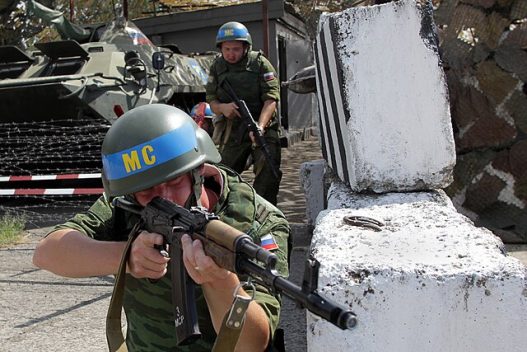
Russian influence has profoundly shaped Transnistrian politics and continues to generate repercussions across Moldova and the broader region. Although the number of Russian troops has been reduced to 1,500 troops in Transnistria, Moscow never fulfilled its 2002 commitment to complete withdrawal. The ongoing presence of Russian forces has become a symbolic flashpoint, reinforcing nationalist sentiment and Russian influence.
Meanwhile, Russian nationalistic tendencies and Soviet nostalgia have also gained ground within Moldova itself. The Moldovan government’s weak institutional capacity and lack of political will hindered its ability to push back against rising Russian influence. Internal divisions over policymaking and media control polarized Moldovan society further. Pro-Moscow Communist forces held sway over key institutions, EU-related information was often transmitted through Russian-controlled media, and Soviet symbols such as Lenin statues remained in public spaces. The government’s inability to effectively address the Transnistrian issue deepened political fragmentation and exacerbated fears among Russian-speaking populations.
All these tensions allowed Transnistria and many Russian speakers in Moldova to develop an ideological reluctance towards Romania and the EU. Russia, in turn, built strong connections with pro-Russian politicians and leveraged Moldova’s energy dependence, especially its reliance on Russian gas, to maintain geopolitical leverage and prevent further Western integration.
Russian Invasion of Ukraine and Its Effects on Moldova
In Moldova, attempts to fend off Russian influence began before the 2022 Russian invasion of Ukraine. The 2020 Presidential elections in Moldova brought pro-EU candidate and a former World Bank economist, Maia Sandu, to power. She defeated the incumbent Igor Dodon, backed by Russia. The Russian invasion of Ukraine on 24 February 2022 created profound and permanent effects on the world order. Amid the escalation, attention turned to the 1,500 Russian “peacekeeping” troops still stationed in Transnistria. Tensions rose further when Transnistrian President Vadim Krasnoselsky described joining the Russian Federation as the region’s “fate,” and the Transnistrian officials sought recognition, similar to Luhansk and Donetsk, from Russia.
Russia’s broader ambition to revise the post–Cold War security architecture, demonstrated previously in its 2008 incursion into Georgia and the 2014 seizure of Crimea, once again manifested in violent form in Ukraine. While Moldova had maintained a more neutral stance during past crises, Sandu’s presidency marked a sharper pro-European shift. The realignment under President Sandu had put Moldova under geopolitical crosshairs with the Kremlin. The Kremlin views President Sandu’s strengthening ties with the West as a threat, as it considers Moldova to be part of its sphere of influence. So, Russia launched its hybrid tactic of political interference, energy dependence, and misinformation to weaken the Moldovan position internally. The Transnistrian conflict is another leverage tool for Russia due to its military presence in the region.
President Maia Sandu’s strong condemnation of Russia’s actions in Ukraine led to the energy crisis, with Russia curtailing energy supplies. The war also highlighted Moldova’s acute vulnerability: its military remains underdeveloped, and its unresolved territorial dispute in Transnistria prevents NATO membership. Meanwhile, leaked documents such as “The Strategic Objectives of the Russian Federation in Moldova” project Russia’s intent to bring the country back under its sphere of influence by 2030. Moldovan political trajectory is at a turning point, but remaining Russian sympathies among its population risk undermining its security further. Moldovan Prime Minister Natalia Gavrilița even publicly warned of the possibility that Moldova could be Russia’s next target, particularly given the forces already deployed in Transnistria.
However, the Russian invasion of Ukraine also changed the perception of Russia among many Moldovans, who now increasingly saw Russia as a threat on their doorstep. While the country was granted EU candidate status alongside Ukraine in June 2022, it continues to receive far less strategic attention. Additionally, Moldova cannot enter NATO due to its territorial integrity being compromised, the military lagging behind Western standards, and vulnerability to external aggression. This further reinforces the lingering threat posed by Russia’s aggressive, expansionist policies to Moldova, which is poorly equipped to defend itself and supported only symbolically by the EU and NATO.
2024 Moldovan Elections and Limited EU Support
Moldovan society remains deeply fragmented between Romanian and Russian-speaking communities. The Gagauzia region and the breakaway region of Transnistria have significant ethnic Russian populations with pro-Russian views and lingering Soviet nostalgia. Despite internal divisions, support for the EU has grown, however, rising from 9% to 27%. Although many Moldovans are frustrated with the persistent Russian influence and view President Maia Sandu’s reforms as slow and insufficient. The lack of EU support has further polarized the society, with political competition being weaker than that in Ukraine, with the influence of pro-Russian politicians, and allegations of misinformation and manipulation campaigns orchestrated by Russia. The 2024 elections proved to be a pivotal point where Maia Sandu held the power with a narrow margin, and alleged election meddling by the Kremlin.
Despite persistent domestic challenges, Moldova gained candidate status, expanding its energy relations with Romania and Europe, and making efforts to decouple its energy supplies from Russian sources. Moreover, under Sandu’s leadership, the credibility of the state institutions increased, and Moldova bolstered its diplomatic cooperation with European states to facilitate European integration. The improvements in the judiciary branch and the revitalization of the justice system gained increased public support. Additionally, Moldova supports Ukrainian refugees, sharing the burden with other EU member states, and showcasing its commitment to the EU humanitarian causes. While Moldova under Sandu’s premiership made progress, it still lacks comprehensive backing or scheduling of EU membership and its institutions.
Despite Moldova’s commitment and vital reforms on its way to the EU integration, and the granted candidate status, the EU has made limited progress towards Moldova’s security integration, leaving the country to deal with Russian disinformation and sabotage attacks on its own. Russian aggressive actions against Moldova in 2022 and 2024 cyber attacks have further revealed Moldova’s limited capabilities in the face of potential Russian aggression.
Realities of the Ground
Moldova faces the harsh reality of its security environment and democratic development. Although Maia Sandu was re-elected for a second term in office, which significantly marks EU accession as a priority for the state, Moldova still requires substantial support to build democratic institutions and align with European standards. Sandu has supported the Council of Europe Action Plan 2025-28, which aims to improve Moldovan institutions and legislation under European standards in areas of democracy, the rule of law, and human rights. Under Sandu’s leadership, Moldova has a better chance to advance further democratic institutions and development, in consolidating and aligning with the European governance standards.
However, one of the key vulnerabilities of Moldovan democracy is its media. Independent media face a funding freeze from the U.S. and anti-press rhetoric by the political elite. Furthermore, Russian-aligned actors use tactics like intimidation in the Gagauzia region, undermining freedom of expression and media, and compromising the independence of the elections.
Additionally, Moldova’s relationship with Transnistria remains fragile. While Chisinau seeks peaceful reintegration through dialogue and reconciliation, regional instability could derail those efforts. Russia-Ukraine war intensified unease at the Moldovan eastern borders and fear of escalation with Transnistria, which neighbors the Ukrainian city of Odesa and is exposed to potential Russian strikes. Anxieties over the potential threat from Transnistria have been exacerbated by the 2022 Russian officials’ threats and the 2024 Russian hints about the potential military escalation against Moldova. As seen in the 2008 Georgian occupation, 2014 Crimea annexation, and the aggression against the two Donbas provinces of Ukraine, Russia could use the precedent of protecting the Russian-speaking population of a foreign country’s region anytime.
Additionally, any escalation in Transnistria could have sweeping consequences for Moldova’s strategic standing in the region. Moldova’s own military is still weak and not prepared to withstand a potential Russian aggression, while its partners and allies are not clearly committed to its protection. Amid a wider strategic vacuum, with President Trump pressuring Ukraine into negotiations and the EU struggling to compensate for reduced U.S. support, Moldova risks becoming a bargaining chip in any potential border deal with Russia. In such a scenario, Moldova’s sovereignty, security, and democratic progress would be under direct threat.
Moldova also faces significant challenges in its domestic politics and EU membership agenda, which could only be worsened in the case of any escalation in Transnistria. While Moldova is making strides to turn its candidate status into official EU membership by 2027, the reality can be different. So, any tensions over Transnistria and its potential “referendum,” or, worse, a staged “accession” backed by Russian troops, like in Luhansk and Donetsk, can bring Moldova a dangerous and unwanted challenge. A false-flag operation could provide Moscow with a pretext for intervention under the narrative of defending Russian citizens. Any symbolic moves by Tiraspol toward Russia would dangerously escalate tensions, especially as Russian forces remain stationed in the region. Meanwhile, with Ukrainian territory steadily occupied, the likelihood of sabotage or escalation in Transnistria continues to grow.
As the example of Ukraine shows, declarative steps towards EU integration are not substantial on their own. While Ukraine has made significant progress in integrating institutionally with the EU and has expanded military cooperation, it still has struggled to contain Russia on its own. Moldova, with its small and inexperienced army, is in an even more precarious position. In a worst-case scenario of Russian military action, it can be left largely alone, with only limited support from Romania or select Western states. EU funding has helped modernize parts of the Moldovan armed forces, but overall military readiness remains weak. Any involvement by Romanian state-backed battalions would risk escalating the conflict further, while NATO would likely remain on the sidelines, as it has with Ukraine.
The European Union, therefore, should not keep Moldova at bay or with stagnant progress in its economic, institutional, and financial integration with the EU. The EU financial packages, such as the Reform and Growth Facility (1.9 billion Euros in support), would enable Moldova to implement new reforms, aiming to bring socio-economic stability and improve democratic governance. From 2021-25, Moldova has also been granted 197 million Euros in the European Peace Facility as an instrument to prevent conflict and strengthen security and stability. Such programs might keep Moldova in orbit, but Moldova must be granted special grants and loans to fill the loopholes left by the freeze of the U.S. funding. The EU should further allocate funds for Moldova to strengthen civil society, anti-corruption bodies, and judicial reforms, while addressing institutional and governance gaps. EU-funded packages would not only progress the state but would also allow the public opinion not to turn against the European Union, and would keep public support afloat towards President Sandu and pro-EU candidates.
Internally, Moldova should continue improving democratic governance, judicial reforms, transparency, anti-corruption measures, public administration, and implementation of the law to gain public and investment confidence. The state should deepen energy cooperation between Moldova, Romania, and the EU to reduce energy dependency on the Russian energy supply. To gain trust in Transnistria and the Gagauzia region, Moldova must persuade with inclusive and flexible policies towards the Russian language, understanding the sensitivity of the cultural significance of the language. For EU membership, Moldova must build national unity and rally public support by spending funds on civic education and transparency. Moreover, Moldova must act on proposing the peace framework with Transnistria in cooperation and international backing from the EU and UN for the peaceful transition and integration with Moldova, while the Ukraine war serves as a warning of a frozen conflict if neglected.