







On 24 February 2022, Vladimir Putin’s invasion of Ukraine sent shockwaves through a Europe that had grown accustomed to the absence of large-scale conflict on its own soil since the end of the Second World War. The Office of the United Nations High Commissioner for Human Rights (OHCHR) estimates that the war has caused more than 62,000 civilian casualties, including over 16,000 deaths between February 2022 and May 2026. For more than four years, the conflict has dominated political debate and media coverage across the continent.
Yet the war’s consequences extend far beyond the battlefield itself. In several neighbouring regions, long-frozen disputes have acquired renewed strategic significance. One of them is the autonomous Moldovan region of Transnistria.
In this analysis, I argue that despite its international isolation, Transnistria remains one of Russia’s most effective instruments of influence in Eastern Europe. Home to fewer than 500,000 inhabitants, the breakaway territory hosts the largest ammunition depot in Eastern Europe and around 1,500 Russian troops stationed just a few kilometres from the Ukrainian border. While the war has weakened Moscow’s economic leverage over the region, it has not eliminated its political and military utility. Understanding this paradox is essential to assessing future security risks along Europe’s eastern flank.
This article first examines the political and military significance of Transnistria before analysing how the war has reshaped the region’s economic position. It concludes by assessing the most likely future scenarios and their implications for European security. 
An Authoritarian Enclave in Eastern Europe
As an autonomous region of Moldova, located in the east of the country near the border with Ukraine, it is home to nearly 500,000 people. According to the latest census, conducted in 2015, its population is composed of 29% Russians, 28% Moldovans, and 23% Ukrainians. Since 1990, Transnistria has considered itself an independent state with its own constitution, armed forces, government, and institutions. To date, its independence has not been recognized by any member state of the United Nations.
Transnistria operates under an authoritarian political system. The ruling Renewal party dominates the 33-seat Supreme Council, holding 29 seats. Since 2016, the region has been led by President Vadim Krasnoselsky, a former military officer. Independent media are effectively non-existent, civil and political rights are routinely violated, and political dissent is systematically suppressed, with numerous citizens having been imprisoned on political grounds.
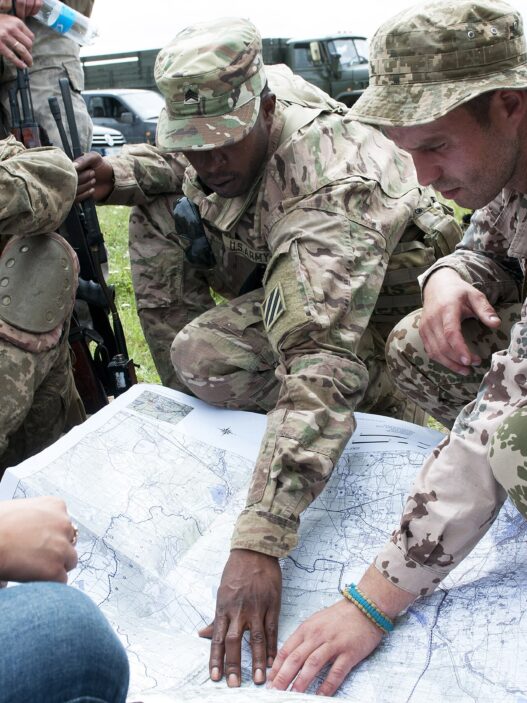
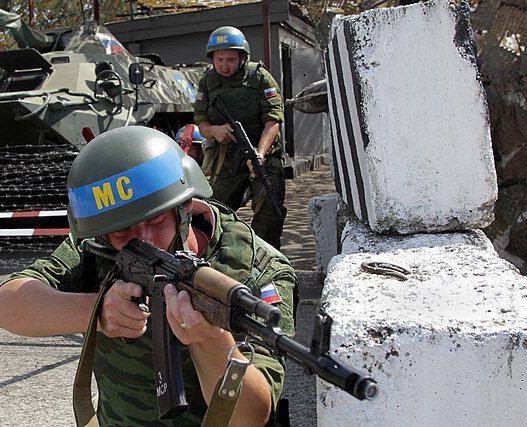
Moreover, the Russian army has maintained a presence of approximately 1,500 troops in Transnistria since 1992, following the victory of separatist forces over the Moldovan army during the Transnistrian war. These troops are stationed at a large ammunition depot located in the village of Cobasna, making it the largest in Eastern Europe. The Russian and Transnistrian authorities are the only ones to possess detailed information regarding the quantity, type, and condition of the munitions stored at the site.
This ammunition depot represents a major information gap in Europe’s eastern security architecture. Only the Russian and Transnistrian authorities possess reliable data on the quantity, type, and condition of the munitions stored there, leaving NATO, the EU, and Moldova itself reliant on outdated intelligence and unverified estimates. This creates a strategic vulnerability by giving Moscow unilateral control over a major security concern on the EU’s eastern flank, while denying other actors the transparency needed to properly assess risks or verify compliance with any future disarmament agreement.
No attempt by Moldova to obtain such information has so far been successful. Hence, this has generated serious tensions between the parties involved, as this military presence constitutes a de facto violation of the principle of neutrality enshrined in the Moldovan constitution.
Moscow’s Strategic Leverage over Moldova
Russia uses this military foothold in Transnistria as a means of pressure on Moldova. In June 2025, Moldovan Prime Minister Dorin Recean publicly accused Moscow of seeking to deploy an additional 10,000 troops in the region in order to increase military pressure on southwestern Ukraine as well as on Romania (a neighbour of both Moldova and Ukraine and a member of the European Union and NATO). In addition, the European Union’s High Representative for Foreign Affairs and Security Policy, Kaja Kallas, has called for the withdrawal of all Russian troops from Belarus, Georgia, Armenia, and Transnistria as part of any future peace agreement on Ukraine.
Moldova also faces other forms of pressure from Russia, particularly political ones. The Kremlin seeks to interfere in Moldovan political debate in order to install a pro-Russian government and counter the pro-European leanings of President Maia Sandu (Moldova has officially been a candidate for EU membership since June 2022).
Concretely, Russia exploits Transnistria’s precarious geographical position, surrounded by countries it considers hostile, to launch destabilization campaigns, particularly in Moldova. According to Moldovan authorities, several pro-Moscow micro-parties were financed by Russia with more than €100 million in 2024 in order to pollute democratic debate and destabilize domestic politics. During the 2024 presidential election, approximately 130,000 voters reportedly received bribes from Russian-linked networks in exchange for supporting pro-Russian candidates.
Numerous disinformation campaigns have also been conducted across the Moldovan online space, particularly targeting the incumbent government, which has been accused of lacking legitimacy and colluding with pro-EU foreign actors. Corruption allegations against Maia Sandu were disseminated by Russian bots and trolls via fabricated news articles and social media content Such initiatives consistently pursue the same objectives: popularizing pro-Russian narratives, fostering distrust towards the West, and creating internal divisions. As of April 2026, The EU has imposed sanctions on 69 people and 19 entities linked to Russian propaganda activities that “undermine the fundamental values of the EU and its member states, their security, stability, independence and integrity.”
Transnistria remains a valuable asset for Russia. Since Moldova’s independence, Moscow has primarily used Transnistria as a lever to shape the country’s broader geopolitical orientation, rather than pursuing its formal recognition, a move that would leave the breakaway region isolated and landlocked between potentially hostile states. By preserving the conflict in its current unresolved form, Russia retains a permanent source of political and strategic leverage over Chișinău, allowing it to influence Moldova’s domestic and foreign policy while complicating its long-term integration with Western institutions.
How the Ukraine War Reshaped Transnistria’s Economy
The Russian invasion of Ukraine in February 2022 exacerbated military and economic tensions in Transnistria. The potential use by the Russian army of the Cobasna ammunition depot to supply its troops in Ukraine represents a direct threat to peace in the region. In addition, several Transnistrian buildings, including the regional Ministry of State Security, were hit by a series of unexplained explosions in April 2022. Many Western experts identified these incidents as potential pretexts for deeper Russian military involvement in the area.
On 31 December 2024, Russia abruptly suspended gas deliveries to Transnistria following the expiration of its transit agreement with Ukraine. Kyiv declined to renew the deal as part of its efforts to curb Russian revenues during the war, and Moscow chose not to reroute supplies to Transnistria, despite having alternative transit options. As a result, the breakaway region became heavily reliant on Moldovan and European markets for its economy and energy supply, leaving it in a position of acute economic vulnerability. Since then, the authorities have repeatedly extended a state of economic emergency as reduced gas supplies continue to weigh on industrial production and the wider economy.
In 2024, approximately 83% of Transnistria’s exports were directed toward EU member states and Moldova, up from 67% in 2021 and 65% in 2019. Roughly 54% of its imports originated from the European Union, compared with just 31.8% in 2018. This trend highlights a significant erosion of the Russian market’s role in Transnistria’s economy and illustrates how Moscow’s economic foothold in the region has weakened since the outbreak of the war in Ukraine.
Between Stability and Escalation
At this stage, several scenarios appear possible for the future of Transnistria. The first is that of a fragile status quo. The prospect of a genuine escalation of tensions in the region currently appears unlikely. Despite repeated provocations and destabilization attempts by Russia in Moldova, the Moldovan government has repeatedly stated that it prioritizes dialogue and rules out any armed confrontation in Transnistria, in accordance with the principle of neutrality enshrined in its constitution since 1994. As Moldova is neither a member of NATO nor of the European Union, it appears highly improbable that it possesses the resources required to engage in an armed conflict.
Russian armed forces, for their part, remain heavily engaged on the Ukrainian front, where they face substantial difficulties. Several NATO officials argue that the total number of Russian dead and wounded in the war has reached approximately 1.1 million, including 250,000 fatalities. Moreover, according to the military outlet SOFREP, the war in Ukraine costs Russia around $900 million per day, in addition to the economic constraints generated by sanctions imposed by, among others, the EU and the United States. It therefore appears highly improbable that Russia would open a new front and commit additional resources and personnel to a geographically isolated theatre.
Finally, Transnistria’s growing economic and energy dependence on Chișinău and the EU since the suspension of Russian supplies has placed the separatist authorities in a position of weakness, encouraging restraint.
However, the possibility of escalation cannot be entirely ruled out, particularly in the event of a shift in the Ukrainian front towards the south-west of the country, closer to Transnistria. Similarly, a faster pace of EU integration by Moldova, or a potential abandonment of its constitutional neutrality in favour of NATO membership, could further strain Russia-Moldova relations. While the EU has so far not played a direct role in negotiations over the Transnistrian settlement, it has increasingly funded initiatives aimed at reducing economic, social, and political disparities between Chișinău and Tiraspol,
According to the Moldovan think tank WatchDog.md, Russian disinformation campaigns increasingly threaten Moldova with suffering the same fate as Ukraine should it continue its rapprochement with the European Union. While, for the reasons outlined above, such pressure is unlikely to translate into a full-scale military conflict, Moscow may nevertheless seek to reinforce its military presence in Transnistria for deterrence or coercive purposes. Such measures would likely be accompanied by intensified disinformation campaigns and further interference in Moldovan political life in order to support pro-Russian candidates.
Conclusion
Although Transnistria is unlikely to become the next battlefield of the war in Ukraine, it still holds crucial strategic significance. For more than three decades, Moscow has used Transnistria as a tool to shape Moldova’s political trajectory and challenge Western influence in Eastern Europe. Although Russia’s economic position in the region has weakened since 2022, its capacity to exploit Transnistria as a source of political pressure remains largely intact. As Moldova moves closer to the European Union, the region will likely remain a key fault line in the broader territorial and ideological contest between Russia and the West.
Several measures thus appear necessary to prevent a further escalation of tensions in the region.
First, negotiations on the future of Transnistria should be revitalised, with a strengthened role for the OSCE and the European Union as mediators. With diplomatic discussions effectively stalled since Russia’s invasion of Ukraine, Moscow has been able to exploit the resulting vacuum to maintain its political and institutional leverage over Transnistria.
Second, the continued economic and energy integration of Transnistria into Moldova and the European Union is essential. The region is currently facing a severe shortage of gas supplies, a vulnerability that has become a key instrument of economic pressure and leverage for Moscow. Over time, reducing this dependency would not only limit Russia’s ability to exert influence, but also help anchor the region more firmly within European economic structures.