










U.S. President Donald Trump has long been vocal in his accusations and demands toward European allies, whom he accuses of being behind on defense spending and of freeriding on American security guarantees. He has also blamed Ukrainian President Volodymyr Zelensky for the continuation of the war and claimed he could end the conflict within 24 hours. Given Donald Trump’s longstanding beliefs and convictions regarding both European NATO allies and the war in Ukraine, it is no surprise that one of his first actions upon returning to office was to initiate talks with Russia and seek ways to pressure both sides into ending hostilities—while simultaneously escalating his criticism of Europe and urging it to take greater responsibility for its own defense.
American negotiators traveled to Riyadh and Istanbul, began drafting a ceasefire deal, and even explored potential Ukrainian concessions without clearly involving either Ukraine or European representatives in the process. Although many had anticipated a dramatic shift in U.S. policy under Trump, the abruptness of his approach shocked even the most prepared European leaders. His actions spurred them to urgently seek ways not only to participate in U.S.-led diplomatic efforts but to assert themselves as key stakeholders in the Russia–Ukraine war, in which Europe is directly and profoundly involved.
Led primarily by the United Kingdom and France, European states have moved to shape ceasefire negotiations and end the war in Ukraine by launching a new multinational initiative: the Coalition of the Willing. The Coalition aims to offer Ukraine credible security assurances while bolstering European security more broadly. Publicly, it has outlined an ambitious four-pillar mission—safe skies, safe seas, peace on land, and a strong Ukrainian army. Yet despite broad participation and political momentum, the Coalition remains in its planning phase, and a key question emerges: what must it achieve to become a real guarantor of peace and a credible deterrent to further Russian aggression?
While its ambitions are clear, its effectiveness will ultimately depend on whether it can meet both Ukraine’s urgent security needs and the constraints of European political will. For the Coalition to be credible, it must offer sustained protection for civilian and strategic infrastructure, enhance Ukraine’s frontline capacity through training and logistical support, and project enough operational readiness and unity to deter further Russian aggression. The Coalition’s success and Europe’s claim to strategic leadership will hinge on its ability to translate intent into meaningful, sustained presence and protection. 
Where the Coalition Stands
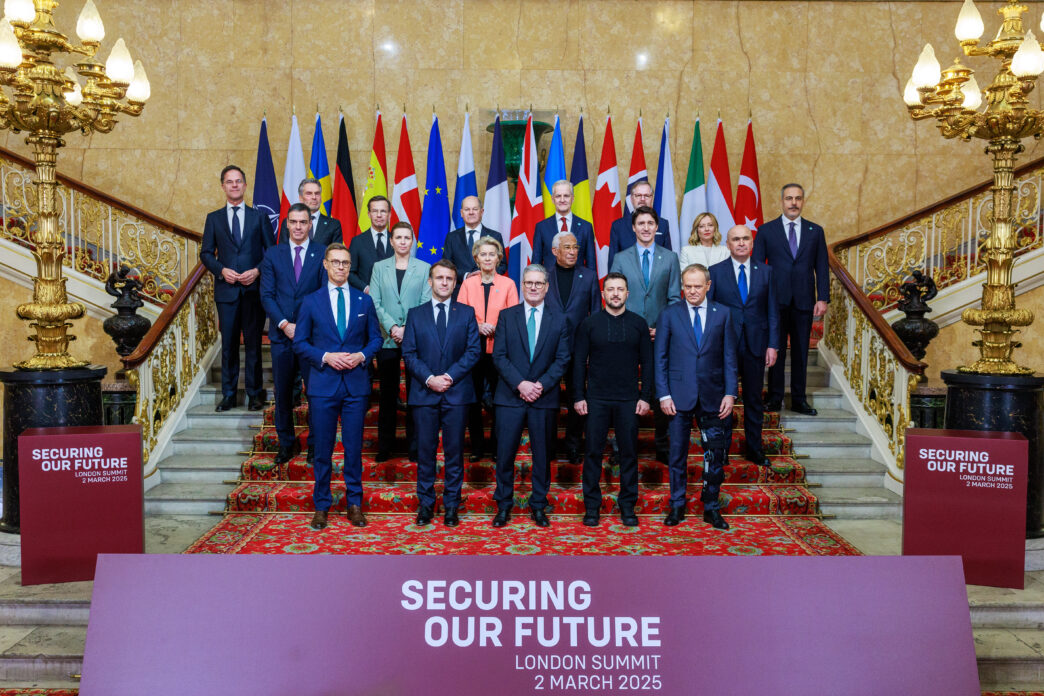
After the disastrous encounter between Presidents Trump and Zelensky in the Oval Office in late February and the sudden launch of direct U.S.–Russia talks, European leaders moved quickly to assert their role in shaping a ceasefire. On March 2, 2025, UK Prime Minister Keir Starmer, following a summit with President Zelensky and 16 European leaders, formally proposed a “Coalition of the Willing” to strengthen Ukraine’s air defense, prepare for troop deployments in case of a ceasefire, and coordinate sanctions and military-industrial support.
Over the following weeks, the Coalition expanded to include around thirty countries—mostly European NATO members, along with Canada, Australia, and New Zealand. The Coalition has identified four key domains around which its mission will be structured: air, sea, land, and military capacity. It is also expected to manifest in two phases: continued military and diplomatic support ahead of any ceasefire, and a reassurance force deployed once fighting stops.
Importantly, President Macron clarified that the force envisioned for deployment to Ukraine is not intended as a frontline peacekeeping mission, but rather as a deterrent signal of Europe’s resolve. Its role would begin with air and maritime security, eventually expanding to protect critical infrastructure in rear areas. So far, only France and the UK have officially committed troops. Others, including Nordic, Baltic, Benelux states, Canada, and Turkey, have shown interest but await clarity on the mission’s scope and U.S. involvement. For many, American backing remains essential, particularly in logistics, intelligence, and protection of the troops. Without it, many of them fear the Coalition may lack the logistical backbone and strategic weight to function as a credible deterrent.
Despite the Coalition’s initial momentum, by late May, official communication about its planning and deployments largely disappeared from public view. According to diplomats, work has shifted to technical and classified formats. While military aid is already flowing to Ukraine, the reassurance force, a core component of the Coalition’s second phase, remains in development, with timelines, composition, and rules of engagement still being negotiated behind closed doors.
Requirements for a Credible European Mission
The prospect of Western forces entering Ukraine to support its defense has been present in political and academic discourse since the early days of Russia’s full-scale invasion in 2022. Today, this possibility feels more realistic than ever, intensifying debates over the mandate, structure, and scale of a Western reassurance force—one of the Coalition of the Willing’s most prominent components. The force would likely deploy after a ceasefire to uphold the agreement and deter renewed Russian aggression. To do so, it must be credible, capable, and prepared to operate across air, land, and sea. Only then can it meet Ukraine’s security needs and assert itself as a serious actor in the eyes of both Moscow and Washington.
One of the most pressing questions surrounding the mission is its size and mandate. The number of European troops to be deployed, their intended stationing, and their specific tasks remain unclear. Media and political figures often diverge widely from expert military estimates. Expert assessments converge on the need for around 150,000 troops permanently stationed in Ukraine with regular rotations. Such a force could effectively monitor a ceasefire, provide on-the-ground training to Ukrainian forces, support the delivery and operation of Western weapons, and ensure air defense for key civilian infrastructure, including nuclear power plants and major non-frontline cities like Kyiv, Odesa, Lviv, and Dnipro. Stationing these troops away from the frontlines for air defense, training, and technical roles would also ease Ukraine’s personnel shortages by freeing up its own forces for the eastern front.
Among the potential roles European forces could assume in Ukraine, ensuring the functionality of its air defense network is the most critical for sustaining the war effort and preventing large-scale humanitarian disasters. Beyond supplying additional systems, the creation of a Coalition of the Willing air protection zone, as outlined in the Sky Shield initiative, would significantly strengthen Ukraine’s defensive posture. Sky Shield envisions a European-led air umbrella over central and western Ukraine, comprising up to 120 fighter jets from willing NATO countries, including the UK, France, Germany, and the Nordic countries. These aircraft, including F‑16s, Typhoons, Rafales, and Gripens, would operate outside NATO command but in coordination with Ukraine’s existing air defense. Their core task would be to intercept Russian cruise missiles and drones targeting civilian and strategic infrastructure, protecting cities like Kyiv, Lviv, and Odesa, as well as nuclear power plants. If implemented effectively, Sky Shield would not only safeguard civilians but also free up Ukrainian air defense and military resources for the frontline.
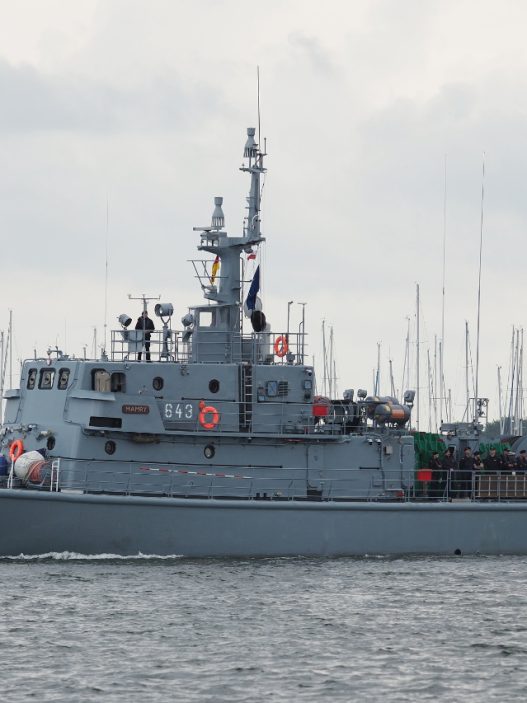
Another vital element of an effective security strategy is a robust maritime component in the Black Sea. The mission could prioritize clearing sea mines and restoring safe commercial and military navigation. Alongside this, a visible deterrent presence through modern surface combatants, such as frigates, would be essential to police Ukrainian territorial waters, escort merchant vessels, and monitor Russian naval activity. Together, these measures would uphold freedom of navigation and complement land and air operations through mine clearance, secure naval escort, and maritime domain awareness.
The mission’s resources and presence would undoubtedly become an important factor in any post-ceasefire security landscape, but to be truly credible, the initiative must rest on a cohesive mandate and sustained political will. Russia will almost certainly be tempted to test Europe’s resolve through provocations—whether sub-threshold attacks, disinformation campaigns, or tactical military pressure. A European mission should not only be capable of sustaining its operations on Ukrainian soil but also of responding decisively to such provocations in order to send an unambiguous signal to the Russian leadership. Deterrence will hinge not just on presence, but on the clear mandate and readiness to act when challenged.
Limits of Europe’s Military and Political Readiness
Most European allies may be eager to provide Ukraine with advanced weaponry, raise its military to Western standards, and protect its skies with top-tier air defense systems. But these ambitions face hard limits due to capability gaps within European NATO countries, particularly in their ability to provide troops. While experts estimate that a credible reassurance force would require around 150,000 troops, and early public statements have floated figures between 10,000 and 30,000, private assessments by European defense ministers suggest that even deploying 25,000 would severely strain existing resources. Much of Europe’s military capacity is already committed to NATO defense plans, and key states remain reluctant to adjust those commitments for Ukraine, fearing it would weaken the alliance’s posture, particularly on its eastern flank.
Beyond the challenge of generating sufficient forces, European readiness levels remain uneven. Years of underinvestment in ammunition, spare parts, and strategic lift capabilities have left many national militaries ill-equipped for sustained, large-scale deployments. A credible reassurance mission would require robust logistical infrastructure and the capacity for ongoing multinational training, especially in the land domain—something European forces have not consistently maintained.
At the same time, there are persistent shortfalls in critical enablers, including intelligence, surveillance, and reconnaissance (ISR); airborne early warning; tanker and heavy-lift aircraft; and electronic warfare capabilities. In all of these areas, European militaries remain heavily reliant on U.S. support. Without American involvement, particularly in space-based ISR and real-time geospatial intelligence, any European-led mission would face significant operational blind spots.
Maritime capabilities present further limitations: European navies cannot match U.S. carrier strike groups, advanced missile defense systems, and high-level command-and-control structures. Even modest naval contributions would quickly strain Europe’s limited supply of surface combatants and escorts. Taken together, these gaps highlight the limitations in Europe’s ability to lead a sustained, independent security mission in Ukraine, both in terms of scale and strategic depth.
Additionally, political will across Europe remains uneven. States bordering Russia or Belarus may withhold troop contributions to preserve national deterrence, while southern countries may prioritize other regional concerns. Even the Coalition’s main initiators, France and the UK, have already scaled back initial proposals. National caveats, such as limits on deployment zones or engagement rules, further fragment planning and undermine coherence. These inconsistencies complicate command and control, weakening the force’s ability to respond swiftly and uniformly to Russian provocations. Without stronger political alignment and fewer restrictions, the mission’s mandate risks being diluted before it begins.
Ultimately, while the Coalition of the Willing serves an important political function, signaling European resolve to Washington, Moscow, and Kyiv, the feasibility of a robust and credible mission remains uncertain. Without greater U.S. support and without a clear, unified political mandate among European states, the Coalition risks being seen more as a symbolic gesture than a strategic shift. Its deterrent value will hardly depend on the hard military capabilities, logistical endurance, and political unity required to withstand provocation and deliver on its promises.
From Ambition to Implementation: The Future Shape of the Coalition
The Coalition of the Willing is both a crucial initiative and a test of Europe’s resolve amid expanding Russian aggression and growing uncertainty about U.S. support. It also marks a significant shift in European strategic thinking: just a few years ago, the idea of deploying troops or advanced air defenses to Ukraine was unthinkable. Critics may argue that Europe has responded too slowly and that the Coalition remains more rhetorical than real. And indeed, serious capability gaps and political divisions persist. It is already clear that the Coalition will fall short of its original ambitions—and of what experts consider necessary, as discussed earlier. Still, Europe’s capabilities should not be dismissed. If implemented effectively, a European reassurance force could still serve as a credible deterrent in the eyes of Russia, the United States, and Ukrainians themselves.
Based on the trajectory of planning before it faded from public discourse, and considering both Europe’s available resources and its limitations, the Coalition will most likely take the form of a contingent of several thousand to tens of thousands of European troops stationed in western Ukraine. Their primary functions would include supporting Ukraine’s air defense and providing training to Ukrainian military personnel. In parallel, the Coalition is expected to continue supplying Ukraine with weapons and deepening cooperation with Ukrainian producers through joint investment and production of advanced defense technologies.
Ukrainian experts likewise argue that a more feasible and strategically sound option for Europe could be a commitment to focus on stationing air assets within Ukraine to help defend its airspace from Russian missile and drone attacks. This would involve deploying British, French, or other European fighter jets inside Ukrainian territory, along with their aircrews and the necessary logistical infrastructure. While such an air protection zone might initially cover only western and central Ukraine, it would still provide substantial relief to Ukraine’s overstretched air defense network, allowing Kyiv to redirect more personnel and assets to the eastern front.
This, combined with the effective training of Ukrainian service personnel by European instructors on Ukrainian territory, would significantly enhance the country’s ability to absorb advanced Western systems, accelerate force modernization, and free up experienced personnel for frontline operations. Importantly, even a limited European military presence in Ukraine would mark a major shift in posture, signaling resolve while avoiding the greater escalation risks and operational burdens of large-scale ground deployments.
Ultimately, the Coalition of the Willing is more than a military initiative—it is a political and strategic test of Europe’s ability to act independently, credibly, and cohesively in a new era of security. While its final form may fall short of initial ambitions, success should be measured not by the number of troops or jets but by its ability to protect Ukrainian airspace and cities, support military operations through training and coordination, and deter renewed Russian aggression. If implemented with focus, unity, and realism, the Coalition could lay the foundation for a new model of European defense—one that takes responsibility for the continent’s security and affirms that Ukraine’s defense is inseparable from Europe’s future.