










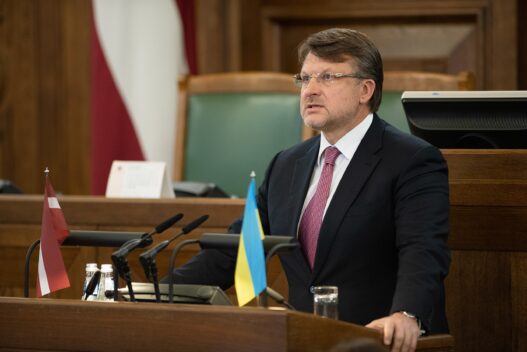
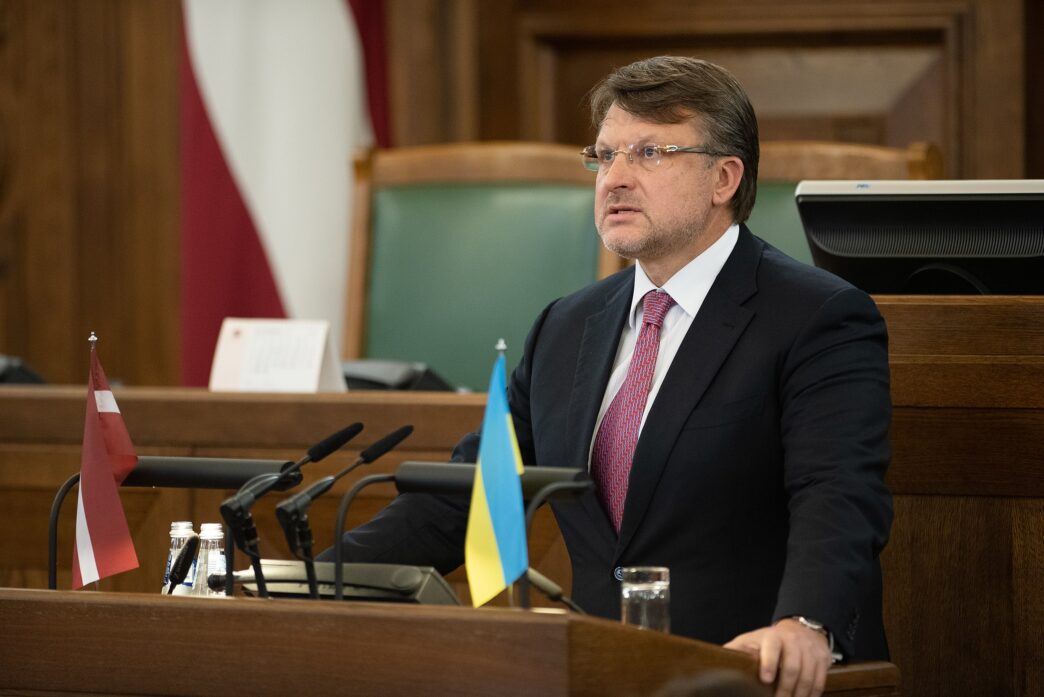
On June 7, 2025, Rīga, the capital city of Latvia, held its hotly contested municipal election. After securing the highest share of the vote (18 per cent), the right-wing populist party Latvia First (LPV) claimed widespread election fraud and sought to annul the election results. At a rally held nearly a week after the election, party leader Ainārs Šlesers decried the Latvian Central Election Committee (CVK) and demanded that new elections be held.
The more likely source of LPV’s dissatisfaction, however, is the four-way governing coalition that sidelines the LPV, which was finalised 3 days after the rally was held. The coalition, formed between The Progressives, the National Alliance, New Unity and the United List, occupies 34 of 60 seats in the Rīga City Council, thus leaving LPV in the minority. Party leadership and LPV voters alike believed that LPV’s 18 per cent share of the vote should have guaranteed their rule in the Rīga City Council, reinforcing their disdain for the new coalition and LPV’s sidelining.
Following the rally, LPV filed an official complaint against the CVK, claiming that for several hours, ballots were unaccounted for, and that technical issues led to people voting more than once. LPV argued that these factors warranted the annulment of the original results and called for a re-election. On June 26, the regional court rejected these claims, while the CVK stated that the levied accusations were exaggerated and that any confusion during the election did not impede the vote-counting process. A day after the ruling was handed down, progressive politician Viesturs Kleinbergs was elected as the new mayor of Rīga by a vote of 34 to 22.
This local Latvian election mirrors the broader trend in Europe of right-wing parties challenging election results, and shows how deeply confidence in the democratic process has been shaken. Just a month prior, right-wing Romanian presidential candidate George Simion refused to accept defeat in the presidential election, going so far as to declare himself “the new president of Romania” on X before votes had been counted. Both Latvian and Romanian candidates, both self-professed supporters of U.S. President Donald Trump, are just two recent examples of the increasing trend of election scepticism from right-wing political parties. The candidates’ electoral scepticism echoes that of Trump, whose refusal to concede in the 2020 election began an unprecedented assault on the American democratic process and arguably emboldened other right-wing leaders to do the same. 
The upcoming Norwegian and Czech parliamentary elections later this year will serve as key indicators for the health of democracy in Europe. In an increasingly polarised political climate, how these elections are conducted and how the results are received will test how democratic institutions in Europe respond to increasing pressure from nationalist and populist parties across the continent.