












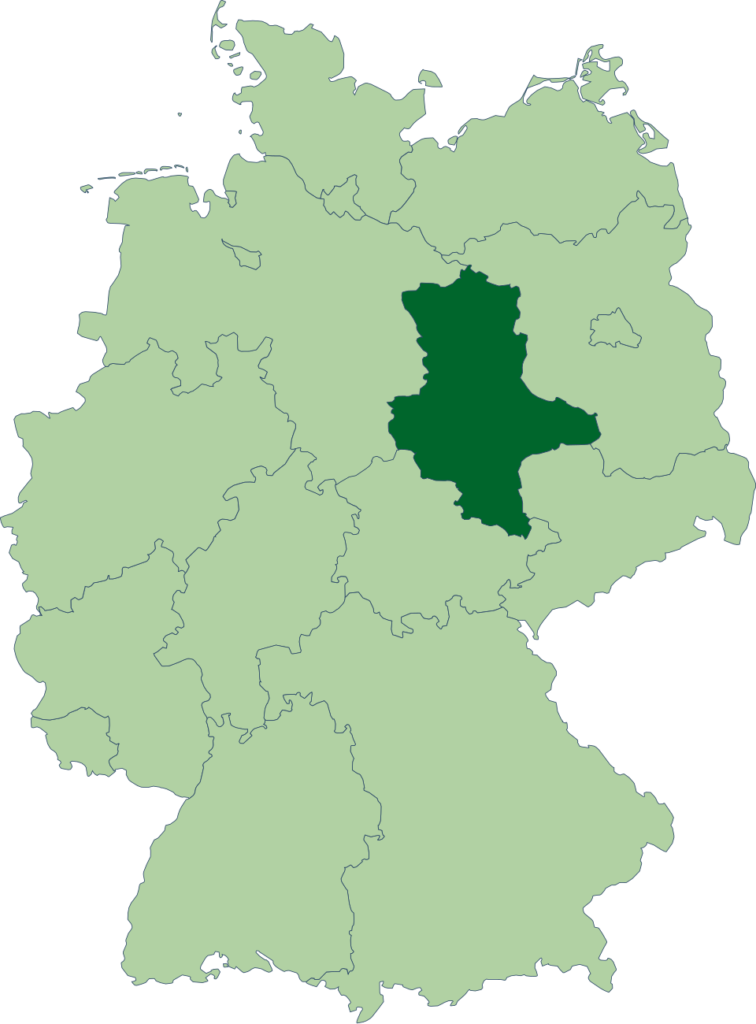
Info Map by Tizian Stocker:
Jan Niklas Reiche is a student of political science at Martin Luther University Halle-Wittenberg. He works as a student assistant at the Chair of Systems Analysis of Political Science and participates in the project “In Verteidigung der Demokratie” (English: In defence of democracy).

Tizian Stocker is a German political scientist and expert on EU and European policies and politics. His work focuses primarily on democracy within the EU. He works as a media editor and briefing analyst for the European Relations Association.
Inside the AfD’s Stronghold: What Fuels Support in Saxony-Anhalt?
Tizian Stocker: State elections will be held in Saxony-Anhalt in September 2026, and for the first time in Germany, the far-right AfD could potentially take power. Why does the AfD seem particularly successful in this federal state?
Info Box provided by Tizian Stocker:
Alternative for Germany (AfD): The AfD is a German political party founded in 2013 as a party critical of the European Union. As it evolved, it shifted its focus to issues such as migration, national sovereignty, and criticism of the EU, and is now predominantly classified as a right-wing populist party; some factions within the party are also considered to be far-right.
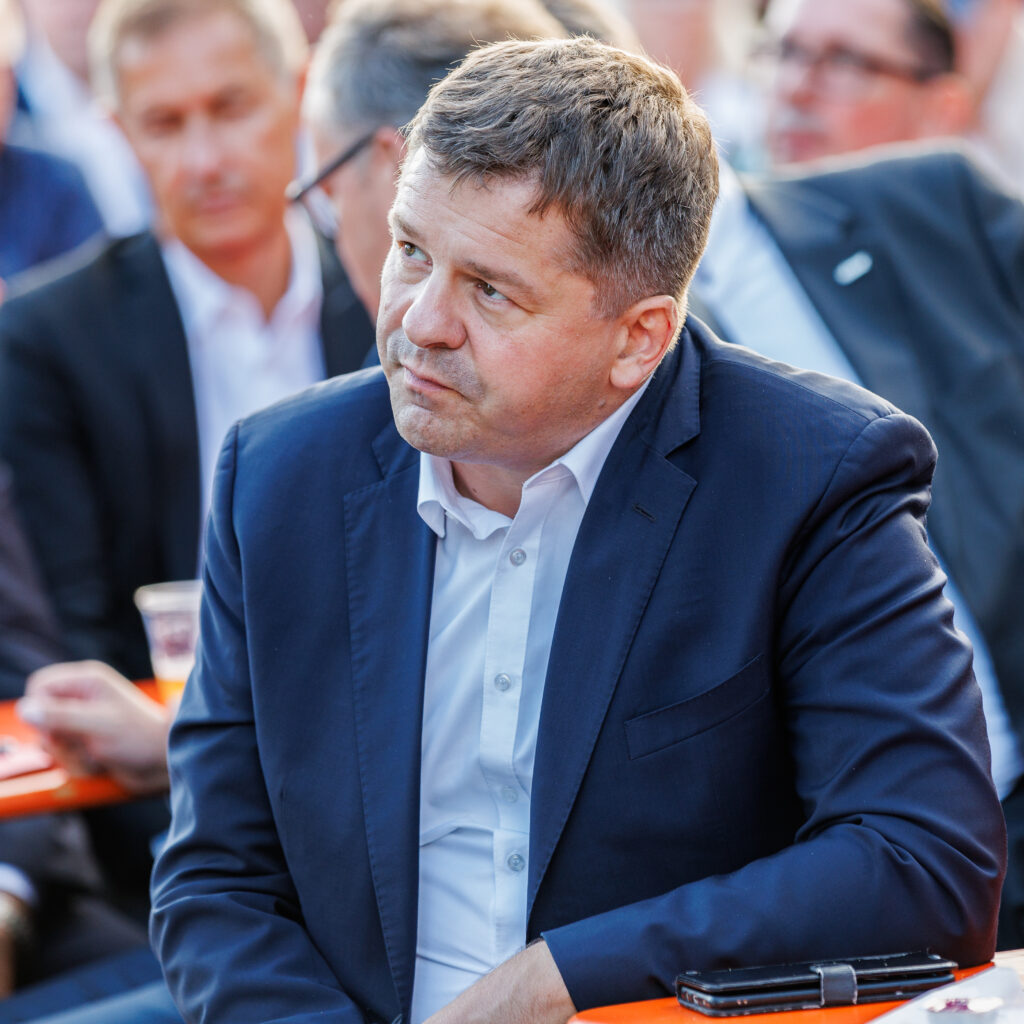
Jan Niklas Reiche: The current dominance of the AfD in Saxony-Anhalt is fueled by specific economic, cultural and social conditions, which are mainly a result of structural disadvantages in East Germany: The federal state has the second-highest poverty rate in Germany, and the already weak local economy has come under significant pressure, with plant closures looming on the horizon. Therefore, the AfD profits from widespread fears of social decline. The population of Saxony-Anhalt is mainly located in rural areas, whose inhabitants are generally a key demographic for right-wing populists. Also central to the party’s success is the strategic exploitation of East German identity: By addressing the widespread perception that East Germany lacks recognition – almost two-thirds of the population in Saxony-Anhalt perceive themselves as “second-class citizens” – the AfD can present itself as a credible alternative to the established political system. On top of these advantageous factors, the far-right party benefits from a charismatic candidate [Ulrich Siegmund] who broadens its electoral coalition.

“[T]he AfD profits from widespread fears of social decline.”
Jan Niklas Reiche
Info Box provided by Tizian Stocker:
East Germany: East Germany refers to the five federal states of Brandenburg, Mecklenburg-Western Pomerania, Saxony, Saxony-Anhalt, and Thuringia, as well as the former eastern part of Berlin. The region largely corresponds to the territory of the German Democratic Republic (GDR), which existed from 1949 to 1990.
Saxony-Anhalt as a Turning Point for German Democracy?
Tizian Stocker: Other parties have warned against an AfD-led government. Why would such a development, from your perspective, be problematic for Saxony-Anhalt and for Germany as a whole?
Jan Niklas Reiche: Political culture and democratic institutions in Saxony-Anhalt would suffer significant damage under an AfD-led government. The party proposes a repressive and possibly unlawful migration policy, as well as major changes to education and cultural policy, in which the federal states in Germany traditionally have extensive powers. To effectively implement these changes, the party is set to replace up to 200 civil servants. But the impacts of a possible AfD-led government in Saxony-Anhalt, which would be the first far-right government in Germany since the Second World War, would also largely affect the political climate of Germany as a whole. Saxony-Anhalt could become a model for an authoritarian transformation with effects on the other East German states and the federal government. German federalism, which relies heavily on the political cooperation of all actors, would be challenged by an uncooperative state government.
“[A] possible AfD-led government in Saxony-Anhalt, which would be the first far-right government in Germany since the Second World War, would also largely affect the political climate of Germany as a whole.”
Jan Niklas Reiche
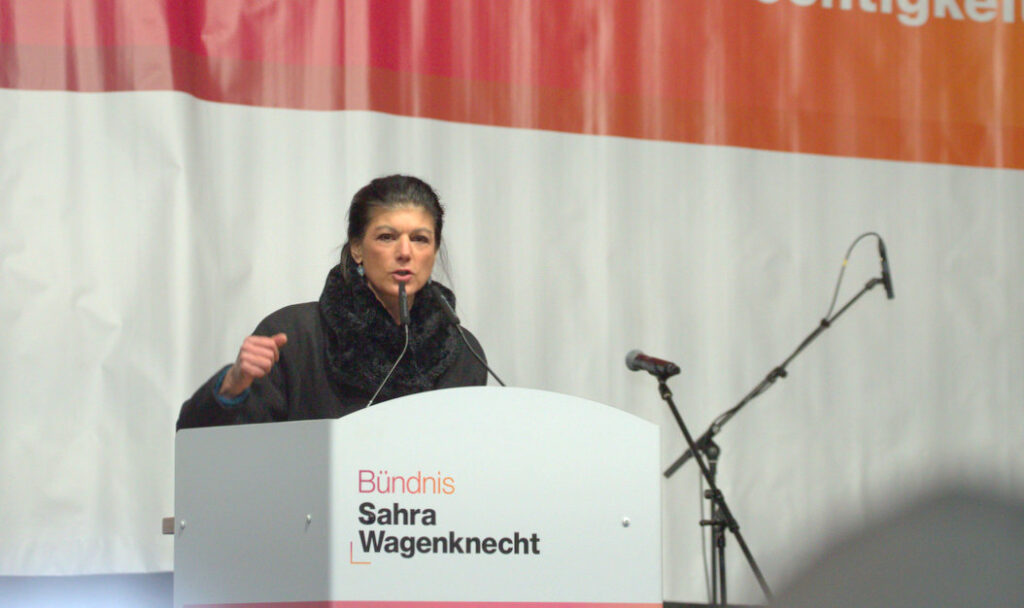
Tizian Stocker: Do you believe the so-called Brandmauer (firewall) could eventually collapse, particularly in light of actors such as the BSW (Bündnis Sahra Wagenknecht, English: Alliance Sahra Wagenknecht)?
Info Box provided by Tizian Stocker:
Brandmauer (Firewall)/cordon sanitaire: In German politics, the “Brandmauer” (literally “firewall”) refers to the informal political principle of excluding cooperation with the far-right Alternative for Germany (AfD). It means that democratic parties reject forming coalitions, supporting minority governments, or entering into systematic parliamentary cooperation with the AfD to prevent the far right from gaining political influence.
Jan Niklas Reiche: The state elections in Saxony-Anhalt are especially significant because the AfD is within reach of an outright majority, without needing a coalition partner. If the far-right party can’t secure this majority, the Brandmauer (cordon sanitaire) could get put under pressure. The BSW, founded by a former politician from the German Left Party, would seem like the natural partner. Both parties share restrictive migration policies, anti-establishment views, and a focus on East German identity politics. The BSW has already signalled possible cooperation with the AfD, but I’m still sceptical whether the party will even be able to secure seats in the Saxony-Anhalt parliament. Another scenario in which the consensus against cooperating with the AfD could collapse would involve the German conservatives (CDU): Over the past years, some members of the state party have already moved closer to the AfD. If the far-right party is just a few seats short of a majority, only a few conservative parliamentarians could let the cordon sanitaire collapse. The implications of such a political manoeuvre for the German political system are unforeseeable.
“If the far-right party [AfD] is just a few seats short of a majority, only a few conservative parliamentarians [from the party CDU] could let the cordon sanitaire collapse.”
Jan Niklas Reiche
How Democratic Parties Can Challenge the AfD
Tizian Stocker: What can parties realistically do to prevent an AfD victory in Saxony-Anhalt?
Jan Niklas Reiche: The democratic parties must present their own key political issues instead of focusing their campaigns on the AfD. The situation of the CDU illustrates this clearly: The conservatives, under their new, still largely unknown leader, Sven Schulze, remains heavily focused on adopting the AfD’s positions on migration and social policy. This strategy of adopting far-right policies has already proven unsuccessful in a variety of political climates, and the current polls in Saxony-Anhalt point in the same direction. Yet the CDU could distinguish itself by playing to its strengths. Their leader and incumbent Minister-President of Saxony-Anhalt has a background as an industrial engineer and policy expert, which could be a key factor in convincing the electorate that the conservatives offer more elaborate answers to the current economic crisis than the far right. Besides the CDU, the Left Party could present itself as a credible alternative for voters who are concerned with social decline – and the party can draw on many new and especially young party members. What remains crucial for any democratic party in this election is the ambition to move beyond academic and urban voters. The election will be won or lost in rural, less prosperous areas.
We thank Jan Niklas Reiche for his insightful contribution and for his fantastic cooperation with the European Relations Association (ERA).
Further articles from ERA:
- Here an analysis of to the rise of populist movements in Europe, including the AfD.
- Here an opinion article why the European far right is so succesful in mobilizing people.
- Here an opinion article on the “The Doomsday Scenario”, which could happen to Europe in 2027 and 2029.
- Here you can listen to a podcast about the topic by the European Council on Foreign Relations.
- Recent News about the AfD: