






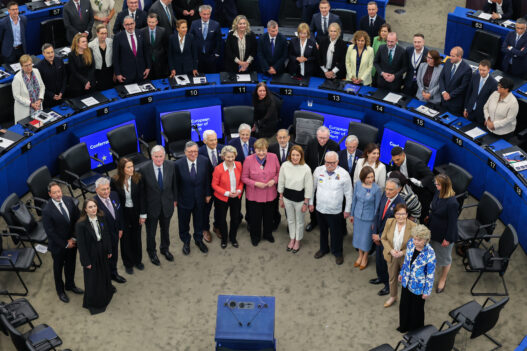
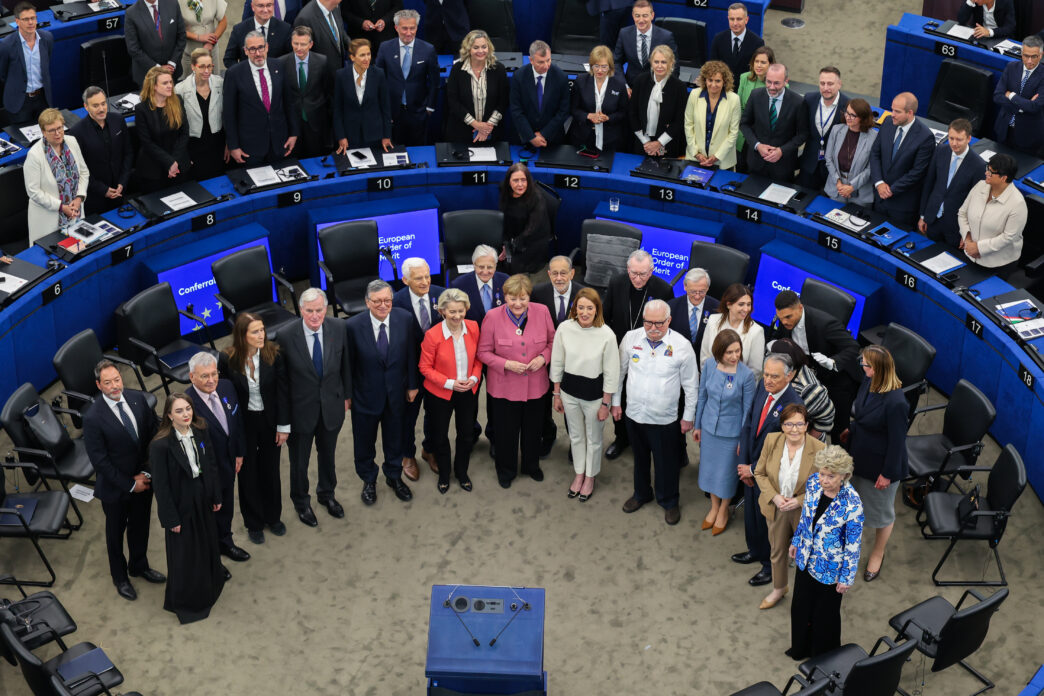
Former German Chancellor Angela Merkel criticised in an interview with a German broadcaster the European Union for not making greater use of its diplomatic influence in efforts to end Russia’s war against Ukraine.
While defending continued military support for Ukraine and stronger European deterrence policies, Merkel argued that diplomacy must remain an essential parallel strategy and warned that Europe risks relying too heavily on the United States and President Donald Trump for negotiations with Moscow. Merkel also reflected on her own efforts to maintain dialogue with Russia before the full-scale invasion in 2022, including her 2021 attempt to establish a new diplomatic format between the EU and Moscow. She emphasised that diplomacy and deterrence must coexist, drawing parallels with Cold War strategies.
At the same time, her remarks revived debate over her political legacy, particularly Germany’s former dependence on Russian gas and the ultimately unsuccessful Minsk agreements negotiated after Russia’s annexation of Crimea in 2014. Merkel also rejected the idea of serving as a mediator herself, arguing that effective negotiations require political authority and direct responsibility from elected leaders. She stated:
We were only able to hold those [Minsk negotiations 2014 and 2015] with President Putin because we had political power, because we were heads of government. You need that power. And I, personally, would never have thought of asking a mediator to go to Minsk for me and talk to Putin … You have to take that into your own hands.
Contextualization and analysis by the author:
Merkel’s comments come amid growing discussions inside Europe about whether the EU should appoint a dedicated peace envoy to represent the bloc in potential Russia-Ukraine negotiations. Russia’s leader proposed former German Chancellor Gerhard Schröder as a mediator, but the EU and Germany rejected the proposal. Current German Chancellor Friedrich Merz said no decision has yet been made, stressing that negotiations can only advance if Moscow demonstrates a genuine willingness to engage and halt its aggression against Ukraine. Merz said:
Until the Russian government is ready to negotiate, we do not need to make any decisions on our side regarding representation.
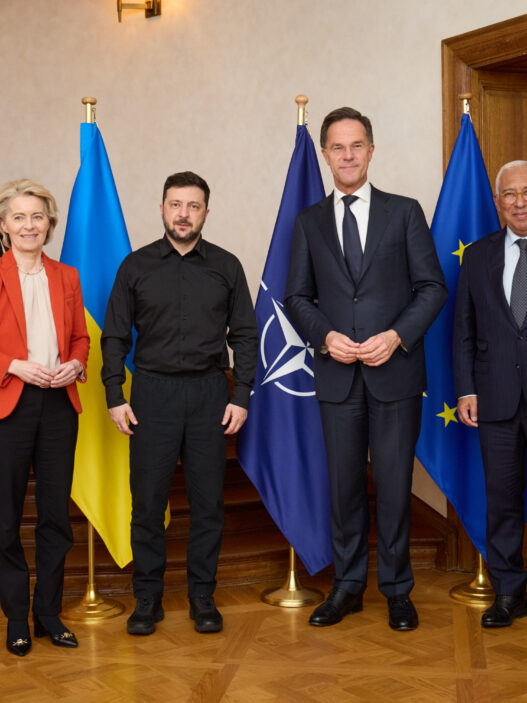
European Council President António Costa stated:
Yes, it’s a possibility [to negotiate with Putin], [but] for the time being, nobody has seen any sign from Russia that they want effectively to engage in serious negotiations.
Merkel’s remarks have reignited broader debates over Europe’s previous Russia policy, particularly criticism from Eastern European countries such as Poland and the Baltic states, which long warned against excessive dependence on Moscow and advocated a firmer stance toward the Kremlin.
Supporters of stronger diplomacy argue that negotiations with President Vladimir Putin may eventually become necessary, but only from a position of Ukrainian and European strength rather than dependence on external powers. Critics, meanwhile, continue to question whether diplomacy alone can influence authoritarian leaders who prioritize power politics over compromise.
Ukrainian President Volodymyr Zelensky recently declared:
Now Putin himself says that he is finally ready for real meetings. We pushed him a little, and we have been preparing for meetings for a long time, so we need to find a format. We need to end this war, reliably guarantee security.
Overall, the debate reflects a growing European dilemma over how to balance military support for Ukraine with renewed diplomatic efforts to end the war.
Sources: Politico EU, European Relations and Kyiv Post.