







Introduction
I didn’t expect to be writing an opinion piece today, but Germany’s former Chancellor Angela Merkel left me no choice. I grew up under her leadership — never a fan, but respectful. Just yesterday, I listened to a podcast with her, with the German journalist Markus Feldenkirchen, about the 2015 refugee crisis. Merkel sounded empathetic and thoughtful. I even started reading her new book, ‘Freedom‘, some weeks ago, and found her reflections on life in the GDR and her rise to power in a male-dominated political system fascinating.
But then came her interview with the Hungarian outlet Partizán — and it made me spill my tea.
The Interview That Shocked Me
In that conversation, Merkel said she still believes a dialogue format between the EU and Russia could have been established in 2021 — before Russia’s full-scale invasion of Ukraine on 24 February 2022 and blamed the Baltic states and Poland for not cooperating to develop such a format. That statement ignores one crucial fact: the war in Ukraine began in 2014, not 2022. Russia’s illegal annexation of Crimea in March 2014 and the outbreak of fighting in Donbas in April 2014 marked the start of a war that never really stopped. The Kremlin still claims it had no role in it — a fiction no one outside Moscow believes.
Why Poland and the Baltics Refused Dialogue
Merkel expressed disappointment that Poland and the Baltic states were unwilling to support renewed dialogue with Moscow. Having lived and studied in Warsaw, I can tell you: their caution is rooted in centuries of hard-earned experience. Poland knows what “dialogue” with Russia often leads to. After the Partitions of Poland (1772–1795), the country was divided among Russia, Prussia, and Austria for 123 years. When it regained independence in 1918, it was immediately forced to defend it in the Polish–Soviet War (1919–1921) — a conflict the Bolsheviks started because they couldn’t accept an independent Poland. Poland won, humiliating the young Soviet Union with the Treaty of Riga. Two decades later, in 1939, Hitler and Stalin signed the Molotov–Ribbentrop Pact, secretly dividing Poland and the Baltic states between Nazi Germany and the USSR. The pact, signed on August 23, 1939, is now commemorated as the “Black Ribbon Day” — a reminder that both totalitarian regimes began the war as partners in crime. Putin’s Russia still denies the pact, preferring to frame the USSR purely as a liberator of Europe. 
Germany Reckoned With Its Past — Russia Never Did
While postwar Germany built its democracy on the painful process of “Vergangenheitsbewältigung” (coming to terms with the past), Russia never did. Under Vladimir Putin, who once called the fall of the Soviet Union “the greatest geopolitical catastrophe of the 20th century,” Russia has returned to its imperial habits — crushing Chechnya, invading Georgia, and now waging a genocidal war against Ukraine. That’s why Merkel’s remarks about the supposed “dialogue unwillingness” of Poland and the Baltics are not just naïve — they’re historically tone-deaf. These countries know what happens when you trust Moscow’s promises.
The Failure of “Change Through Trade”
Germany’s long-held belief in Wandel durch Handel — “change through trade” — has failed. So has its “Ostpolitik”, the policy of rapprochement pursued since Willy Brandt. Since Putin took power, Eastern Europe has faced constant aggression, while Western Europe looked away — until February 2022. Even now, some Western governments still hesitate to see Russia as the existential threat it is, buying oil and gas, financing Putin’s aggression against Ukraine.
At least Germany has begun to wake up.
“We no longer live in peace.”
– chancellor Friedrich Merz recently said
The Myth of “Missed Dialogue”
Ukrainian columnist Roman Hontscharenko was right: there has never been a lack of Western dialogue with Russia.
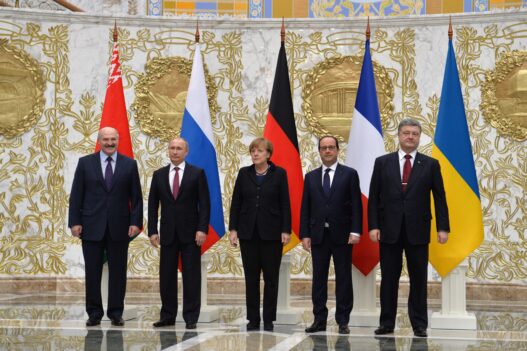
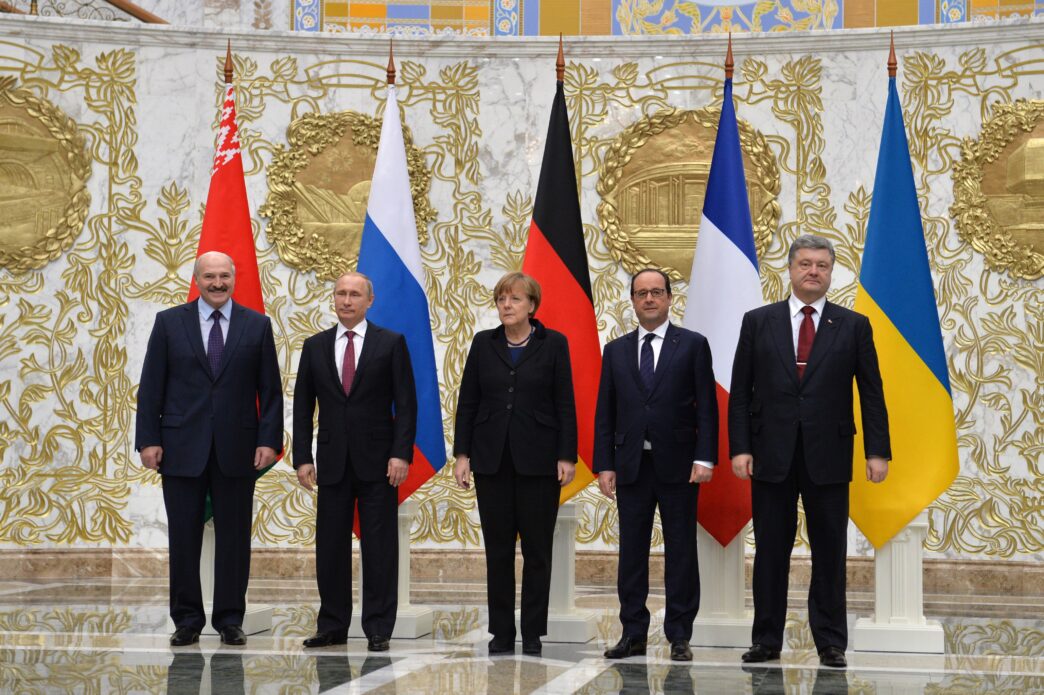
Angela Merkel personally led the Minsk negotiations between 2014 and 2015 in an effort to stabilise eastern Ukraine, while Olaf Scholz pursued diplomatic channels right up until February 2022 in hopes of preventing a wider conflict. Even Donald Trump engaged in his own unconventional talks with Vladimir Putin earlier this year, underscoring how successive Western leaders have repeatedly sought dialogue with Moscow—often with limited or short-lived results.
The West kept talking. Putin kept lying.
For Putin, war is preferable to peace — because peace would force Russians to ask whether the thousands of dead were worth it. And when that question is finally asked, Putin’s rule could crumble overnight.
Europe’s Task: Strength, Then Dialogue
Europe cannot exist without Russia — or rather, without the Russian people. But under Putin, dialogue is dangerous. He understands only strength. The EU must prepare to resist Russia’s hybrid warfare, consisting of shadow fleets, cyberattacks, disinformation, and the weaponisation of migrants at the eastern borders. Dialogue will be necessary one day — but not before Russia’s aggression ends and Ukraine’s complete territorial integrity is restored, or when Ukrainians decide that the moment for dialogue with Russia has come.
Conclusion
Europe should listen more carefully to its eastern members — Poland, Lithuania, Latvia, and Estonia — who have long understood the Russian threat.
Their caution is not obstinacy; it’s wisdom.
Dialogue with the aggressor is not diplomacy.
Dialogue with the victim is solidarity.
And if Western Europe has learned anything since 2022, it should be that appeasement isn’t peace — it’s preparation for the next war.