







The United Kingdom of Great Britain and Northern Ireland (UK) remains one of the most fascinating political unions in Europe. The centuries-old Union of the four nations moulded through war and royalty remains now made up of four voluntary nations to conclude a modern state. Despite the trivial party politics that play out on our screens, there is a far more multifaceted politics behind it, too.
This paper by Dr Cathrine Baker, parallels Britain’s union with Yugoslavia’s. It is a useful guide to understanding the political make-up of Britain that others fail to comprehend; a multifaceted union. Dr Baker’s paper and the remark highlight that the UK, like Yugoslavia, Austria-Hungary, and the USSR, is a state in union with other nations that have every possibility to fragment just as the former states did.
The diminishing centre of politics in Britain due to the chaotic 14-year tenure of the Tories and now with Labour’s exceedingly unpopular governance, produces trouble for the unity of the four nations. Westminster’s failure to govern makes more people question why Westminster should lead them in the first place.
Unionists in Northern Ireland are now a minority of the political parties, with Sinn Féin’s Michelle O’Neill as First Minister. She and Marie Lou McDonald (the Republic of Ireland’s Sinn Féin party leader) are now banging the drums of a border poll, a referendum on Irish unification which is constitutionally permitted due to their electoral victories. In Scotland, despite losing 42 seats along with its momentum for the 2nd referendum, it is now increasing in polls again, suggesting a new majority for the SNP would reinvigorate the independence cause. But even Wales is seeing huge changes to its political makeup. 
But most consequential is where these three nations would be left if Reform UK gains power in 2029. Reform’s giant lead in the polls warrants an investigation of the role Britain’s populist right could have on the Union. This article looks to reinvestigate the state of the Union by analysing the political trajectories of Wales, Scotland, and Northern Ireland.
Wales: Traditions Questioned
Wales, part of the United Kingdom, has always held strong since the Middle Ages. But now, like Scotland due to discontentment with the British centre, Wales may see a political earthquake in its 2026 parliamentary elections. Plaid Cymru (The Party of Wales), with its focal policy being Welsh independence, has momentum from its Senedd (Welsh Parliament) by-election victory, and is now neck and neck with Reform for the next Senedd election. This, only a couple of years ago, would have been unheard of as Wales has always been known as a Labour stronghold.
But Wales also highlights the challenge Reform will pose towards the Union, largely with its neglect of the need for self-governance. Nigel Farage is yet to reject reporting that if Reform wins the next General election, they will abolish the Senedd. True, Farage has played this down, but in a speech in which he pushed back on Welsh devolution, stating that the referendum in 1997 only passed with “a cigarette paper”. These statements are mystifying in the fact that devolution is still largely popular in Wales, not least for its advancements of Welsh language and culture. The comments and rhetoric are significant to how our state apparatus could be changed by Reform’s indifference towards the need for devolution.
This antithesis to Welsh autonomy is that Plaid Cymru’s leader, Rhun ap Iorwerth, has rallied Welsh voters for Plaid in spirit to prevent Reform from power; a strategy that has clearly worked in the last by-election. The fact that Wales, where Unionism has supposedly been the safest and never questioned, is now in a position where an independence party is leading the polls, concluding a result that could see a nationalist party in every nation. Reform’s unease with Welsh autonomy paints a picture of the strain this union faces.
Scotland: A Second Referendum?
Scotland was brought into union with England originally through the Royal family, before the Kingdom of Scotland weakened economically and faced security fears of a Europe with enlarging kingdoms seeking a political union with England in 1707. When Britain’s democracy expanded through the 20th century, so did Scottish nationalism, resulting in the formation of the SNP (Scottish National Party) in 1934, and it has been Scotland’s largest party for almost two decades.
Scotland’s latest attempt at independence lost momentum. After Brexit, called into question the democratic nature of the Union as Scotland was being forced into a decision against its will, with a majority vote for Remain. Despite a strong political case, the UK Supreme Court declared that only the UK House of Commons had the authority to first permit a second referendum. Closing Holyrood’s momentum.
But now, with the dismay at politics in Westminster, Scottish nationalists are pointing again at the Union and asking the Scottish electorate: Is this worth it? Along with the rise of Reform, there has been a revival of the independence question. First Minister John Sweeny, just like Plaid Cymru’s gambit, has galvanised support for the SNP’s new drive of independence voters against the rise of Reform, a play that at the moment is working for the SNP.
But the rise of Farage is not just his perceived volatility in politics or his role in Brexit; it is also his statements on devolution and what he hasn’t said, raising questions about the future relationship between Westminster and Holyrood. True, Farage and Reform have not declared any policies against Scottish devolution or its parliamentary authority. However, Farage has criticised the Barnett Formula, the process by which public funds are distributed between Westminster and the devolved powers.
Northern Ireland: In or Out?
Northern Ireland has had a more tenuous relationship with the Union due to the historic English conquest of Ireland and the Troubles period. The period was thought to have drawn to a close with the 1998 Good Friday Agreement (GFA), but Brexit has posed a fresh dilemma for Northern Ireland.
Brexit, like for Scotland, was a seismic earthquake in Northern Irish national politics. The EU plays a critical role in the peace of the region, due to the single market bypassing what was one of the most restrictive and insecure borders in Europe. The European framework created a space of cohesion for Catholic citizens of the North to feel more a part of Ireland, with the UK in the single market, accelerating trade between Northern Ireland and the Republic.
Boris Johnson’s decision to put a border in the Irish Sea, economically evicting Northern Ireland from the Union, caused financial pain for Northern Irish businesses forced to pay EU tariffs for goods within their own state. Only until Rishi Sunak struck the Windsor Framework agreement with the EU, to the dismay of the Brexiters, to remove these trade barriers.
Despite the Windsor Framework delivering stability, just prior to the first time Sinn Féin won a majority in the Northern Irish Assembly, resulting in the first nationalist First Minister, Michelle O’Neill. Since then, O’Neill and Sinn Féin in Ireland, under Mary Lou McDonald, have been consistent in their desire for a border poll, a referendum on the unification of northern and southern Ireland; that is now constitutionally permitted with Sinn Féin’s majority.
This Windsor Framework is under scrutiny from Nigel Farage’s Reform UK, which plans to withdraw from the agreement because of the EU customs arrangements for certain goods. This policy, as of yet, comes without consideration of the consequential outcomes. This indifference of the hard right in Britain is being noticed by Nationalists and Unionists alike.
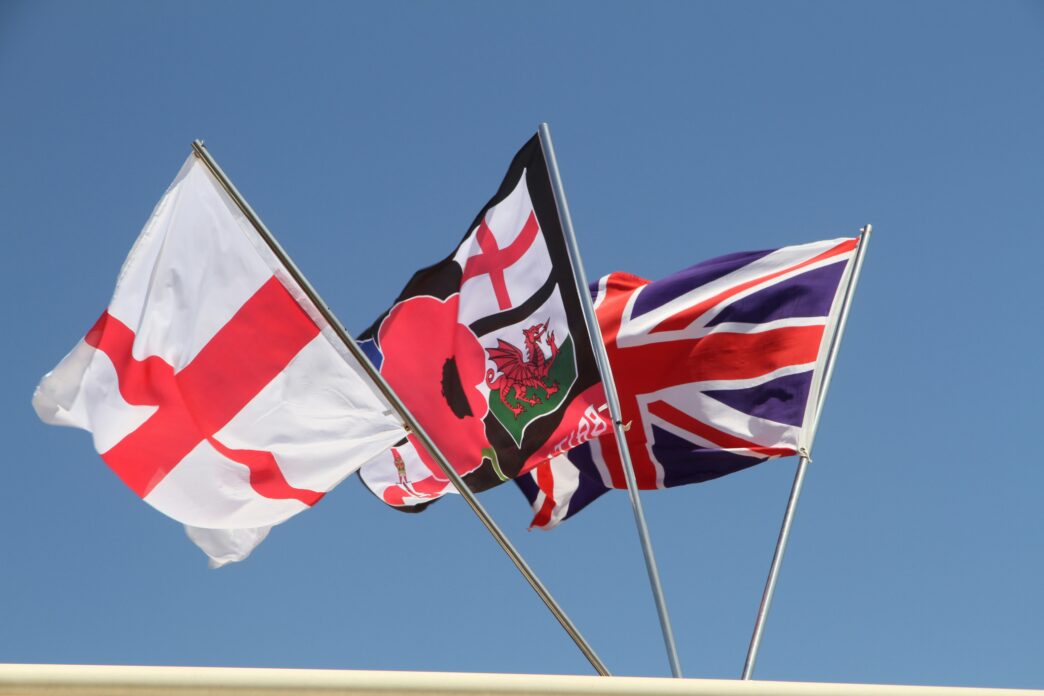
But most revealing in the latest speech by Ulster Unionist Party leader Mike Nesbit. In which Nesbit would say, “English nationalism is the largest threat to the Union”. Commenting on the St George’s flag phenomenon last summer, Nesbit said he was shocked to see so many colleagues in Westminster wearing not lapels of the Union Jack but of solely the English flag. Nesbit went on to inform his conference of a dangerous equation of English nationalists in dispute over the amount of economic relief Westminster provides Northern Ireland, talking about Northern Ireland as if it were an ‘other’ than the Union.
This is already being espoused by Reform, with Farage stating that previous governments have put “Northern Ireland in a different position than the rest of the UK”. Farage went on to state that “Northern Ireland would not be at the forefront of their proposals”. These comments are not just about the Windsor Framework but also about renegotiating the GFA because of their focus on leaving the European Court of Human Rights (ECHR). The ECHR and the GFA are interlinked with many of the provisions of the peace deal on religious freedoms and rights that sought to protect vulnerable communities and ensure the violence of the Troubles would not repeat itself. The ECHR bolsters protections towards communities in Northern Ireland.
The pivotal question is: would Reform be prepared to withdraw from the Windsor Framework immediately, too? Or withdraw from it while renegotiating the GFA? Either decision would undermine peace in the region by placing a hard border back. Having a hard border on the island of Ireland infringes on the inherent Irish rights to freely cross between north and south. The decades of violence in the Troubles saw the border between the two entities, which created the main source of grievances. To ignore this jeopardises the Union and to some extent threatens political violence back upon the region.
The road to a United Ireland is not clear for Nationalists either. There are many questions they would need to answer, such as how the rights of Protestant/Unionists can be protected? Will the Irish Garda police Unionist neighbourhoods? How would they approach issues in those communities without possibly flaring up a new Troubles-like conflict? Would the Irish government be prepared for the economic relief it would pay for unification, as West Germany did to its East? Not to mention the actual process of holding a referendum to see divisions unleashed from one of the most bitter conflicts of Europe, with a new media ecosystem and highly polarised political landscape, would be an essential concern to decision makers.
The Road Ahead:
With local and regional elections next spring, as well as growing pressure from the Taoiseach to declare when a Border poll will occur, the fabric of the political structure in the British Isles is at a juncture not seen for centuries.
One should be clear and empirical that the Devolution across the nations has been one of the most successful and popular policies in Britain. It returned decision-making to the hearts of centuries-old communities and allowed the flourishing of culture and language, which were thought to have been dead. Bringing a renewed diversity to Britain to be proud of.
The tabloid focus of Reform’s rise and Westminster party politics sees the roots of the UK’s state pushed to the sidelines. The commitments towards the nations remain politically strong. Failure of the centre of our politics to recognise this and scrutinise Reforms for policies that undermine these foundations.
Unlike Labour and the Conservative party’s manifestos, Reform’s party manifesto has no mention of devolved powers; in fact, it doesn’t mention Scotland or Wales once. True, this is not a concrete policy against devolution, but it clearly presents an apathy towards it being part of the UK’s political structure.
This is relevant because if we analyse the state of the Union, if the next government has little to say and is already causing a resurgence to support independence, then a possible inter-union political conflict between Scotland and Westminster is possible. To get a sense of this significance, former leader Nicola Sturgeon has gone on to say that Scottish authority will be under threat if Farage is elected Prime Minister. Similarly, Irish Taoiseach Leo Varadkar said the same for Ireland if Farage would put a united Ireland at “centre stage”.
The core principle of the Union is four nations democratically joined for a political venture that is equally beneficial. The cost of living is still crippling, and Labour’s inability to understand the political zeitgeist. Means the case for nationalism will only be emboldened.
Politicians need to remember that challenges to the makeup of the British state have been recent in terms of the wider history. The Scottish referendum was only 11 years ago, and the Troubles only ended 28 years ago. A lack of respect for this history by politicians will cement consequences to Britain unseen in centuries.