







Remember Climate Change? The issue that saw millions of Europeans take to the streets in 2019? The issue we were running out of time on, six years ago, but which has now paradoxically slipped from the political agenda? In the 2019 EU elections, climate was the second-most impactful issue influencing vote choice. Now, the EP Autumn 2025 survey shows that Europeans want the European Parliament to prioritise other issues. At the top of the list are economic concerns, closely followed by defence and security. Environment and climate change are placed only 6th. This piece centres on the current top concerns of Europeans and demonstrates how deeply entrenched climate change is in them. Climate change is not a separate problem that can simply be relegated to the background in the face of seemingly more pressing crises; it is the defining context in which all other crises unfold. If Europe seriously pursues a future of security and economic prosperity, climate change must be at the heart of its political agenda.
An Economically Prosperous and Secure Europe
Climate change is, in fact, already amplifying the very economic hardships driving public concern, as shown by a recent report from the European Environment Agency (EEA). From 1980 to 2023, weather- and climate-related extremes caused economic losses estimated at EUR 738 billion in the EU Member States, with over EUR 162 billion from 2021 to 2023 alone. In 2023, floods in Slovenia resulted in a 16% loss in gross domestic product. Ongoing climate change will increase the frequency of such extreme weather events, thereby driving up associated economic losses.
Consumers are directly experiencing these economic hardships. Just take food prices – extreme temperatures and more frequent heatwaves will continue to damage agricultural production and lead to an increase in costs. In 2022 and 2023, higher food prices could already be traced back to agricultural losses due to severe droughts in parts of Europe.
Given this bleak outlook, it would be easy to succumb to fatalistic views. The future is not fixed, though, and neither is the extent of economic turmoil Europe will face due to climate change. A policy brief by the Grantham Research Institute on Climate Change showed that strong global climate action could reduce estimated climate change damages in the UK from 7.4% of GDP (under current policies) to 2.4% by 2100. 
Furthermore, climate change mitigation can go hand in hand with competitiveness and economic security. One of the main reasons for higher energy prices in the last few years was Russia’s war on Ukraine and the suspension of gas deliveries. The current surge in energy prices, caused by the Iran War and the closure of the Strait of Hormuz, underlines Europe’s volatile energy supply. With renewable energy already being the number one source of domestically produced energy, further expansion of renewable energy production promises to increase energy security by decreasing dependencies on imported fossil fuels.
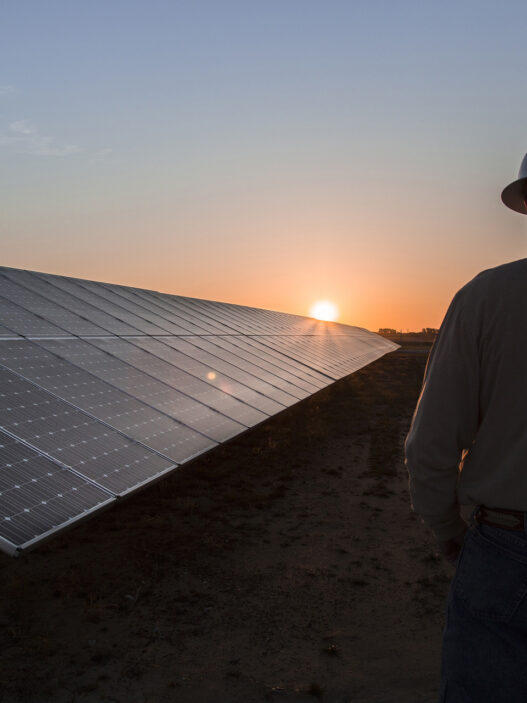
Additionally, renewables are cheaper. A recently published report by the International Renewable Energy Agency shows that, on average, solar photovoltaics (PV) were 41% cheaper than the cheapest fossil fuel alternatives, while onshore wind projects were 53% cheaper in 2024.
To conclude, the effects of climate change are directly associated with economic losses. At the same time, climate mitigation action can reduce future costs as well as increase competitiveness and economic security.
All-around Security
Economic security is just one of the security dimensions in which climate change is entrenched. A broad understanding of security moves beyond the military and economic dimensions and encompasses all threats to human lives.
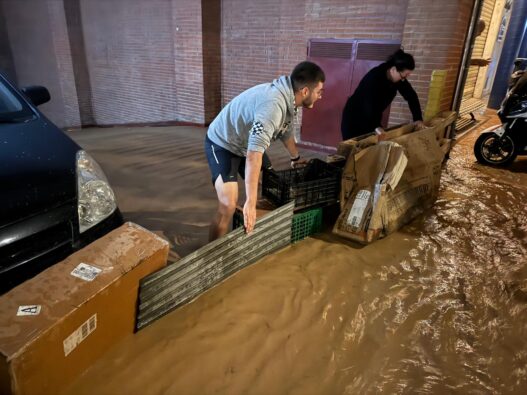
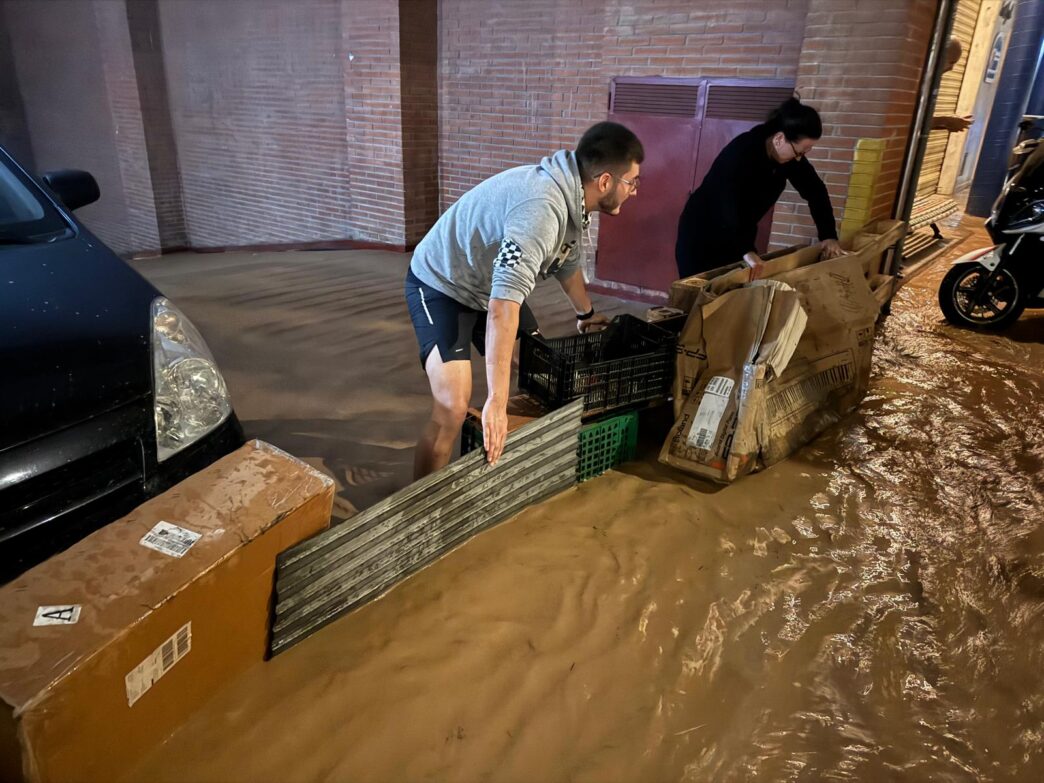
According to the EEA report, over 240,000 people died in the EU-27 due to weather- and climate-related extreme events between 1980 and 2023. One of the most recent examples was the flooding in Valencia in 2024, which caused 250 deaths. In 2022, 70,000 people in the EU died from extreme heat.
The Lancet Public Health Report also shows that the European climate has become more suitable for various diseases, such as the West Nile Virus and Malaria, which can potentially endanger the lives of Europeans in the future.
Moving beyond the borders of this continent, we can see how climate change is a driver of conflict as well: Scarce resources due to droughts fuelled tense competition over them in Sudan’s Darfur region; the melting sea ice is exposing oil, gas, and mineral resources, leading to disputes over control of those. These are just two examples of how climate change is impacting global security.
An encompassing security can only be achieved by taking climate change into consideration – future risks to security could possibly be avoided by strong climate mitigation policies.
Climate-Leader Europe
Amid these concerning interrelations of climate change with Europe’s economy and security, global emissions have hit a record high in 2024, with 53.2 gigatonnes of CO2 emitted by human activities. The EU27 are responsible for 5.9% of these emissions, placing them as the fourth-biggest emitter after China, the US, and India, and further underscoring its responsibility to reduce greenhouse gas (GHG) emissions.
Admittedly, given that the EU’s GHG emissions were only a fifth of China’s in 2024, calls questioning the EU’s power to mitigate climate change are understandable. They are, however, missing the bigger picture. China may have the biggest share in global emissions (30%). But do you know who has more? The rest of the world. The countries that do not make the ‘top five’ account for 41% in global emissions. Why should they care for climate mitigation if the continent that has built its wealth on fossil fuels is not doing so?
At times in which the EU is struggling to find its place on the world stage, with its normative power and influence being contested, it could revitalise itself by taking on a more prominent role as a climate leader. Furthermore, bringing climate change back to the heart of Europe’s political agenda has the potential to shift the narrative from a Europe that stumbles from one crisis to the next to a forward-stepping union. We should not only remember climate change itself, but also the potential this issue has to unleash political forces, as was the case in 2019. Europe cannot afford to lose sight of the climate crisis amid the chaos of ongoing emergencies. It is not inherently wrong that Europeans are preoccupied with security and the economy – given today’s crises, these concerns must be given a high priority. But as governments scramble to respond to what seems most urgent, the slow-burning crisis of climate change must not slip into the background. If Europe seriously pursues a well-functioning economy and all-around security, it is necessary to consider climate change. And beyond necessity, climate action offers something rare in today’s politics: a positive vision. A Europe that leads through innovation, is economically self-reliant, and thrives in health and well-being. That is not a distraction from Europe’s priorities. It is Europe’s path forward.