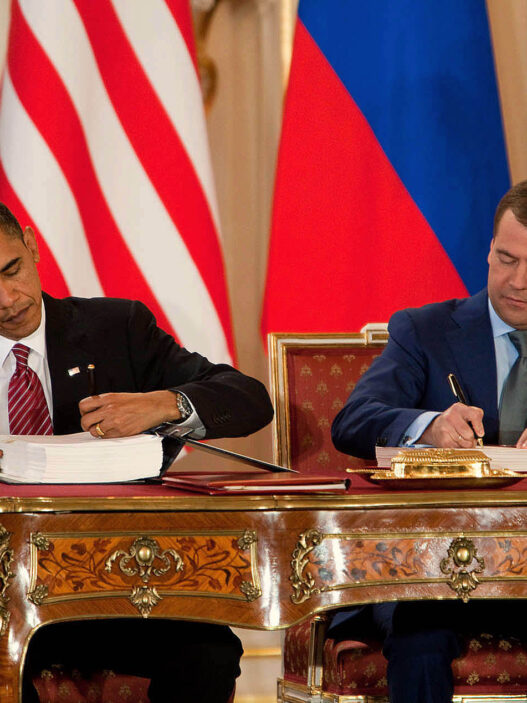







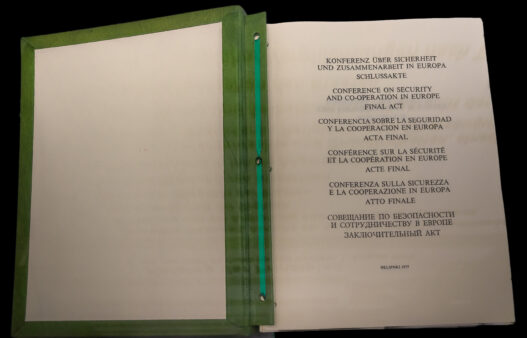
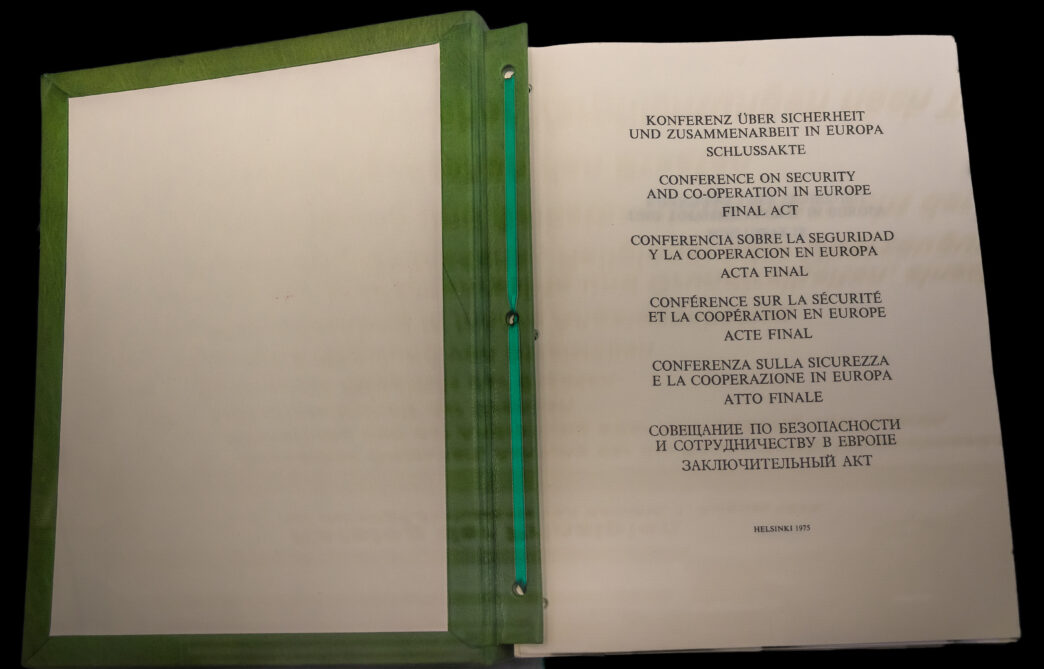
Fifty years ago, Europe, along with Canada and the US, signed the Helsinki Accords. A landmark achievement of diplomacy that brought West and East together in agreement over core international values that would cool the threat of nuclear war. The Declaration has largely been credited to Urho Kekkonen, President of Finland, who navigated this tight diplomacy. Flash forward to the present, and Kekkonen’s Finland is in the opposite trajectory completely. Joined NATO together with its prominent neutral neighbour, Sweden, in the wake of Russia’s full-scale invasion of Ukraine. The contrast added Finland‘s diplomatic accomplishment in 1975 and its joining of NATO raises the question of where does neutrality find itself in Europe now.
Helsinki‘s 50th anniversary in 2025 serves as a good introduction to the need for neutrality in European politics. Kekkonen sought to use Finland’s neutrality, with its connections between the West and East, to organise the security architecture that would form the Organisation of Cooperation and Security in Europe (OCSE), which was critical to transitioning post-communist and Soviet states into democracies and deterring conflict. After Sweden and Finland joined NATO, it leaves only four neutral states on the continent. This article will focus on Austria, Ireland and Switzerland, which, in the face of the Russo-Ukrainian war, are rethinking their foreign policy. Prompting what future it leaves for the status of neutrality in Europe.
Background and Responses to the Invasion of Ukraine
Ireland, since its conception as a modern nation-state, has maintained a strong stance of neutrality, deemed critical to the national identity of its people. When Russia invaded Ukraine, Ireland backed the EU sanctions, took in thousands of Ukrainian refugees, and funded several humanitarian aid projects. Leo Varadkar would reiterate Ireland’s neutrality stance, stating that “we will not be sending weapons… we are a militarily neutral country”. Despite not taking any military action in Ukraine, Russia has cast Ireland as an ‘unfriendly state’ and sanctioned numerous Irish politicians as a result.
Austria’s neutrality was enshrined in a 1955 treaty that allowed the end of Soviet occupation of the eastern half of the country. Austrian neutrality has come under scrutiny for its unethicality, which saw it embrace Putin three months after the annexation of Crimea. In addition, one of Austria’s leading banks, Raiffeisen, is still operating in Moscow despite attempts to sell it. Austria, in line with the EU, joined sanctions against Russia, describing the use of force as an unacceptable form of foreign policy. Austria is now also labelled as an “unfriendly state” by Russia. 
Since the Congress of Vienna over 200 years ago, Switzerland has remained one of the pillars of neutrality, not just in Europe but globally, opting out of both world wars. When Russia invaded Ukraine, the Swiss reaction was quick. Declared it an unprecedented violation of international law and norms, and joined the EU sanctions against Russia. Since then, Switzerland has also seized Russian assets and delivered humanitarian aid to Ukraine. Russia reacted angrily, also sanctioning the country and affirming that it had lost its neutral status. To many, this may seem like an abdication of Switzerland’s neutrality, but in reality, it is a continuation of Switzerland’s post-Cold War foreign policy doctrine.
Switzerland’s shift is critical to understanding how neutrality currently stands in Europe, there is no absolute refusal to take action against other states or comment on a conflict. As the nature of security and conflicts changed after 1990, Switzerland decided to modernise its neutrality. In a report, it states, “neutrality needs to be interpreted in light of the requirements of international solidarity and should be used to serve the international community and world peace”. But it wasn’t just geopolitics alone. During the 1990s, Switzerland began to face their problematic legacy from the Second World War when Swiss banks aided Nazi Germany’s finances and denied safety to those persecuted by them. The reinterpretation of Switzerland’s neutrality foreign policy could be seen when it agreed to UN sanctions for the first time on Iraq, whilst simultaneously blocking the transit of military shipments through its territory for Operation Desert Storm.
Bridges for Peace and Security?
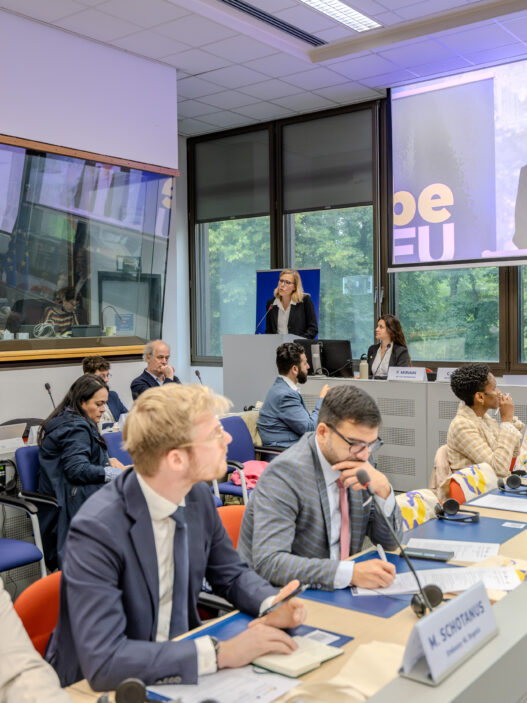
Switzerland and Austria, from the beginning of the Russian invasion, stated their openness to facilitate a peace dialogue. Switzerland has hosted a summit to outline the framework of peace negotiations and even went as far as declaring it would not arrest Putin if he came to the country for talks. This was unfortunately rejected by Russia.
Austria has made a series of requests to host talks for possible negotiations, with Russia rejecting this proposal as well. The vindictiveness of Russia towards Switzerland’s and Austria’s proposals of peace is a critical blow to the former security architecture Europe had. That even neutral states that genuinely uphold their own standards of neutrality are forced to take sides signifies a troubling ability for any voice of compromise to reach the Kremlin.
Another potential utilisation for these states is the prospect of peacekeepers. With Putin recently threatening to target Western forces in Ukraine, Europe’s neutral states offer an alternative. Ireland, Switzerland and Austria have shown willingness to put forces towards this end. A move that could ease Russian concerns about NATO presence while supporting Ukraine’s reconstruction. In the eyes of Moscow, these states’ track record of diverging from Western policy lines might give them more credibility. Despite this, Russia has rejected the use of Irish troops as “unacceptable”, leaving Switzerland and Austria as the most viable options. Signifying a key security feature, neutrality remains in Europe for these states.
Although, of course, covering over 1000 kilometres of front lines remains an obstacle for two of Europe’s smallest nations.. However, one could hope to envision the possibility of opening a different coalition of other neutral states, such as Brazil. What Ukrainian officials have also praised. recognised its importance. Such a possibility could provide a good foundation to secure a compromise on the battlefield with the voice’s neutrality.
Does Neutrality Still Mean Safety?
These neutral states may offer the last credible diplomatic card that could end this war. However, these states have their own security and, like the rest of Europe, they are also beginning to face new realities.
Ireland’s neutrality throughout the last century hinged on the fact that it was a western island away from the trouble spots of Cold War Europe. However, in an age of hybrid warfare, Ireland no longer remains so safe, with its security being tested by Russia. In Spring 2021, Ireland faced a critical cyber attack against its health services from a group located in Russia, heavily known to be backed by the Kremlin. Added, Russian bombers and warships have consistently tested Irish sovereign space, posing a larger headache for the Taoiseach, as their undersea cables remain vulnerable to potential Russian attack.
Nevertheless, both Austria and Switzerland are having to rethink their security added. A watershed report published last year by the Swiss Defence Ministry stated that Switzerland needs to “revise” its neutrality status, linking Russia as a key threat to its security. This was soon to be followed by a similar report by the Austrian Defence Ministry. Additionally, Austria’s Foreign Minister stated that “neutrality will not save us” in reference to Russia’s malicious threat to its way of life.. Irish Taoiseach Micheal Martin has also declared the need for Ireland to face new geopolitical realities in line with its increasing military spending and to remove its triple lock on military deployment that requires a UN Security Council vote.
Another sign of the changing tide in the security landscape is evident in their agreements with new EU defence frameworks. Ireland is joining the EU’s new €150 billion scheme in order to acquire military equipment at better costs. The initiative aims to familiarise European armies with cross-border cooperation and other countries’ weaponry in the face of a possible invasion. Austria has also joined this scheme, as well as the EU’s ReArm project. Switzerland, in a landmark step, has agreed a defence partnership with the EU, following its defence commission’s recommendation to revise laws on its defense commission recommending changing its laws on imports and exports of military equipment. Both states have joined the EU’s new air defence system Sky Shield as a response to the envisioned lethality that Russian drones have.
The wider international context provides another stark indicator of this shift. Trump’s aggressive 50% tariffs against India due to its trade with Russia have accelerated geopolitical realignments, bringing China and India closer together.. China and India, longstanding regional rivals, have quickly aligned in light of Trump’s actions, highlighting the wider polarisation of states taking sides. This polarisation extends to East Asian states, increasingly forced to choose between the US and China. The Gaza humanitarian crisis further illustrates this dynamic, with Israel’s strike on Qatar further illuminating a world where intermediaries are no longer respected as they once were.
Such developments prove to be serious challenges to all nations’ security structures. In an increasingly polarised multipolar world of states jostling for position, smaller nations have less room to establish themselves safely. Russia’s continued airspace incursions only go on to prove its unwillingness to recognise boundaries in diplomacy. What withstands is these nations’ strong identity towards neutrality and its popular support, and that if this status were to be changed would face huge backlash.
But decision-makers in these states are coming to the reality of that in the event of a Russian full-scale invasion of Europe, Vienna, Bern, and Cork would not be absent air attacks the likes of which have ravaged Ukraine. In this international context, it appears that neutrality in Europe is diminishing to the realist need for a new collective continental security architecture, as demonstrated by the EU-UK new defence pact.
Conclusion
Neutrality and its concept in Europe have greatly changed since the Helsinki Accords. All states have adopted new dignified concepts which see them out of military alliances but not out of consequences of malicious state actions. A spirit of Helsinki remains that these states have the potential to be catalysts for peacemakers in Ukraine.
However, in this time of writing, fear remains more potent than the hope Kekkonen sought to hand over to 21st-century Europe. Ireland, Austria and Switzerland now face the same threat towards NATO countries from Russian hybrid assaults. The open admissions of this threat from the decision makers in these states is eye-opening; with such prospects completely unlike the Cold War era. The world is becoming less embracing of intermediaries and lines being drawn internationally, and the spirit of Helsinki may be fading in Europe, with no space for those to continue its objective of peace.
With the US moving to disengage from Europe and the Russian threat growing, the desire for new protections over trade, way of life and democracy and a new collective security architecture that protects these values appears to be the likely future of these states.