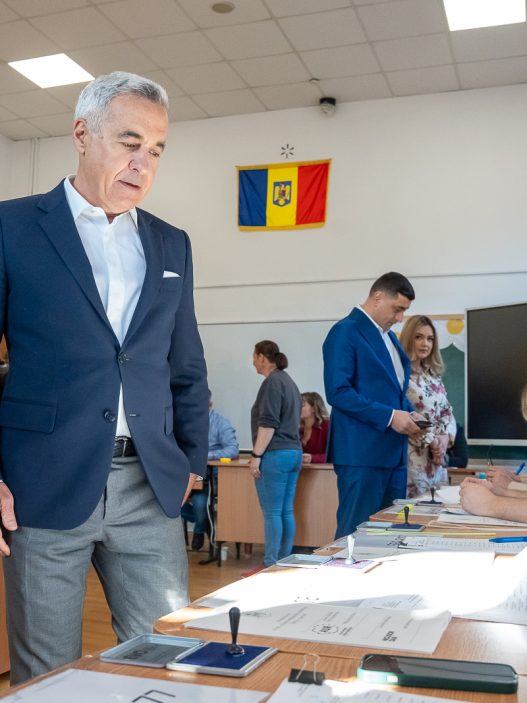








On October 8 the Italian parliament approved an electoral law that gives a parliamentary majority bonus to the largest alliance if it wins more than 42% of the vote
The reform’s aimed to reinforce Meloni’s governing coalition but analysts think it can also benefit her center-left foes
Opposition leaders Elly Schlein and Giuseppe Conte disagree over who should lead their alliance, with the latter calling for primaries
Analysts warn that leadership battles and policy differences could undermine opposition unity and reduce its chances of defeating Meloni
Source: Reuters
More Quick Briefs:
·Inside Europe·Housing·Strike·Tenant Groups·Trade Unions
·Inside Europe·Housing·Strike·Tenant Groups·Trade Unions
Spain’s Housing Strike Puts Pressure on Parties ↗︎
Spain’s first nationwide general strike since 2012 disrupted public transport on 11 November, putting housing affordability in the spotlight ahead of the 29 November snap election.
→The strike: Trade unions CCOO and UGT called the walkout with tenants’ groups. Unions reported strong turnout in some sectors, while employers said participation was low across most of the economy.
→The demands: Organisers want rent controls, stronger eviction protections, more public housing and higher wages.
→The political divide: Prime Minister Pedro Sánchez called the election after parliament rejected two housing decrees. Opposition leader Alberto Núñez Feijóo criticised the strike, while unions said their demands targeted all levels of government.
→The election: The formal campaign begins on 13 November, two days after the strike. Voters elect both chambers of parliament on 29 November.
→Sources: UGT, AFP via The Local Spain, Spanish Official Gazette
→Transparency Note: AI-assisted. Reviewed by the Briefing Team.
·European Governance·Inside Europe·Security & Defence·Aviation Security·Border Security·Cybersecurity·DIsinformation·Hybrid Threats·Poland·Supermarket Refrigeration Systems·Weekly Briefing
·European Governance·Inside Europe·Security & Defence·Aviation Security·Border Security·Cybersecurity·DIsinformation·Hybrid Threats·Poland·Supermarket Refrigeration Systems·Weekly Briefing
European Security Faces Multiple Hybrid Threats ↗︎
Aviation bomb threats, suspected cyberattacks and security concerns along NATO’s eastern border have exposed vulnerabilities across Europe, although no coordinated campaign has been established.
Updates
→News: At least 300 schools across Italy evacuated following emailed bomb threats (Reuters)
→News: European Commission plans security talks after a wave of bomb hoaxes disrupted 20 airports and dozens of flights across Europe (EUObserver)
→News: France blames Iran for cyberattacks targeting supermarket refrigeration systems (POLITICO)
→News: Bomb threats accompanied by the warning “The clock is ticking” disrupt television broadcasters across Europe, raising concerns over coordinated intimidation (Reuters)
→News: More European flights face bomb threats, raising concerns over aviation security (POLITICO)
→Aviation Security: Bomb threats disrupted flights across Europe, prompting diversions and heightened security measures. The European Commission strengthened information-sharing, while investigations continue into possible coordination behind the incidents
→Border Security: Poland reported suspicious movements near its border with Russia’s Kaliningrad region. Prime Minister Donald Tusk warned of possible provocations, but the intentions behind the activity remain unclear
→Cybersecurity: Suspected cyberattacks disrupted supermarket refrigeration systems in several European countries, exposing vulnerabilities in civilian infrastructure. Russian involvement has been suggested but remains unconfirmed
→Disinformation and Preparedness: Reports of Russian disinformation affecting NATO support in Montenegro and Albania highlight security challenges in the Western Balkans. Separately, European military exercises in Poland underline efforts to strengthen defence cooperation
→Sources: Rapporteur, POLITICO Europe, Reuters, France 24, POLITICO Europe, POLITICO Europe, EUobserver
→AI Transparency Note
·Agricultural Policy·Inside Europe·CAP·Copa-Cogeca·EU Funding·European Commission·European Union·Farmers·Food Security
·Agricultural Policy·Inside Europe·CAP·Copa-Cogeca·EU Funding·European Commission·European Union·Farmers·Food Security
Farmers Plan Dublin Rally Over EU Funding ↗︎
The Irish Farmers’ Association plans a rally in Dublin on 13 November, as EU leaders meet in the city, to oppose proposed changes to farm funding after 2027.
→The protest: Organisers plan to plough “No CAP Cuts” into a field beside Dublin Airport so arriving leaders can see it
→European backing: EU farm lobby Copa-Cogeca will use the rally to launch a campaign linking farm support to Europe’s food security
→The proposal: The European Commission would set aside at least €300 billion for farm income and crisis support in 2028-2034. Member states could fund other agricultural and rural programmes through broader national plans
→The dispute: Farm groups want dedicated funding for the Common Agricultural Policy (CAP) protected. The Commission says its proposal gives member states more flexibility to meet local needs
→Sources: Irish Farmers’ Association, Rapporteur, European Commission
→Transparency Note: AI-assisted. Reviewed by the Briefing Team.
·Inside Europe·Far-Right Ideology·Kraków·Poland·Police·Shooting·Six People Killed·Terrorism
·Inside Europe·Far-Right Ideology·Kraków·Poland·Police·Shooting·Six People Killed·Terrorism
Poland Investigates Deadly Kraków Shooting ↗︎
Polish prosecutors are investigating the 7 November shooting that killed six people in Kraków’s Main Market Square as a terrorist offence. The motive remains under investigation.
Updates
→Analysis: The deadly Krakow shooting exposes Poland’s political divisions and risks creating opportunities for Russian interference (EUObserver)
→News: Poland faces mounting political tensions after a deadly shooting deepens divisions across the country (France 24)
→News: Suspect in Krakow mass shooting dies in hospital, Polish police confirm (Reuters)
→The attack: A gunman drove into the square and opened fire, wounding 15 people in addition to those killed. Police shot and wounded the 24-year-old suspect
→Possible motive: Interior Minister Marcin Kierwiński said evidence pointed to the suspect’s interest in far-right ideology. As of 9 November, investigators had yet to question him because of his medical condition
→Wider investigation: Police found the bodies of the suspect’s parents and sister at the family home in Ostrowiec Świętokrzyski. Prosecutors are also investigating their deaths
→National mourning: Poland declared two days of national mourning on 8 and 9 November. A British man and an Austrian woman were among the six people killed in Kraków
→Sources: Polish Government, AP, The Guardian
→Transparency Note: AI-assisted. Reviewed by the Briefing Team.
·Climate Policy·Energy Policy·Environmental Policy·United Nations·Australia·Clean Electricity·COP31·Council of the EU·European Union·Fossil Fuels·UNEP
·Climate Policy·Energy Policy·Environmental Policy·United Nations·Australia·Clean Electricity·COP31·Council of the EU·European Union·Fossil Fuels·UNEP
Fossil Fuels and Climate Finance Top COP31 Agenda ↗︎
Governments meet in Antalya from 9 to 20 November to discuss how to move away from fossil fuels and close the funding gap for countries adapting to climate change.
Updates
→Official Announcement: EU signs Global Geothermal Pledge at COP31, reaffirming its commitment to expanding geothermal energy as part of the clean energy transition (European Commission)
→Official Announcement: EU and Organisation of African, Caribbean and Pacific States reaffirm climate commitments at COP31, focusing on translating shared priorities into concrete action (Council of the EU)
→Analysis: Six key issues to watch at COP31 climate talks, including emissions reductions, climate finance and international cooperation (Rapporteur)
→News: Turkish villagers urge COP31 leaders to witness the environmental devastation caused by coal mining and energy production (Reuters)
→The summit: Turkey hosts COP31, while Australia leads the negotiations. Heads of state and government meet on 11 and 12 November
→Fossil fuels: Brazil’s outgoing COP presidency published a voluntary roadmap on 3 November. It calls for fossil fuel production and demand to fall as clean energy expands
→Adaptation finance: Developing countries received $28.2–31.7 billion in international public adaptation finance in 2024. The UN Environment Programme estimates they will need around $305 billion annually by 2035
→EU position: The EU will press governments to implement their national climate plans, accelerate the shift away from fossil fuels and expand the use of clean electricity
→Sources: Council of the EU, COP30 Presidency, UNEP, UNFCCC
→Transparency Note: AI-assisted. Reviewed by the Briefing Team.
·Eastern Europe·Russia·Bulgaria·Drone Strike·European Defense·Russian Threat
·Eastern Europe·Russia·Bulgaria·Drone Strike·European Defense·Russian Threat
Bulgaria Summons Russia’s Envoy After Drone Attack; Attacks Continue in Black Sea ↗︎
Following the drone attacks off the coast of Bulgaria on October 13, Russia's Ambassador to Bulgaria was summoned as 11 of the sailors from the sunken ship remain missing.
Updates
→News: EU announces €50 million for a Black Sea maritime security hub in Romania and Bulgaria to strengthen regional security (Euronews)
→News: EU offers financial support to strengthen the Black Sea region’s response to attacks (POLITICO)
→News: European Commission President Ursula von der Leyen plans visit to the Black Sea region amid a wave of deadly drone attacks (POLITICO)
→Update (03.11.2026): Analysis: Expanding Black Sea conflict tests NATO’s red lines and regional security commitments (Reuters)
→Update (28.10.2026): News: Bulgaria strengthens Black Sea defences after drones strike another vessel (Rapporteur)
→Update (24.10.2026): Parliamentary Vote: European Parliament votes on escalating Russian strikes affecting the EU, particularly the Black Sea region (EP Votes)
→Update (23.10.2026): News: Drone strikes another ship in the Black Sea near Romania, killing at least one sailor (POLITICO)
→Update (20.10.2026): News: NATO to deploy aircraft and drones over Black Sea following attacks on shipping (Reuters)
→Update (17.10.2026): News: Romania scrambles F-16 jets after detecting aerial targets near Snake Island (Romanian Ministry of Defence)
→Update (15.10.2026): News: Seven missing after tanker fire off Romanian coast (POLITICO)
→Update (14.10.2026): News: Romania proposes joint NATO Black Sea command with Bulgaria (Rapporteur)
→Update (13.10.2026): Commentary from Bulgaria: Time to stop deceiving ourselves - Russia poses a security threat to Bulgaria (Webcafe Bulgaria)
→Quick Brief:
→Eleven sailors are still missing after a drone attack off the coast of Bulgaria
→Two cargo ships were hit by drones during the night of October 13th according to Bulgarian officials
→In response to the incident Bulgaria summoned Russia's Ambassador
→Bulgaria does not explicitly accuse Russia of the attacks but its Prime Minister said this "benefits" Russia
→Source: Reuters
·Economic Policy·Monetary Policy·Security & Defence·Budget·Council of the EU·EU Borrowing·European Commission·General Affairs Council·Multiannual Financial Framework
·Economic Policy·Monetary Policy·Security & Defence·Budget·Council of the EU·EU Borrowing·European Commission·General Affairs Council·Multiannual Financial Framework
Frugals vs. Friends of Cohesion: EU Budget Battle Intensifies ↗︎
Six fiscally conservative EU countries are demanding major cuts to Brussels’ proposed €2 trillion budget for 2028–2034, setting up a difficult fight over Europe’s future spending priorities. The 27 member states want to have a decision by the end of the year.
Updates
→News: German Chancellor Friedrich Merz and Hungarian Prime Minister Péter Magyar clash over EU financial support for Ukraine and the bloc’s next long-term budget (Rapporteur)
→Interview: Estonia rejects Germany’s calls for cuts to the EU’s next long-term budget (Rapporteur)
→News: German Chancellor Friedrich Merz warns that failure to agree on EU aid for Ukraine could block negotiations on the bloc’s next long-term budget (Euronews)
→Interview: EU’s real deadline for reaching an agreement on its next long-term budget comes into focus (Rapporteur)
→News: EU budget disputes stall key Brussels priorities, including AI chips, Arctic policy and agriculture (POLITICO)
→News: Finland warns that EU financial support for Ukraine must not depend on negotiations over the bloc’s long-term budget (Rapporteur)
→News: Firefighters from 19 countries protest proposed EU disaster response budget cuts in Brussels (EUObserver)
→Update (02.11.2026): News: European cultural organisations warn of severe consequences as proposed EU budget cuts threaten to reduce cultural funding by 30% (EUObserver)
→Update (30.10.2026): News: EU tobacco tax revenue forecasts fall sharply amid negotiations over the bloc’s next long-term budget (Rapporteur)
→Update (27.10.2026): Analysis: Ukraine’s €70 billion funding shortfall threatens to complicate negotiations over the EU’s next long-term budget (Euronews)
→Update (26.10.2026): News: Austria threatens to veto the EU budget (Rapporteur)
→Update (26.10.2026): News: EU foreign aid chief says little is changing in Africa despite development efforts (Rapporteur)
→Update (26.10.2026): News: Rising debt costs and fraud allegations increase pressure on the EU budget (Rapporteur)
→Update (23.10.2026): Interview: António Costa targets November agreement on EU budget (Rapporteur)
→Update (22.10.2026): News: MEPs seek €7 billion more for Erasmus despite opposition from budget-conscious EU governments (EUobserver)
→Update (21.10.2026): Analysis: Who will stand up for Global Europe? (PubAffairs Bruxelles)
→Update (20.10.2026): News: EU budget negotiations raise questions over costs and funding (Rapporteur)
→Update (19.10.2026): Analysis: EU faces a perfect political storm amid mounting challenges (POLITICO)
→Update (16.10.2026): Interview: Irish minister says EU budget deal still possible by Christmas (YouTube)
→Update (16.10.2026): Interview: Cyprus president proposes shortening EU budget to three or four years (POLITICO)
→Update (16.10.2026): News: Costa targets November EU budget showdown (POLITICO)
→Update (16.10.2026): News: Costa proposes new EU taxes to break budget deadlock (Rapporteur)
→Update (15.10.2026): Podcast: Europe faces a new battle over the EU budget (ECFR)
→Update (15.10.2026): News: 17 European leaders issue joint statement on EU cohesion funding (Italian Government)
→Update (14.10.2026): News: EU leaders consider deep budget cuts as joint borrowing expands (EUobserver)
→Update (14.10.2026): News: EU capitals weaken budget deal deadline (POLITICO)
→Update (13.10.2026): News: France sets EU budget red lines on tech taxes and Buy European (Rapporteur)
→Update (13.10.2026): Interview: Austrian EU Affairs Minister Claudia Bauer rejects artificial budget deadline (Rapporteur)
→Update (13.10.2026): News: Spain hosts Friends of Cohesion meeting on next EU budget (Spanish Ministry of Foreign Affairs)
→Update (12.10.2026): Opinion: Will MEPs challenge €141bn in EU budget cuts? (EUobserver)
→Update (11.10.2026): News: MEPs warn Irish EU budget plan risks historic failure as €141 billion in cuts spare agriculture and cohesion funds (EUobserver)
→Update (11.10.2026): News: European Commission warns that EU budget cuts could undermine funding for crisis response (POLITICO)
→Update (10.10.2026): EU's Irish presidency wants 8% cut to proposed 2028-2034 budget plan (Reuters)
→Update (08.10.2026): Opinion: Cut the EU budget and we all lose (EUobserver)
→Update (08.10.2026): News: EU countries brace for €100B-€200B smaller budget (Politico)
→Update (08.10.2026): Analysis: EU’s 2028-2034 budget proposal creates new conflicts over spending priorities and financial burden-sharing (SWP)
→Update (08.10.2026): News: EU auditors warn of major budget shortfall unless the EU introduces new sources of revenue (Rapporteur)
→Update (07.10.2026): News: Iran war shock expected to shrink next EU budget (Rapporteur)
→Update (06.10.2026): News: Von der Leyen rebukes EU budget frugals over demands for deeper spending cuts (Rapporteur)
→Update (29.09.2026): News: EU governments brace for €100 billion cut to long-term budget proposal (POLITICO)
→Update (29.09.2026): News: EU cuts funding for women’s rights groups amid wider budget reductions (EUobserver)
→Update (29.09.2026): News: MEPs back €47 billion in new Erasmus funding as frugal states seek EU budget cuts (EUobserver)
→Update (29.09.2026): Commentary: EU budget cuts risk hurting member states’ own regions (EUobserver)
→Update (29.09.2026): News: EU leaders battle over budget as Parliament prepares resistance (Rapporteur)
→Update (25.09.2026): News: 12 countries oppose French push for EU defence preference (Euractiv)
→Update (23.09.2026): News: EU governments consider cutting development aid by up to 40 percent (EUobserver)
→Update (23.09.2026): News: Greece proposes EU-wide telecoms levy to fund budget and high-tech investment (Euractiv)
→Update (22.09.2026): News: France opposes cuts to foreign aid in next EU budget (POLITICO)
→Update (22.09.2026): News: Results of the General Affairs Council (Irish EU Presidency)
→Update (22.09.2026): News: France opposes cuts to foreign aid in next EU budget (POLITICO)
→Update (22.09.2026): News: Germany rejects Costa’s push for new EU budget taxes (POLITICO)
→Update (22.09.2026): News: EU ministers meet in Brussels for General Affairs Council (Council of the EU)
→Update (21.09.2026): Analysis: EU budget could strengthen rule of law safeguards but member states may blunt reforms (CER)
→Update (21.09.2026): News: Costa says EU budget needs new taxes governments are not already raising (POLITICO)
→Update (18.09.2026): News: Germany and Spain go head-to-head in EU budget fight (POLITICO)
→Update (17.09.2026): News: MEPs deadlocked over CAP’s place in next EU budget (Euractiv)
→Update (15.09.2026): News: Metsola urges Europe’s political centre to hold against extremes (Euractiv)
→Update (14.09.2026): News: EU plans cuts to staff and salaries in next long-term budget (POLITICO)
→Update (14.09.2026): News: EU countries split over scale of long-term budget cuts (Euractiv)
→Update (09.09.2026): News: Germany calls for hundreds of billions in EU budget cuts (Reuters)
→Update (09.09.2026): News: Costa says new EU taxes would reduce national contributions (POLITICO)
→Update (08.09.2026): News: France backs business tax to fund EU budget (Euractiv)
→Update (07.09.2026): News: Le Pen backs tobacco retailers against EU tax hikes (Euractiv)
→Update (07.09.2026): News: Ireland secures EU tax deal on carbon imports and e-waste (POLITICO)
→Update (04.09.2026): News: Spain urges EU climate adaptation fund and binding targets (Reuters)
→Update (04.09.2026): Commentary: EU budget could loosen China’s grip on critical raw materials (Euronews)
→Update (03.09.2026): News: EU budget negotiators criticise frugal states over cuts (EUobserver)
→Update (03.09.2026): Interview: Lithuania says eastern flank needs must shape EU budget (Euractiv)
→Update (02.09.2026): News: Spain worried by EU budget debate (Euractiv)
→Update (02.09.2026): News: EU budget camps remain deadlocked (EUobserver)
→Update (31.08.2026): News: Ireland seeks to break EU budget deadlock (POLITICO)
→Update (27.08.2026): Europe’s defence promise meets budget reality (ECFR)
→Quick Brief:
→Germany, Denmark, the Netherlands, Austria, Finland and Sweden want cuts of several hundred billion euros
→The European Commission has proposed a nearly €2 trillion seven-year budget for 2028–2034
→The six still want priority spending on defence, competitiveness, migration and European sovereignty
→They reject new joint EU borrowing and demand cuts across spending areas as national budgets face consolidation
→Sources: Euractiv, Reuters, Council of the EU
→Transparency Note: Use of AI
·National Politics·AfD·Firewall·Saxony-Anhalt·State Elections
·National Politics·AfD·Firewall·Saxony-Anhalt·State Elections
AfD Wins Historic State Victory ↗︎
The AfD has won a historic victory in Saxony-Anhalt, dramatically shifting the political balance in eastern Germany while falling short of the majority needed to govern alone.
Updates
→Analysis: The rise of Germany’s far-right AfD raises questions about the future of European integration, EU cohesion and Germany’s role in Europe (ECFR)
→Interview: TU Braunschweig President Angela Ittel warns of AfD plans to dismantle university equality programmes and calls for a “science NATO” to protect academic freedom through solidarity between German states (DIE ZEIT)
→Update (07.10.2026): News: AfD’s Tobias Rausch elected Saxony-Anhalt parliament president with four additional votes beyond AfD and BSW, raising suspicions of CDU support and fuelling concerns over a possible split within the CDU parliamentary group (Tagesschau, Reuters)
→Update (06.10.2026): News: Germany’s governing SPD stages protest march to Berlin’s Bebelplatz, site of the 1933 Nazi book burnings, after AfD’s election victory in Saxony-Anhalt; Defence Minister Pistorius leads singing of national anthem (SPD)
→Update (06.10.2026): News: AfD seeks Saxony-Anhalt parliament presidency as BSW support could secure majority (Euronews)
→Update (10.09.2026): Commentary: Saxony-Anhalt election strengthens Russia and East German nostalgia (Euractiv)
→Update (10.09.2026): Commentary: AfD victory could amplify Euroscepticism in France (Le Monde)
→Update (09.09.2026): News: Merz goes on offensive against AfD after Saxony-Anhalt defeat (Euractiv)
→Update (09.09.2026): News: Merz calls AfD’s anti-migration policy “ethnic cleansing” (Reuters)
→Update (09.09.2026): Analysis: SPD rebels against Merz after far-right rout (POLITICO)
→Update (08.09.2026): Analysis: Merz’s political crisis threatens Germany’s leadership in Europe (ECFR)
→Update (08.09.2026): Analysis: AfD victory raises concerns in Poland over German military rearming (POLITICO)
→Update (08.09.2026): Analysis: Germany debates whether to ban the AfD (EUobserver)
→Update (08.09.2026): Analysis: Merz appears to have no plan against AfD (POLITICO)
→Update (07.09.2026): Interview: Roma rights defender warns AfD victory normalises hatred of minorities (EUobserver)
→Update (07.09.2026): Analysis: AfD explores paths to govern Saxony-Anhalt (Deutsche Welle)
→Update (07.09.2026): Commentary: AfD landslide reshapes German politics (La Vanguardia)
→Update (06.09.2026): Analysis: AfD victory sends a warning to Europe (Svenska Dagbladet)
→Update (06.09.2026): Commentary: AfD rule could put Germany’s economy to the test (Deutsche Welle)
→Update (06.09.2026): Analysis: Will AfD remain this radical after its victory? (Ilta-Sanomat)
→Update (06.09.2026): Analysis: AfD victory raises doubts over Merz as chancellor (DER SPIEGEL)
→Update (06.09.2026): Analysis: Saxony-Anhalt could end Germany’s firewall against AfD (G4Media)
→Update (06.09.2026): Commentary: AfD surge is a victory for Russia (The Telegraph)
→Quick Brief:
→The far-right Alternative for Germany (AfD) won 43.8%, its strongest result in any German state election and more than double its 2021 share
→Chancellor Friedrich Merz’s CDU fell to 17.2%, losing more than half its previous support after governing Saxony-Anhalt since 2002
→Despite its victory, the AfD secured 39 of 83 seats, three short of an absolute majority. Other established parties have ruled out governing with it
→The result puts Germany’s political “firewall” against cooperation with the AfD under new pressure, as the remaining parties face a difficult path to forming a government without it
→Sources: Euractiv, Reuters, ZDF
→Transparency Note: Use of AI
·Inside Europe·Conservatives·Édouard Philippe·European Union·France·François Hollande·Jean-Luc Mélenchon·Marine Le Pen·Presidential Elections 2027·Raphaël Glucksmann·Socialists
·Inside Europe·Conservatives·Édouard Philippe·European Union·France·François Hollande·Jean-Luc Mélenchon·Marine Le Pen·Presidential Elections 2027·Raphaël Glucksmann·Socialists
France’s Spring 2027 Election: Can the Pro-EU Centre Recover? France Between Identity and Economic Politics. ↗︎
Glucksmann’s nomination boosts France’s centre-left, but moderate candidates remain divided as Le Pen and Mélenchon lead a recent presidential poll.
Updates
→Analysis: France’s political landscape remains deeply fragmented ahead of the 2027 presidential election, with uncertainty extending beyond Marine Le Pen and Jean-Luc Mélenchon (Le Monde)
→News: French Olympic judo champion Teddy Riner announces presidential bid ahead of France’s 2027 election (POLITICO)
→Analysis: Jean-Luc Mélenchon mobilises his supporters for a potential presidential run-off against Marine Le Pen in France’s 2027 election (Rapporteur)
→Analysis: Jean-Luc Mélenchon urges young supporters to persuade their parents ahead of France’s 2027 presidential election (Rapporteur)
→Analysis: French President Emmanuel Macron explores ways to prevent a Marine Le Pen versus Jean-Luc Mélenchon run-off in the 2027 presidential election (Les Echos)
→News: Jean-Luc Mélenchon rejects Édouard Philippe’s invitation to debate immigration and integration ahead of France’s 2027 presidential election (AFP)
→Analysis: Le Pen seeks to attract wealthy conservative voters on the French Riviera ahead of the 2027 presidential election (Rapporteur)
→Update (30.10.2026): Analysis: Divisions among French centrists increase the likelihood of a Le Pen-Mélenchon presidential run-off (Reuters)
→Update (27.10.2026): Joint Statement: 44 French journalists’ associations condemn reported assaults on Mediapart and Politis reporters at the far-right National Rally’s congress in Orléans (Mediapart, Le Monde)
→Update (26.10.2026): News: French presidential candidate Édouard Philippe loses support in new opinion poll ahead of 2027 election (POLITICO)
→Update (25.10.2026): Analysis: France faces mounting political and economic challenges amid concerns over its role in Europe (POLITICO)
→Update (25.10.2026): News: Marine Le Pen’s presidential campaign messaging overshadowed by Rassemblement National’s confrontational approach (Rapporteur)
→Update (25.10.2026): News: Marine Le Pen launches 2027 presidential campaign, promising French national renewal and challenging EU authority (RFI)
→Update (24.10.2026): News: Jordan Bardella re-elected president of France’s Rassemblement National with 98.98% of the vote (LCP)
→Update (23.10.2026): Analysis: Mélenchon proposes cancelling France’s public debt, raising questions about historical precedents (Le Monde)
→Update (23.10.2026): News: Mélenchon’s vision of a “New France” sparks identity clash with Le Pen (Rapporteur)
→Update (20.10.2026): Analysis: French riots expose political risks and opportunities ahead of 2027 presidential election (POLITICO)
→Update (14.10.2026): Polling: Mélenchon overtakes Philippe in French presidential poll (Public Sénat)
→Update (14.10.2026): News: Mélenchon courts France’s isolated voters (Rapporteur)
→Update (12.10.2026): Analysis: Édouard Philippe’s allies increasingly doubt his chances of defeating Marine Le Pen in France’s 2027 presidential election (POLITICO)
→Quick Brief:
→Raphaël Glucksmann, a pro-European MEP and Place Publique leader, won the centre-left primary on 11 October with 66%
→Édouard Philippe, prime minister from 2017 to 2020 and Horizons leader, seeks to unite centre-right and centrist voters
→François Hollande, Socialist president from 2012 to 2017, is considering another bid, potentially further splitting the centre-left
→An early-October poll puts far-right Le Pen at 35-37%, with radical-left Mélenchon reaching the runoff in every tested scenario. The race remains open
→Sources: Reuters, Le Monde, DLF - Europa heute
→Transparency Note: Use of AI
·European Governance·Inside Europe·Christine Lagarde·European Central Bank
·European Governance·Inside Europe·Christine Lagarde·European Central Bank
Who Will Be the New President of the European Central Bank? ↗︎
Christine Lagarde steps down as ECB's president to be able to express her opinion freely on important things happening in the world.
Updates
→News: France may back Pablo Hernández de Cos over Klaas Knot for the European Central Bank presidency (Le Monde)
→News: EU member states face Friday deadline to submit nominations for the next European Central Bank president (Rapporteur)
→Quick Brief:
→The president of the ECB, Christine Lagarde, to step down on 7 February 2027
→She has informed the EU Governing Council as well as EU Council President of her decision on 29 October
→Lagarde wants to leave office to gain the ability to freely express her opinion on world matters
→Her successor will be appointed according to Article 283 of the Treaty on the Functioning of the European Union
→Source։ European Central Bank, Reuters
·African Relations·Health Policy·Democratic Republic of Congo·Ebola·Epidemic·Uganda·WHO
·African Relations·Health Policy·Democratic Republic of Congo·Ebola·Epidemic·Uganda·WHO
Ebola Epidemic: DRC’s deadliest ever, Conflicts make situation worse ↗︎
The World Health Organisation declared the Ebola outbreak in the Democratic Republic of Congo (DRC) and Uganda a global public health emergency.
Updates
→Update (30.10.2026): New numbers, new infections (CDC)
→Update (23.10.2026): News: Woman diagnosed with Ebola in Nigeria identified as wife of Swiss diplomat (BBC News)
→Update (20.10.2026): News: Nigeria confirms first Ebola case amid regional outbreak (WHO)
→Update (15.10.2026): Reportage: Bunia fights to protect families from DR Congo’s deadliest Ebola outbreak (RFI)
→Update (01.10.2026): News: Thousands flee Ebola-hit Congo camp, raising fears of wider disease spread (Reuters)
→Update (24.09.2026): News: WHO says Congo’s Ebola outbreak remains out of control amid health worker shortage (PBS NewsHour)
→Update (20.09.2026): News: Congo prioritizes Ebola health care workers for Ervebo vaccine effective against different virus strain (AP)
→Update (26.08.2023): Conflict drives DRC cholera outbreak (RFI)
→Update (20.08.2026): Ebola vaccines allocated to Congo (WHO)
→Update (13.08.2026): WHO chief warns of deadliest Ebola outbreak (BBC News)
→Update (10.08.2026): Interview with expert: How missing international aid increasingly exacerbates the crisis (ZDFheute)
→Update (05.08.2026): Expert speaks about potential future Ebola vaccine (FAZ)
→Update (July 24, 2026): First person gets new experimental vaccine for Ebola (BBC)
→Update (July 13, 2026): Ebola vaccine made in UK now ready for trials (BBC)
→Update (July 09, 2026): Ebola rumours fuel attacks on health workers (BBC)
→Update (July 03, 2026): Ebola treatments trial begins in DR Congo (BBC)
→Update (June 15, 2026): Recovery of Ebola patients offers rare moments of joy (BBC)
→Update (June 02, 2026): Protests against US Ebola quarantine centre plan in Kenya, two deaths (BBC)
→Update (June 01, 2026): Three Ebola vaccines in development (BBC)
→Update (May 31, 2026): How Ebola spreads and why it is so dangerous (BBC)
→Update (May 31, 2026): Medical charity Médecins Sans Frontières (MSF) has warned about Ebola in DRC: "Deeply alarming" situation (BBC)
→Update (May 25, 2026): Many African countries want to cooperate to prevent the virus from further spreading (BBC); the EU and UNICEF mobilise over 100 metric tonnes of emergency supplies to DRC (UNICEF)
→Update (May 24, 2026): African Centres for Disease Control warns of 10 other countries being at risk (BBC)
→Update (May 22, 2026): Drastic missing information and education about the danger of Ebola within the population. Regional conflicts affect the situation. The population has high levels of mistrust of the government, corruption, and institutions like hospitals (BBC). WHO warned of very high national and regional spread, a potential epidemic and healthcare risks, but low global influence (BBC)
→May 21, 2026:
→WHO and the African Union declared a public health emergency over the Bundibugyo Ebola outbreak, which started in Eastern Congo (Ituri)
→Bundibugyo Ebola is a rare Ebola strain with no approved specific vaccine or treatment yet; a vaccine could take 9 months
→WHO reported approximately 600 suspected cases and 139 suspected deaths, but the situation is highly fluid
→Sources: WHO, BBC
·Europe in the world
·Europe in the world
European Council Agrees on Strengthening Action to Global Challenges ↗︎
The Council of Europe and Representative bodies have agreed on joint conclusions to highlight EU's commitment to humanitarian law and principles amid global challenges.
→The European Council has agreed on EU’s commitment to remaining a reliable humanitarian donor amid global challenges
→The conclusions highlight EU’s commitment to international humanitarian law and humanitarian principles
→The Council called for a more coordinated Team Europe humanitarian diplomacy
→It also welcomed the establishment of the “protect aid workers” mechanism
→Source: European Council