










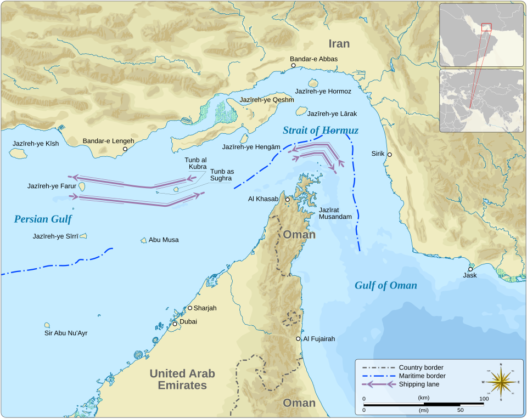
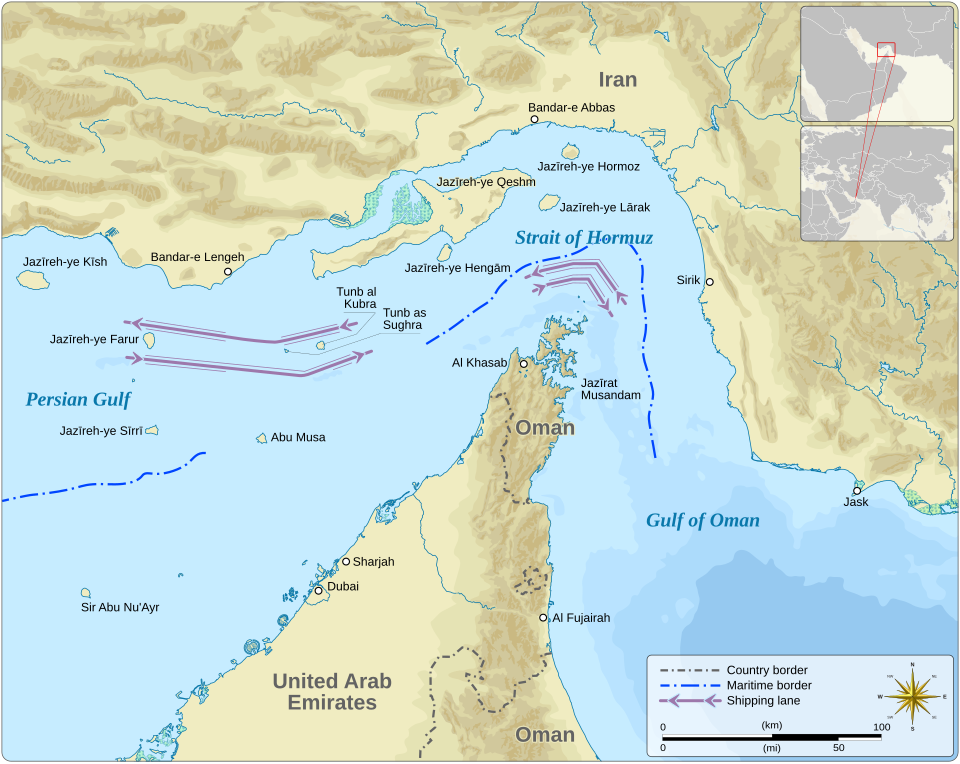
In the space of a few days, the Strait of Hormuz has moved from the background to an explicit EU concern. In a recent statement from March 1st on developments in Iran and the Middle East, the High Representative warned that disruption of critical waterways such as the Strait of Hormuz must be avoided.
The following day, the Commission’s Security College said it was reinforcing monitoring of transport disrupting risks around the Strait of Hormuz and the Red Sea.
On March 5th, after an extraordinary EU – Gulf Cooperation Council meeting, High Representative Kaja Kallas went further still, saying that European naval assets had been sent to the region because the security of the Strait and its trade routes was extremely important for both the EU and the Gulf states. She also noted that, while Operations ASPIDES and Atalanta are in the region, they are not currently operating in the Strait itself.
Before the most recent events in and around Iran, on February 23rd the Council already extended the mandate of EUNAVFOR ASPIDES until February 2027, an operation that monitors the maritime situation in the Strait of Hormuz amongst other things.
A ministerial joint statement then reinforced the point politically, stressing the importance of safeguarding freedom of navigation in the Strait of Hormuz and Bab-el-Mandeb, while linking maritime security directly to supply chains and the stability of global energy markets.
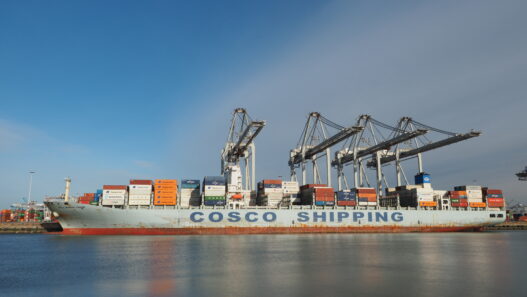
The significance of the Strait of Hormuz for the EU is already visible in markets. Benchmark European gas prices jumped by more than 50% after disruptions to energy shipments through the Strait, prompting the Commission to convene the EU’s gas and oil coordination groups. Only days later, Brent crude had briefly climbed to $119.50 per barrel, its highest level since 2022, as fears of prolonged disruption in Hormuz gripped traders. Shipping costs have also surged. Hull war–risk premiums for tankers transiting the area rose from around 0.25% of vessel value before the conflict to about 3%, implying roughly $7.5m in additional insurance costs for a typical tanker. Even without an immediate physical shortage inside the EU, these developments feed directly into higher import costs, freight rates, inflation expectations and broader market volatility.
That is why Hormuz matters. Europe is not the main direct destination for Gulf exports moving through the Strait, only a small part of crude oil and LNG flowing through Hormuz is routed into Europe. Yet this does not shield the EU from the consequences of disruption. Oil is priced globally, LNG disruptions push buyers onto tighter markets, and higher insurance and transport costs are passed along the supply chain. The Commission has therefore stressed that, while there are currently no immediate EU oil or gas supply concerns, a prolonged closure of Hormuz or further disruptions would require a reassessment of European energy security.
This also speaks to the broader argument developed in a forthcoming academic paper. My point there is that strategic autonomy is not only about decision-making or industrial strength, but also about access, about whether Europe can keep vital maritime routes and critical connections working when they come under pressure. From that perspective, the current Hormuz situation is a timely reminder of how closely Europe’s security and prosperity remain tied to the resilience of those routes.
Sources
- https://www.consilium.europa.eu/en/press/press-releases/2026/03/01/statement-by-the-high-representative-on-behalf-of-the-european-union-on-developments-in-the-middle-east/
- https://www.eeas.europa.eu/eeas/eu-gcc-extraordinary-meeting-press-remarks-high-representative-kaja-kallas_en
- https://ec.europa.eu/commission/presscorner/detail/da/read_26_513
- https://www.eeas.europa.eu/eeas/joint-statement-gcc-eu-ministers’-meeting-recent-developments-middle-east-iran’s-attacks-against-gcc_en
- https://www.consilium.europa.eu/en/press/press-releases/2026/02/23/red-sea-council-extends-the-mandate-of-operation-aspides-to-safeguard-freedom-of-navigation/
- https://www.reuters.com/business/energy/eu-policymakers-expect-no-immediate-oil-security-impact-iran-conflict-email-2026-03-02/
- https://www.abc.net.au/news/2026-03-09/us-israel-iran-war-oil-price-surge-share-markets/106432166
- https://energy.ec.europa.eu/news/commission-and-eu-countries-confirm-no-immediate-oil-or-gas-supply-concerns-following-disruptions-2026-03-04_en