











As Europe advances its ambition for strategic autonomy in geopolitical affairs, small and medium-sized enterprises (SMEs) have emerged as key contributors to this effort. In 2021, the European Defence Fund launched a call for defence project proposals, resulting in the selection of 60 collaborative projects with a total budget of €1.2 billion. These initiatives span a broad range of capability enhancements, including drones, artificial intelligence, air systems, and improved land and naval assets.
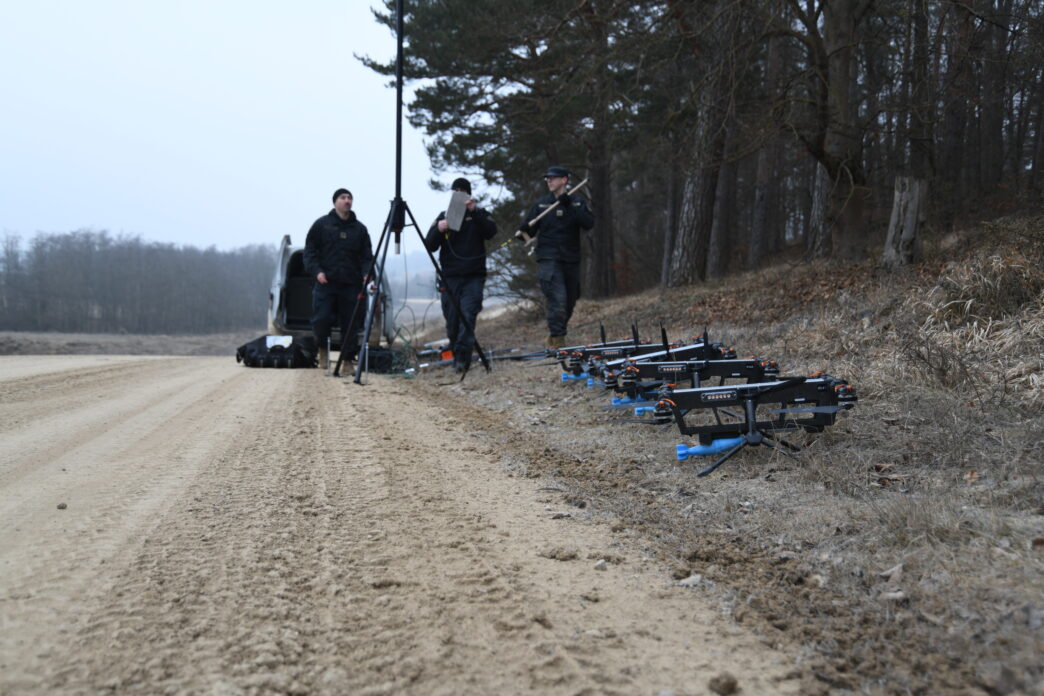
SMEs played a significant role in these projects: they accounted for 43% of the selected entities and received 18% of the total allocated funding. One such initiative is the “Highly Automated Swarm of Affordable ISR Long Endurance UAVs for Force Protection” (ALTISS). The project brought together a consortium of SMEs—Magellium SAS, Sagax, Radionor, and M3S Belgium—and was finalized in December 2025. ALTISS strengthens European security by delivering critical intelligence, surveillance, and reconnaissance (ISR) capabilities through drones developed and manufactured in Europe.
Drone and counter-drone technologies have repeatedly been identified as critical to Europe’s security. Contemporary conflicts, particularly in Ukraine, demonstrate the growing importance of drones across a wide spectrum of missions, including ISR, tactical strikes, and logistics support. In this context, ALTISS enhances European force projection by improving drone communications, flight performance, image processing, and automated event detection.
ALTISS offers three core features that underpin its strategic value.
First, it provides rapid detection and target identification. The integration of advanced sensors and software significantly reduces the time between initial detection and the delivery of actionable intelligence across large areas and extended operational durations. The system combines two complementary assets: a high-resolution optical sensor with 360-degree coverage and compact communications intelligence (COMINT) equipment capable of radio detection and geolocation.
Second, ALTISS enables autonomous swarm operations, moving beyond the traditional “one drone–one pilot–one payload” model. A single operator can supervise an entire swarm, supported by AI-driven mission planning and dynamic task allocation tools. Onboard data processing and automated event detection allow operators to focus on decision-making rather than continuous monitoring.
Third, the system integrates radio signal detection with visual and infrared imaging. When a significant radio transmission is detected, the system automatically directs its cameras toward the source. Onboard image analytics then refines localization and classification, thereby enhancing target identification.
The development of such capabilities aligns closely with the EU’s evolving security framework, including the European Commission’s recently proposed measures to prevent and counter terrorism. The proposal is structured around six pillars aimed at strengthening preparedness and response to better protect citizens and businesses. Pillar one focuses on anticipating threats through enhanced intelligence analysis at the EU level; pillar five seeks to improve the tracking of terrorist financing; and pillar six aims to strengthen coordination with international partners to enhance data collection on potential threats. All of these objectives could benefit from advanced ISR capabilities such as those provided by ALTISS.
Overall, this case illustrates two broader trends: drones are becoming important to European security policy, and SMEs are playing an increasingly important role within the European Defence Technological and Industrial Base.
Sources
European Commission, European Commission, European Commission, European Commission