







In the second week of the U.S.–Iran conflict, global energy markets and regional security dynamics are already showing signs of significant strain. Crude oil prices have already reached their highest level in 14 years, surpassing $100 per barrel for the first time since 2022.
The United States’ stated priorities in Iran remain unclear, ranging from a narrow focus on destroying Iran’s missile capabilities and nuclear program to calls for full-scale regime change. The conflict has already spilled across the region, with Iran launching a series of attacks against several neighboring Gulf states in response to the U.S. and Israeli assault.
Europe is already feeling the pressure. Governments are evacuating citizens from the region while grappling with the rising economic costs of the conflict. 356 European citizens were safely repatriated from Oman to Romania, marking the first-ever use of RescEU transport and logistics capabilities. Brussels has also supported 42 other flights, returning over 4,100 European citizens. The key question now is how far Europe is willing to become involved.
Thus far, the early stages of the conflict suggest that European governments are seeking to avoid direct involvement as much as possible. Even before the war began, the United Kingdom decided to block the United States from using two key bases (Diego Garcia in the Indian Ocean and RAF Fairford) in the event of an attack on Iran. The decision was driven by legal concerns regarding such an attack as well as an ongoing dispute over the status of Diego Garcia.
However, since the conflict began, the UK has allowed the United States to use its military bases only for collective self-defense, while withholding approval for broader offensive operations. Even after an Iranian drone struck a British airbase in Cyprus, the UK government limited its response, stating that it would continue to “monitor” the war’s economic impact rather than escalate militarily. Spain has taken a similar position, recently issuing a statement denying the use of joint military bases on its territory for operations related to the conflict in Iran.
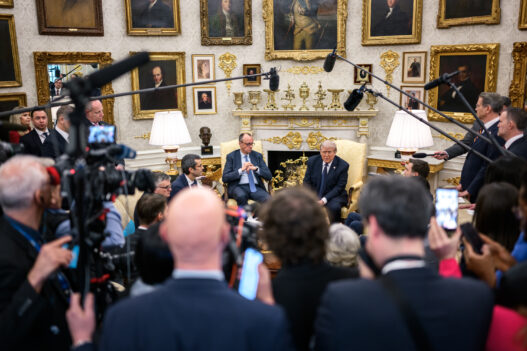
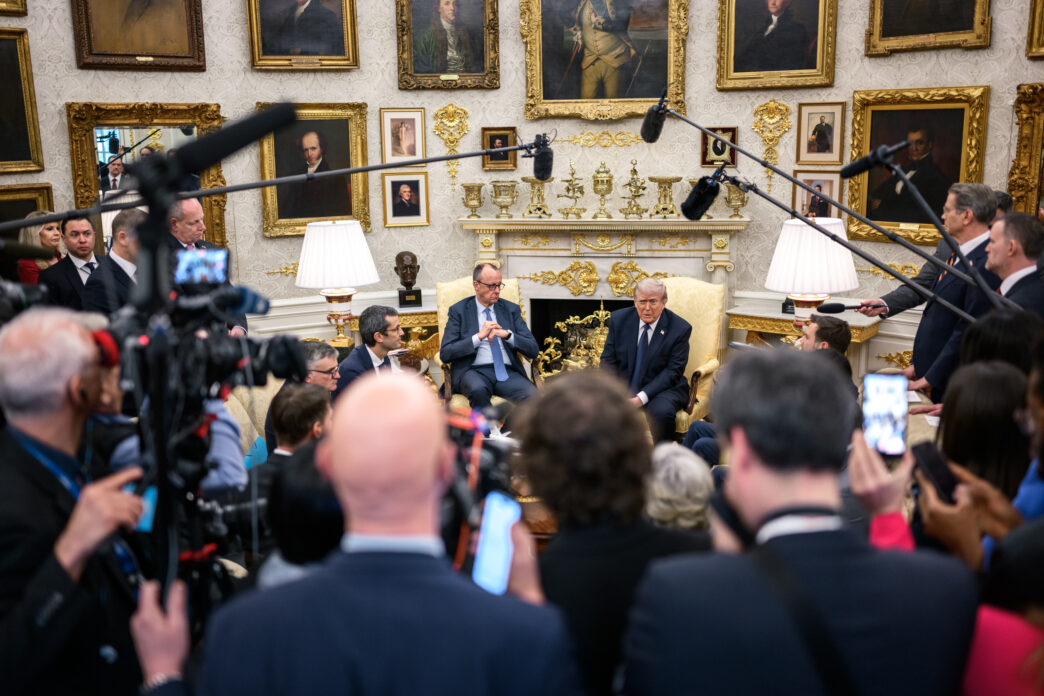
For many European states, the primary focus so far has been on managing the economic consequences of the conflict and strengthening defenses against potential Iranian retaliation. Croatia has capped fuel prices in response to volatility in energy markets, while German Chancellor Friedrich Merz has expressed concern about rising energy costs. Merz’s own words appear to reflect the broader European stance: “It is up to this regime and the so-called Revolutionary Guard alone to stop the fighting.”
At the same time, European governments are preparing for potential security threats. According to Ukrainian President Volodymyr Zelenskyy, 11 European countries have already contacted Ukraine for guidance on countering Iranian drones, drawing on Ukraine’s extensive experience in drone defense developed during its ongoing war with Russia.
Despite Europe’s generally cautious posture, some military measures have been taken and additional options remain under discussion. The Iranian drone strike on the British Royal Air Force base at Akrotiri prompted French President Emmanuel Macron to order the aircraft carrier Charles de Gaulle, along with accompanying frigates and air defense units, to deploy to the Mediterranean. During a security conference in Cyprus, Macron also declared that an attack on Cyprus would be considered an attack on Europe.
NATO air defense systems have already intercepted Iranian missiles headed toward Türkiye. Meanwhile, EU officials announced last Monday that the bloc stands ready to strengthen its maritime security operations in the Middle East to protect key shipping routes, particularly in the Red Sea. In practice, this could involve reinforcing the EU’s existing Red Sea mission, EUNAVFOR Operation ASPIDES, or potentially launching a new naval operation in the region.
If Iranian attacks against Türkiye continue, NATO’s Article 5 collective defense clause could potentially be invoked. As a result, while Europe has thus far sought to avoid deeper involvement in the conflict, significant pathways remain for European states to become more directly engaged militarily in the future.
Sources
BBC, Aljazeera, Euronews, Euronews, Euronews, EUnews, CroatiaWeek