










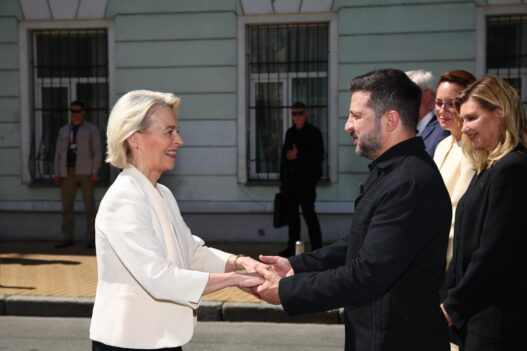
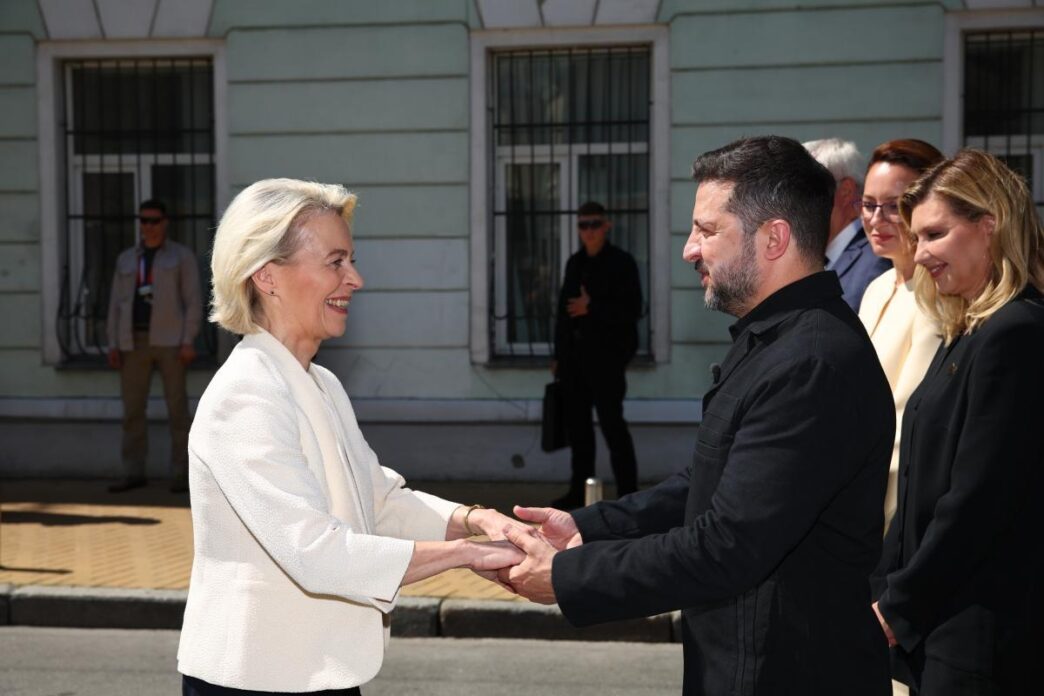
The EU-Ukraine Drone Alliance was officially launched on July 17 during the third EU-Ukraine Defence Industry Forum in Kyiv following the announcement of the Drone Deal on July 15. The goal of the alliance is to accelerate the development of a European ecosystem for drone and counter-drone technology. As the EU works to develop strategic autonomy, Ukraine is an ideal partner for strengthening its drone capabilities and defence industry. The alliance is part of broader EU efforts to enhance European defence capabilities in this area.
The initiative brings together drone manufacturers, technology companies, start-ups, research organisations, and military end users from the EU and Ukraine on a single industrial platform. Its objective is to establish joint ventures between Ukrainian and European companies, with a focus on accelerating the development and production of next-generation drones and counter-drone systems. In relation to the Drone Deal underpinning the Alliance, President Ursula von der Leyen stated, “Our defence industrial partnership integrates Ukraine’s defence economy the same way we integrate our markets: By removing barriers and aligning our standards as quickly as possible – from defence procurement to the protection of intellectual property. Allowing for a closer cooperation of our defence industries and joint ventures. Together, we are harnessing our shared industrial strength for our common security.”
The EU Drone Alliance was first announced by von der Leyen in her 2025 State of the European Union address and is a key deliverable of the Joint Communication Preserving Peace – Defence Readiness Roadmap 2030.
The new partnership creates a single EU-Ukraine framework for developing a strong drone industry that builds on the nine existing bilateral drone agreements between Ukraine and EU Member States, three of which were recently signed following the NATO Summit in Ankara. The framework includes plans to rapidly scale up the production and deployment of battle-proven capabilities to counter drones and missiles, while providing long-term predictability to secure investment and expand defence industrial capacity in both Ukraine and the EU.
One priority highlighted in the cooperation is protecting against low- to medium-range drones and missiles and deploying battle-proven drone systems at scale. Part of the plan is to build systems that can be stocked outside Ukraine while providing both industrial bases with the stability needed to secure investment and expand production. This focus is understandable given the effectiveness of drones in both the Russia-Ukraine war and the US war with Iran, which demonstrates the need for such systems. Iskander ballistic missiles in particular have been among the main weapon systems used by Russia to inflict significant damage on Ukrainian targets, particularly when fired in large numbers to overwhelm Ukrainian air defences. Finding ways to mitigate the effectiveness of such weapons will therefore be crucial to European and Ukrainian defence. This priority can also be seen in plans to expand EU-Ukraine defence industrial cooperation to facilitate the joint production of anti-ballistic missiles by 2028, addressing critical air and defence capability gaps.
On July 16, the European Commission selected Quantum Systems as a founding member of the EU-Ukraine Drone Alliance in support of the initiative. The appointment reinforces Quantum Systems’ position as a leading force in the European drone industry and a flagship of European-Ukrainian industrial cooperation. Since the company began operations in Ukraine in 2022, it has expanded its local footprint by increasing manufacturing capacity, integrating Ukrainian suppliers and software expertise, and deepening industrial collaboration.
Quantum Systems co-founded the first European-Ukrainian joint venture with Quantum Frontline Industries (QFI), under the defence industry cooperation framework “Build with Ukraine.” It has also established multiple new joint ventures with Ukrainian industry partners, showcasing its expertise in cooperative military development.
A total of 18 companies are involved in the drone initiative, nine from the EU and nine from Ukraine. The EU side includes ORQA, the Croatian FPV specialist, alongside Indra Group, Fincantieri, WB Group, Destinus, Delair, RSI Europe, TERMA, and the recently selected Quantum Systems. The Ukrainian side includes Skyfall Industries, Greentech Harvest, Tencore, Deviro, Vyriy Industry, Athlon Avia, TAF Industries, UFORCE, and F-Drones. F-Drones, in particular, highlights the adaptability of Ukrainian defence companies. The company transitioned from a fully Chinese supply chain in 2023 to manufacturing its own flight controllers, speed controllers, and video transmission systems by 2025.
The European Commission also disbursed a further €1 billion to support Ukraine’s drone capabilities under the €90 billion Ukraine Support Loan. This was the second drone related payment in three weeks, following the Commission’s initial €3.9 billion payout on June 30, the first payment of a roughly €6 billion tranche dedicated to drone procurement. This funding comes on top of Commission forward funding of up to €10 billion, which is expected to draw on the remaining funds of the EU’s SAFE (Security Action for Europe) programme, a €150 billion common borrowing facility adopted in May 2025.
All of this demonstrates the EU’s commitment to improving its drone capabilities and strengthening its drone industry. However, it is important to note that the drone deal is currently a memorandum rather than a binding treaty. The actual Defence Industrial Pact, which will cover intellectual property issues and joint venture rules, still needs to be negotiated.
Sources:
DroneXL, European Security & Defence, European Union, European Union.