







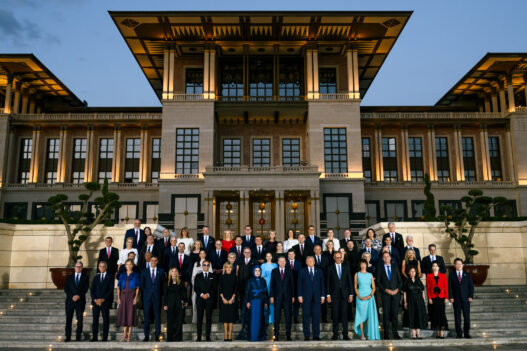
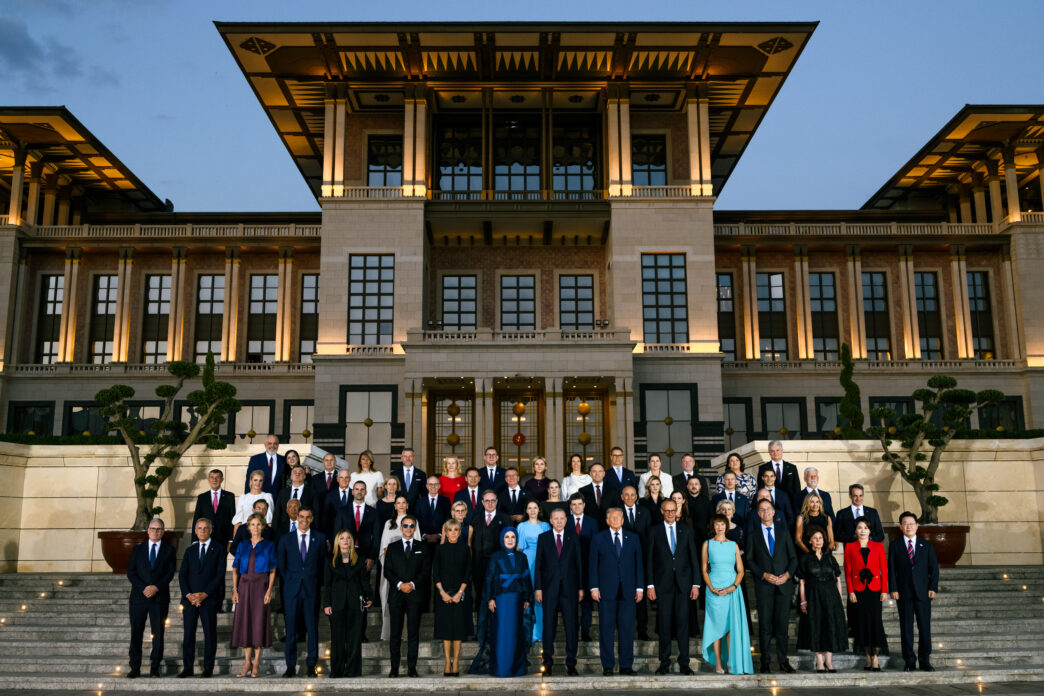
Between 7 and 8 July, NATO held its annual Summit in Ankara, Türkiye. Despite inflammatory remarks by U.S. President Donald Trump in the lead-up to the meeting, Alliance members successfully navigated transatlantic tensions and presented a largely unified front. The perceived success of the summit stemmed largely from the fact that it exceeded low expectations and alleviated concerns about Alliance cohesion. Its modest achievements included reaffirming greater European and Canadian leadership within NATO, committing to higher defence spending, and maintaining support for Ukraine in its war against Russia. While these outcomes fell short of the ambitions of some allies, they were sufficient to reinforce perceptions of continued U.S. commitment and stronger allied cooperation.
Several important announcements accompanied the summit. Germany confirmed it would procure Tomahawk cruise missiles to replace those the Pentagon announced last month it would no longer deploy to Germany. In addition, Ukraine secured a licensing agreement to begin domestic production of Patriot missiles for air defence.
The summit also highlighted the extent to which European allies and Canada have increased their defence contributions to offset a reduced U.S. military role. According to NATO, European allies and Canada spent more than USD 570 billion on defence in 2025, a 19% increase over 2024. Allies also committed additional forces to NATO’s Force Model, including units intended to replace those withdrawn by the United States. NATO officials assess that European allies and Canada have already filled nearly 90% of the air defense gap created by the reassignment of U.S. assets.
Despite this progress, Europe remains heavily dependent on the United States for key enabling capabilities. To reduce this dependence, NATO announced multinational procurement projects for Airbus A330 Multi Role Tanker Transport (MRTT) aircraft, Northrop Grumman Triton high-altitude, long-endurance drones, and Saab GlobalEye airborne early warning and control aircraft. These initiatives form part of approximately USD 50 billion in new procurement projects intended to strengthen the Alliance’s strategic enablers.
The summit also produced important commitments for Ukraine. European allies pledged €70 billion in military equipment, assistance, and training for Ukraine over this year and next. However, much of this funding repackages the €40 billion in long-term security assistance agreed at the 2024 Washington Summit, together with allocations from the European Union’s Ukraine support loan. Nevertheless, these commitments remain significant as the Trump administration has substantially reduced U.S. financial, military, and political support for Ukraine in favour of pursuing a negotiated settlement with Russia, which has so far failed to bring the war closer to an end.
The summit’s success was far from guaranteed, however, as the volatility of the current U.S. administration remained on full display. Trump arrived in Ankara already frustrated after the temporary ceasefire between Israel and Iran failed to hold. Having described Iran’s leadership as “very reasonable” only two weeks earlier, he instead referred to them as “scum” and “sick people.” He also criticised NATO before the summit, stating that he was “not happy with NATO” because Alliance members had not done more to support the U.S. during the conflict with Iran. Trump also further reiterated his claims over Greenland, despite it being Danish territory, and called for the United States to sever trade ties with Spain because of its socialist government, which he described as “bad people.”
Despite these remarks, Trump’s tone shifted markedly during the summit. Following meetings with the same leaders he had criticised, he emphasised Alliance unity, remarking that “there was a lot of love in that room.” He also praised Ukrainian President Volodymyr Zelenskyy, describing him as “ingenious.” Analysts have suggested that Trump’s close relationship with Turkish President Recep Tayyip Erdoğan, together with NATO Secretary General Mark Rutte’s effectiveness as a “Trump whisperer,” helped stabilise relations and contributed to this abrupt change in tone.
The summit’s outcome was perhaps best summarised by Secretary General Rutte, who stated: “Here in Ankara, Allies reaffirmed their ironclad commitment to collective defence under Article 5—that an attack on one is an attack on all, and we will stand together. Our unity, solidarity and collective strength remain the foundation of peace, security and prosperity.”
Beyond political messaging, the Allies also pledged to strengthen NATO’s defence-industrial resilience by expanding production capacity, fostering industry-led innovation, and enhancing transatlantic industrial cooperation by removing trade barriers within the Alliance. NATO also launched its Front Door for Industry initiative, while agreeing that the Strategy for Industry–NATO Cooperation would provide the framework for advancing these efforts.
Sources: International Centre for Defence and Security, NATO, Stimson, The Guardian