










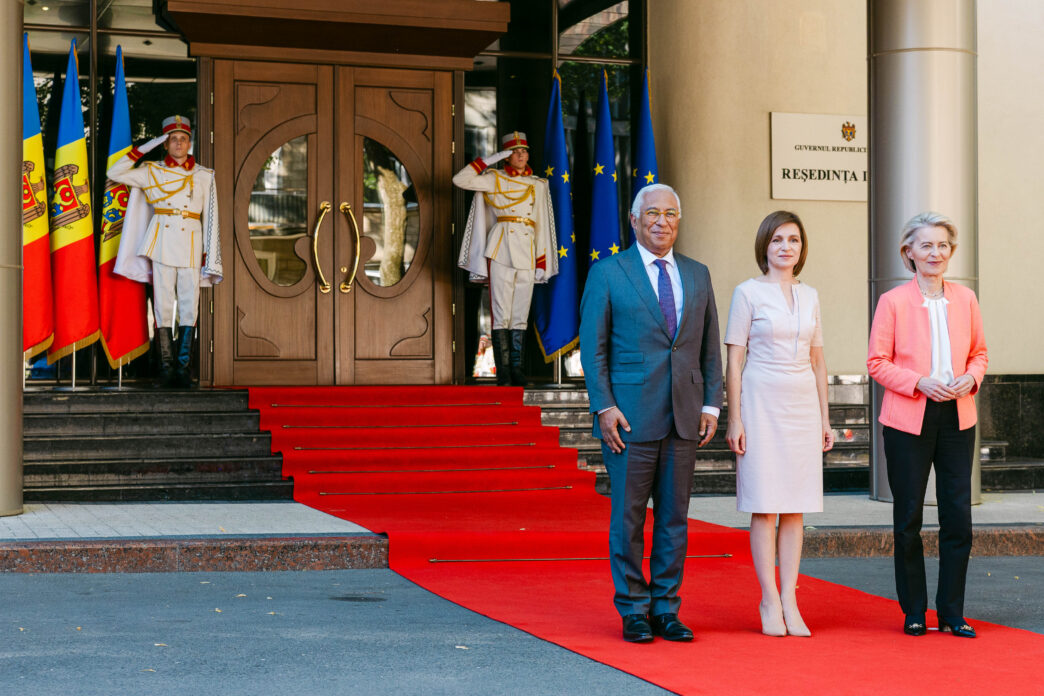
Tizian Stocker: Despite electoral fraud, propaganda, cyber attacks and bomb threats from the Kremlin, Maia Sandu’s pro-European party “Partidul Acțiune și Solidaritate” (PAS), in English “Party of Action and Solidarity”, won this year’s Moldovan parliamentary elections by a clear margin. What can the accession country now do under Sandu to join the EU quickly?
Jessica Hendrick: Moldova can move faster under Maia Sandu by tackling entrenched corruption and pairing reforms with a pragmatic push for “gradual integration” into core EU policy areas. Sandu’s PAS holds a narrow but workable majority—about 55 of 101 seats—removing coalition gridlock and enabling reforms if the government sustains public trust. Voter frustration over inflation, energy prices, and slow progress on justice reform remains a risk to that trust. Building a broader, cross-party consensus for EU alignment—so progress doesn’t rest on a single actor—will help sustain momentum beyond one electoral cycle.
Tizian Stocker: What must the EU do?
Jessica Hendrick: For its part, the EU should treat Moldova’s accession as both a merit-based process and a security strategy. A credible pathway now is ‘gradual integration’: front-loading concrete benefits (e.g., elements of single-market access and sectoral cooperation in energy and security) rather than an all-or-nothing model. Proposals include using QMV for more interim steps and granting candidates observer participation in certain Council formats while chapters advance. Brussels also needs to close the awareness gap: Preliminary RE ENGAGE findings from fieldwork in Moldova show Moldovans’ trust in the EU is high. Still, awareness of flagship EU programmes such as EU4Dialogue and justice-reform initiatives supported by the EU and the Council of Europe is low, so support doesn’t always translate into everyday legitimacy. The EU should pair funding with visible delivery and strategic communications, and tilt democracy support “bottom-up” by empowering civil society to build vertical trust and resilience against hybrid threats.
Tizian Stocker: What will the Kremlin do, given Russia’s considerable influence through Transnistria?
Jessica Hendrick: The Kremlin will keep probing Moldova’s vulnerabilities, including via Transnistria. Its toolkit has included cash-fuelled vote-buying, coordinated bomb threats aimed at depressing the pro-EU diaspora vote, and large-scale online manipulation. Energy leverage is central: the expiry of the Russia–Ukraine gas transit deal disrupted supplies to Transnistria’s Cuciurgan power plant, which is long critical for Moldova’s electricity. Still, the EU’s
new €1.9 billion reform-and-growth facility offers financial support that may help cushion macroeconomic and energy-sector strains, though power prices remain politically sensitive.
Tizian Stocker: Will there be more hybrid aggressions, or even military consequences, considering the Russian-driven war in Ukraine?
Jessica Hendrick: More hybrid aggression is likely—through disinformation, diaspora intimidation, financial interference, and pressure via energy and governance chokepoints—so policy should prioritise resilience. This means targeted sectoral integration with the EU (especially in energy and security), sustained support for independent media and civil society, and highly visible EU delivery that turns pro-EU sentiment into tangible benefits.
Jessica Hendrick: Summarised in short, proceed on two tracks—accelerate domestic reforms while Europe accelerates
integration benefits and resilience support—to blunt the Kremlin’s hybrid playbook and keep accession credible
We want to thank Jessica Hendrick for her expert commentary about the Moldovan parliamentary elections and all implications for the EU. If you are more interested, she recommended finding more information on the RE-ENGAGE project and related publications on this website.
Jessica Hendrick is a Communications Officer at the European Council on Foreign Relations (ECFR), based in Berlin, working on digital strategy, media relations, and events. She previously coordinated communications at the “Better Politics Foundation” and has experience across non-profit, private, and start-up sectors. She’s active on ECFR’s Horizon Europe “re-Engage” initiative.