









On August 19, 2025, the Pew Research Center released a study on international perceptions of global threats. Among the concerns identified, the spread of false information emerged as the top priority, with 72% of respondents expressing significant worry. In Europe, this figure rises to 75.6%.
Disinformation poses a serious challenge for democratic societies, where access to reliable information is essential for the functioning of institutions. Without transparency and verified sources, citizens cannot form well-informed opinions on political decisions or social issues. This creates a dilemma: while public authorities seek to protect institutions by adopting more restrictive regulations, democracy also requires the safeguarding of fundamental principles, including freedom of expression, as Robert Dahl has emphasized when defining the core compétents of what can be called a democracy. Guaranteeing a healthy information environment is crucial, but the regulatory tools designed to achieve it may themselves risk encroaching on basic liberties.
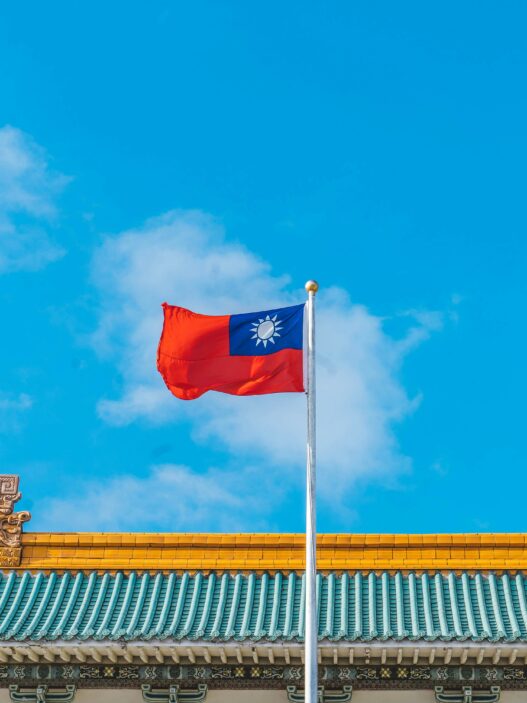
In this context, Europeans are still searching for a way forward, with initiatives emerging at both national and continental levels. Yet most measures to date have been led by institutions and focus mainly on regulating media access or setting safety guidelines. Inspiration from other democracies could therefore prove valuable. Among these, the Taiwanese example stands out as a particularly original and insightful model for combating disinformation. The question is whether Europe can adapt and learn from Taiwan’s experience.
Comparing the Contexts: Two Democratic Settings Confronting Autocratic Regimes
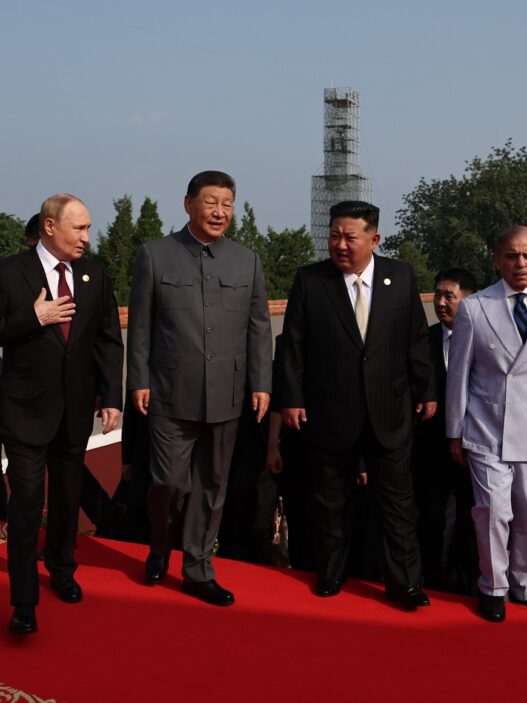
Although there are significant cultural, historical, and social differences between Taiwan and Europe, the threats Taiwan faces from China can be compared to those encountered by European countries bordering Russia. Xi Jinping’s declarations in Russian media on May 7 illustrate the common practices shared by China and Russia. 
This hostile environment is particularly evident in the domain of Foreign Information Manipulation and Interference (FIMI). With the rise of the internet and the central role of information in democracies, the spread of disinformation has become a core element of both Chinese and Russian offensive strategies.
In China’s case, however, FIMI campaigns are closely tied to the doctrine of “public opinion warfare”, as Puma Shen, chairman at DoubleThinkTank Lan and Legislator affiliated to the Democratic Progressive Party (DPP), highlights.
This doctrine combines classical strategy, exemplified by Sun Tzu, with the Leninist heritage Mao Zedong integrated into his military thought — ideas that continue to shape Chinese officials’ discourse today. Considering these legacies helps to understand the specificity of the Chinese approach to disinformation, which is not fully aligned with Russia.
Acknowledging that Chinese-led FIMI are strategic means used in the context of « informational warfare » sheds light on the threats these methods pose to Europeans.
A Case of Democratic Governance
Certainly, the reasons for Europeans to be concerned about Chinese FIMI campaigns are not the same as Taiwan’s. Taiwan faces a direct, existential threat from Beijing — a challenge that Europe does not encounter in the same way. Yet recent events, such as the Olympic Games in Paris and elections in several European countries, have revealed the growing influence of such campaigns. Attacks on political figures and the exploitation of democratic weaknesses are among the tools China uses to polarize societies and impose its narrative.
Europe is gradually acknowledging this danger, categorizing it as a form of “hybrid threat”: actions by state or non-state actors designed to exploit institutional vulnerabilities through a coordinated mix of measures that remain below the threshold of formal warfare. In Europe’s case, this threat comes not only from China but also from Russia, whose information campaigns seek to destabilize neighboring democracies and weaken the cohesion of the European Union.
What unites Europe and Taiwan, then, is not the identical nature of the threat they face, but their shared commitment to defending democratic principles against authoritarian powers that use disinformation as a weapon of influence.
The Taiwanese Case as a Laboratory
Taiwan serves as a laboratory for Chinese disinformation methods, which are already spreading worldwide, as Paul Charron aptly observes. Studying how China conducts its “cognitive warfare” on the island provides valuable insights for shaping Europe’s own counter-disinformation strategies.
A defining feature of Chinese FIMI campaigns is their ability to adapt to the new digital landscape in order to create content based on media consumption trends. Furthermore, rather than focusing on credibility, they flood the information space across all media, prioritizing quantity over quality in order to saturate the public space. With the rise of AI, these tactics risk becoming even more massive and effective.
Chinese authorities also rely heavily on the diaspora to amplify their narratives. In Taiwan, this influence is facilitated by a shared language, but Beijing is increasingly tightening its grip on diaspora communities abroad, expanding the global reach of its disinformation.
Again, the goal of these campaigns is less to improve China’s image than to polarize societies by exploiting democratic weaknesses. As Tim Niven notes, “The polarization that Taiwan is now seeing has been driven in part by long-running CCP information-manipulation campaigns pushing disinformation and conspiracy theories about government corruption and antidemocratic behavior.”
Democracies, because they safeguard freedom of expression and political competition, are inherently vulnerable. As Raymond Aron argued in Democracy and Totalitarianism, pluralism inevitably produces conflict. But when such conflict hardens into uncompromising polarization, democracy itself is endangered.
Taiwan thus illustrates how authoritarian disinformation exploits democratic pluralism, and for Europe, already fractured by internal polarization, the danger may be even greater. Understanding these methods also highlights why Taiwan’s innovative counter-strategies are so crucial — and why they may offer lessons for Europe.
Taiwanese Strategies
The Taiwanese case not only illustrates the methods employed by China to pursue its objectives, but is also valuable for the original model the country has developed to counter this threat — a model that manages to combine democratic requirements with security imperatives. Proof of this achievement lies in the 2025 Freedom House Report, which ranked Taiwan at 94/100 on its democracy index, placing it even higher than France or Spain.
A Complete Framework against Disinformation
Awareness of the scale of the threat posed by Chinese disinformation grew particularly acute in 2018, following the suicide of Taiwanese diplomat Su Chii-cherng. His death came after accusations that were later revealed to be false, fabricated, and used as a weapon against him.
The demonstration of the direct consequences of disinformation was a major factor in prompting the authorities to develop a flexible framework for combating disinformation, focused on rapid debunking strategies based on the « golden hour principle » summarized by Audrey Tang: speed, fairness, and humor.
More specifically, the government developed a three-part definition of disinformation and a four-part policy framework based on inter-agency discussions and negotiations with major platforms. The importance given to discussion is essential here, as it determines the acceptance of the proposed measures, which are not limited to regulation but extend to the identification, refutation, combating, and punishment of disinformation.
What sets this framework apart is that, unlike the European model—which relies more on top-down regulation—Taiwan’s strategy is based on ongoing dialogue in order to maintain both flexibility and adaptability.
A « whole-of-society » Approach
While the government has developed its own framework, Taiwan also relies on civil society organizations that devise independent methods to combat disinformation. The key point here is that these civil initiatives are autonomous, not government-mandated, and the wide variety of initiatives thus feeds into a « whole-of-society » model that combines top-down and bottom-up approaches.
For these reasons, it is difficult to speak of a genuine “partnership” between the state and civil society organizations. There is little formal coordination between the two, and official standards do not always correspond to the methods of independent organizations. Moreover, certain restrictions imposed by the authorities have been strongly criticized by the civil society, a sign that a certain distance exists between civil society and the authorities.
This dynamic marks a fundamental difference with the European context. In Europe, civil society initiatives often struggle to appear independent, partly because they are heavily dependent on public funding or institutional support. In contrast, in Taiwan, organizations such as DoubleThink Lab and the Taiwan FactCheck Center deliberately assert their autonomy from the government, which helps to reinforce their legitimacy in the eyes of the public.
Adapting to Social Trends
The adaptability of the Taiwanese model also stems from its ability to integrate new technologies and digital tools to strengthen the fight against disinformation. Partnerships with social media platforms have been developed, such as Cofacts, a bot accessible as a “friend” on LINE, Taiwan’s most popular social network.
This flexibility facilitates adaptation to changing patterns of information consumption, as shown in the 2025 Digital News Report, which states that the public is increasingly turning away from traditional news media in favor of social media, online browsers, and videos.
However, such innovation cannot succeed without transparent regulation to build public trust and sustained investment in media literacy. This is also where the Taiwanese model reveals its limitations: in a rapidly changing digital landscape, it is essential to strengthen citizens’ critical skills, but the effects of these long-term investments take time to materialize, leaving democracies exposed in the meantime.
What Europeans can Learn From Taiwan
While the Taiwanese model appears exemplary in its approach to combating disinformation, it is not entirely replicable in European countries.
Limits of the Taiwanese Models
One of the main problems with the Taiwanese model is that, although it is particularly flexible and innovative, it does not allow for its effectiveness to be assessed. The countermeasures adopted are difficult to evaluate due to their diversity and the fact that they are not fully coordinated. Furthermore, as the criteria for defining disinformation can be considered subjective, some content could be considered a form of disinformation by the government, but not by civil society. This can lead to conflicts and make it difficult to enforce regulations, with the government being accused of restricting civil liberties. Moreover, while Taiwan is ranked among the most protective regimes for civil liberties by the Freedom House Institute, it is clear that the assessment in terms of freedom in the digital space is much more nuanced.
These limitations underscore the importance of long-term investment in media literacy, as learning to think critically helps citizens identify misleading content and even get directly involved in combating disinformation.
However, until recently, most of Taiwan’s efforts have focused on how to respond to disinformation rather than how to prevent it. Although it is not possible to completely avoid this type of threat, especially with the rise of AI, which increases the possibilities for sharing falsified content, the development of European models for combating disinformation must take into account the importance of developing citizens’ critical thinking skills through education and media literacy.
Adaptability with the European Context
Another important point is that the Taiwanese model relies on a high consensus on the need to confront FIMI and on a strong collective commitment to remain independent from China. In contrast, Europeans face declining levels of trust in their institutions and lack consensus on what defines their shared identity. The rise of nationalist and extremist movements in several countries further underscores the risk of an illiberal turn within parts of Europe.
For this reason, the Taiwanese model cannot be directly transposed. Yet one of its core lessons remains highly relevant: the need to rely more on civil society to generate independent initiatives. This could also serve as a partial remedy to Europe’s trust deficit. So far, Europe has leaned primarily on top-down approaches — such as the Digital Services Act or the Code of Practice against Disinformation. Taiwan’s example suggests that these measures could be strengthened by more bottom-up, civil society–driven initiatives, not as substitutes but as complements to public authority.
The European Fact-Checking Network already illustrates this potential. As a civil society initiative, it focuses primarily on debunking strategies, but closer inter-European cooperation could help broaden its scope. Cross-border initiatives bringing together both civic and institutional actors would enable a stronger and more credible response to disinformation campaigns.
Engaging the Dialogue with Taiwan
Deepening European understanding of the Taiwanese model would also be an opportunity to strengthen relations with Taiwan in the context of an emerging “cognitive war.” In the context of the Ukrainian War, the proximity between Europeans and Taiwan could be further explored. This could be part of a more global approach to strengthening the resilience of our democratic models, but it requires a clearer identification of the specific threats posed by disinformation campaigns, both to democracies in general and to Europe in particular, at a time when these campaigns are spreading ever more rapidly.
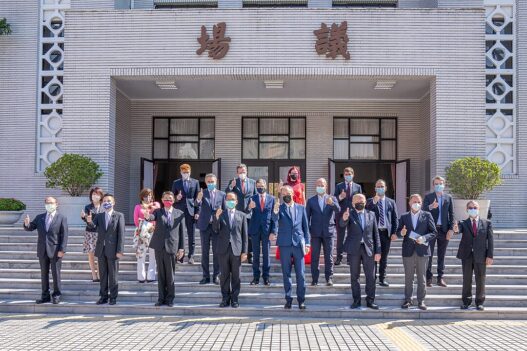
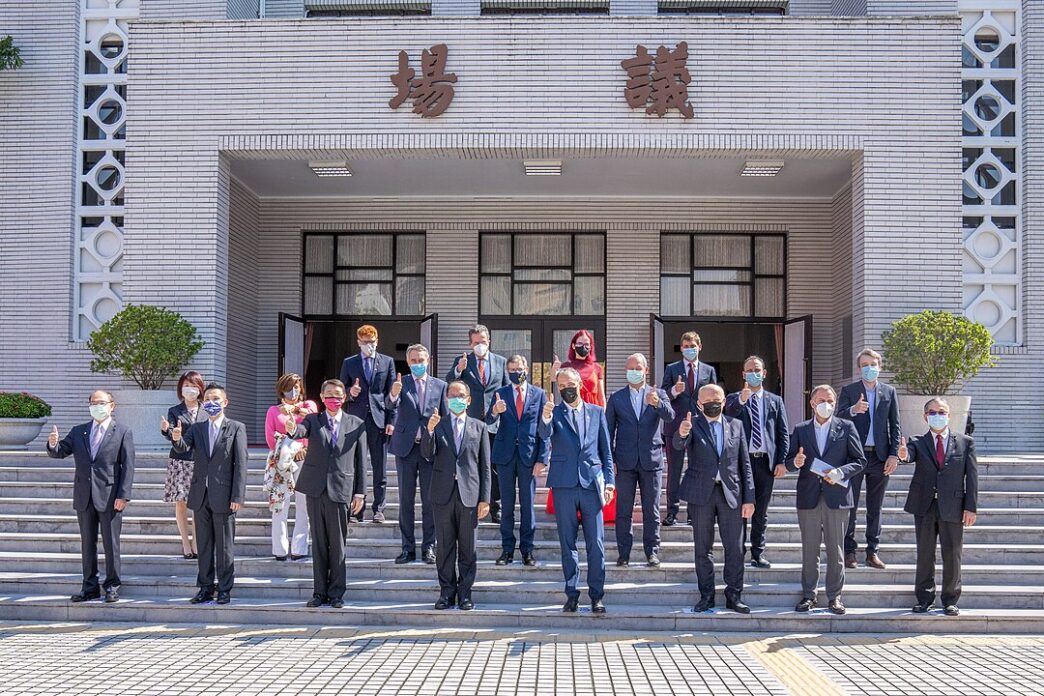
Some forms of cooperation and exchange already exist, such as parliamentary exchanges, but no institutional agreement has yet been reached. Establishing such a framework would not only improve mutual learning but also send a strong signal that Europe is determined to defend democracy against new threats arising from a rapidly changing digital landscape.