






Whilst it doesn’t come up on the news anymore, climate change still poses one of the direst challenges of our generation. Once an element of discussion that kept appearing in most conversations and mobilised millions of people around the world through movements, pledges, and demonstrations, it now seems to have been diluted from public discourse. This lack of attention has inevitably been accompanied by a decrease in policy action and political momentum.
The Inevitability of Climate Change
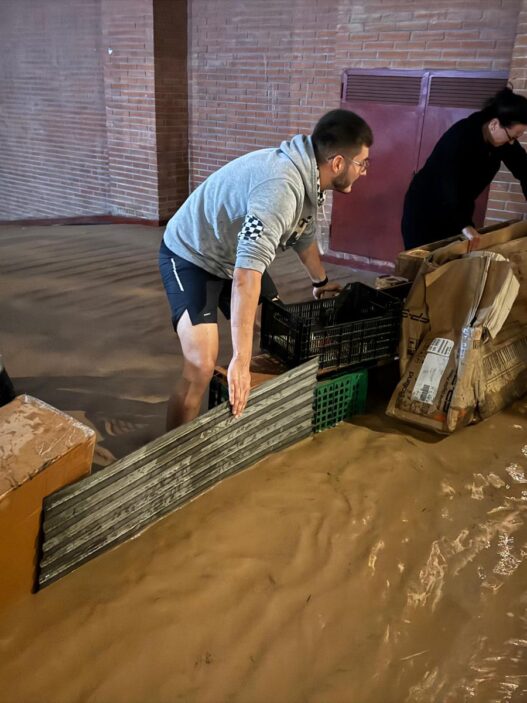
The consequences of climate change are evident. Extreme weather events are becoming the new normal all around the world, a constant reminder that this threat will not be managed or mitigated unless action is taken. Developing countries, whilst having contributed the least to global CO₂ emissions, are feeling these impacts more strongly. Predictions are increasingly alarming. Just last month, it was estimated that Afghanistan could run out of water by 2030, in a mere 5 years.
Climate change is also inextricably linked to wider socioeconomic conditions. Poverty, inequality, gender disparity, war, and forced migration are all heightened and reinforced by unlivable conditions, creating a self-reinforced loop. Global progress is faltering as a consequence. Thus, only 35 per cent of the Sustainable Development Goals (SDGs) are currently on track, whilst 18 per cent have regressed below the 2015 baseline. It is therefore critical to dramatically increase global investment and use every tool to halt and mitigate climate change globally. 
What is the EU’s position?
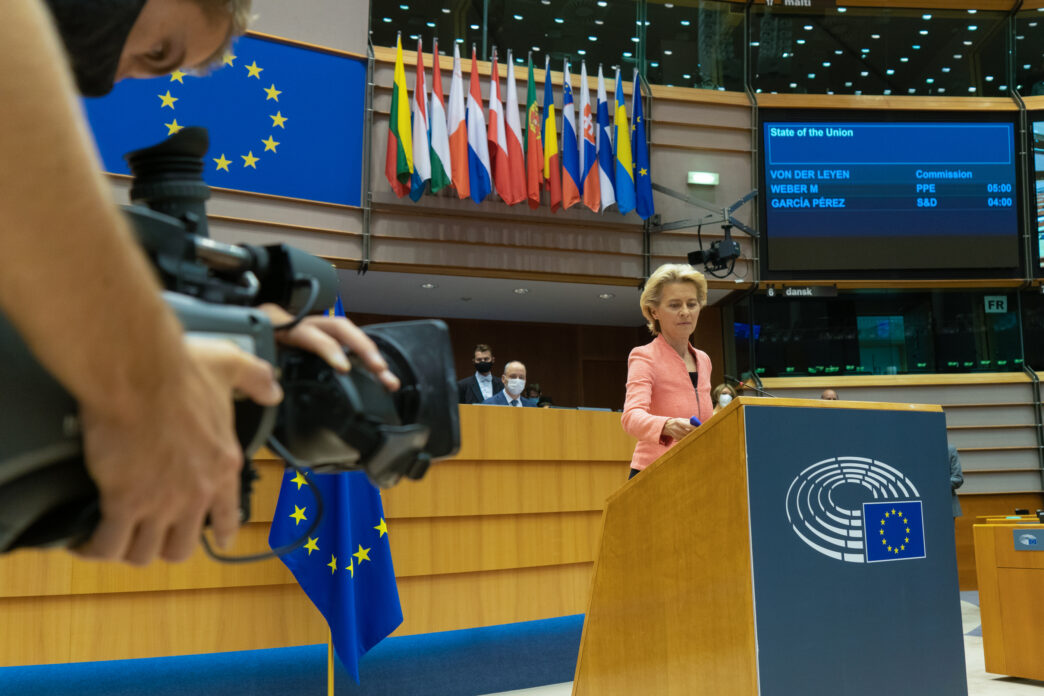
In Europe, significant policy action has been taken to address climate change. The European Green Deal, approved in 2020, presents a comprehensive set of targets addressing all aspects of Europe’s economy, ranging from agriculture to energy, in order to achieve net-zero by 2050. It has also been designed in line with the SDGs and the Paris Agreement to stay below 1.5°C, and has thus been made legally binding through the European Climate Law.
However, given the significant rightward shift of the European Parliament, in line with the international political trend, many of the Deal’s policies put in place to deliver these objectives have been significantly watered down since the end of 2023. As a consequence, most of the much-needed climate and environmental policy has shifted towards a more competition-oriented direction. Moreover, the recently passed controversial ‘‘omnibus” package has effectively lowered sustainable finance standards and weakened environmental reporting requirements for Small and Medium Enterprises (SMEs). The implications are alarming: about 90% of businesses have been excluded from the Carbon Border Adjustment Mechanism, and requirements to conduct in-depth impact assessments have been removed. As recently as June of 2025, an anti-greenwashing law was scrapped due to a significant push by European People’s Party (EPP) and far-right lawmakers, which was celebrated by the EPP as a ‘win for companies’. This not only unveils a new political direction but also displays a broader change in priorities for the European Union. This detachment from climate goals is clearly displayed by Christian Schainle, European Environmental Bureau’s Head of Zero Pollution Industry, who signals: “EU policymakers seem increasingly detached from the triple planetary crisis we are facing”.
This shift towards a profit-oriented vision carries direct international consequences. The newly published draft of the next Multiannual Financial Framework, which will run from 2028 to 2034, reflects how this redirection extends globally through the Global Europe Instrument (a substantially reformed NDICI – Neighbourhood, Development and International Cooperation Instrument), the EU’s financial tool for external action. As its most notable change, its previous aim of advancing the SDGs and building on the Paris Agreement has shifted towards advancing the EU’s strategic international interests and enhancing its competitiveness. This includes leveraging export potential and strengthening European companies’ opportunities through synergies with the Competitiveness Fund. Additionally, its thematic focus will be reshaped and simplified, merging the areas of development cooperation, humanitarian aid, and pre-accession support into a single framework.
Thus, the EU is reshaping its role from a global leader committed to human rights protection and poverty eradication to a more self-interested actor, prioritising areas such as migration management, competitiveness, supply chain resilience, and defence. At a time when the global necessities of humanitarian crises and climate action could not be more severe, this change in priorities risks leaving lives and communities exposed and delaying international environmental action.
What is the Global Status?
Very significantly, this decision is taken in the midst of a critical gap in international leadership, marked by large retrenchments in the global development landscape, such as the United States’ dismantling of USAID (United States Agency for International Development), long considered one of the cornerstones of international aid. Furthermore, according to Oxfam, the G7 (a grouping of 7 of the world’s advanced economies and the European Union), which accounts for around three-quarters of all development assistance, will lower its aid spending by 28 per cent for 2026 compared to 2024 levels. This not only constitutes the largest cut in aid since the group was formed in 1975, but in all records since aid was started in 1960. As a consequence, multilateral institutions are seeing their influence shrink as their budgets are tightened.
What does the World Expect?
At the same time, public demand for stronger climate action and heightened social responsibility is at an all-time high in Europe, with 85 per cent of its population classifying it as a ‘major problem’, according to the latest June Eurobarometer. Besides, the data suggests the timing could not be better: a recent study led by the UNDP (United Nations Development Programme) shows overwhelming global public support for governments to act decisively on climate change, even across possible arising divides.
The study, which interviewed over 73 thousand people, spanning 87 different languages, across 77 countries, reveals how an overwhelming majority (80 per cent) of the World population wants stronger climate action. Quite significantly, 86 per cent of the population want their countries to overcome their geopolitical differences in order to take action, as more than half of the people globally expressed they were more worried about climate change than last year.
Europe ought to step up to its responsibilities
These findings underscore the urgency for decisive action at the European level. Climate change will not pause, whether or not leaders look away or give in to lobby demands, and Europe cannot afford to falter, even if other international actors are stepping back.
The need for action is undeniable, and it could not be higher. Global leadership is faltering: USAID has been dismantled, international organisations are being streamlined, and multilateral ambition is shrinking. The world is watching: citizens, civil society, and partners across the globe are demanding accountability, action, and tangible progress. Europe cannot shy away from this responsibility.
To make a meaningful difference, Europe must act globally through collaborative, multilateral approaches that strengthen climate resilience, support continued decarbonisation, and advance a socially just green transition. Only joint action can address the fact that Global South countries, which have contributed the least to global emissions, are already facing the harshest consequences of climate change. Ambitious investments, technical cooperation, and shared strategies are needed to ensure all countries can transition sustainably and fairly.
Further, as Achim Steiner, former UNDP Administrator, highlights, the present moment offers an unprecedented opportunity to invest in a green energy and mobility transition, greater than anything seen since the advent of industrialisation. Thus, acting decisively is not only the right choice for the planet, but it is even the only way for Europe to remain ‘competitive’. Even strategies that aim to focus solely on economic advantage will fail if they ignore the green transition, as the future can only exist for those who act sustainably.
This urgency has been recognised and reaffirmed on the global stage. At the Fourth International Conference on Financing for Development (FFD4) in Seville, in a challenging geopolitical context defined by competitiveness, economic security, and defence priorities, it was made clear that Europe’s ability to step up public investment and work with partners on climate and social issues will be decisive not only for its own prosperity but also for the credibility of multilateralism in an increasingly complex world. The Seville commitments have already been globally endorsed; the responsibility now rests with Europe to honour them.