










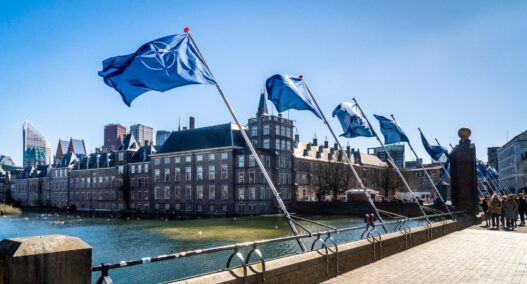
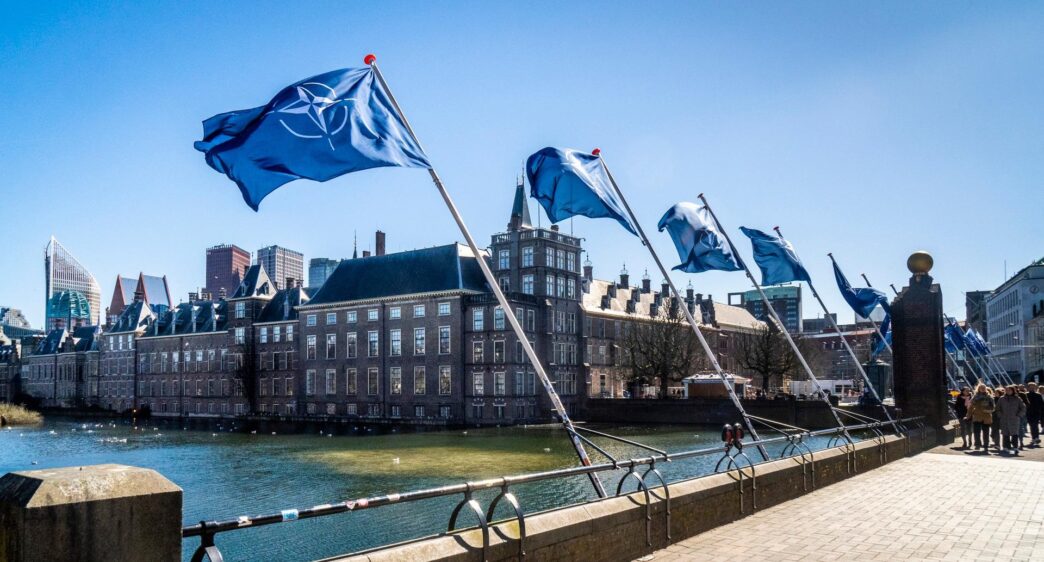
The NATO summit in The Hague this June marked a turning point in the alliance’s history. Leaders agreed to raise defence spending to 5% of GDP by 2035, a target that goes well beyond the long-debated 2% threshold. The decision reflects growing security concerns in Europe, particularly the war in Ukraine and renewed pressure from Washington’s shifting foreign policy, but it also redefines what counts as defence.
Only 3.5% of the quota will cover traditional military capabilities. The remaining 1.5% may be invested in infrastructure, cyber resilience, and logistics, representing areas that allow member states to interpret commitments more flexibly. For the European Union, this opens a space where governments can balance security obligations with domestic development goals.
For the purpose of a comprehensive comparative view, it could be useful to look into how countries from different regions of Europe are interpreting the requirement, according to national priorities and pressing challenges. This article will approach the four main directions.
Southern Europe: Stretching the Definition – Italy
Italy is leading the way into strategic investments that stretch the meaning of NATO’s new quota. Prime Minister Giorgia Meloni has argued that the long-delayed Messina Bridge project, a €13.5 billion plan to link Sicily with the mainland, can be classified as part of Italy’s defence expenditure. Officially, the bridge is about economic development, but its strategic framing is clear: improved connectivity in southern Italy could also serve military mobility, enabling faster deployment of NATO forces across the peninsula. 
This interpretation has raised questions both at home and abroad. For critics, it risks turning NATO’s 5% goal into a creative accounting exercise. But for supporters, it highlights the political logic behind the 1.5% “resilience” allowance. Italy, which currently spends below even the old 2% target, can claim progress toward NATO obligations while unlocking a project that successive governments have promised but failed to deliver.
Beyond symbolism, Rome is also investing in naval modernisation and Mediterranean logistics, but the Messina Bridge encapsulates a broader strategy: using NATO’s flexibility to align defence commitments with domestic priorities. For a country struggling with fiscal limits, it represents not just military readiness, but also an economic lifeline and a statement of relevance within the alliance.
Eastern Europe: the Front Line – Romania
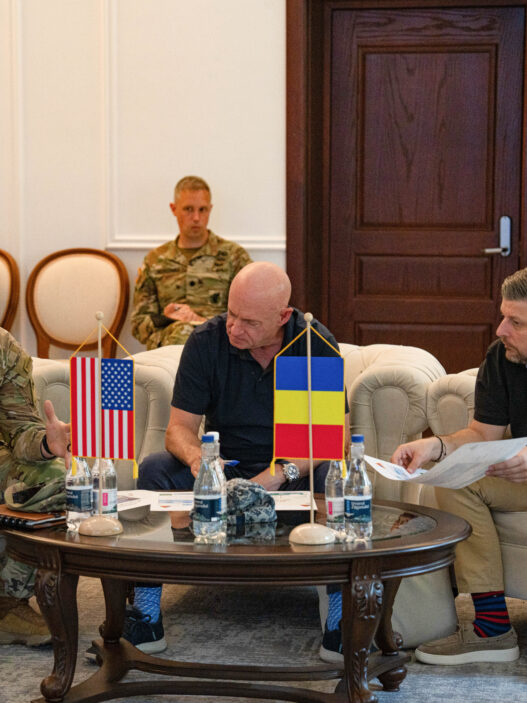
If Italy illustrates how NATO’s 5% target can merge into civilian infrastructure, Romania shows what it means on the front line. With the Black Sea now at the heart of NATO’s eastern security strategy, Bucharest has cast itself as both a border protector and a logistics hub. Since Russia’s full-scale invasion of Ukraine, Romania has expanded its role as a key transit corridor for Western aid. Ukrainian grain shipments, NATO deployments through Constanța port, and a network of land corridors across the Danube have given the country an increasing importance in alliance planning.
As the 5% target puts more pressure on Romania’s current economic challenges, the debate in Bucharest is volatile, with a new government that is introducing massive cuts at the national level. However, as part of the alliance, even though there is no choice but to honour the negotiations and allocate the percentage, there is a choice regarding what to prioritise.
One scenario is an emphasis on building independent capacities: modernising its air defence, strengthening its navy on the Black Sea, and expanding military mobility infrastructure so that foreign troops moving east are supported by reliable Romanian assets. This approach would position Romania less as a staging ground for others and more as a strong NATO border state in its own right.
The alternative is to lean further into partnerships, channelling the 1.5% “resilience” allocation towards projects that reinforce Romania’s role within the Bucharest Nine and the wider NATO eastern flank. Joint exercises, integrated logistics planning, and regional defence procurement could allow Romania to amplify its weight through collective security frameworks rather than acting alone. This approach would keep Bucharest firmly embedded in NATO’s front-line position while sharing the burden with its neighbours.
For now, Romania is pursuing both tracks: modernising its forces with Western equipment while lobbying for a greater allied presence on its soil. Whether the 5% target becomes an opportunity to consolidate national sovereignty or a tool to foster regional partnerships will define how far Bucharest can transform from a frontline transit state into a strategic actor in its own right. It is certainly not an easy decision, as public support for military investments gravitates from fear of the war reaching Romania to animosity towards conflict dynamics, in favour of a more balanced rhetoric.
Northern Europe: Resilience by Design – Norway
Norway was quick to embrace NATO’s 5% target, not because it struggles with budgets like Italy or Romania, but because the new rule fits perfectly with priorities it had already set for itself. Oslo has been steadily investing in energy security, cyber defence, and the protection of vital infrastructure, especially since the Nord Stream explosions exposed just how vulnerable Europe’s lifelines are. When 4,000 Home Guard troops were deployed to safeguard offshore energy installations, it showed how seriously Norway treats pipelines and platforms as part of its defence capabilities. Under NATO’s new framework, these efforts count directly toward the alliance’s spending decision.
This approach aligns with the regional necessities brought forward by modern warfare, which defines defence as more than just military might, extending it to societal resilience, economic security, and critical infrastructure protection in the Arctic and cyber domains. The creation of the Cyber Defence Force more than a decade ago, now integrated into Norway’s military structure, is a clear sign of this thinking: cyber capability is treated as infrastructure, not an abstract sector. Local authorities are also reviving Cold War-era bomb shelters and planning for NATO contingents, reinforcing the idea that resilience is society-wide.
Traditional procurement has not been neglected. Oslo reached the objective to expand its fleet of F-35 jets, and continues to modernise its submarine programme, and step up Arctic patrols. But what distinguishes Norway is how easily these long-standing modernisation plans fold into NATO’s broader framework. Unlike members that may rely on creative accounting to reach the 5%, Norway barely needs to adjust. It uses the target to consolidate what it was already doing, turning resilience into a central pillar of its NATO role. In the High North, that credibility matters: Norway positions itself not just as a compliant ally, but as the alliance’s reliable northern guardian.
Western Europe: Industry and Ambition – France
France approaches NATO’s 5% target from a position of strength, anchored in one of the largest defence industries in Europe, making it not only a consumer of weapons, but a global producer and exporter. Investments in Rafale jets, nuclear submarines, and missile systems are therefore not only about national security, but also about sustaining jobs, technological leadership, and industrial sovereignty. Military spending, in the French case, becomes a form of economic policy as much as a strategic necessity.
Paris also frames its role through the lens of global responsibility. As the EU’s only nuclear power and a permanent member of the UN Security Council, France views defence spending as a statement of credibility. Whether through deployments in the Sahel, naval presence in the Indo-Pacific, or diplomatic initiatives in the Middle East, France links its NATO contributions to a broader narrative of being able to project power beyond Europe. Meeting alliance commitments is not treated as a mere obligation, but as proof that France retains a unique weight on the world stage.
At the political level, French leaders consistently argue that Europe cannot depend exclusively on Washington for its security. Emmanuel Macron’s call for a “Europe puissance” reflects this ambition: a continent capable of defending itself while remaining a credible partner in NATO. Within this framework, the 5% target is not seen as an imposition, but as an opportunity to reinforce the argument for European defence capacity. Where others may struggle to reconcile the quota with domestic politics, France interprets it as a chance to consolidate its industrial base, strengthen its autonomy, and confirm its claim to leadership within the alliance.
Conclusions
The debate around NATO’s 5% target shows that while the figure is uniform, in reality, the implications vary. In Southern Europe, Italy experiments with dual-use projects such as the Messina Bridge to stretch definitions and balance fiscal limits. In Eastern Europe, Romania wrestles with the tension between building its own capacities and anchoring itself in collective formats like the Bucharest Nine. Norway in the North treats the target as a natural extension of priorities it was already pursuing, using it to fold energy security and cyber resilience neatly into NATO’s framework. And in the West, France uses the target to underline its industrial strength and global responsibilities, positioning itself as both a European leader and a reliable ally.
Across these examples, a pattern emerges: the 5% benchmark is not a single path to rearmament but a political instrument reshaped by geography, domestic politics, and national ambition. Where some states turn to creative accounting, others lean into industry or resilience, and others still embrace the target as proof of sovereignty. Taken together, these diverse approaches reveal that the value of the 5% rule will not be measured only in tanks or submarines, but in how effectively Europe manages to convert an alliance obligation into a broader strategy for development, credibility, and security.