








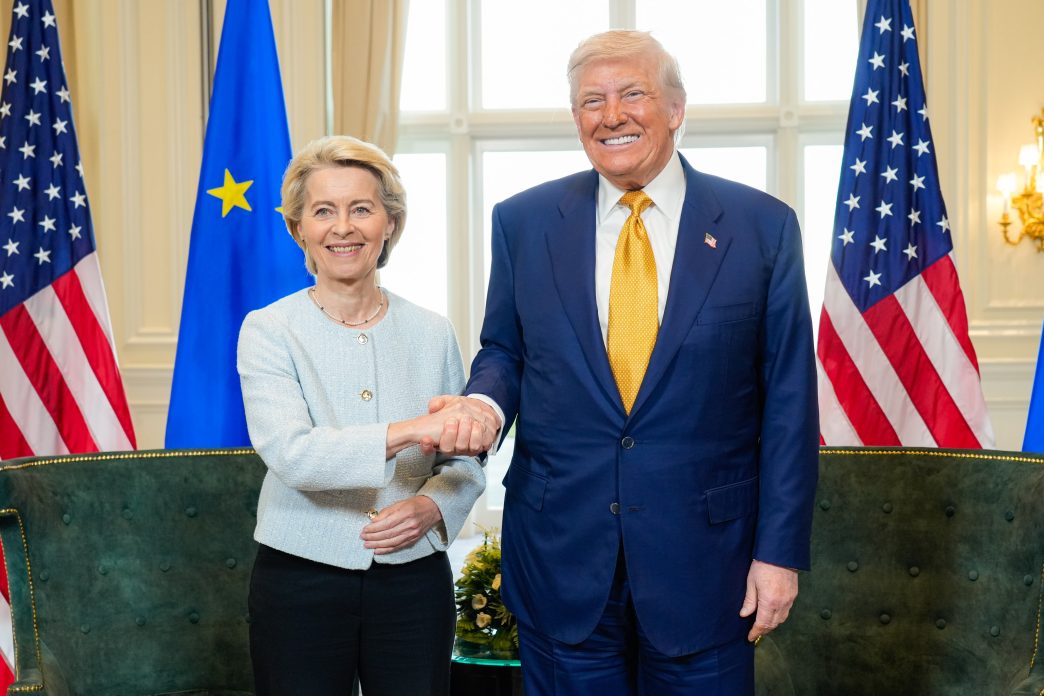
In January, Donald Trump assumed the Oval Office, becoming the 47th President of the United States of America. Since then, the relationship of the American country with the European Union has been brought to public debate. The policies introduced by the Trump administration have exposed the deep asymmetry between the two actors, highlighting the extent to which the EU remains dependent on Washington.
How the US established influence over Europe
During the Second World War, the Allies started to negotiate the creation of a new international financial system. Due to the weakened negotiating power of the European countries—whose efforts were largely focused on the war—the United States was able to shape the outcome in line with its own interests. The result was the Bretton Woods system, agreed upon in 1944. This agreement led to the creation of major international institutions such as the International Monetary Fund (IMF) and the World Bank, through which the U.S. promoted liberal economic principles and established the U.S. dollar as the global reserve currency.
When Nazi Germany capitulated to the Allies in 1945, the situation in Europe was devastating. Much of the continent lay in ruins: cities were destroyed, infrastructure was shattered, and populations faced widespread famine and shortages. Even countries that had not been directly involved in the fighting suffered the economic and social consequences of a continent-wide collapse. Europe had an urgent need to rebuild.
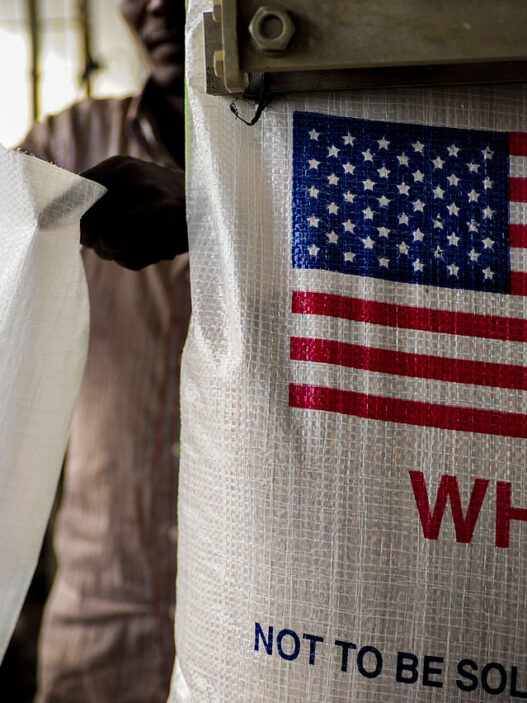
And in this dramatic situation, a saviour emerged: the United States. Newly positioned as the global hegemon -though the Soviet Union would soon challenge this status- the United States was willing and able to fund Western and Central Europe’s recovery. The Marshall Plan was approved, and US dollars began flowing into the continent. In exchange for $13 billion in grants and loans, the United States secured a strategically loyal bloc of allies for the emerging Cold War order; an ally that would accept and follow all their instructions and impositions, because their economic stability was now dependent on the American willingness to continue funding their post-war rebuilding. 
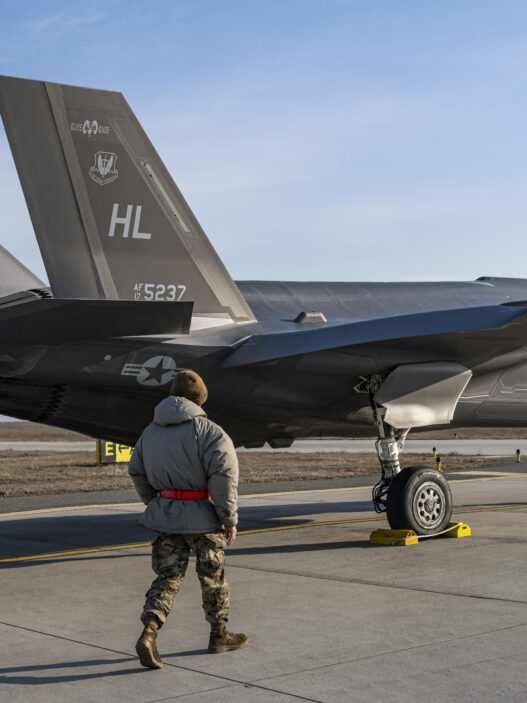
The American-European alliance did not end with the Marshall Plan; it deepened in the years that followed. In 1949, 10 European states and the United States, together with Canada, signed a treaty of collective defence, which gave birth to the North Atlantic Treaty Organisation (NATO). The organisation would soon expand, accepting new European states as members. With this treaty, the United States and Canada agreed to pay for most of the expenditure of the organisation, funding in practice most of the member states’ defence budgets. For instance, in 1952, the US and Canada’s expenditure on NATO was nearly $50 billion while the combined spending of all European members was around $10 billion, meaning that the European member-states spent less than a fifth of what the Americans did, although being more in numbers. In practice, this meant nearly full funding by the United States of the European defence budgets. Or, in other words, it effectively subordinated European states to the mandates of Washington.
The Bretton Woods system, the Marshall Plan, and NATO were not isolated instruments; together, they formed a broader structure through which the United States institutionalised its postwar leadership in Europe. From this starting point, the US started to develop more institutions, organisations, and agreements to strengthen the American-European alliance. Because of these treaties, the European Union has been unable to develop a truly autonomous policy path, being forced to stay under the umbrella of the United States’ foreign policy.
How does the dependence on the US shape the EU’s policy?
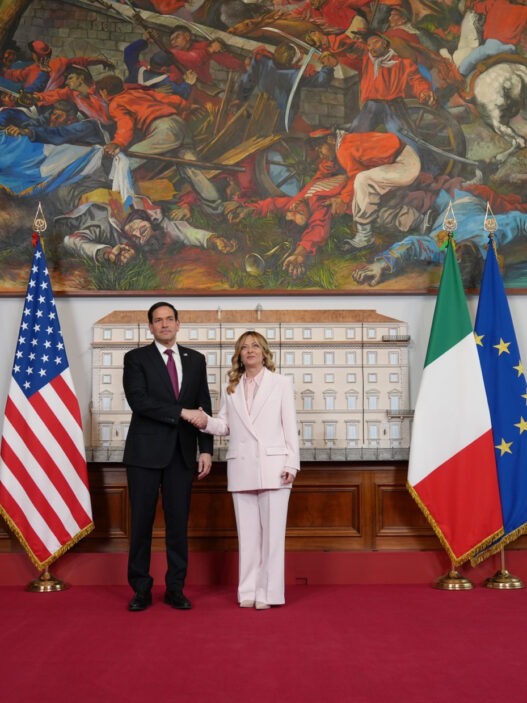
Since the arrival of Donald Trump in the White House, the European Union’s dependence on the United States has been even more evident due to the confrontational stance adopted by his administration. Two recent popular debates show how EU policies are shaped by this asymmetric relationship, forcing the EU to align with the interests of Washington: the so-called “Tariff War” and the new spending demands imposed on NATO members.
The Tariff War
One of the key campaign pledges of Donald Trump, part of the “Make America Great Again” banner, was to reindustrialise the United States. This promise carried a clear message for all of America’s trading partners: tariffs on their exported goods.
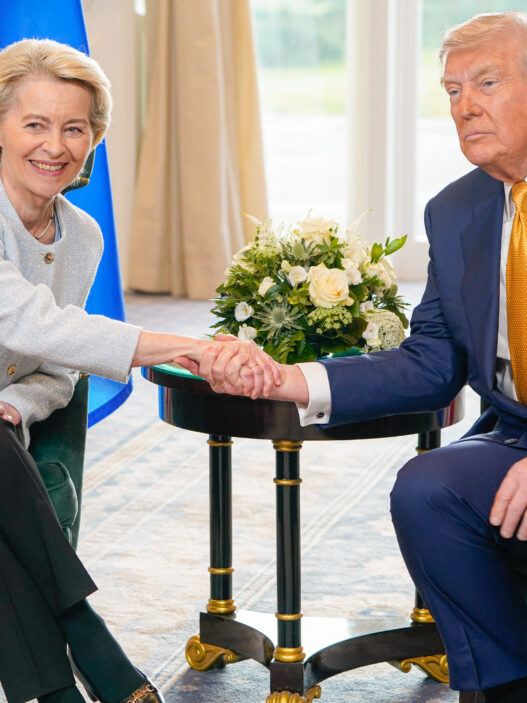
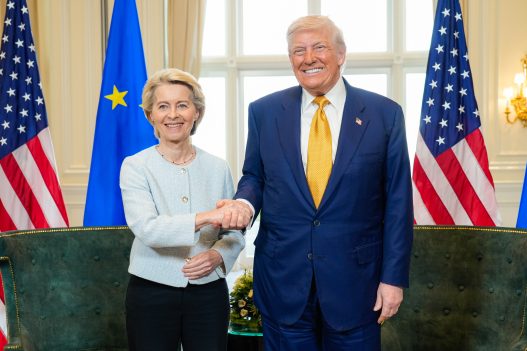
On the second of April, on what he named “Liberation Day”, Donald Trump announced plans to impose blanket tariffs on imports from multiple trading partners.. In the case of the European Union, the tariff would be 20%, if no mutual agreement was achieved before the August 1st deadline he imposed. Shortly after the announcement, Ursula von der Leyen, the president of the European Commission, made it clear that the European Union was prepared to impose countermeasures on American imports.
After several rounds of negotiation, during which Trump threatened to impose a 30% tariff on all European goods, an agreement was finalised on the 27th of July. In this agreement, the European Union accepted the imposition of a 15% base tariff on all its exports, with some sectors such as steel and aluminium going up to 50%.
What did the European Union secure in return? The answer, although disappointing, is straightforward: nothing. Rather than imposing reciprocal tariffs, the EU eliminated duties on U.S. industrial goods, reduced non-tariff barriers, and offered expanded market access to American agricultural and fisheries products. In fact, it has done the exact opposite: it has eliminated all tariffs on industrial goods coming from the US, reduced non-tariff barriers, and promised better market access to American agricultural and fishery goods. Furthermore, it has committed to buying and investing more in American energy and arms corporations.
The outcome of this trade dispute clearly illustrates the inability of the European Union to assert itself independently from the United States and to challenge the interests of the American superpower. The agreement represents a total capitulation on the part of the EU, underscoring its limited strategic agency and its continued subordination within the transatlantic relationship.
NATO minimum spending modification
Another cornerstone of Trump’s presidency, already during his first term, was his demand that all NATO members fulfil their obligation to spend at least 2% of their national GDP on defence. Since returning to office in January, he has doubled down on this, proposing to raise the 2% minimum threshold to 5%.
This proposal was met with rejection in Europe, as most states opposed the increase. Belgium and Slovakia presented their concerns regarding the measure, and Spanish Prime Minister Pedro Sánchez even publicly rejected any increase in Spain’s defence budget, arguing it was “not only unreasonable, but also counterproductive”.
Despite widespread opposition, during the 2025 NATO summit held in June in the Netherlands, the organisation issued the Hague Summit Declaration, in which all member-states accepted and committed to reaching a defence investment of at least 5% of their GDP by 2035.
Does this agreement benefit the European states? Depends on perspectives. Some voices -for example, Lithuania, which had already announced it would increase its spending to between 5% and 6% of its GDP prior to the summit- have argued that Europe must invest more in defence to deter a possible Russian aggression, especially in eastern Europe and the Baltic. Others, including Spain, have, however, argued that this is unaffordable for most states and will accelerate the dismantling of the European welfare state system, as it will force governments to divert funding away from social programmes to meet defence obligations. Thus, it is unclear whether Europe comes out stronger or not from this agreement. However, a clear winner is the United States: it successfully secured the commitment of all NATO members to raise their defence budgets to 5%. By doing so, not only did they defend their geopolitical goals, but also their economic interests: from mid-2022 to mid-2023, 63% of the EU defence contracts were awarded to US companies.
The 2025 NATO summit is yet another illustration of Europe’s inability to resist U.S. pressure—even when doing so may run counter to its own interests. Once again, it highlights the lack of European strategic autonomy and its submission to American interests.
Path towards autonomy
These recent episodes clearly demonstrate the European Union’s lack of genuine autonomy, revealing its deep dependence on the United States’ foreign policy. This dependency has not gone unnoticed by several European leaders and politicians, some of whom have raised their concerns regarding American dominance and the constraints it places on Europe’s strategic independence.
French Prime Minister Emmanuel Macron has been one of the leading voices of this movement for the past years. In 2018, he called for the creation of a “true European Army” in order to stop depending on the United States for defence and security issues. The proposal gained support from prominent figures, including former German Chancellor Angela Merkel. However, despite this initial momentum, the project stalled politically, and no little concrete progress has been made since.
Another key advocate for an autonomous Europe is Josep Borrell, the former High Representative of the Union for Foreign Affairs and Security Policy. Throughout his tenure as the High Representative, he repeatedly urged the EU to stop outsourcing its geopolitical responsibilities to Washington. In his own words, he argued for the EU to start being a “player, not the playground” of geopolitics. This attempt, however, was also in vain.
Although some steps have been taken to transform the EU into a “geopolitical power”, as Ursula von der Leyen pledged during her inaugural speech in 2019, these efforts have so far fallen short. The EU still lacks the “European sovereignty” envisioned by Macron. Its limited geopolitical power continues to hinder the development of an independent foreign policy, leaving the Union unable to effectively defend its interests on the global stage.
In an era of escalating geopolitical tensions and military conflicts, the European Union must act decisively if it wishes to maintain its international relevance. It needs to start developing a serious and coherent plan to achieve full independence from external powers, and thus develop a European Foreign Policy strategy that truly defends the geopolitical and geoeconomic interests of Europe.